

- Shifting land use in sugarcane fields
- Expectations to increase the value of giant freshwater prawns.
- Giant freshwater prawns fetch good prices, bringing joy to farmers.
But then, life didn't stop at the familiar. Climate change , fluctuating sugarcane prices, barren land... all came like an undercurrent, silent but fierce, forcing people to change. And that transformation was a journey full of anxiety and challenges. Yet now, standing amidst the bountiful shrimp and crab harvests – with good prices – the people of Tri Phai commune can smile with satisfaction. Because they were right to place their faith in shrimp and crabs to rise up and change their lives.
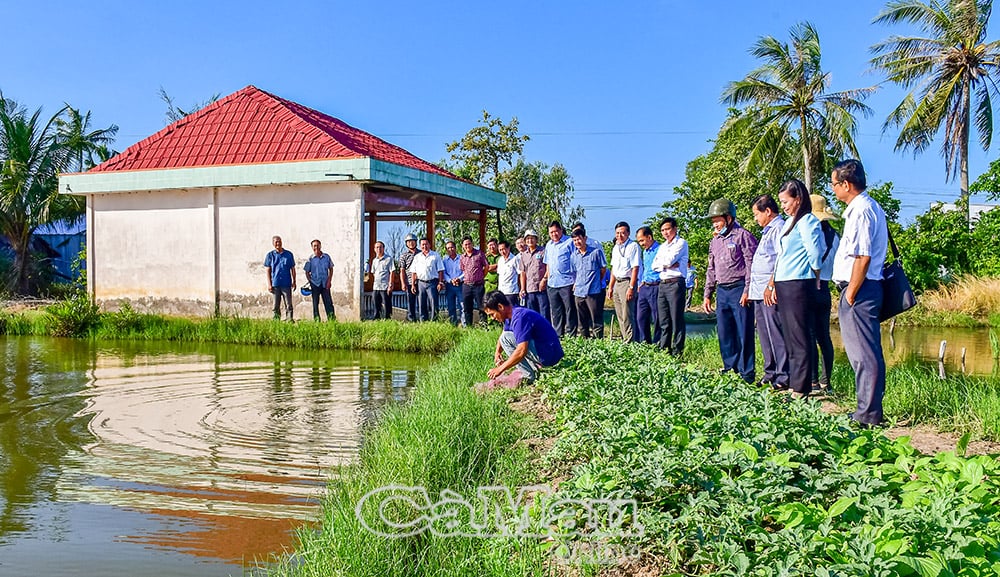
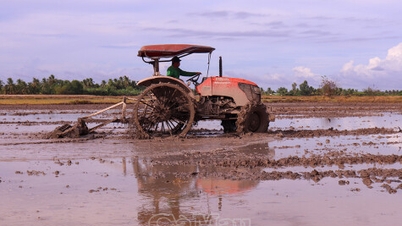
Mr. Nguyen Van Hon, Secretary of the Party Branch of Hamlet 10 (Tri Phai Commune), recalled old memories, slowly recounting: “It was so hard back then! To have a good sugarcane harvest, people had to go to the fields from dawn. Men prepared the soil and pulled up the stalks; women stripped the sugarcane leaves all year round. Sugarcane was very profitable, but traders would force down the prices. From one season to the next, we worked hard to make ends meet, enduring countless hardships, and at the end of the season, we didn't have much left over. Then we switched to growing other crops, but nature didn't spare us either. Even with a good harvest, there was no water for irrigation during the dry season. People had to plant crops according to the season, waiting for the rain to bring their produce to market. Life was a vicious cycle of poverty.”
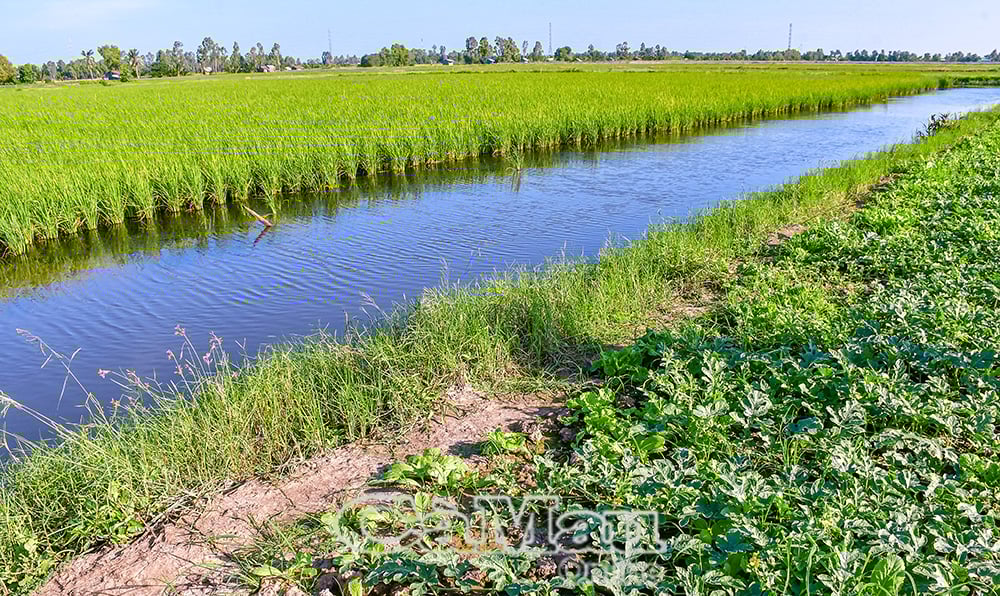
Then the turning point came. In 1995, several households began to change direction: abandoning crop farming and switching to shrimp farming. In the area that had been converted to freshwater years earlier, saltwater began to infiltrate, bringing with it new hope.
According to many households, during the first few nights of shrimp farming, the pond banks were brightly lit with flashlights, like a festival. Everyone was curious to see how big the shrimp were. Some households harvested their first batch after 60 days, with shrimp weighing 40 per kilogram. "The price at that time was 128,000 VND per kilogram. We harvested 100-200 kilograms in one night. Everyone was overjoyed!" Mr. Hon recalled with a smile. "Back then, people followed whoever was doing well. One kilogram of shrimp was worth as much as a hundred kilograms of sugarcane, so who wouldn't be impressed?" added Mr. Tran Van Nam, Head of Hamlet 10.
By 2000, the monotonous, barren sugarcane crop had been replaced by shrimp farming – a new crop for this land. But the people of Tri Phai didn't stop there. On the same plot of land, they learned to cultivate multiple crops and raise multiple animals to increase their income. During the rainy season, they utilized the embankments to grow vegetables, improving their meals and earning extra money. During the rice season, they sowed rice seedlings on the ground to "fill in" for the next crop, providing food for the shrimp and rice for cooking. What delighted them most was that they were able to raise giant freshwater prawns – a species that previously only lived in freshwater.
Mr. Hon excitedly said: " The giant freshwater prawn, which originally only tolerates freshwater, can now tolerate saline water thanks to breeding and the application of technology. So, during the rice growing season, farmers can add giant freshwater prawns, and then harvest the prawns at the same time when the rice is harvested. Some people even manage to raise giant freshwater prawns out of season, fetching high prices and being easy to sell."
According to authorities, this model has low risks, moderate costs, makes good use of the natural ecosystem, and is very suitable for the characteristic brackish water of Ca Mau . The good thing is that people don't overuse fertilizers or antibiotics. Shrimp and crabs are raised in a natural environment, feeding on algae and grass, growing slowly but surely. And from that stability, "people have been able to build sturdy and spacious houses, children receive a proper education, and there is no longer the need to drop out of school to follow their parents to the fields. Some children have gone to university to study aquaculture and then returned to their hometowns to provide technical support to their villages, which makes us very happy," Mr. Nam shared.
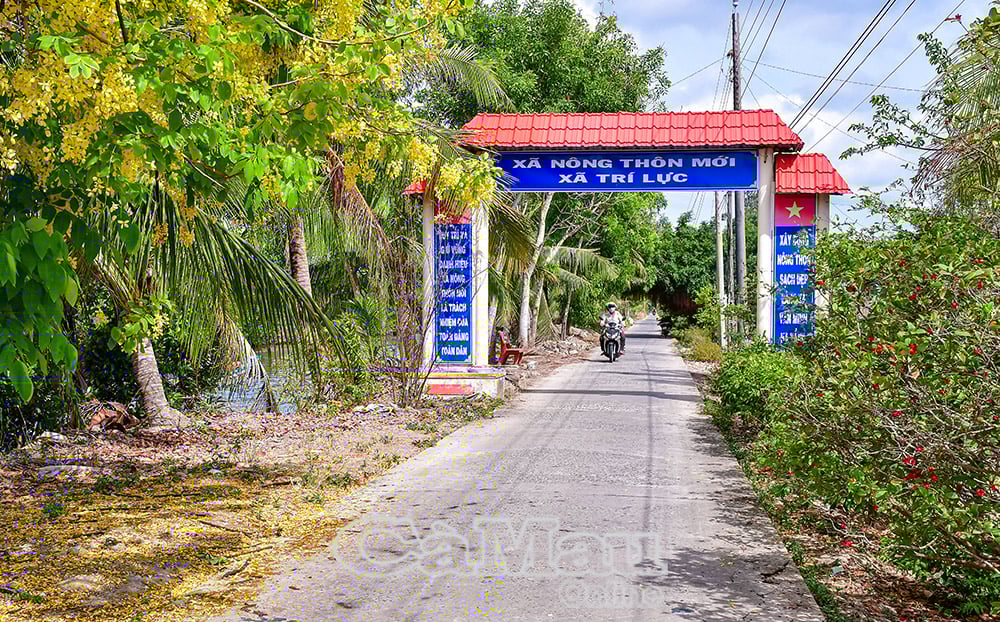
Now, after more than 15 years of transformation, returning to Tri Phai, the land once known for its sweet sugarcane, one can easily see the changes. Houses with brick walls have sprung up close together. Electricity, roads, schools, and health stations are all readily available and well-maintained. Back then, Hamlet 10 had 400 households, but there were 37 poor households, 35 near-poor households, and half the population was considered disadvantaged. Now, all poor and near-poor households have been eliminated, a clear testament to the correctness of the production transformation.
Today, Tri Phai is no longer a barren sugarcane field, but a place that shines with hope for sustainable ecological agriculture . The people are excited because they dared to change, dared to believe, and dared to move forward. In the journey of rebuilding their homeland, there were times when they had to leave behind the sweet memories of sugarcane to reach a future rich in the salty taste of the sea, the taste of prosperity and sustainability.
Diamond
Source: https://baocamau.vn/vi-ngot-tu-su-doi-thay-a121082.html

![[Photo] Admire the coral "masterpiece" amidst the million-year-old heritage of Dak Lak province.](https://vphoto.vietnam.vn/thumb/1200x675/vietnam/resource/IMAGE/2026/05/31/1780221235105_anh-man-hinh-2026-05-31-luc-16-53-27.png)

![[Photo] Solemn bathing ceremony and Buddha procession in Hue](https://vphoto.vietnam.vn/thumb/1200x675/vietnam/resource/IMAGE/2026/05/31/1780228263543_1-jpg.webp)
![[Image] Hanoi Police officially crowned champions of V-League 2025/2026](https://vphoto.vietnam.vn/thumb/1200x675/vietnam/resource/IMAGE/2026/05/31/1780244769054_ndo_br_039d561b692be875b13a-jpg.webp)
![[Photo] The General Secretary, President and his wife begin their state visit to the Philippines.](https://vphoto.vietnam.vn/thumb/1200x675/vietnam/resource/IMAGE/2026/05/31/1780230559452_anh-man-hinh-2026-05-31-luc-19-28-11.png)











![[Video] Sunset at Lap An Lagoon – Where the sun sets over the fishing nets](https://vphoto.vietnam.vn/thumb/340x192/vietnam/resource/IMAGE/2026/05/31/1780192137701_beach-landscape-sea-water-nature-grass-745871-pxhere-com.jpeg)





























































Comment (0)