

 |
| Ms. Ramla Khalidi, Head of UNDP in Vietnam. |
Digital transformation has consistently been identified as a central focus of UNDP's global work. How do you see the digital transformation process unfolding in Vietnam?
First, it's worth noting that Vietnam has recognized the catalytic role of digitalization early on, setting ambitious national goals for a thriving digital nation by 2030. Achieving these goals requires fundamental and comprehensive reforms in government operations, business activities, and how people live and work.
The Prime Minister's approval of the "National Digital Transformation Program to 2025, with a vision to 2030" in 2020 marked a significant milestone in Vietnam's digital development journey. The program places people at the center, considering digital transformation as a key path to achieving the Sustainable Development Goals (SDGs).
Today, approximately three-quarters of Vietnamese people use the internet, making Vietnam one of the most connected countries in the world .
However, a significant gap remains in the digital literacy of Vietnamese users. This gap is particularly acute when it comes to e-commerce and digital services, where people, especially in rural areas, still prefer using cash over digital wallets or bank accounts and online financial services.
The UNDP's annual Provincial Public Administration and Governance Performance Index (PAPI) survey in Vietnam in 2022 showed that despite a high internet usage rate, less than 5% of respondents nationwide had accessed e-government services through the National E-Service Portal.
The effective development of online services must go hand in hand with raising awareness and developing digital literacy, supporting people in transitioning from cash and paper-based processes to accessing digital financial and governance services, cashless payments, and other digital services confidently and securely, while maintaining options for those who do not yet have access to digital services.
How do you assess Vietnam's goal of becoming the leading digital economy in the ASEAN region by 2030?
The National Digital Transformation Program reflects Vietnam's aspiration to become a leading digital nation and digital economy in the ASEAN region by 2030, while also promoting comprehensive testing of new technologies in the digital economy.
With this national program, Vietnam is well-positioned to capitalize on its potential. The total number of IT professionals in Vietnam is approximately 1.15 million, with 160 universities nationwide offering technical training programs.
By May 2022, thanks to the guidance of the national program, all 63 provinces and cities had established Steering Committees for Digital Transformation, 55 out of 63 localities had issued resolutions on digital transformation, and 59 localities had issued programs/projects and plans for digital transformation over a five-year period, demonstrating concrete political determination to achieve the goals set by the Prime Minister.
International cooperation is considered one of the solutions to help Vietnam adapt quickly to innovation. Could you share some typical experiences from around the world that could be applied in Vietnam?
Electronic procurement systems provide an online platform for public procurement processes, making them more transparent and accountable, and helping to reduce the risk of corruption. Countries such as Ukraine, Kenya, and Brazil have implemented electronic procurement systems with support from international organizations such as the World Bank and the United Nations.
In Vietnam, UNDP is supporting the National Centralized Procurement Centre in digitizing its processes to improve transparency and efficiency, while reducing the risk of corruption.
Other examples include UNDP's collaboration with the Estonian government to develop e-government platforms to ensure seamless interaction between the government and citizens.
In Türkiye, UNDP supports digital transformation for small and medium-sized enterprises (SMEs) through training and consulting to develop integrated models to improve productivity and competitiveness. Vietnam could adopt similar strategies to support SMEs in competing in the global market in the context of the Fourth Industrial Revolution.
In recent years, many countries have developed telehealth services that utilize online connections between different healthcare facilities, doctors, and patients to improve people's access to quality healthcare services.
These services play a crucial role during disease outbreaks, helping to reduce the risk of transmission, effectively serving remote communities, maintaining access to healthcare services during natural disasters and extreme weather, connecting local doctors with specialists for the diagnosis, treatment, and monitoring of chronic diseases, saving patients time and travel costs, and reducing overcrowding at higher-level healthcare facilities.
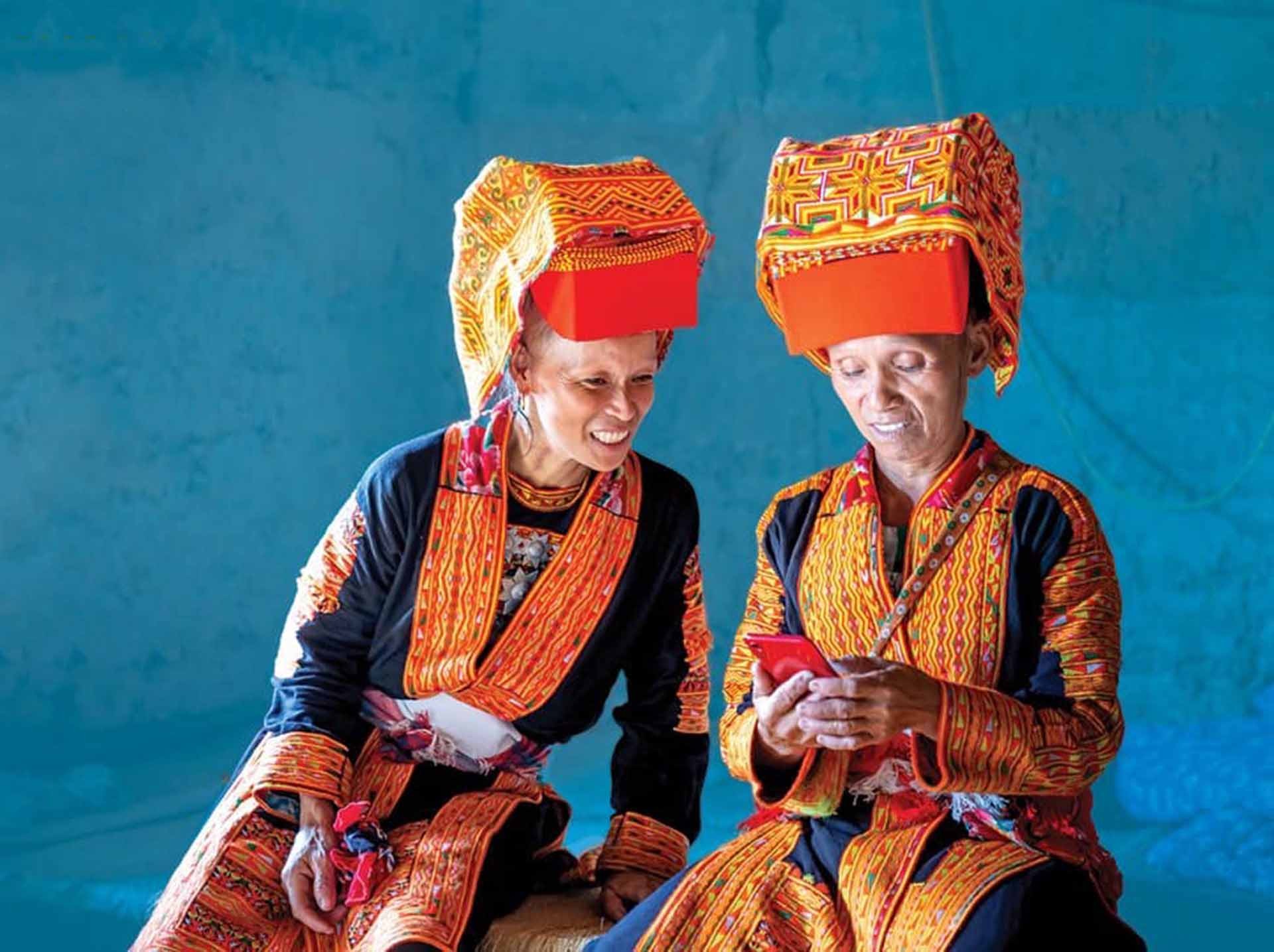 |
| Today, about three-quarters of Vietnamese people use the Internet. |
In Vietnam, UNDP has collaborated closely with the Ministry of Health to develop and pilot a grassroots telehealth system called "Doctors for Every Home." Initially, this system was created to respond to the Covid-19 pandemic, connecting commune health stations with provincial and district health facilities to provide consultation, monitoring, and expert medical advice. Subsequently, the system was deployed in eight provinces and cities across Vietnam, focusing on remote, mountainous, and climate-sensitive areas.
By the end of 2023, approximately 3,000 healthcare workers had been trained on the system, over 1.3 million community members had established accounts, and more than 70,000 telehealth consultations had been conducted. In the near future, “Doctors for Every Home” will expand to nine more provinces with support from the Korea Foundation for International Health (KOFIH) and the United States Agency for International Development (USAID).
UNDP is ready to share more lessons and models developed through our Global Digital Strategy that Vietnam can adapt to support its national digital transformation.
Besides digital transformation, green transformation also brings opportunities and challenges in the development of a circular economy. In your opinion, what are the prospects of this process in Vietnam?
Promoting the transition to a circular economy is a powerful vehicle for Vietnam to accelerate progress and achieve the SDGs by the end of this decade. This requires a leap in investment and effort to activate three supporting elements that we have identified as strategic due to their potential for generating positive follow-on impacts, including “digital technology and innovation”.
Despite ranking 86th globally in e-government in 2022, Vietnam faces challenges such as limited research and development funding (0.5% of GDP), a coordination gap in digital transformation, and inadequate digital infrastructure.
Increased investment in digital technologies for the circular economy can lead to advancements in materials science and design, reduce the cost of raw materials/volatile materials, create access to new markets, and generate new revenue streams, especially in the context of the latest free trade agreements.
Digital technology can bring even more opportunities for circular businesses to thrive, such as sharing and reuse systems, product-as-a-service models, sourcing recycled content (e.g., in textiles), enhancing product circularity, utilizing assets through valuation, forecasting demand, and developing intelligent value chain management. Tools like AI, big data, and automation will optimize resource utilization, improve transparency, and drive innovation.
Source

































































































Comment (0)