From job creation and production and business development to improving living environments, policy credit is asserting its pivotal role in social security, contributing to sustainable poverty reduction and in-depth rural development.

The Quoc Oai branch of the Social Policy Bank is disbursing loans to eligible borrowers. Photo: Duy Son
Policy capital flows to the right recipients.
In the socio -economic development landscape of rural areas, policy credit holds a unique position: it does not pursue profit, nor expand at all costs, but prioritizes stabilizing livelihoods, ensuring social security, and promoting sustainable development. In the communes of Quoc Oai, Hung Dao, Kieu Phu, and Phu Cat, this role is clearly demonstrated through the activities of the Quoc Oai Branch of the Social Policy Bank in 2025.
According to Quang Manh Ha, Director of the Quoc Oai Branch of the Vietnam Bank for Social Policies, following the guidance of the Hanoi City Branch of the Vietnam Bank for Social Policies, the branch has proactively managed credit in a flexible manner, suitable to the characteristics of each commune and each target group. By December 2025, the total policy credit capital reached over 710 billion VND, an increase of nearly 64 billion VND compared to the end of 2024, corresponding to a growth rate of 9.84%. Notably, entrusted capital from the local budget reached nearly 445 billion VND, an increase of 66.7 billion VND, demonstrating the responsible involvement of Party committees and authorities at all levels in prioritizing resources for poverty reduction and ensuring social security. These figures clearly reflect the local government's political determination to consider policy credit as an important tool for achieving inclusive development goals.
A highlight of policy credit activities in Quoc Oai district in 2025 is the focus on programs that directly impact people's livelihoods and quality of life. In particular, loans for job creation increased by over 46 billion VND, becoming a major pillar in the loan growth structure. Prioritizing capital for this program demonstrates a clear direction: poverty reduction must be linked to creating stable jobs, helping people to improve their lives through their own production and business capabilities.
In addition, the rural water supply and sanitation program received an increase of 15.7 billion VND, supporting more than 1,053 households in renovating or building new water and sanitation facilities. This demonstrates the comprehensive approach of policy credit, which not only addresses income issues but also aims to improve the quality of life, protect public health, and meet the criteria of advanced new rural development.
Notably, the Quoc Oai branch of the Vietnam Social Policy Bank has proactively implemented a loan policy for STEM students in accordance with Decision No. 29/2025/QD-TTg of the Prime Minister . Although not yet large in scale, this is a strategically significant direction, demonstrating a mindset of investing in high-quality human resources now, linking social welfare with long-term development.
Practical implementation in Quoc Oai, Hung Dao, Phu Cat, and Kieu Phu communes shows that policy credit capital has truly entered people's lives, creating conditions for people to confidently invest, expand production and business, develop socio-economic conditions, stabilize their lives, and rise out of poverty.
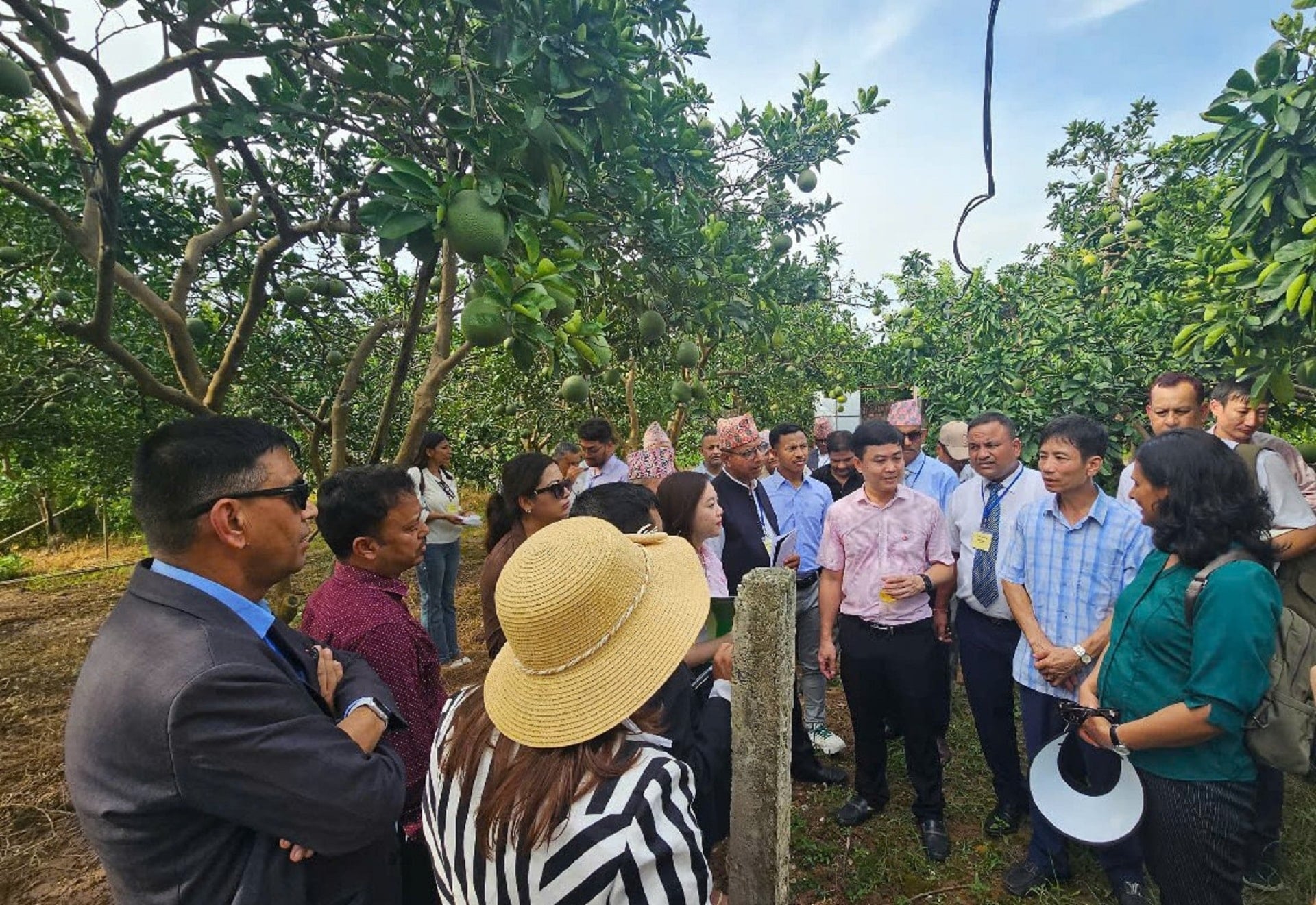
Quang Manh Ha, Director of the Quoc Oai branch of the Social Policy Bank, introduces the Dien pomelo model, which has helped farmers achieve sustainable poverty alleviation thanks to policy loans. Photo: Duy Son
In Hung Dao commune, many households use loans to create jobs, maintaining and expanding small-scale production facilities, and providing local employment. Mr. Nguyen Manh Hung from Yen Noi village shared: "My family used to be a struggling household with no capital to expand production. Thanks to the Farmers' Association's guarantee, we borrowed 50 million VND from the Social Policy Bank to invest in a bio-secure chicken farming model. After one year, our income tripled." According to Mr. Hung, the biggest advantage of policy loans is the suitable interest rate and repayment period that closely matches the production cycle, giving borrowers peace of mind for long-term investment.
In Phu Cat commune, households approved for loans under the rural clean water and sanitation program reported that the funds helped them build new clean water facilities and standard toilets, significantly improving living conditions and the health of their family members. Meanwhile, in Kieu Phu commune, owners of integrated livestock farms assessed that the loans helped create jobs, enabling households to proactively plan production, reduce dependence on commercial credit, gradually stabilize income, and create seasonal jobs for local workers.
These examples demonstrate that, when people have access to preferential capital at the right time and for the right needs, they are able to organize production themselves, increase their income, and improve their lives sustainably.
Maintain credit quality.
Alongside expanding lending scale, the Quoc Oai branch of the Social Policy Bank has placed special emphasis on improving credit quality. By December 2025, the total outstanding loan balance reached over 710 billion VND with 10,717 customers currently borrowing capital; the overdue and non-performing loan ratio was only 0.0077%, a very low level.
This result was achieved thanks to close coordination between banks, local authorities, and entrusted socio-political organizations. In particular, in the four communes of Quoc Oai district, there are currently 267 savings and loan groups, 97% of which are rated as good, playing a crucial role in loan approval, monitoring capital utilization, and debt collection.
Ms. Nguyen Thi Sac, Vice Chairwoman of the Fatherland Front Committee and Chairwoman of the Farmers' Association of Hung Dao commune, affirmed that policy credit has become a "support system" for farmer members, helping households confidently invest in production, reduce risks, and improve economic efficiency. When associations truly get involved, policy credit is no longer solely the responsibility of banks, but becomes a shared task of the entire political system at the grassroots level.
Evaluating the management work, Mr. Quang Manh Ha, Director of the Quoc Oai Branch of the Social Policy Bank, emphasized that the implementation of policy credit does not simply pursue growth, but focuses on the efficient use of capital, the ability to create jobs, and long-term social impact. This is the overarching principle that has helped the Branch expand its loan portfolio while maintaining credit discipline. According to Mr. Quang Manh Ha, the greatest effectiveness of policy credit lies not only in the disbursement figures, but in the change in people's awareness and business practices, from a mindset of waiting for support to proactive investment, and from fragmented production to planned and clearly oriented production.
Entering 2026, the Quoc Oai branch of the Social Policy Bank is determined to continue innovating its methods of implementing policy credit, aiming for broader and more inclusive coverage, while also focusing on depth, ensuring that every preferential loan yields tangible results and is linked to the sustainable development goals of the locality.
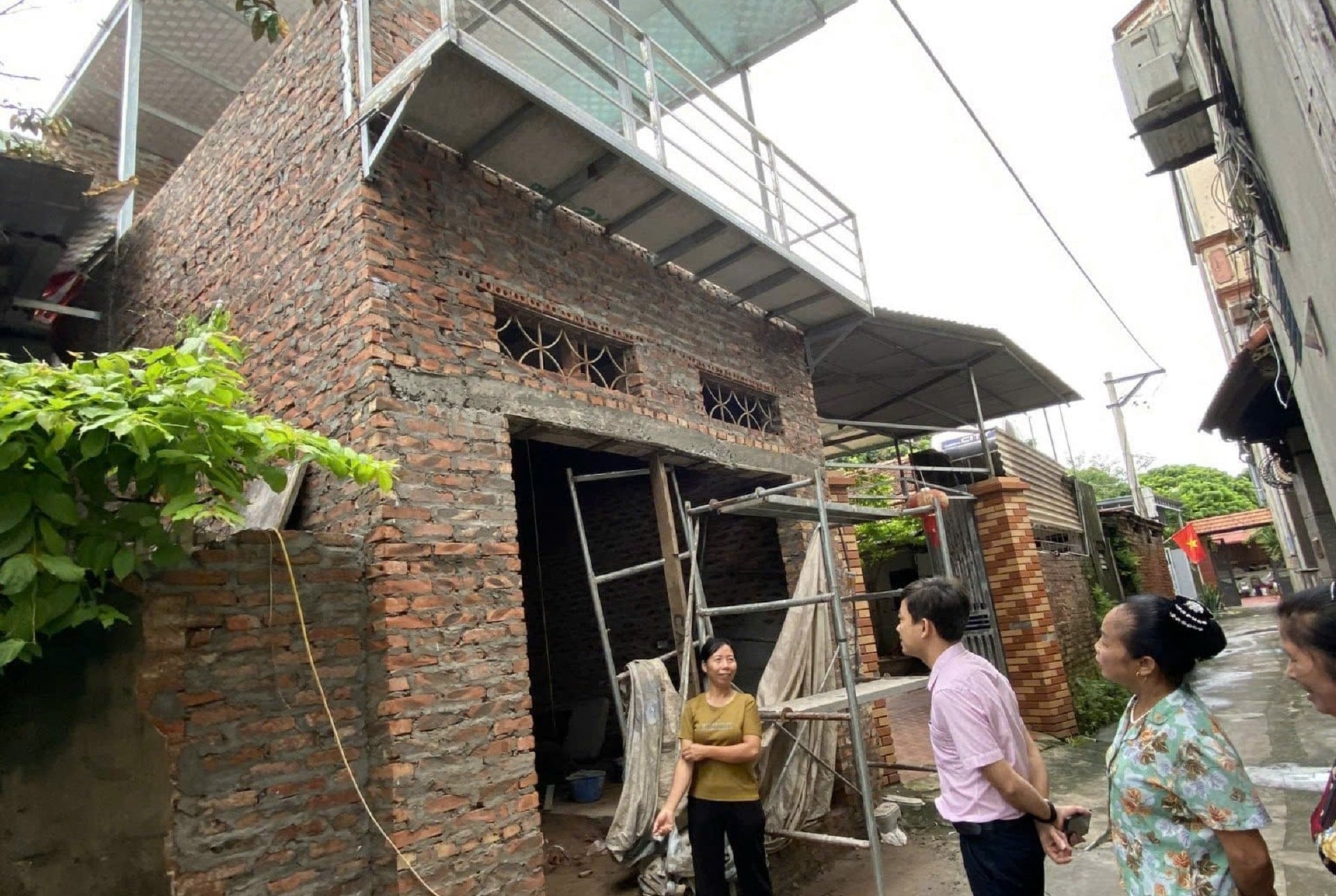
Thanks to loans for production development, a family in Quoc Oai district has been able to build a spacious house. Photo: Duy Son
The focus is on closely reviewing the loan needs in each commune and for each target group, prioritizing near-poor households, newly-escaped-poverty households, self-employed workers, young entrepreneurs, former prisoners, and students from disadvantaged backgrounds, especially students in science, technology, engineering, and mathematics. Along with expanding lending scale, the branch will strengthen credit quality, intensify inspection and supervision of capital utilization, and hold credit officers accountable for each locality and each savings and loan group. Simultaneously, the role of entrusted socio-political organizations in managing capital and supporting borrowers will continue to be promoted.
Another important aspect is to promote digital transformation in policy credit operations, modernize business processes, and improve the quality of transactions at commune-level transaction points, while still maintaining the characteristic of being "close to the people" - an element that defines the identity of policy banks.
It can be affirmed that the performance results of the Quoc Oai branch of the Social Policy Bank in 2025 and the orientation for 2026 show that policy credit is not only a financial tool, but also a social policy with profound humanitarian significance. When implemented systematically, closely at the grassroots level, and with the support of the entire political system, preferential capital has been and is contributing to creating a solid foundation for sustainable poverty reduction, stabilizing people's lives, and developing the local economy and society in a harmonious and inclusive manner.
Source: https://hanoimoi.vn/tin-dung-chinh-sach-don-bay-giam-ngheo-ben-vung-727616.html
































































































Comment (0)