"Just keep going and writing" amidst the smoke and flames of war.
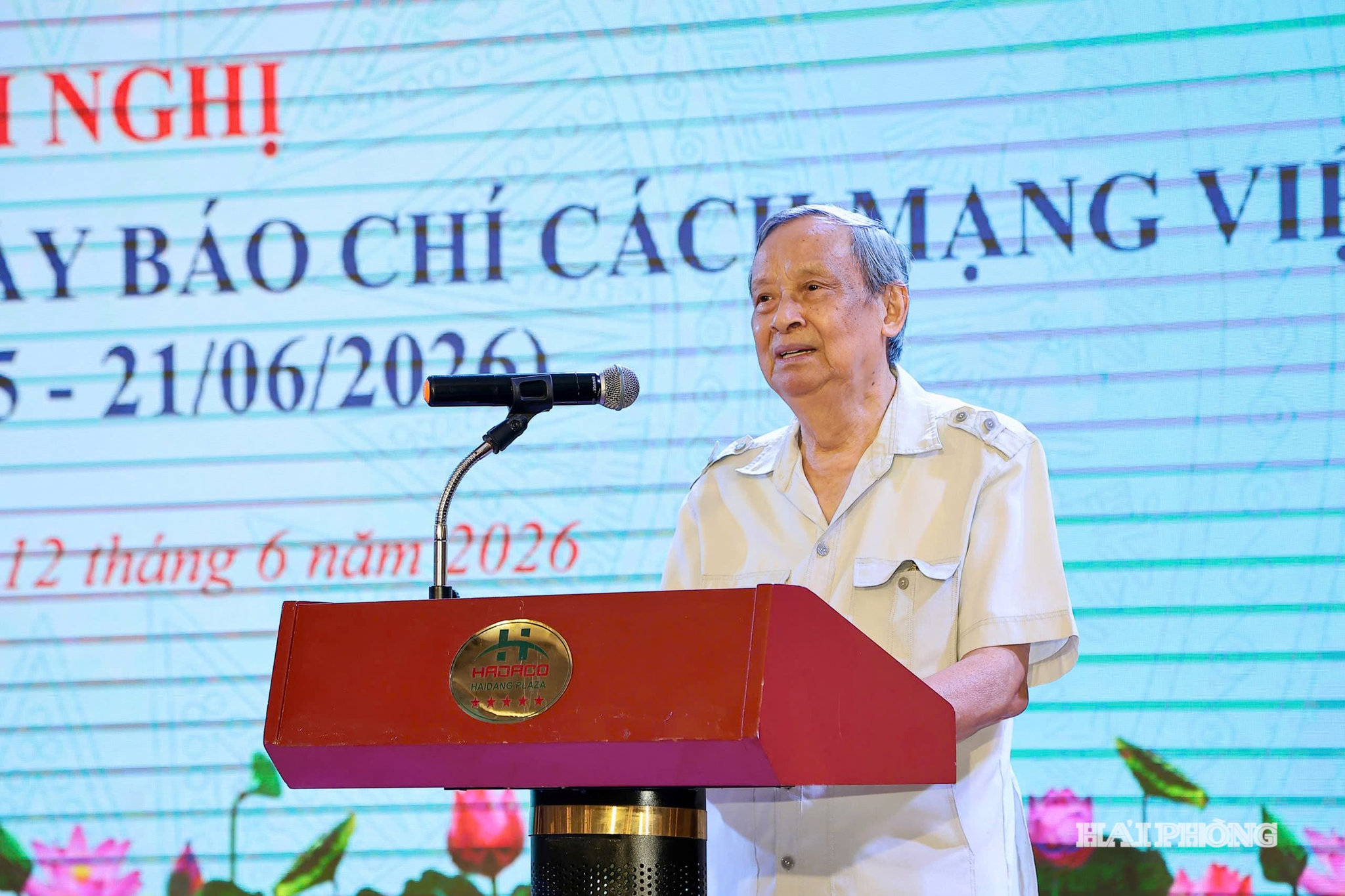
On the occasion of the 101st anniversary of Vietnam's Revolutionary Press Day, we were honored to have a conversation with journalist Kim Toan, former Editor-in-Chief of Hai Phong Newspaper.
Despite being 86 years old, he still maintains a calm, dignified demeanor, the character of a journalist who has experienced many ups and downs of history. His sincere and simple sharing helped us understand more about journalism, the responsibility, and the value of those who wield the pen.
Journalist Kim Toan, writing under the pen name Cao Kim, is one of the exemplary figures of the generation of journalist-revolutionaries. Born in 1940 in Hai Phong, he entered journalism at a young age, having worked at Kien An Newspaper and Hai Phong Newspaper.
In 1965, when the war entered its most intense phase, he volunteered to go south, crossing the Truong Son Mountains, and became a reporter for the Liberation Newspaper - the official newspaper of the National Liberation Front of South Vietnam.
His years as a war correspondent left a special mark on his life. Cao Kim not only wrote about the war but also lived directly amidst it. He not only recorded history but was present during the most critical moments. He served in the Southern battlefield, in the Saigon-Gia Dinh area, reporting during the fierce days of the Tet Offensive and Uprising of 1968. Each page he wrote at that time was the result of perilous journeys, of his dedication to authentically preserving the images of soldiers, civilians, and the nation's struggle.
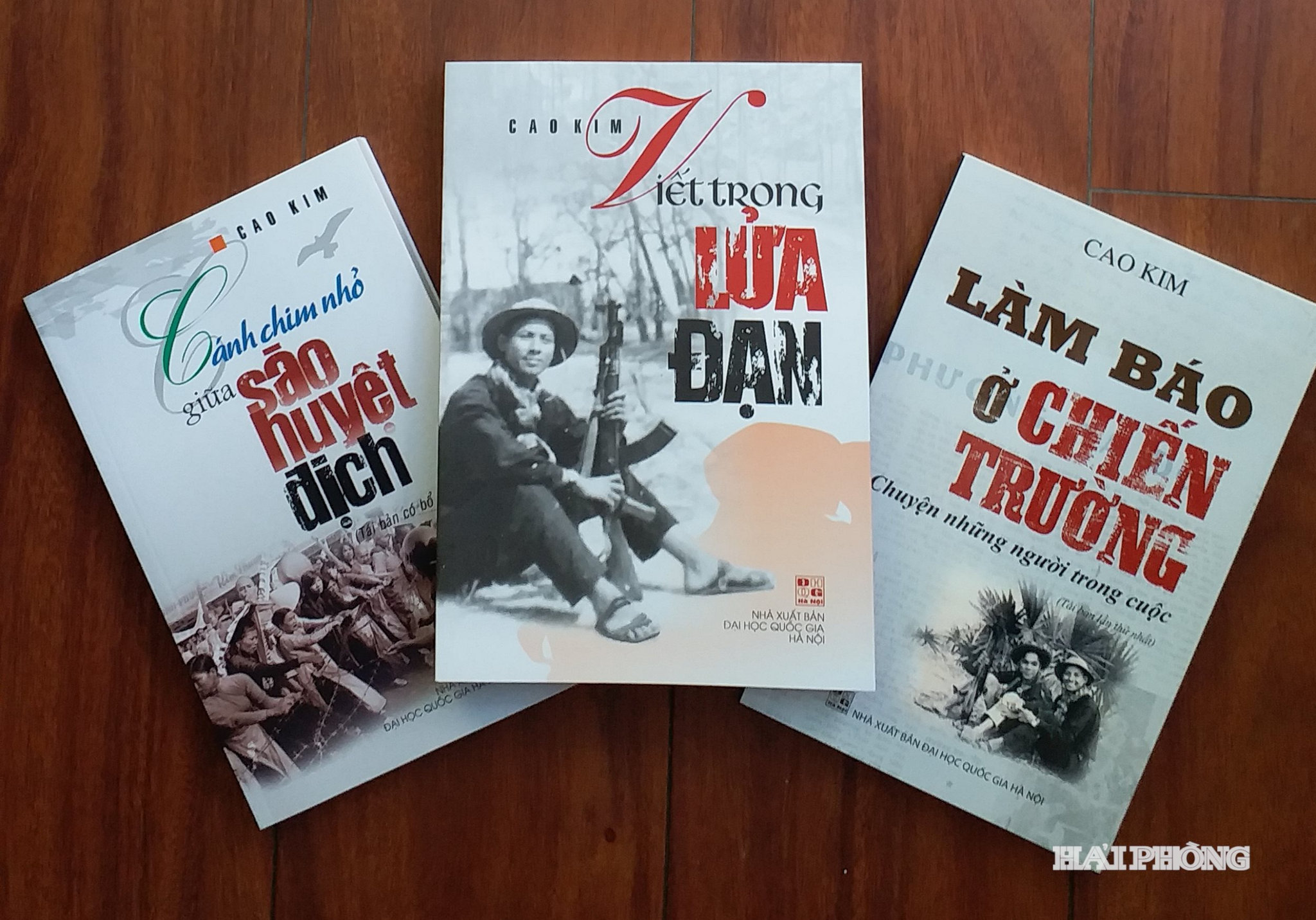


A particularly poignant story associated with him is that during the war, his comrades received news of his death and held a memorial service. But after days of hardship, he returned, continued writing, and fulfilled his duties. This story partly illustrates the spirit of a generation of revolutionary journalists: when the country needs them, journalists are ready to be present in the most difficult places.
After the reunification of the country, journalist Kim Toan returned to Hai Phong and continued to contribute to the city's journalism in various capacities, including Editor-in-Chief of Hai Phong Newspaper, Chairman of the Hai Phong Journalists Association, and Standing Committee Member of the Vietnam Journalists Association . In peacetime, he maintained the same philosophy of a journalist-soldier: every journalistic work must be linked to social responsibility and the lives of the people.
What is admirable about journalist Kim Toan is not only his years on the battlefield, but also the way he passed on his experience to subsequent generations of journalists. He always emphasized that journalists need courage, honesty, a love for their profession, and a close connection to life. The documents and memories he preserved and shared are also his way of passing on valuable professional lessons to today's young reporters.
For generations of journalists, Kim Toan - Cao Kim was not only a writer who had weathered the storms of war, but also a symbol of a professional style: living among the people, writing with responsibility, and dedicating his entire life to the cause. His story reminds journalists today that behind every written page lies not only skill, but also character, belief, and dedication to society.
Maintaining the trust of our readers.
.jpg)
At 86 years old, journalist Nguyen The Truong still maintains the habit of reading newspapers and taking notes every day. He says that journalists should be like a battery; if they stop writing, the flame of their profession will gradually die out. It is this perseverance that makes him feel that life still has much meaning.
Journalist Nguyen The Truong is one of the few "living witnesses" of the generation who worked in journalism during the war to recount the extraordinary years of revolutionary journalism. Originally a primary school teacher, he transferred to work at Hai Duong Newspaper in 1962.
The early days of journalism were incredibly difficult. Without a bicycle, he walked dozens of kilometers all the way to Kinh Mon and Chi Linh, carrying only a few potatoes and cassava roots to eat along the way. "I always thought, 'Just keep going and writing.' No matter how difficult it was, I would overcome it to ensure that the news flow in the newspaper was maintained," he recalled.
The memories of the war years remain vivid in the mind of this now-advanced reporter. In 1965, when the US imperialists expanded their bombing campaign to the North, the Hai Duong Newspaper's editorial office had to evacuate several times. During the day, he and his colleagues stayed close to the grassroots, going to war zones to report on the fighting spirit and production activities of the soldiers and people. At night, under the dim light of an oil lamp, carefully concealed to avoid detection by enemy aircraft, he diligently wrote news and articles.


Once, he was assigned to cover a story in Nam Sach, Kim Thanh, right when American bombs were heavily bombing along National Highway 5. He had just learned to ride his newly acquired MZ motorbike when he had to rush into the war zone. The trip was fraught with danger, but he ultimately returned safely and completed his news report for the following day's issue.
The experiences of journalist Nguyen The Truong, as well as the years spent writing amidst the battlefield by journalists Kim Toan and Cao Kim, are testament to a generation of journalists who lived, wrote, and contributed in extraordinary circumstances. Their commonality lies not only in their courage in the face of hardship, but also in their sense of responsibility to their profession, their readers, and the values that journalism brings. Even as time passes, the lessons about love for the profession, dedication, and the fortitude of journalists remain as relevant as ever.
The days of newspapers written by oil lamps are gone, but the spirit of "keep going and writing," the perseverance in the profession, and the responsibility to readers of revolutionary journalists remain invaluable. This is not only a memory of a generation of wartime journalists, but also a valuable lesson for journalists today. No matter how much technology changes, the core of journalism remains courage, dedication, and the desire to bring the truth to the public.
Source: https://baohaiphong.vn/viet-trong-lua-dan-song-tron-voi-nghe-545938.html
![[Image] Ho Chi Minh City: Ma Lang area, Chicken-Rice Market about to change its appearance](https://vphoto.vietnam.vn/thumb/1200x675/vietnam/resource/IMAGE/2026/06/25/1782377698627_ndo_br_m1-jpg.webp)

![[Photo] General Secretary and President To Lam receives Palestinian Ambassador Saadi Salama](https://vphoto.vietnam.vn/thumb/1200x675/vietnam/resource/IMAGE/2026/06/25/1782365384740_a1-bnd-9423-8322-jpg.webp)
![[Image] Schools organize meetings and introduce teaching models to students admitted to grade 10.](https://vphoto.vietnam.vn/thumb/1200x675/vietnam/resource/IMAGE/2026/06/25/1782368077271_ndo_br_z7970052192242-1ec8daeb77a6eed1a4e9f58c564ddd3e-jpg.webp)