

The world is currently entering a period of profound upheaval with structural changes. The Covid-19 pandemic, prolonged geopolitical conflicts, strategic competition between major powers, protectionist trends, tariff measures, and the fragmentation of global supply chains have created strong headwinds for most economies. In this unstable global landscape, many countries are struggling to adapt, while numerous development models are revealing their limitations.
In this context, Vietnam has emerged as a shining example of resilience, strong governance, and the ability to transform challenges into opportunities. Not only has it maintained political and social stability and achieved relatively solid economic recovery and growth, but Vietnam has also gradually enhanced its international standing, gaining recognition and high praise from the region and the international community. These achievements are even more significant as the 14th National Congress of the Party is underway – a milestone marking the beginning of a new phase of development and the final, decisive stage in the journey towards the centenary goal.
Outstanding achievements affirm Vietnam's position.
After 40 years of reform, Vietnam has made remarkable progress in terms of scale, quality, and depth of international integration. From a small, closed economy with a GDP of less than $20 billion and per capita income below $100 in the late 1980s, Vietnam has now risen to become one of the 32 largest economies in the world. GDP is projected to exceed $510 billion in 2025; trade turnover is expected to reach approximately $920 billion; and per capita income will exceed $5,000 per year. A trade openness of 160-180% of GDP demonstrates that Vietnam has become one of the most deeply integrated economies globally.
Economic achievements are closely linked to success in international integration. Vietnam currently has economic, trade, and investment relations with 224 markets across all continents; participates in more than 500 bilateral and multilateral agreements in various fields; and has signed and implemented 17 free trade agreements (FTAs), connecting with more than 60 leading economic partners worldwide. The new generation of FTAs not only expands export markets and attracts investment, but also creates momentum for institutional reform, enhances competitiveness, and allows for deeper participation in global value chains.
In terms of foreign relations and politics, Vietnam has completely broken free from its previous isolation, encirclement, and embargo, becoming an active and responsible member of the international community. To date, Vietnam has diplomatic relations with 194 countries and territories; establishing a network of over 40 partners ranging from comprehensive partners to strategic and comprehensive strategic partners, including all five permanent members of the United Nations Security Council, seven G7 countries, and 17 out of 20 G20 economies. This is a rare structure of foreign relations, creating a deep and intertwined network of interests, contributing to maintaining a peaceful and stable environment for development.
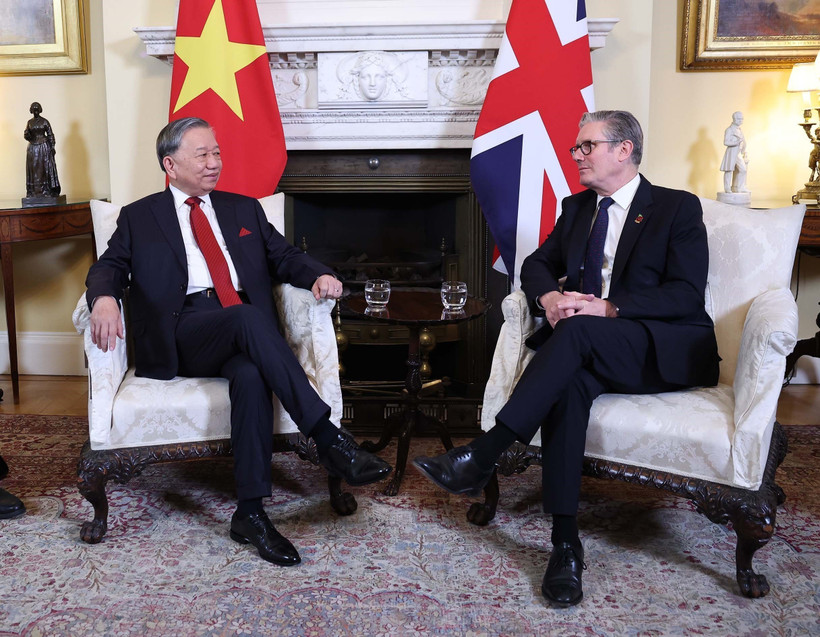
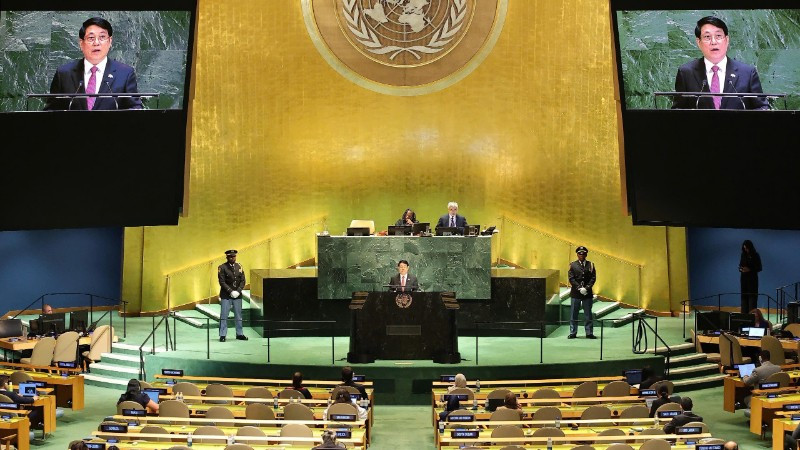
Vietnam has also affirmed its role and prestige in important multilateral mechanisms. Within ASEAN, Vietnam is one of the active members, playing a bridging role and promoting internal solidarity. At the United Nations, Vietnam has twice served as a non-permanent member of the Security Council; held the position of Vice President of the 77th session of the UN General Assembly; is a member of the Human Rights Council for the 2023-2025 term; and participates in many specialized mechanisms such as the International Law Commission and UNESCO committees. In particular, Vietnam's chairmanship and leadership in negotiating and leading the signing of the Hanoi Convention on Cybercrime – the first UN convention in two decades – is considered a significant milestone, demonstrating its ability to create rules of the game and make a substantial contribution to global governance.
In the field of defense and security, Vietnam not only steadfastly protects its independence, sovereignty, and territorial integrity, but also actively contributes to international peace. By mid-2025, Vietnam had sent more than 1,000 military and police officers to participate in United Nations peacekeeping forces; and deployed international search and rescue forces in Turkey and Myanmar. The demarcation and placement of land borders with China, Laos, and Cambodia; and the signing of agreements to resolve overlapping maritime areas with neighboring countries have created a solid legal basis for border management, sovereignty protection, and expanded cooperation.
Cultural diplomacy, external information, and work related to Vietnamese people abroad have also achieved many important results. The image of Vietnam and its people as safe, friendly, dynamic, and integrated is increasingly being spread; many cultural heritage sites have been recognized by UNESCO; the Vietnamese community abroad, with millions of people, has become an important resource for development, with cumulative remittances of nearly 250 billion USD and hundreds of investment projects in the country.
The international community highly appreciates Vietnam's role and stature.
These achievements have not only been recognized domestically but have also been highly appreciated by the international community. Many experts and international organizations believe that Vietnam is emerging as a "key middle power" in the region and is having an increasingly significant influence on the global stage.
Professor James Borton (SAIS Institute for Foreign Policy, Johns Hopkins University, USA) argues that Vietnam has successfully developed a "bamboo diplomacy" strategy – flexible yet firm, balancing between major powers instead of being forced to choose sides.
Meanwhile, Professor Carlyle Thayer (University of New South Wales, Australia) emphasized that Vietnam's international standing has been enhanced by an increase in "national overall strength" and the capacity to effectively utilize economic tools. According to the Lowy Institute's Asia Power Index 2025, Vietnam ranks 12th out of 27 countries in overall national strength and fourth in the capacity of the State to utilize economic tools – behind only China, Singapore, and Japan. This is a remarkable ranking, reflecting Vietnam's increasingly important role in the regional economic and political structure.
Many believe that after the 14th National Congress, Vietnam's core foreign policy will continue to be maintained, as it is the result of a long process of building strategic consensus. However, with a strengthened domestic foundation and a new development vision, Vietnam's foreign policy is expected to become more proactive, more focused, and more clearly demonstrate its leading role in regional and international issues.
Source: https://congluan.vn/vung-vang-viet-nam-10327788.html

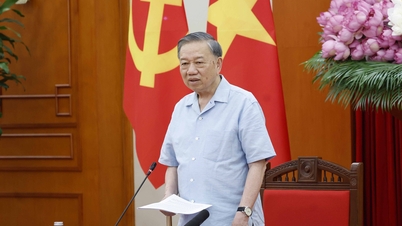
![[Photo] General Secretary and President To Lam presides over a meeting on preparations for the review of one year of operation of the three-tiered government system.](https://vphoto.vietnam.vn/thumb/1200x675/vietnam/resource/IMAGE/2026/06/02/1780391821195_a1-bnd-4595-9717-jpg.webp)
















































Comment (0)