


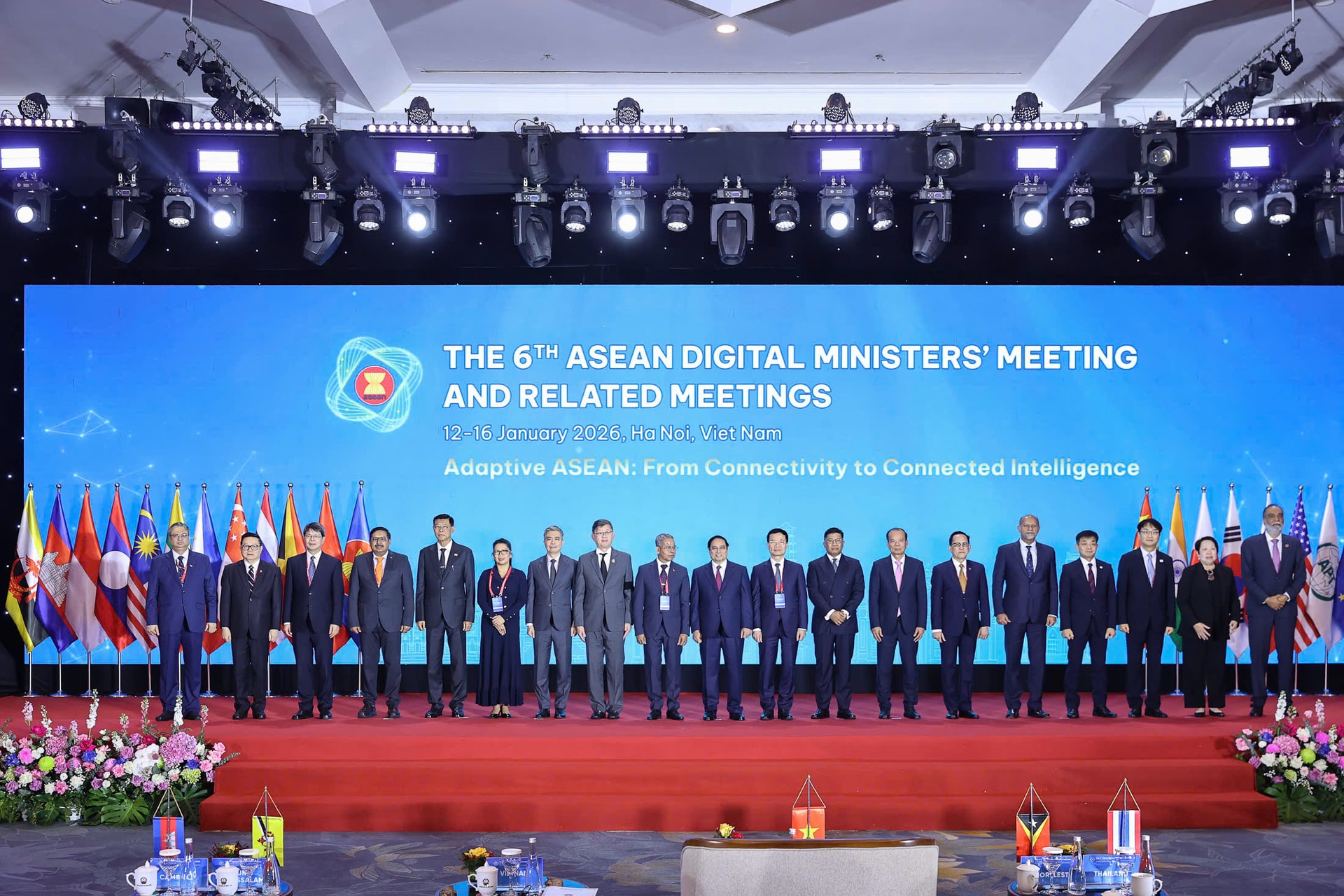
With nearly 700 million people, ASEAN attracts strong participation from major partners such as the United States, the EU, China, Japan, South Korea, and international organizations such as the ITU and the World Bank.
Looking back to 2001 (its predecessor being the TELMIN Conference), this cooperation mechanism has shifted its focus from telecommunications to promoting comprehensive digital transformation since 2019.
At this meeting, the Ministers focused on reviewing the ASEAN Digital Master Plan 2025, while also discussing emerging challenges in preparation for developing a new master plan for the future.
In line with its overall direction, ASEAN aims to build a connected, innovative, secure, reliable, and inclusive digital ASEAN Community, thereby contributing to the realization of the ASEAN Community Vision 2045.
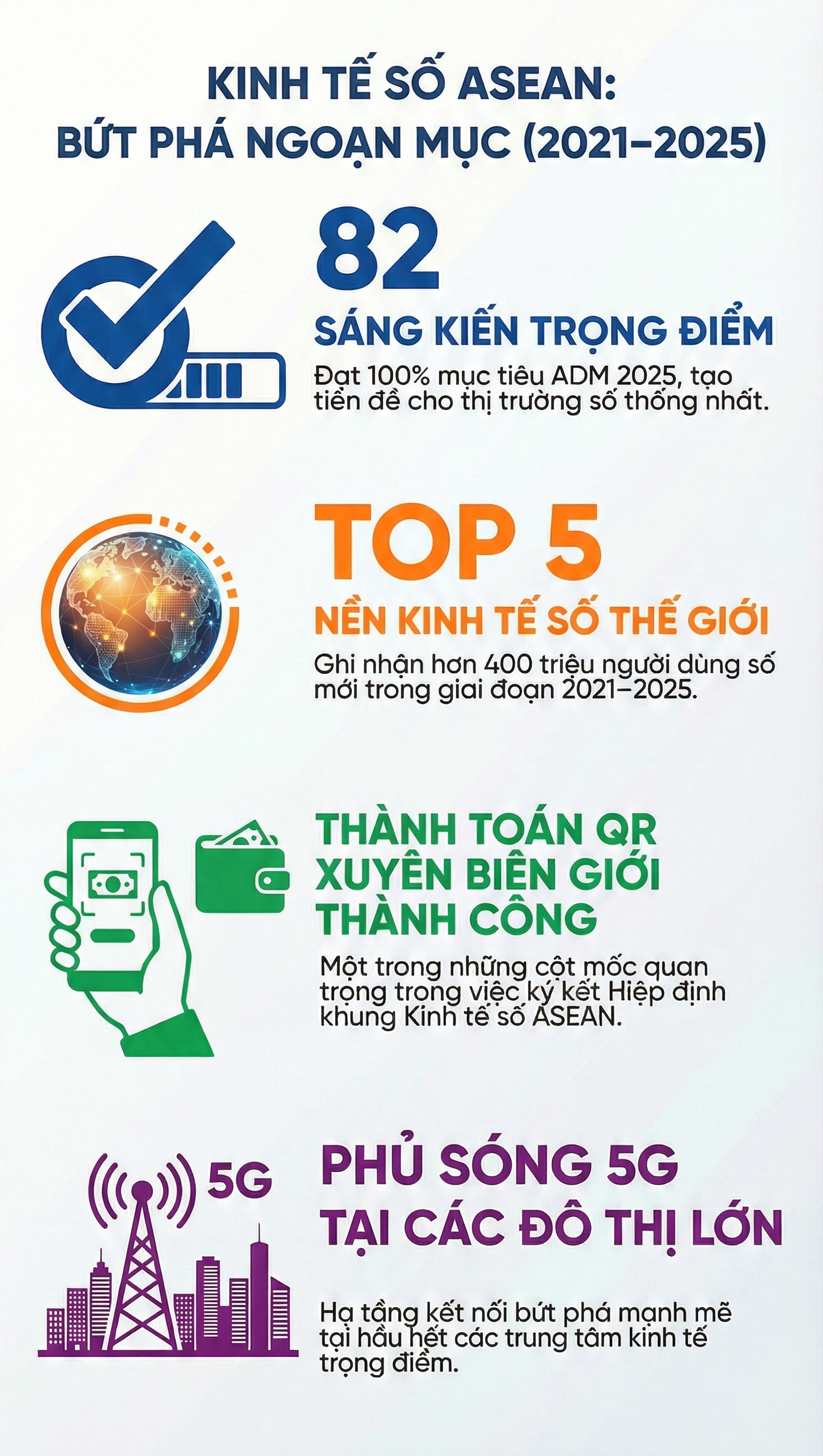
Notably, the 2021-2025 period saw the completion of 82 initiatives, laying an important foundation for digital cooperation in the region. Many concrete results have been implemented, such as cross-border QR payments, 5G coverage in most major cities, and the signing of the ASEAN Digital Economy Framework Agreement. These are not just summary figures, but reflect progress in the operational capacity and digital connectivity among member states.
Building on that foundation, ASEAN is setting a higher vision for the next phase: the digital economy aims to contribute 30% of the bloc's GDP, creating an additional US$1 trillion in new value; the workforce aims for 80% to be highly skilled, thereby increasing productivity by 2.5 times; and online public services aim for 100% AI integration, reducing social operating costs by 40%. In other words, ASEAN Development Goals 2030 is moving digital transformation away from the "technology narrative," placing it back in its rightful place: a tool for restructuring productivity and governance.
Source: https://mst.gov.vn/buc-tranh-so-asean-2021-2025-197260209235908936.htm

![[Photo] Walking amidst the coffee blossoms in the Central Highlands](https://vphoto.vietnam.vn/thumb/1200x675/vietnam/resource/IMAGE/2026/02/22/1771736214034_ndo_bl_img-3460-8365-jpg.webp)





















































































Comment (0)