

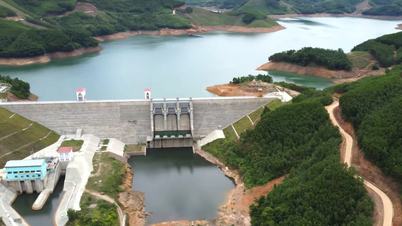
Like other areas facing the influx of tourists since the opening of the expressway, Ham Thuan Bac district is also grappling with the issue of land used for energy projects related to tourism development . This is particularly true in Da Mi, home to the Ham Thuan and Da Mi hydroelectric reservoirs, which are central to rural tourism development in the district. The need for water surface area to develop eco-tourism and rural tourism is urgent here, and anyone familiar with the situation feels that failing to work together to resolve the issue would be a significant waste of resources.
Lesson 1: The Highlands Call
An unexpected wave of visitors.
The landslides in Lam Dong province, specifically in the two tourist centers of Da Lat and Bao Loc, prompted Nhan and her group of friends from Phan Thiet to decide to spend the September 2nd holiday in Da Mi, Ham Thuan Bac district. Their expectations were met with great enthusiasm; everyone enjoyed the experience and realized the huge advantage of enjoying the cool, refreshing air like Da Lat without having to travel far or spend too much money. “We also visited two mysterious lakes, the nine-tiered waterfall, and the fruit orchards. The scenery of mountains, hills, and passes created a beautiful and unique picture, making my friends exclaim that it looked just like something out of a Chinese martial arts movie!” Nhan said excitedly. Nhan explained that the group stayed at a friend's house after searching for accommodation but finding none. Only after traveling along National Highway 55 did they discover one or two places, though not publicly advertised, that were homestays reserved for close friends or families. The cafes and rest stops are scattered along Highway 55, but they are all makeshift. Nevertheless, they still attract many customers.
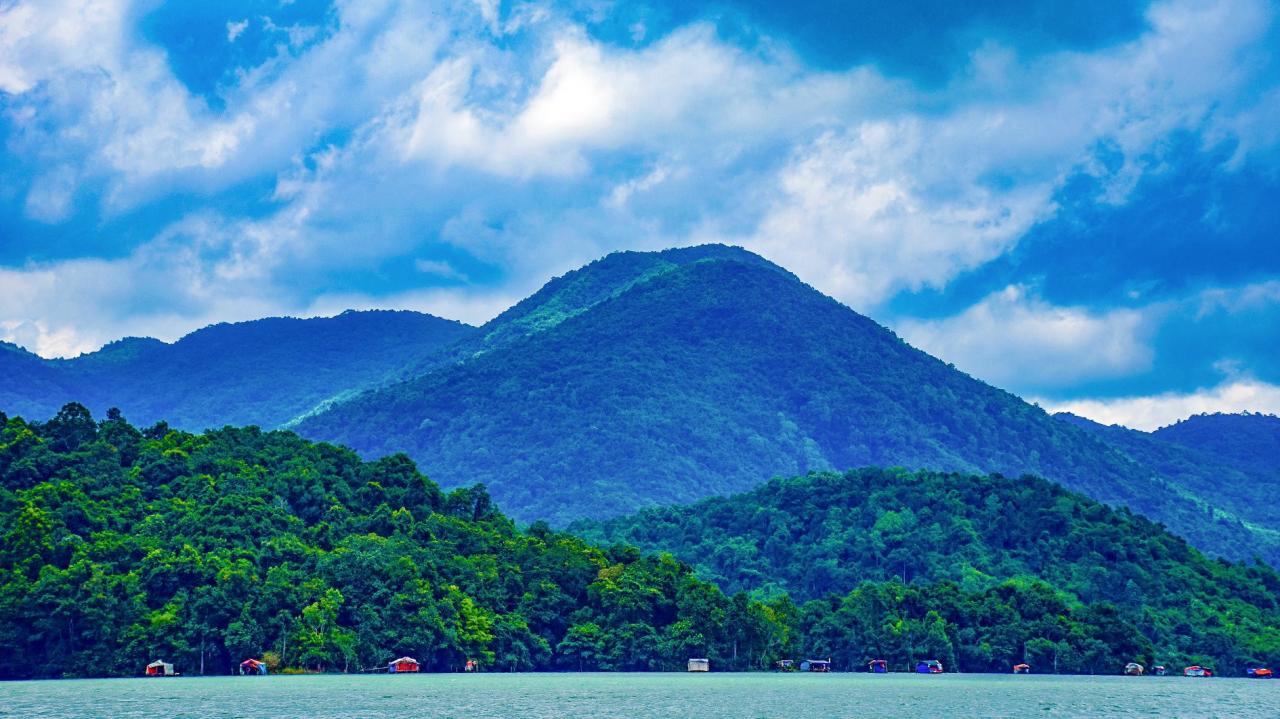
Like Nhan's group, Da Mi was also a popular destination during the recent September 2nd holiday, despite intermittent rain caused by a storm, although the weather was generally cool. On the roads of this mountainous commune, cars and buses from southern provinces and cities like Ho Chi Minh City, Dong Nai , and Binh Duong converged, creating a bustling atmosphere throughout the four-day holiday. It seems tourists enjoyed the cool air and light drizzle in the rolling hills. They also loved cloud watching, as the alternating rain and sunshine created a mesmerizing effect, with clouds constantly appearing and disappearing, captivating visitors with their captivating beauty. Sitting in a spot that offered both views of Ham Thuan Lake or Da Mi Lake and this breathtaking scenery was simply wonderful… That's why the September 2nd holiday was still crowded, contrary to many predictions that it would be less popular than the April 30th and May 1st holidays. It was argued that the initial appeal of the Dau Giay – Phan Thiet expressway had faded, due to the lack of rest and recreation services, makeshift restaurants, and the often rainy weather during the September 2nd holiday, resulting in fewer tourists wanting to travel to the mountains. However, reality shows that thanks to the expressway, waves of tourists flocking to the area via National Highway 55 and Provincial Road 22 discovered a unique, unspoiled "mini Da Lat" called Da Mi, just 70 km from Phan Thiet beach. This led to the creation of tours and itineraries tailored to specific travel needs during this September 2nd holiday.
Unexpected tours and routes
If visitors depart from Phan Thiet City, they can follow National Highway 28, then turn onto Provincial Highway 22 to reach the highland communes of Ham Thuan Bac District such as Dong Tien, Dong Giang, and La Da, before meeting National Highway 55 in Da Mi commune. Visitors from southern provinces can follow National Highway 55 through La Ngau (Tanh Linh) before entering Da Mi commune for tourism, then loop back to Phan Thiet city via Provincial Highway 22 and onto National Highway 28. Regardless of the route, when passing through Dong Giang, visitors can visit and pay respects at the Sa Lon Revolutionary Base as a pilgrimage to their roots. These are two tourist routes, with Da Mi as the central point.
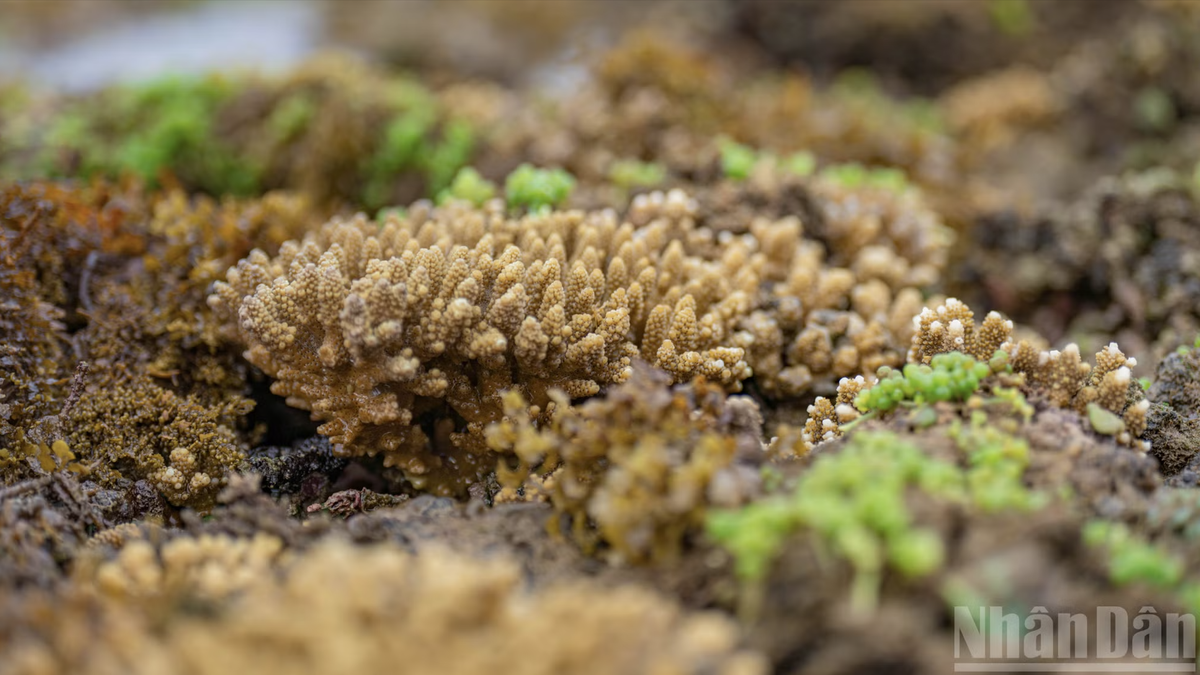
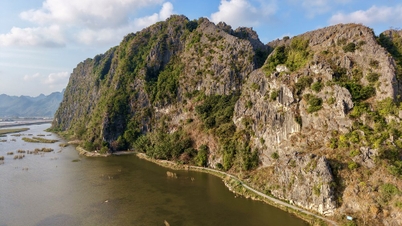
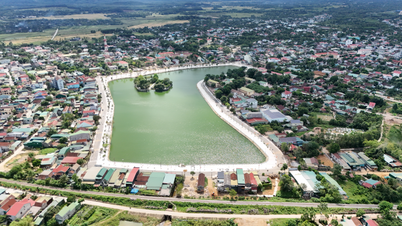
This highland commune boasts many beautiful landscapes, cultural and religious sites, production areas, factories, etc., each with its own unique charm and appeal. Tourists naturally gravitate towards it, following their own paths and exploration needs, forming tours without even realizing it. Particularly noteworthy are the two lakes, Ham Thuan and Da Mi, both hydroelectric reservoirs, yet each distinct from the other. Da Mi Lake is beautifully serene, reflecting its gentle water level fluctuations of only 1-3 meters. On its surface, tens of thousands of solar panels are installed, and there are areas for sturgeon farming. Visitors are always eager to learn about how solar power is generated and fed into the grid; they want to try sturgeon dishes on the spot or take them back to the city to prepare for their families. Ham Thuan Lake, on the other hand, is more majestic, mysterious, and powerful. At times, the water level rises to 30 meters, submerging sandbanks, and when the water recedes, it reveals its hidden secrets, leaving visitors captivated.
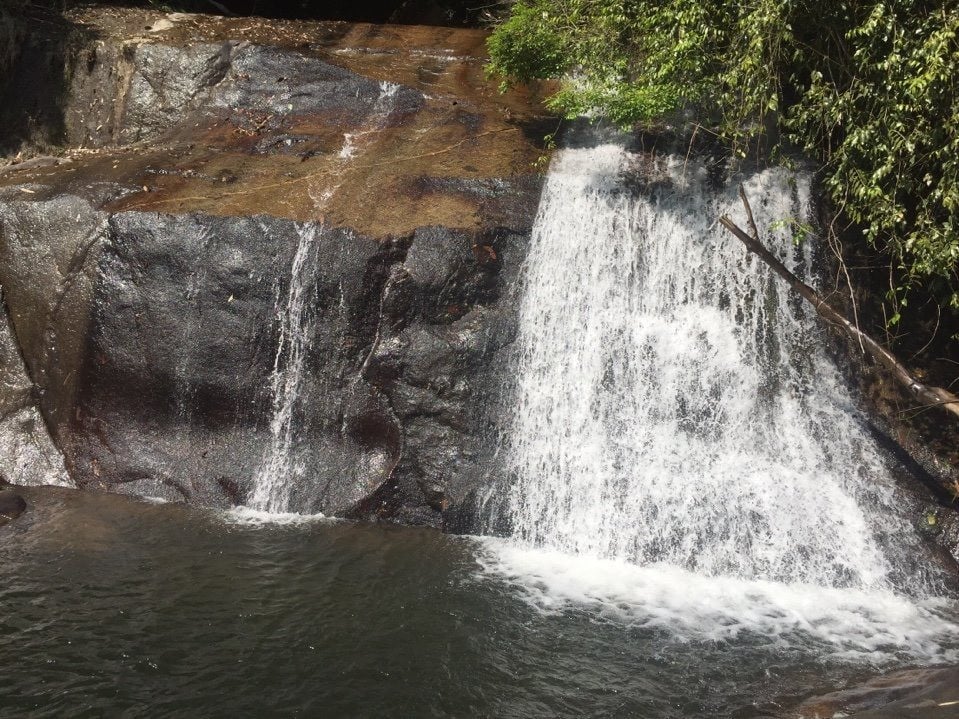
Furthermore, the hydroelectric power plant located in Da Mi commune is also a destination that tourists want to visit to learn about the operation process of generating electricity. Next is the Nine-Tiered Waterfall, whose name itself suggests its attractiveness, simultaneously arousing the adventurous spirit of those who love mountains, forests, and waterfalls. If you're tired and want to find peace listening to the temple bells of the cool, coastal region of Da Mi, then visit Quan Am Pagoda. Another unique feature is that Da Mi is a region with fruit trees all year round. This is the result of the community's concentration of people who migrated from many regions across the country, bringing with them plant varieties from their homelands, and surprisingly, they all thrive. From this, we discover that Da Mi's climate is truly special, situated between the warm, hot climate of Phan Thiet City and the cold, humid climate of Lam Dong, so it seems that almost any type of plant can survive. Therefore, no matter what season you visit Da Mi, you can explore the fruit orchards, enjoy the fruits, and buy them to take home. But if we're talking about branding, Da Mi durian already has a strong reputation in the market.
With these outstanding features, visitors can arrange their own trips, even if they want to visit the two lakes of Ham Thuan and Da Mi. However, all services here are not publicly advertised, are spontaneous, and have boomed since the April 30th holiday. This is a challenge but also an opportunity that Ham Thuan Bac district recognizes, with the intention of developing Da Mi into a tourist area of the district.
Lesson 2: The Dilemma of Da Mi
Source



![[Photo] General Secretary and President To Lam presides over a working session with the Central Policy and Strategy Committee on the development of the materials industry.](https://vphoto.vietnam.vn/thumb/1200x675/vietnam/resource/IMAGE/2026/05/21/1779359935432_a3-bnd-3129-1412-jpg.webp)




































































Comment (0)