

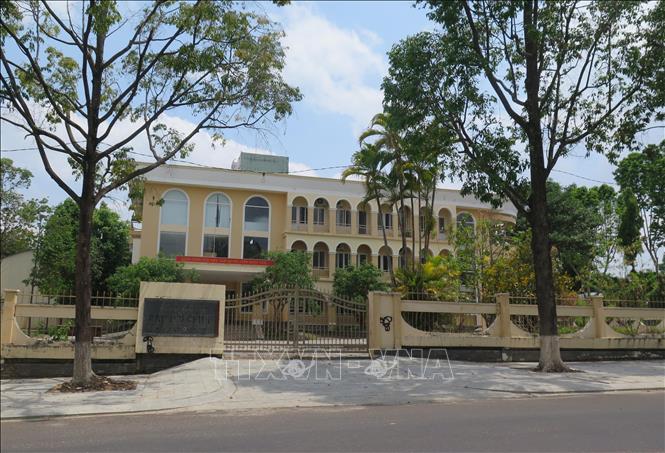
The Ministry of Finance reported that 34 localities have completed plans to handle 25,885 properties (houses and land), but in reality, the exploitation and reuse of this asset base still face many difficulties and pose a risk of wasting public resources. Handling this asset base is not only a management problem but also an urgent requirement to avoid wasting resources and to effectively utilize public assets for socio-economic development.
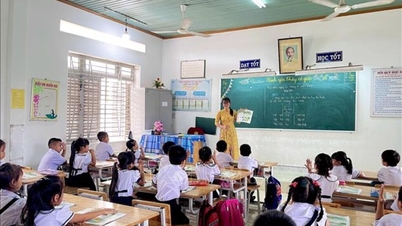
A total of 25,885 properties have been processed, ensuring that 100% of them have entities responsible for their management, use, or exploitation in accordance with regulations. Of these, 8,515 properties are designated as offices or operational facilities; 2,913 as educational and training facilities; 618 as healthcare facilities; 2,296 as cultural and sports institutions; 677 as facilities for other public purposes; and 91 as official housing. In addition, 4,495 properties have been assigned to land development organizations or units with housing management and business functions for management and exploitation; and 6,280 properties are used for other purposes as stipulated.
This result contributes to stabilizing the organization and ensuring the operational conditions of the two-tiered local government model, while also limiting the abandonment, waste, or misuse of public assets.
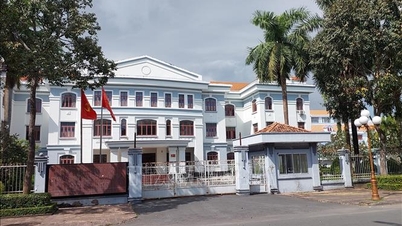
However, in some localities, the reality shows that even after the allocation plan has been finalized, the process of "reusing" surplus assets still faces many obstacles. In Dong Nai province, after the administrative reorganization, the entire province still has 66 surplus offices of former Binh Phuoc province departments and agencies, as well as district and commune-level units. Of these, the former Binh Phuoc province administrative center currently has 22 offices, Thien Hung commune has 8 offices, and Dong Phu commune has 6 offices that have not been effectively utilized.
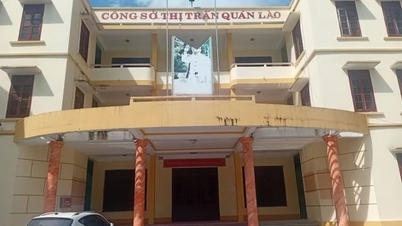
Some communes and wards, such as Chơn Thành, Đồng Phú, and Lộc Ninh, have not yet completed the functions and tasks of managing and exploiting houses and land not used for residential purposes for the commune-level General Service Center, despite previous guidance from the provincial level.
Not only in Dong Nai, but also in some areas following the reorganization from July 2025, such as Hoa Binh and Vinh Phuc, many headquarters have deteriorated due to infrequent use, while management and security are difficult due to lack of funding. This poses a potential risk of loss, fire, and theft of public assets.
According to Ms. Dang Bich Ngoc, Deputy Head of the Standing Delegation of the National Assembly of Phu Tho province, although the Ministry of Finance has requested localities to review and develop a roadmap for handling the issue, the process of decentralization, delegation of authority, and implementation procedures still face many obstacles. This is also an issue that voters have repeatedly raised.
Experts believe that the slow process of handling surplus assets stems not only from implementation issues but also from a lack of unified criteria for identifying, classifying, and disposing of these assets.
According to Mr. Nghiem Xuan Thanh, a National Assembly representative from Khanh Hoa province, many localities are still hesitant, even apprehensive, about reporting outstanding public projects and assets due to the lack of a clear framework for handling them, especially in cases that have dragged on for many years and involve the responsibilities of multiple levels and sectors.
According to the delegates, a unified coordination mechanism from the central government is needed to comprehensively resolve obstacles, and even consider establishing a steering mechanism or coordinating committee to handle outstanding projects and ensure consistency in the resolution process.
According to National Assembly representative Le Ngoc Quang from Da Nang City, the situation of many vacant office buildings, while some localities lack land for schools, cultural institutions, or parks, represents a significant waste. Therefore, reviewing and developing specific plans for the use of each office building is an urgent requirement.
In light of this situation, the Government and ministries are continuing to implement various solutions to improve the efficiency of managing and utilizing public assets after restructuring. On February 26, 2026, the Prime Minister issued Official Dispatch No. 19/CĐ-TTg, requesting ministries, agencies, and localities to accelerate the restructuring, handling, and exploitation of public assets after organizational restructuring, while strengthening inspection, examination, and supervision of the allocation and use of surplus land and buildings.
Mr. Nguyen Tan Thinh, Director of the Public Assets Management Department (Ministry of Finance), stated that public assets are not only physical infrastructure serving state management activities but also important resources for socio-economic development. Therefore, the requirement is not only strict management but also efficient exploitation.
According to Mr. Nguyen Tan Thinh, the mindset regarding public asset management needs to change, moving away from holding assets for "safety" if not used, as this would mean wasting resources. Instead, surplus assets should be put into operation through transparent and open mechanisms such as auctions or tenders to maximize their value and create additional resources for development.
The Ministry of Finance also requested localities to continue reviewing and improving regulations on the decentralization of public asset management, issuing standards and norms for asset use, and accelerating the development of plans for handling surplus offices and land.
In the context of many localities accelerating the restructuring of their administrative apparatus, effectively managing and utilizing surplus public assets not only helps avoid waste but also contributes to creating additional resources for socio-economic development in the coming period.
Source: https://baotintuc.vn/kinh-te/vuong-mac-tai-su-dung-tai-san-cong-doi-du-20260502084851830.htm















































































Comment (0)