

During the fight against the American bombing campaign in the skies of North Vietnam, the army and people of Ngoc Vung island commune (Van Don district) shot down 23 American aircraft; captured and killed dozens of enemy pilots. Among them, the 200th aircraft was shot down over Quang Ninh by the militia platoon of Ngoc Vung commune , contributing to the overall victory in the national resistance war against the US.
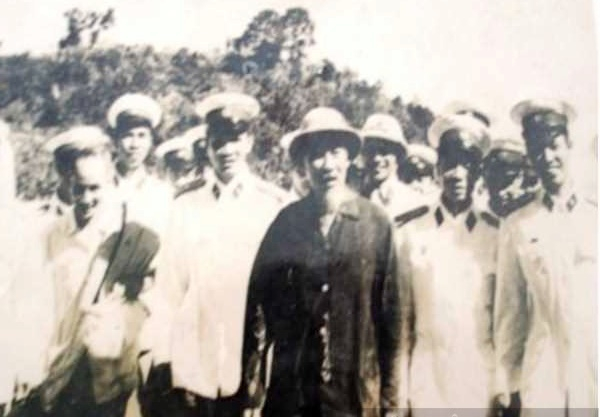
Protecting our homeland's airspace.
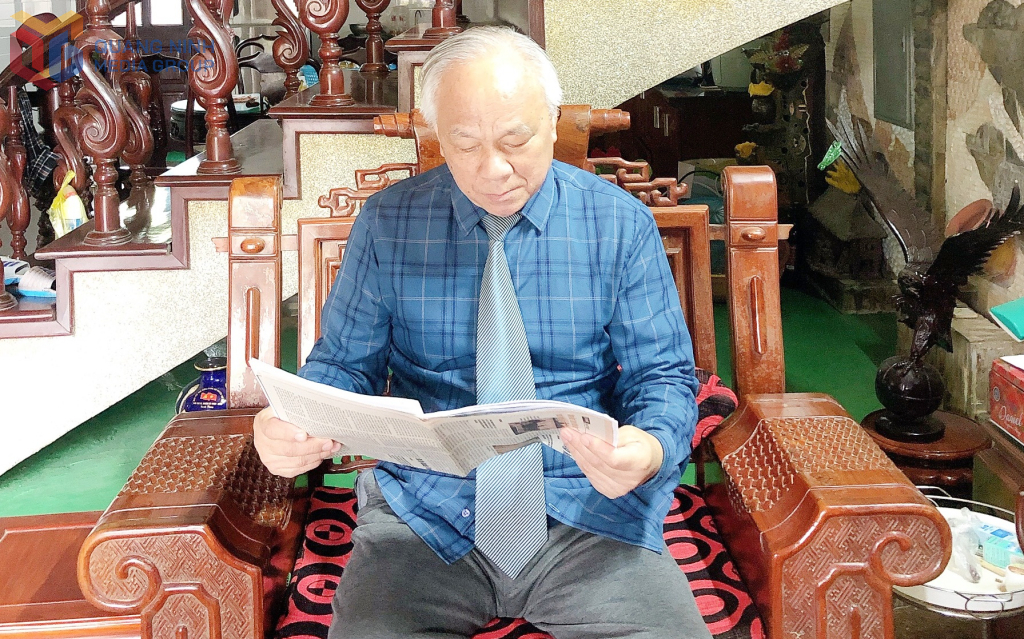
During these historic days of April, amidst the nationwide celebrations commemorating the 50th anniversary of the complete liberation of Southern Vietnam and national reunification on April 30th (1975-2025), we met with veteran Nguyen Thanh Suu at his home in Dong Xa commune (Van Don district), the commander who shot down the 200th American aircraft over Quang Ninh 53 years ago.
Following the Gulf of Tonkin incident on August 5, 1964, the US officially expanded its first bombing campaign against North Vietnam (1965-1968) with the goal of destroying infrastructure, factories, enterprises, ports, and transportation facilities... aiming to cripple the economic potential of the socialist North and prevent the military and people from providing support to the Southern battlefield. Quang Ninh, an important industrial province with coal mines, seaports, and bordering international waters, received increased bombing attacks from both the US air and naval forces.
With its extremely important location, Ngoc Vung commune (Van Don district) guards the international maritime route to Cua Ong port, Hon Gai, Hai Phong , and the air route. American planes wanting to bomb the mining region and many other localities in the North had to pass through the strategically important location of Ngoc Vung. Cong Yen port is located 7km from the center of Ngoc Vung commune; in 1965, the port became a gathering point for ships carrying weapons and food supplies from socialist countries to help Vietnam.
On May 10, 1965, the US resumed bombing Quang Ninh. On September 20, 1965, three US planes bombed the mining area. When they reached the Ngoc Vung area, one plane was shot down by anti-aircraft forces on the island.
Recognizing Ngoc Vung's strategic importance, the Ministry of National Defense and Quang Ninh province deployed a mixed army regiment to the island commune. The regiment established coastal artillery positions and 37mm and 14.5mm anti-aircraft artillery positions to engage the enemy. In 1967, the Cam Pha District Military Command (now Van Don District) established the Ngoc Vung Commune Militia Platoon, equipped with three 12.7mm anti-aircraft machine guns, stationed on Diem Canh Hill.
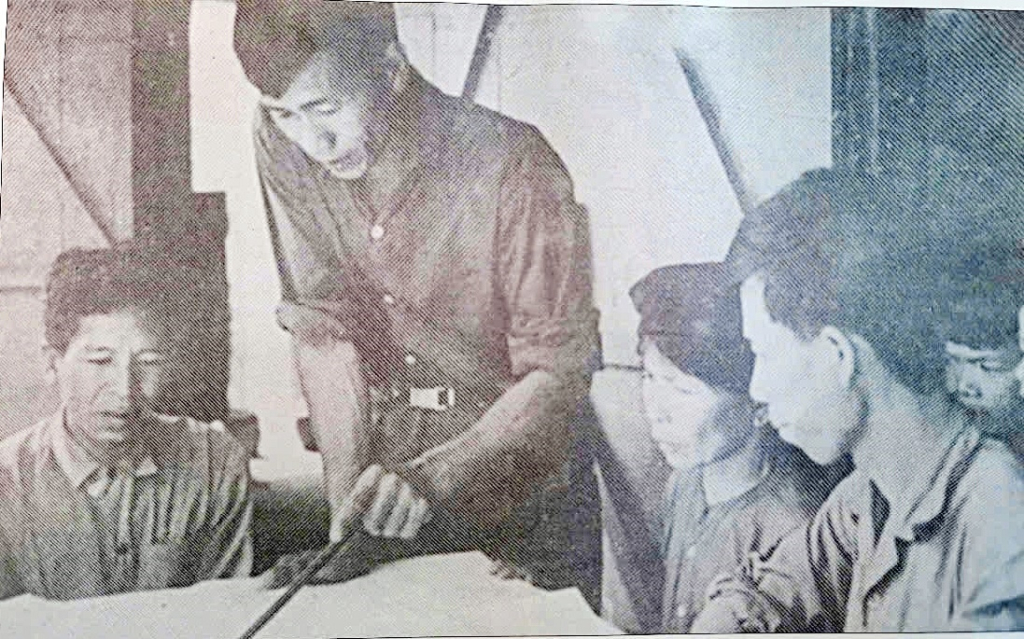
Born and raised in Ngoc Vung island commune, Mr. Nguyen Thanh Suu, at the age of 18 in 1967, joined the commune's militia platoon along with many other young men. Mr. Suu shared: "Diem Canh Hill is located in the center of the commune, 107 meters above sea level; from here, one can observe all directions, especially the sea. According to the elders in the commune, in the past, Ngoc Vung island was frequently attacked and plundered by pirates, so the people of the commune assigned themselves to guard Diem Canh Hill. When pirates were detected, they would sound the alarm so that the people could organize defenses; during the period of resistance against the French colonialists and their collaborators, Diem Canh Hill was a position to observe and detect enemy raids on the commune."
To ensure the position was secure and safe, Diem Canh Hill was equipped with three well-camouflaged 12.7mm anti-aircraft guns, and a system of fortifications to protect against enemy bombs was dug. During the period of resistance against the American bombing campaign, the Diem Canh Hill position, in coordination with the anti-aircraft positions of the army, formed a dense network of fire, determined to shoot down enemy aircraft.
Ngoc Vung was likened to a "bombing epicenter" because whenever American planes bombed Hon Gai, Cam Pha, and Cua Ong, they would drop any leftover bombs on this area. To avoid loss of life and property, during periods of intense bombing by American planes, the people of Ngoc Vung commune had to evacuate to other places.
The 200th plane to pay the price.
With the goal of "returning North Vietnam to the Stone Age" to gain leverage at the Paris Peace Conference, on December 18, 1972, the US launched Operation "Linebacker II" against North Vietnam. The focus of the attacks was the capital Hanoi, Hai Phong, and many other locations… The US used B-52 strategic bombers along with hundreds of tactical aircraft from its air and naval forces. Quang Ninh was also targeted; the US bombed Hon Gai, Cam Pha, Cua Ong… with intense and fierce bombing.
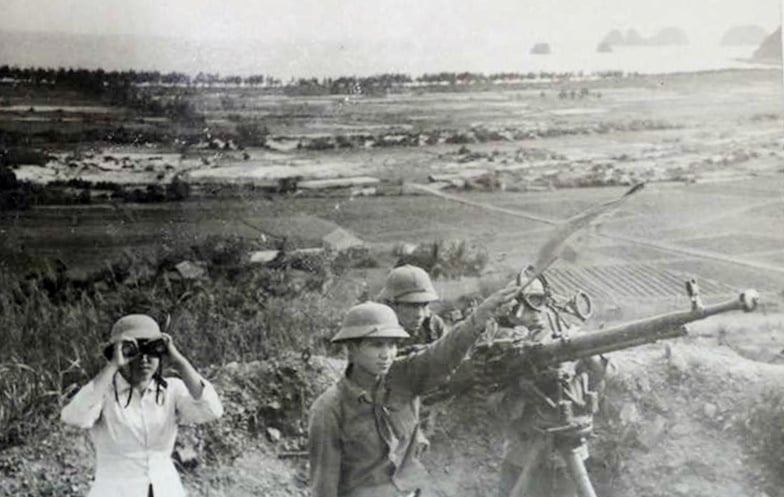
In Ngoc Vung, the anti-aircraft positions were under extreme tension. The enemy continuously attacked with various types of high-damage bombs, rockets, and missiles to destroy our positions. Mr. Nguyen Thanh Suu, as the platoon leader of the Ngoc Vung commune militia platoon, commanded three 12.7mm anti-aircraft gun crews, consisting of seven people, stationed at the position. From December 18, 1972, many groups of American planes attacked Hon Gai and Cam Pha; in Ngoc Vung, they bombed the Cong Yen port area. On December 19, the army and people of Ngoc Vung commune shot down one plane; on December 23, they shot down another plane at Truong Chinh beach.
On December 24, 1972, the militia platoon of Ngoc Vung commune shot down the 200th American aircraft over Quang Ninh province. Mr. Nguyen Thanh Suu recounted: "It was late in the year, with thick fog and very low visibility. Around 3:15 PM, we were on the battlefield when we heard a rumbling sound coming from the sea. Everyone took their fighting positions. I stood with my binoculars observing and saw two groups of aircraft; one group of about 10 planes flew away from the battlefield towards Hon Gai, while the other group consisted of two F4s flying in formation directly towards the battlefield. According to my calculations, the one behind was flying lower. I ordered the entire platoon to target the second aircraft and prepare. As soon as the plane entered the coordinates, I shouted 'fire!' The gun crews simultaneously opened fire. The plane was hit, its tail smoked, and it plunged headfirst into the sea."
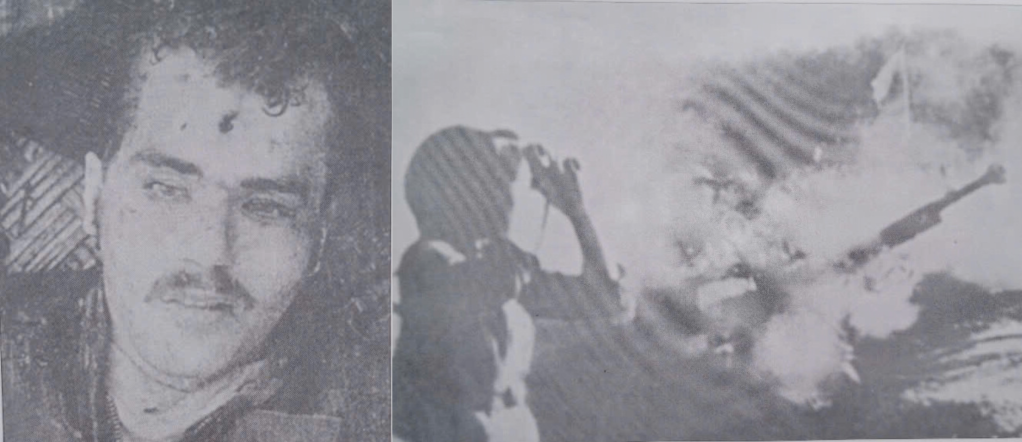
Mr. Nguyen Xuan Thu (71 years old) from Cai Rong town (Van Don district) emotionally recalled: "I was a gunner in the second gun crew. After Comrade Suu shouted 'fire,' I tensed my body, squeezed the trigger, and fired a long burst straight at the second plane. The gun barrel spewed sparks, the ground shook, and the sound ripped through the sky. Seeing the plane plummeting down with black smoke, I told everyone, 'It's paying the price.'"
The plane was shot down and crashed in Thang Loi commune (Van Don district). The F4 pilot, Lieutenant Phillip Clock, parachuted into the sea, drew his gun and fiercely resisted when surrounded by militia from Thang Loi commune, but was ultimately killed by the militia.
According to Mr. Nguyen Thanh Suu, immediately after the plane was shot down, the observation post of the regiment on the island commune and the Provincial Military Command confirmed that the plane was shot down by the militia platoon of Ngoc Vung commune. This was the 200th American plane shot down over Quang Ninh province.
Following its defeat in the North during the "Dien Bien Phu in the Air" campaign in December 1972, the US was forced to sit down at the negotiating table and officially sign the Paris Agreement, ending the war and restoring peace in Vietnam on January 27, 1973.
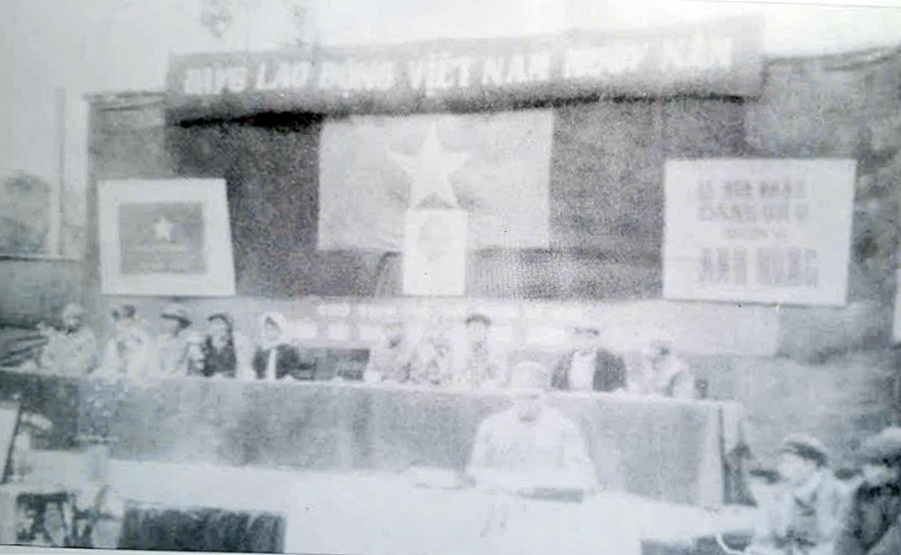
During the two wars against the American bombing campaign, Ngoc Vung commune suffered 1,588 bombs of various types and 1,697 rockets, accounting for two-thirds of the bombs and rockets dropped by the US on other communes in Van Don district. The people and soldiers of Ngoc Vung commune, with their resourcefulness and courage, shot down 23 American aircraft, including the 200th plane shot down over Quang Ninh. With many resounding victories, in 1973 Ngoc Vung commune was honorably awarded the title of Hero of the People's Armed Forces.
After bravely fighting to defend their homeland's skies, the soldiers of the Ngoc Vung commune militia platoon embarked on a new mission. In 1973, Mr. Nguyen Thanh Suu was sent by the province to study, later becoming a key leader in Van Don and Co To districts. The remaining soldiers continued to enlist and fight in the South until the country was unified. Now, the soldiers of the Ngoc Vung commune militia platoon of yesteryear are of advanced age, some still alive, some deceased, but the memories of those days holding their ground and fighting the enemy on their homeland remain vivid in their minds, a living testament to the nation's aspiration for independence and national unity.
Duong Truong
Source


![[Photo] Enchanting ancient rose garden on the mountainside in Nghe An](/_next/image?url=https%3A%2F%2Fvphoto.vietnam.vn%2Fthumb%2F1200x675%2Fvietnam%2Fresource%2FIMAGE%2F2025%2F12%2F19%2F1766109900916_vuon-hong-chin-do-thu-hut-du-khach-toi-check-in-o-ha-noi-3-20162778-1671624890024-1671624890104198100259.jpeg&w=3840&q=75)
![[Photo] General Secretary To Lam visits the exhibition space showcasing books, photo exhibitions, and achievements of digital transformation in journalism.](/_next/image?url=https%3A%2F%2Fvphoto.vietnam.vn%2Fthumb%2F1200x675%2Fvietnam%2Fresource%2FIMAGE%2F2025%2F12%2F19%2F1766110879215_1766110240024-jpg.webp&w=3840&q=75)































![[INFOGRAPHIC] Overview of the Hoa Phat Dung Quat Rail and Special Steel Production Plant Project](https://vphoto.vietnam.vn/thumb/402x226/vietnam/resource/IMAGE/2025/12/19/1766111183203_z7339170069817-126a3e5a095f62e606a0be41015c1b80.jpeg)












































Comment (0)