

"Xán lạn" is a Sino-Vietnamese word, consisting of two words:
Xán (灿) belongs to the fire radical, its structure is phonetic ( Six Scripts ), its original meaning is bright, brilliant ( National Calligraphy Dictionary Grand Master ), for example, the phrase "xán nhã đồ tú" (brilliant like embroidered paintings) in Từ Hà Khách Du Ký and Du Hoàng Sơn Ký.
The character 烂(lạn) belongs to the fire radical, has a phonetic structure ( in the Six Scripts ), and was first found in the Shuowen Jiezi (Explanation of Characters in the Shuowen Dictionary ). Its original meaning relates to cooking, referring to food that is soft due to overcooking, such as the phrase "cooked but not mushy" in the Lüshi Chunqiu (Lüshi Chunqiu). (Original meaning )
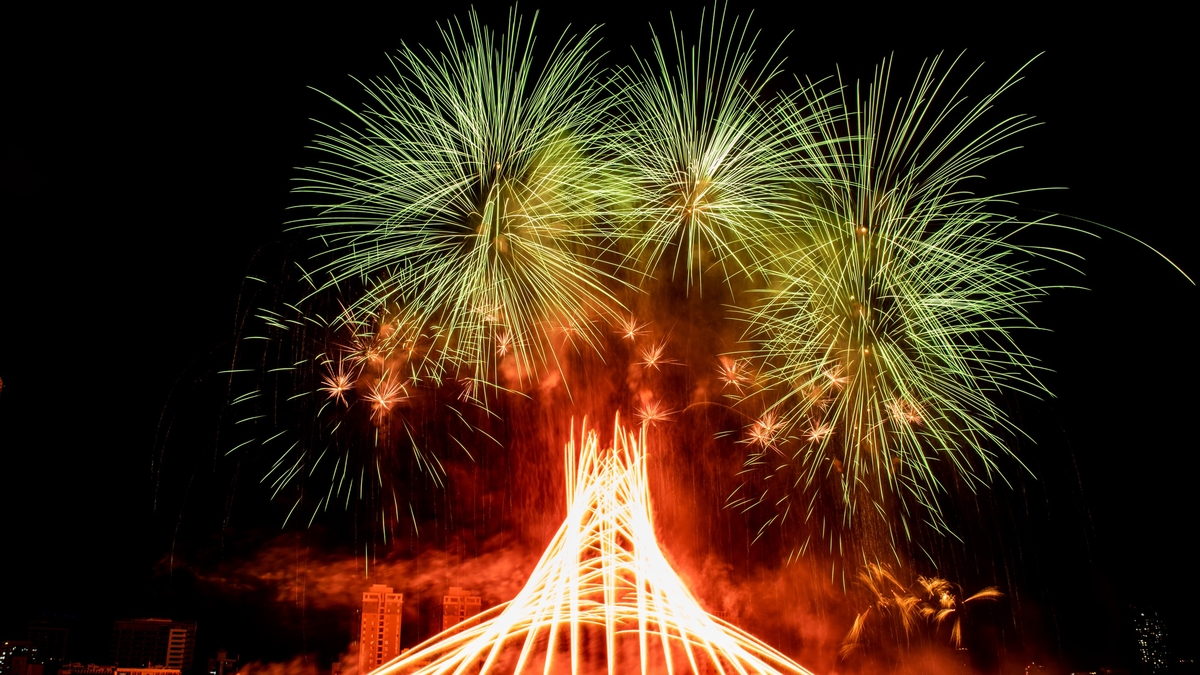
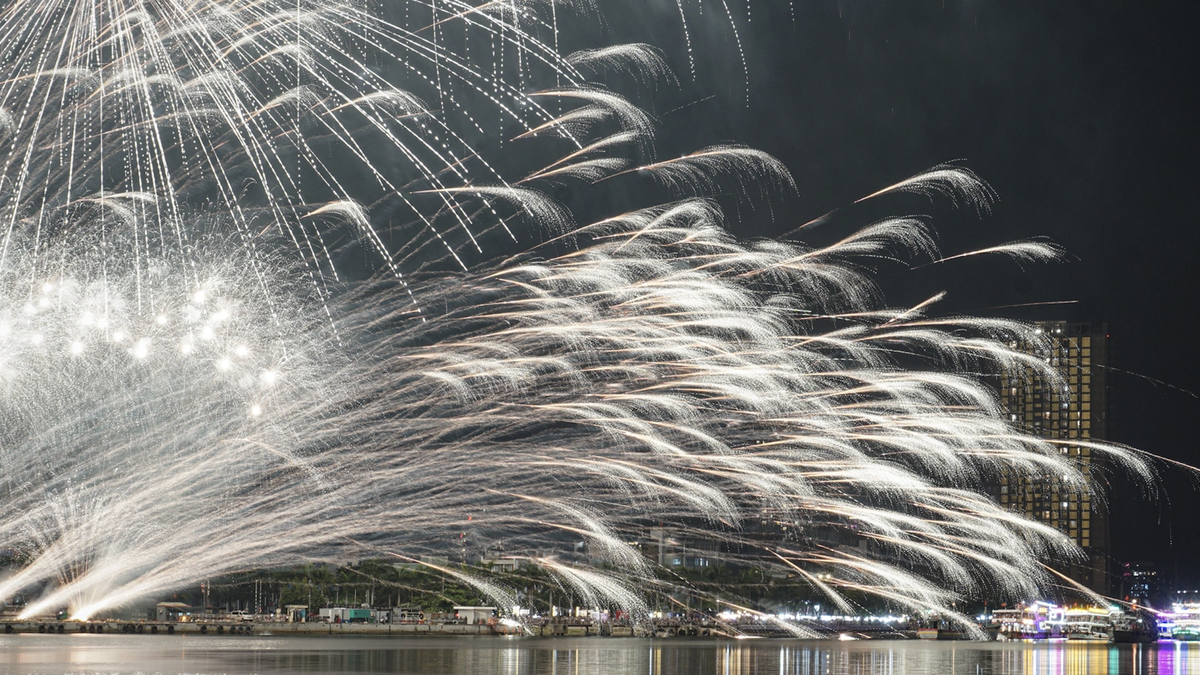
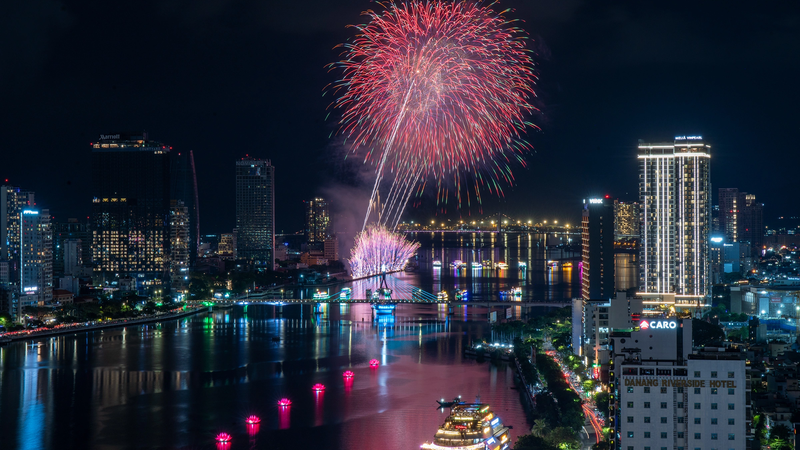
To express dazzling brilliance, the idiom "Xán lạn đoạt mục" (dazzling and captivating) is often used, a phrase possibly originating from Feng Menglong's *Tỉnh thế hằng ngôn* (Words of the World) during the Ming Dynasty. This idiom is also used to describe the splendor of natural landscapes (for example, fireworks or rainbows). "Xán lạn đoạt mục" also signifies the prominence of abstract concepts or describes the dazzling array of colors (of fireworks, bright lights, etc.), similar to the meaning of the idiom "Xán lạn đa thái" ( dazzling and colorful).
The term "Xán lạn" (灿烂) originates from Zhang Heng's *Wen Xuan* (Anthology of Literature ). Its original meaning is bright and radiant, often used to describe vibrant colors: "Xán lạn nhất câu tân nguyệt, mộc mạt lai yêu" (A brilliant crescent moon, inviting trees to sprout), quoted from *Er Ke Pai An Jing Qi* (Volume 13).
In addition, the word "xán lạn" (brilliant/radiant ) has the following meanings:
- Only a bright, lively appearance ( Anthology of Literature. Zhang Xing's Eastern Capital Poem ).
- Magnificent, splendid ( Bao Phac Tu. Bac Du by Ge Hong during the Jin Dynasty).
- Describing the beauty of literary language (Wang Shizhen's "Art of the Garden " from the Ming Dynasty).
- Describing objects or structures that are brilliant and beautiful ( Later Han Dynasty History, Biography of Ban Gu , Part Two).
Words synonymous with "xán lạn" are "huy hoàng" (辉煌: to shine, to radiate, to be brilliant, to be outstanding) or "huyến lạn" (绚烂: glorious, dazzling, brilliant).
In terms of idioms, "xán lạn" (brilliant/splendor) appears in the following phrases:
"Quang huy xán lạn" means a bright future, an idiom first seen in the *Ngũ đăng hội nguyên* (volume 11) by Zen master Puji during the Song dynasty.
"Kim quang xán lạn" refers to the dazzling brilliance of gold, an idiom that first appeared in the form of a couplet in Li Ruzhen's *Jing Hua Yuan * (chapter 20) during the Qing Dynasty. This idiom is also used to describe the effect of gold leaf on architectural decorations, such as the gold leafing technique used on ancient palaces. "Kim quang xán lạn" is also used to describe the light of a sunset.
Additionally, there is the idiom "brilliant and glorious ," a phrase whose literal meaning signifies a dazzling, brilliant spectacle; figuratively, it refers to a remarkable achievement that attracts attention. This idiom was first found in chapter 48 of Li Ruzhen's work, " Jing Hua Yuan," from the Qing Dynasty.
Regarding spelling, the Kangxi Dictionary states:
The character xán (灿) has the phonetic transcription "thương án thiết", pronounced xán (粲)"; while lạn (烂) has the phonetic transcription "lang cán thiết", pronounced lạn (lan khứ thanh).
Therefore, "xán lạn" is the standard Sino-Vietnamese word. From the 19th century to the present, all "official" dictionaries published in Vietnam have recorded the word "xán lạn". Other spellings such as "sáng lạng", "xán lạng" , or "sán lạn " are considered spelling errors.
Source: https://thanhnien.vn/xan-lan-dang-dung-thanh-sai-185251128215808716.htm
![[Photo] The General Secretary, President and his wife begin their state visit to the Philippines.](https://vphoto.vietnam.vn/thumb/1200x675/vietnam/resource/IMAGE/2026/05/31/1780230559452_anh-man-hinh-2026-05-31-luc-19-28-11.png)
![[Photo] Admire the coral "masterpiece" amidst the million-year-old heritage of Dak Lak province.](https://vphoto.vietnam.vn/thumb/1200x675/vietnam/resource/IMAGE/2026/05/31/1780221235105_anh-man-hinh-2026-05-31-luc-16-53-27.png)
![[Photo] Solemn bathing ceremony and Buddha procession in Hue](https://vphoto.vietnam.vn/thumb/1200x675/vietnam/resource/IMAGE/2026/05/31/1780228263543_1-jpg.webp)








![[Video] Weather forecast for tonight and tomorrow, June 1st, 2026: Northern Vietnam experiences rising temperatures, Southern Vietnam continues to have thunderstorms.](https://vphoto.vietnam.vn/thumb/402x226/vietnam/resource/IMAGE/2026/05/31/1780232471628_thumb-toi-3105-png.webp)






![[Video] Sunset at Lap An Lagoon – Where the sun sets over the fishing nets](https://vphoto.vietnam.vn/thumb/340x192/vietnam/resource/IMAGE/2026/05/31/1780192137701_beach-landscape-sea-water-nature-grass-745871-pxhere-com.jpeg)



































![[Photo] Admire the coral "masterpiece" amidst the million-year-old heritage of Dak Lak province.](https://vphoto.vietnam.vn/thumb/402x226/vietnam/resource/IMAGE/2026/05/31/1780221235105_anh-man-hinh-2026-05-31-luc-16-53-27.png)

























Comment (0)