

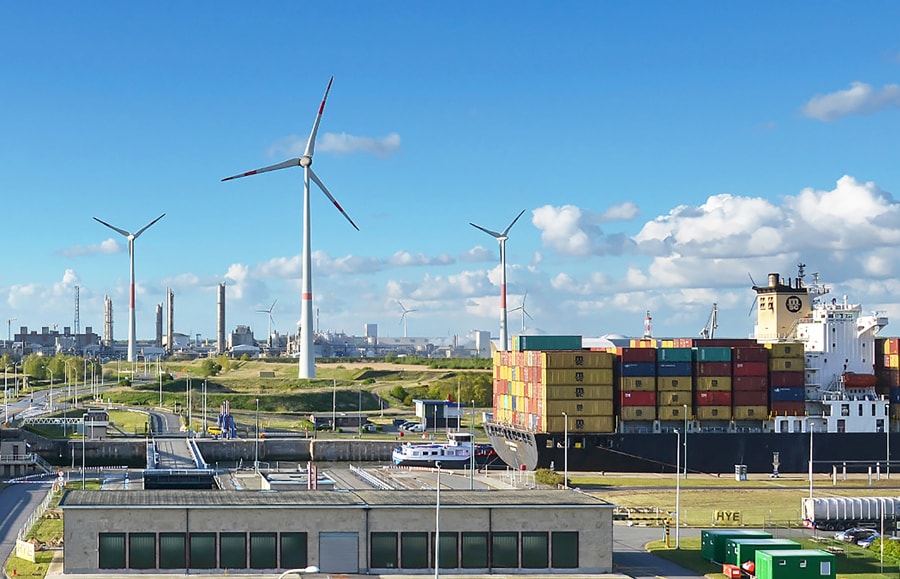
An irreversible trend.
Over the past two decades, the shift to clean energy has become a global trend, not only for the goal of reducing emissions but also due to fundamental changes in economic and technological structures. Renewable energy sources such as wind, solar, and hydropower significantly reduce greenhouse gas emissions – the main cause of climate change – thereby mitigating the risks of natural disasters and the economic costs of environmental degradation.
More importantly, clean energy helps countries reduce their dependence on imported fossil fuels like oil and gas, which are vulnerable to disruptions from geopolitical conflicts and price fluctuations. This opens up opportunities to boost economic growth, create new jobs, and develop high-tech industries.
According to the International Energy Agency (IEA), renewable energy will account for approximately 32% of global electricity production in 2024 and is expected to increase to 43% by 2030, meeting more than 90% of the growing electricity demand during that period. This strong growth stems from several factors, primarily the significant drop in costs. The prices of solar and wind power have fallen sharply over the past decade, making these energy sources competitive with fossil fuels.
In addition, the development of energy storage technology, especially batteries, helps to partially overcome the intermittent nature of renewable energy.
Another key driver is the unprecedentedly rapid increase in electricity demand. The World Energy Outlook 2025 report shows that electricity is becoming central to the energy system, with demand surging thanks to new sectors such as artificial intelligence, data centers, and electric vehicles. This forces countries to seek energy sources that are rapidly scalable, affordable, and sustainable – criteria that renewable energy is meeting better than traditional fossil fuels.
The reality is that clean energy is no longer a "supplement" but is becoming a mainstay. By 2024, more than 90% of new global electricity capacity will come from renewable sources. At the same time, during certain periods of 2025, electricity production from clean energy will surpass coal for the first time, marking a significant turning point in the global energy transition.
Major economies are leading this trend. China – the world's largest energy consumer – is not only a major emitter but also the largest investor in clean energy. According to the IEA, the majority of new electricity capacity in Asia's largest economy in recent years has come from clean energy, particularly solar and wind power.
In the European Union (EU), renewable energy accounted for 25.4% of total final energy consumption in 2024 and continues to grow. Several countries have very high proportions of electricity from renewable sources, such as Norway, Iceland, Sweden, and Denmark. The Netherlands is also rapidly accelerating this trend thanks to offshore wind power projects.
Even countries that were once heavily reliant on fossil fuels are shifting. The US now maintains a significant share of renewable energy (23%) and nuclear (18%) in its electricity mix, while coal accounts for only about 16%. These figures indicate a gradual decline in the role of traditional energy sources in the long term.
According to experts, the energy transition is no longer an option but an inevitability. IEA Executive Director Fatih Birol once emphasized that the world is entering an “era of electrification,” where clean energy plays a central role in economic growth. This means that countries cannot stand aside if they want to maintain competitiveness.
However, the "greening" process also faces many challenges such as grid infrastructure, supply chains, and finance. The IEA warns that investment in the grid has not kept pace with the development of clean energy sources, potentially posing risks to the energy system. Nevertheless, the overall trend remains irreversible: Clean energy is becoming the cornerstone of modern energy systems.
A new pillar in times of instability
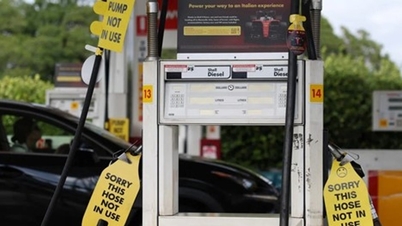
While energy security was previously primarily linked to securing oil and gas supplies, this concept is now undergoing a profound transformation. Geopolitical shocks, particularly in the Middle East and along vital energy transport routes, have exposed the risks of reliance on imported fossil fuels.
In this context, renewable energy has emerged as a strategic solution. Unlike oil or natural gas, sources such as solar and wind power can be harnessed locally, reducing dependence on external supplies, which is particularly important for energy-importing countries.
Europe is a prime example. Following the energy crisis caused by the Russia-Ukraine conflict, the EU accelerated the development of renewable energy to reduce its dependence on imported gas. Increasing the share of clean energy not only helps reduce long-term costs but also enhances energy self-sufficiency.
In Asia, Japan has virtually no domestic energy resources, with a self-sufficiency rate of only about 13%, among the lowest in the world. This means that any fluctuations in the global oil and gas market directly impact the economy. Faced with energy security pressures, Japan is implementing a "dual" strategy: expanding renewable energy while simultaneously reviving nuclear power. Tokyo aims to increase the share of nuclear power to approximately 20% by 2040, while increasing renewable energy to 40-50% of the electricity mix. In fact, in the first half of 2025, clean energy (including renewable and nuclear) accounted for about 41% of electricity production, a significant increase compared to previous years.
South Korea faces a similar challenge, with its energy self-sufficiency rate at only around 19%. The country has shifted towards increasing the proportion of nuclear power and boosting investment in clean energy to reduce its reliance on imports. Notably, the majority of South Korea's energy investment – along with Japan's – has now shifted to clean energy, accounting for 92% of total investment, significantly higher than the global average.
According to experts, clean energy helps increase the "resilience" of the energy system. Unlike fossil fuels, which are heavily influenced by market and geopolitical factors, renewable energy has less volatility in operating costs, thereby contributing to electricity price stability and reducing economic risks. At the same time, diversifying supply sources from wind, solar, hydropower to biomass makes the energy system more flexible compared to a model dependent on fossil fuels.
However, "greening" energy also poses new challenges, particularly the dependence on critical minerals such as lithium, cobalt, and rare earth elements. The IEA's World Energy Outlook 2025 report emphasizes that future energy security will be closely tied to the supply chains of these minerals, requiring countries to have comprehensive strategies, not only in energy but also in industry and resources.
Nevertheless, the overall trend remains clear: "Greening" energy is becoming a core element of national security. In a volatile world, energy self-sufficiency not only determines economic stability but also directly impacts the geopolitical standing of each nation.
From an environmental goal, "greening" energy has become a vital requirement in development strategies. Pressure from climate change, increasing energy demand, and geopolitical instability are accelerating this process faster than expected. The question is no longer "should we switch or not," but "how quickly and how to switch." Leading nations are not only reducing emissions but also enhancing their self-reliance and competitiveness.
For Vietnam, this trend presents both opportunities and challenges. If Vietnam effectively utilizes its renewable energy potential to build a flexible energy system, it can absolutely ensure sustainable growth while maintaining long-term energy security.
Source: https://hanoimoi.vn/xanh-hoa-nang-luong-tu-lua-chon-phat-trien-den-yeu-cau-an-ninh-song-con-742035.html

![[Photo] General Secretary To Lam attends the ceremony commemorating the 75th anniversary of the founding of the Central Military Hospital 108.](https://vphoto.vietnam.vn/thumb/1200x675/vietnam/resource/IMAGE/2026/03/30/1774866343623_a1-bnd-5435-7415-jpg.webp)
![[Photo] The moment of seasonal change at Thong Nhat Park](https://vphoto.vietnam.vn/thumb/1200x675/vietnam/resource/IMAGE/2026/03/30/1774870546141_ndo_br_b773e4e7b1a230fc69b313-jpg.webp)
![[Photo] General Secretary To Lam presents the Military Merit Order and Party Badge to senior leaders.](https://vphoto.vietnam.vn/thumb/1200x675/vietnam/resource/IMAGE/2026/03/30/1774878643606_a1-bnd-5651-8284-2398-1124-jpg.webp)































































![[Photo gallery] Loc Ninh will become a leading urban center in the border region.](https://vphoto.vietnam.vn/thumb/402x226/vietnam/resource/IMAGE/2026/03/30/1774883149722_1_20260330212248.jpeg)






Comment (0)