The Resolution of the First Provincial Party Congress, term 2025-2030, identifies "putting people at the center," comprehensively caring for seven pillars of happiness: healthcare, education , housing, clean water, electricity, information, and employment/income. All aim to achieve a happiness index of 72% by 2030.
To realize that goal, the Provincial Party Committee has issued many socio-economic development plans, most notably the Comprehensive Rural Development Plan for the period 2026-2030, aiming towards ecological agriculture, modern rural areas, and civilized farmers.
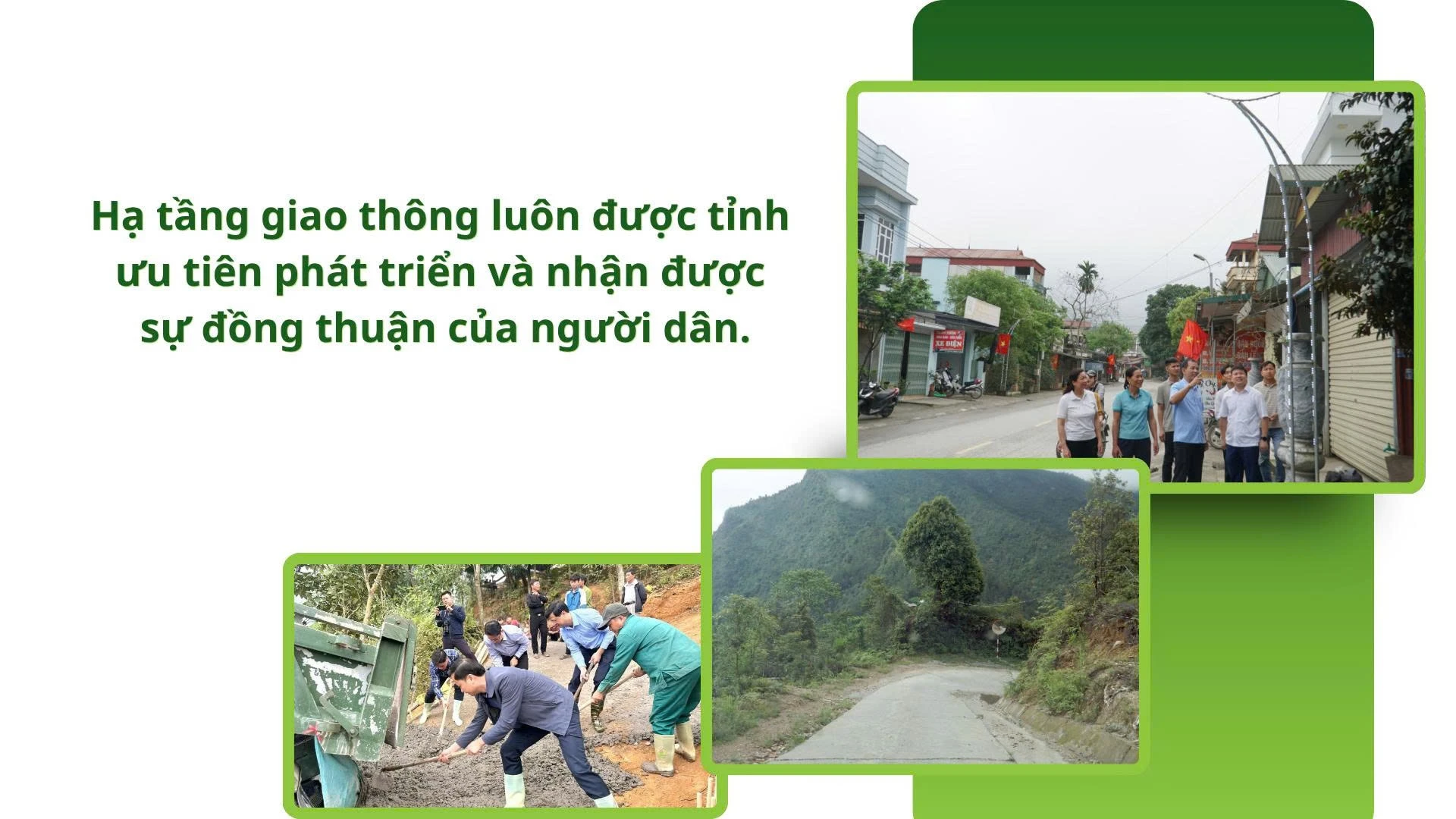
Characterized by its mountainous terrain, the biggest "bottleneck" in the highlands of Lao Cai is its fragmented landscape. Therefore, transportation infrastructure development is always prioritized and receives the consensus of the local people.
Along with strategic transportation projects, in the past period, more than 3,800 km of rural roads have been concreted, along with 110 large and small infrastructure projects. In the first quarter of 2026 alone, people contributed 18,400 man-days of labor, repaired 306 km of canals and 211 km of roads, and donated 31,000 m² of land for infrastructure expansion. To date, the province's transportation system has basically taken shape and is being completed; 100% of communes have roads accessible by car to their centers, and most villages and hamlets have solid roads.
Visiting Ta Xi Lang commune, one of the remote highland communes, one can truly appreciate the value that improved transportation infrastructure brings. Located at an altitude of over 1,000 meters above sea level, Ta Xi Lang was previously shrouded in fog year-round, making transportation difficult and isolating the Mong ethnic minority from the outside world. Mr. Giang Rua Rinh from Xa Nhu village said emotionally, “Traveling used to be very difficult. Now the roads are paved with concrete, and motorbikes and cars can transport goods right to the village. The lives of the people have changed significantly.”
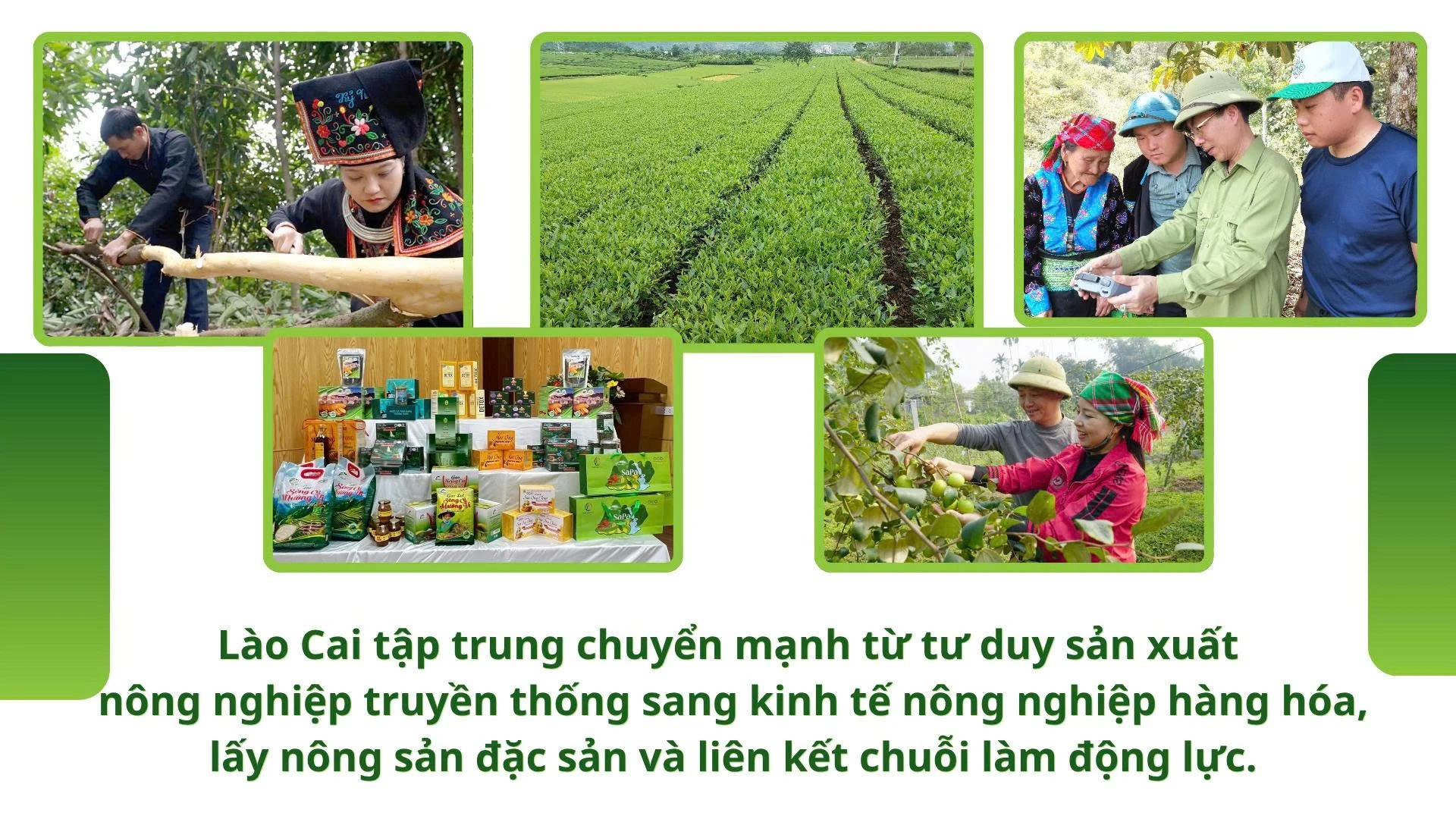
Happiness is impossible if people remain poor; therefore, economic development coupled with social welfare has always been a priority for the province. Based on national target programs and other investment resources, Lao Cai focuses on implementing livelihood support projects, shifting strongly from traditional agricultural production thinking to a commodity-based agricultural economy, using specialty agricultural products and supply chain linkages as driving forces.
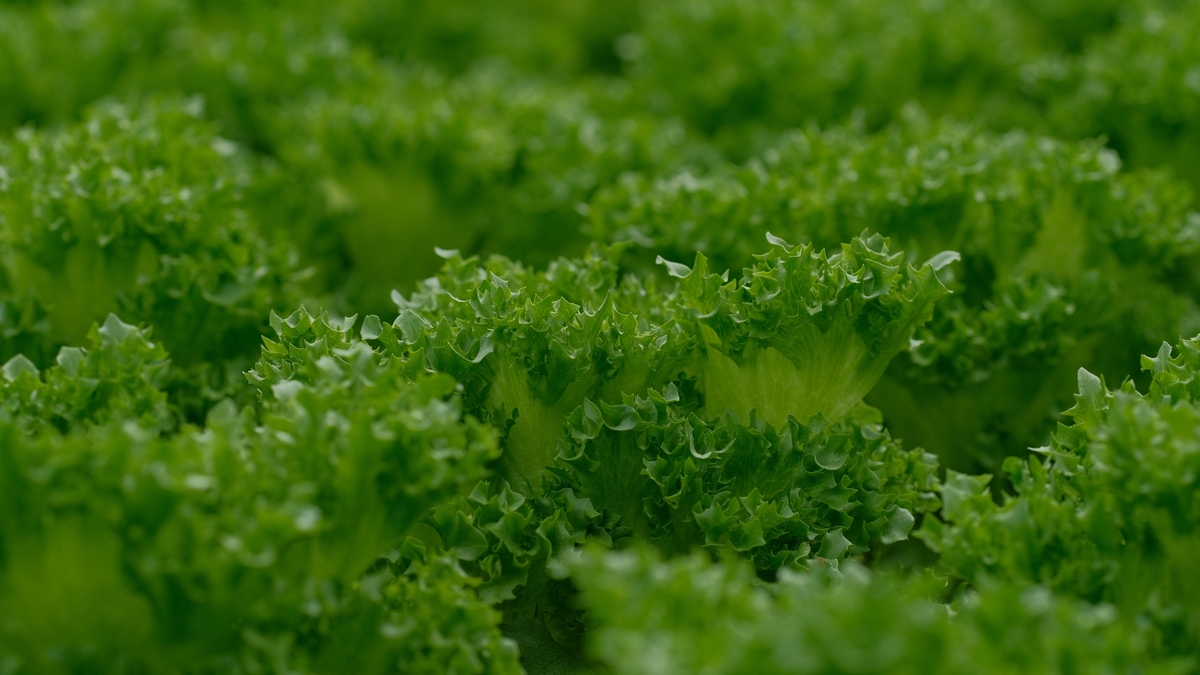
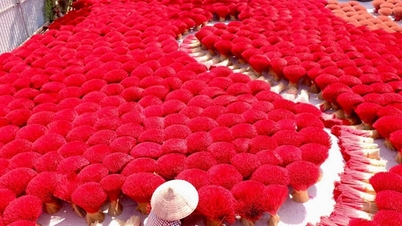
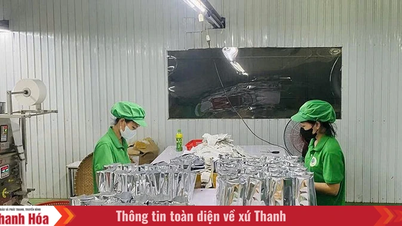
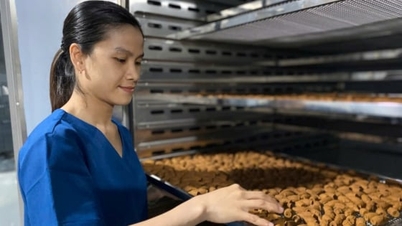
Leveraging its regional strengths, the province has developed concentrated production areas for crops such as rice, tea, cinnamon, and medicinal herbs. Instead of fragmented production, farmers in Lao Cai are now familiar with OCOP certification, ensuring product origin transparency through labels and selling through e-commerce platforms. Livelihood support projects have created strong links between farmers and businesses, guaranteeing stable market outlets.
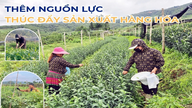
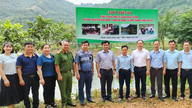
Products linked to preserving traditional cultural identity, combined with community tourism, open up promising new directions, creating livelihoods while enhancing national pride. Many high-tech application models in Tran Yen, Sa Pa, Bao Thang, etc., also bring high incomes to the people.
The achievements in economic development and sustainable poverty reduction, coupled with ensuring social security for the happiness of the people in Lao Cai, are evidenced by vivid statistics.
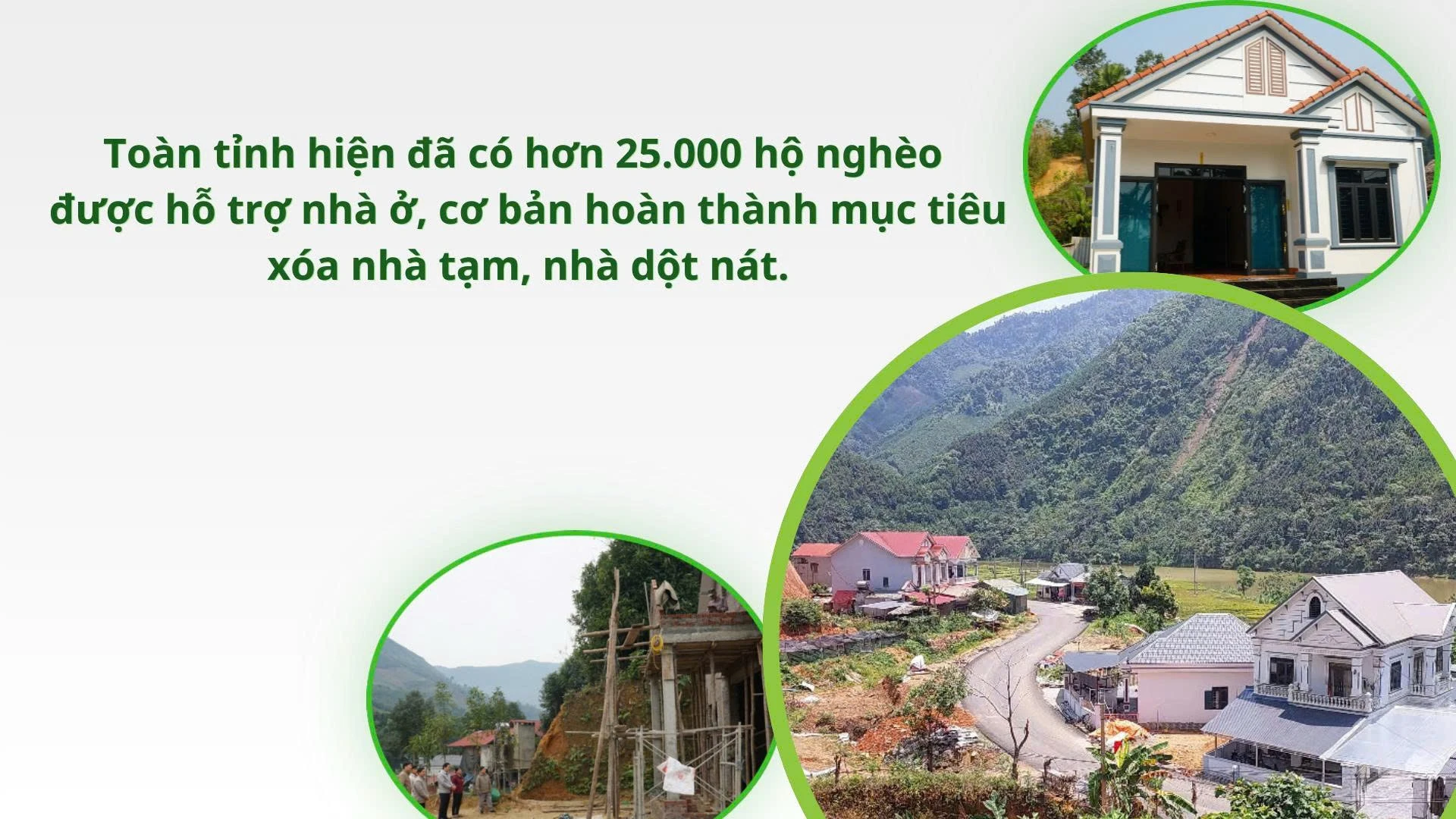
With a systematic approach and the mobilization of resources, over 25,000 poor households in the province have received housing support, basically achieving the goal of eliminating temporary and dilapidated houses so that people can settle down and make a living. 100% of poor households have been issued health insurance cards, with health insurance coverage reaching 96.5%, nearly 100% of households use the national power grid, and 95% of households have access to clean water. The number of poor households is decreasing by an average of nearly 4% per year, reaching 5.5% by the end of 2025. The average income in rural areas is 38.5 million VND/person/year.
If income and infrastructure are the "surface" material aspects, then spiritual life, ecological living environment, and community cohesion are the "hidden" elements that shape the depth of the happiness index.
The new rural development program in Lao Cai does not equate to forced urbanization. On the contrary, it is a process of "separating the wheat from the chaff," transforming local cultural identity into a resource for development.
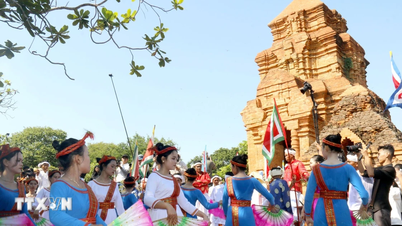
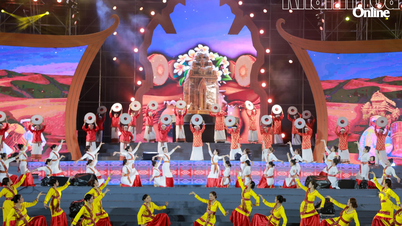
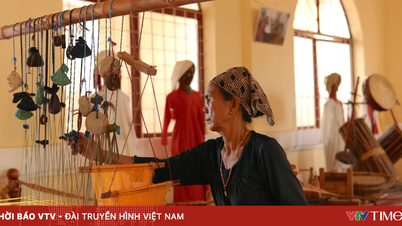
By skillfully integrating cultural life development with community tourism, adventure tourism, and experiential tourism, people not only gain additional income but also develop a sense of self-awareness in preserving their traditional costumes, language, flute melodies, and dances. Culture is not commercialized but becomes an "undercurrent" nurturing pride and solidarity within the village.
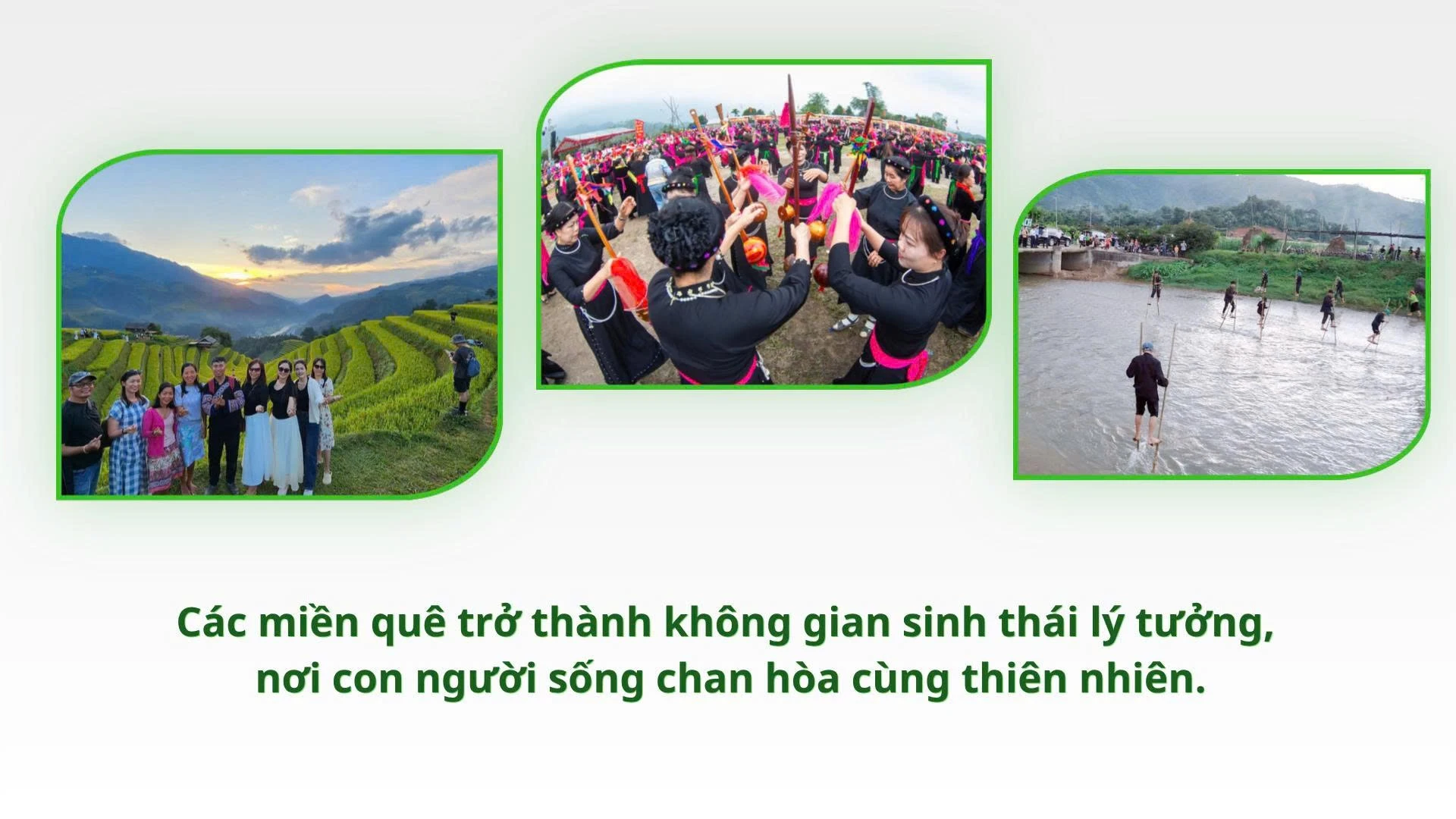
Besides cultural preservation, the creation of a "bright, green, clean, and beautiful" living environment is being widely implemented through self-governance movements by the people.
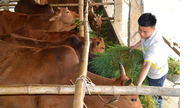


In various localities, the movement "All people unite to build a cultured life in residential areas" and the campaign "All people unite to build new rural areas and civilized urban areas" have been widely implemented, contributing to preserving traditional customs and values, gradually eliminating outdated practices, and raising awareness of building a cultured life in residential areas. Rural areas have become ideal ecological spaces where people live in harmony with nature.
The image of "green, harmonious, distinctive, and happy" is clearly evident in the rural areas of Lao Cai, from the lowlands to the highlands, today. While acknowledging that the road ahead holds many challenges, maintaining and improving the happiness index requires strategy and perseverance. With a spirit of innovation, solidarity, and a desire to build their homeland, the people of Lao Cai's ethnic groups will reap the "sweet fruits" of prosperity and happiness in their own land.
Source: https://baolaocai.vn/xay-dung-nhung-mien-que-hanh-phuc-post901198.html

![[Image] Schools organize meetings and introduce teaching models to students admitted to grade 10.](https://vphoto.vietnam.vn/thumb/1200x675/vietnam/resource/IMAGE/2026/06/25/1782368077271_ndo_br_z7970052192242-1ec8daeb77a6eed1a4e9f58c564ddd3e-jpg.webp)

![[Image] Ho Chi Minh City: Ma Lang area, Chicken-Rice Market about to change its appearance](https://vphoto.vietnam.vn/thumb/1200x675/vietnam/resource/IMAGE/2026/06/25/1782377698627_ndo_br_m1-jpg.webp)
![[Photo] General Secretary and President To Lam receives Palestinian Ambassador Saadi Salama](https://vphoto.vietnam.vn/thumb/1200x675/vietnam/resource/IMAGE/2026/06/25/1782365384740_a1-bnd-9423-8322-jpg.webp)










![[GALLERY] Voidling Bound takes Steam by storm with 94% positive reviews.](https://vphoto.vietnam.vn/thumb/402x226/vietnam/resource/IMAGE/2026/06/25/1782396892878_tua-1-png.webp)