The implementation of the OCOP program has helped many products in the province improve their quality and design, while also establishing their brands. These products meet the consumption needs within the province, and some have even begun to be exported. To date, the province has nearly 600 products that meet OCOP standards from 3 stars and above, including 6 products that have achieved 5 stars.
When developing towards a market-oriented approach, OCOP products must operate according to market principles. If they fail to meet requirements regarding quality, packaging, aesthetics, or market connectivity, sales will be difficult. Therefore, to maintain and develop, businesses need to focus on improving quality, building brands, and developing sustainable distribution channels.
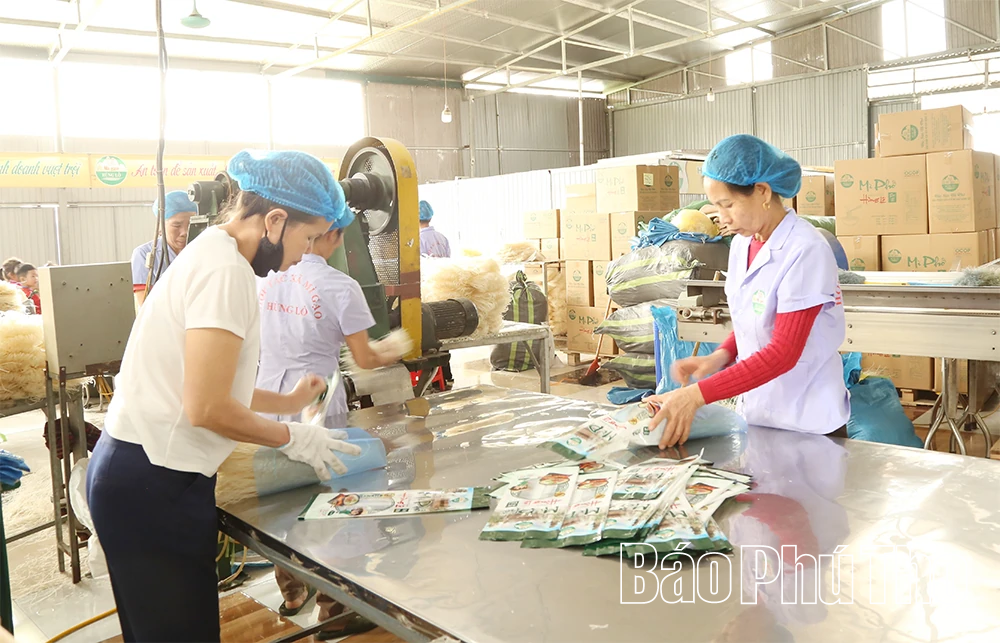
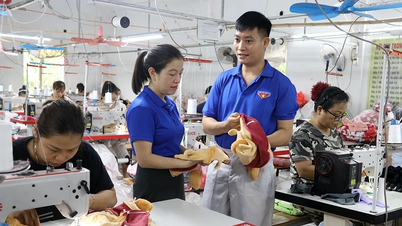
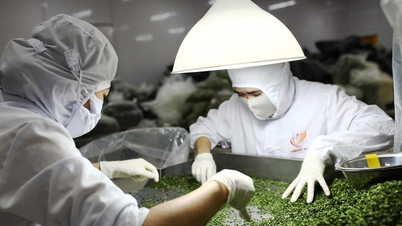
Packaging rice noodles at Hung Lo Rice Noodle Cooperative (Van Phu Ward).
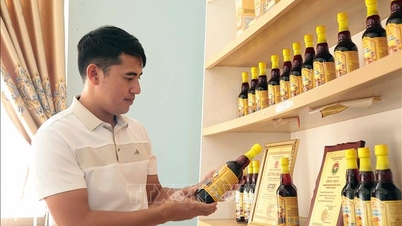
Hung Lo Rice Noodle Cooperative (Van Phu Ward) has a product that has achieved OCOP 5-star certification. The cooperative focuses on investing in technological innovation, automating some production processes, and prioritizing trade promotion. Mr. Cao Dang Duy, Director of the cooperative, said: “Among the many rice noodle products on the market, to make an impression and be competitive, we have determined that we must affirm our position through quality and persistently build our brand. Quality helps retain customers, while branding creates credibility and expands business opportunities. Therefore, the cooperative has invested in technological innovation, improved packaging and labeling, actively participated in trade fairs and product showcase booths, and successfully built the Hung Lo Rice Noodle collective brand with the support of various levels and sectors. Along with that, strict control of raw materials and the application of standardized production help ensure product quality stability, building trust with consumers.”
To ensure quality and contribute to building the brand of OCOP products, in recent years, emphasis has been placed on promoting the application of science and technology and protecting intellectual property rights for these products. Through the OCOP program and other integrated programs, many producers have received support and advice on building and managing trademarks, designs, and packaging; registering, establishing, protecting, developing, and enforcing intellectual property rights; implementing and applying traceability systems; barcode systems; labeling goods; and declaring quality standards for products. Programs applying and transferring scientific and technological advancements have helped producers improve their capacity, standardize products, innovate technology, build trademarks and brands, and develop along the value chain. To date, the province has over 90 key products and local specialties that have been established and developed with trademarks, brands, and geographical indications, such as: Doan Hung pomelo, Tan Son multi-toed chicken, Cao Phong orange, Vinh Phuc cordyceps...
When focusing on brand building, producers not only create standard-compliant products but also learn how to organize production systematically, from raw material selection, processing, and preservation to marketing. This process forces them to shift their mindset from small-scale production to a more professional approach, paying attention to registering intellectual property rights. This helps to establish the product's origin, prevent counterfeiting and imitation, and create a foundation for enhancing its value and reputation in the market.
Despite the achievements, many OCOP products in the province, although meeting quality standards, still lack a systematic brand development strategy. The designs are monotonous, the packaging is unattractive, the prices are high, and the limited promotion means the products do not have a clear competitive advantage.
Facing competitive market challenges, elevating OCOP products requires the simultaneous implementation of various solutions. Along with selling products through traditional channels such as specialty stores or supermarkets, developing dedicated websites, utilizing e-commerce, and promoting on social media helps products reach a large number of potential customers and effectively spread brand awareness. Relevant authorities need to continue supporting and advising businesses on logo design, packaging, trademarks, promotional materials, and websites; advising on intellectual property registration, product certification according to safety standards, implementing traceability systems, and building brand identity and protection systems.
It is crucial that OCOP participants proactively improve their capabilities, from refining processes and ensuring quality standards to understanding the market and customer needs. They are the ones who tell the most authentic stories about the products and cultural traditions, directly introducing the products, listening to feedback, and building sustainable relationships with customers.
When these solutions are implemented synchronously, the province's OCOP products will create their own unique mark on the market, build brands, increase value, expand consumption opportunities, and contribute to sustainable rural economic development.
Nguyen Hue
Source: https://baophutho.vn/xay-dung-thuong-hieu-nang-cao-gia-tri-san-pham-ocop-239503.htm






























































































Comment (0)