

The player answered "Two," which was immediately confirmed as "Correct Answer," and the two words marked as "misspelled" were "sổ" (book) and "ghạch" (brick).
"The word 'brick' is indeed wrong, but the 'record' needs to be reviewed."
First, let's consult a dictionary to see what similarities and differences there are between "sổ" and "xổ".
- The Đại Nam Quốc Âm Tự Vị (Huình Tịnh Paulus Của) explains "sổ" as "to break out, to fall out, to burst out," and lists "sổ ra" = "to break the rope, to break out"; "sổ dây" = "to break the rope"; "sổ lồng" = "to break out of the cage."
"Sổ ra" means "to break the rope." So what does "breaking the rope" mean? The Vietnamese Dictionary (by Lê Văn Đức) explains "breaking the rope" as "the rope breaking" (meaning the rope has come loose) and gives examples like "The bucket broke its rope and fell into the well, the horse broke its rope and ran away."
Regarding the word "xổ," the Đại Nam Quốc Âm Tự Vị dictionary defines it as "to pour out, to release; to untie; to let go; to take off," and gives examples such as "xổ súng" = "to shoot" (thus we see that "xổ" is synonymous with "to let go"); "xổ buồm" = "to hoist sails." However, this dictionary does not define the word "xổ ra" but notes it as "id" (rarely used).
What can we observe in the way the Đại Nam Quốc Âm Tự Vị (Vietnamese National Language Dictionary) teaches?
"Sổ" refers to something that slips or comes loose naturally, unintentionally; while "xổ" means to take off, remove, or detach intentionally.
The Vietnamese Dictionary (Hội Khai trí Tiến đức - 1931), published 35 years after the Đại Nam Quốc Âm Dictionary, similarly records that "sổ" means "to break free, to escape from a place that must be held or confined," and gives examples such as "Breaking the knot. Bird escaping the cage. Chicken escaping the coop. Newly released chick"; while "xổ" means "to open, to untie, to release," with examples such as "Untying the sail. Lottery. Laxative. Newly released chick. Untying the knot."
What about modern Vietnamese?
The Vietnamese dictionary (edited by Hoang Phe, published by the Institute of Linguistics) defines "sổ" as "to untie or loosen something that has been braided or tied," and gives examples such as "Untying hair to tie it back up. Loosening fabric...". According to this dictionary, "sổ" is used for both passive (untying, loosening) and active (causing something to come loose). However, for "xổ," the dictionary limits the meaning to "to open, to loosen something that is tied" (actively causing something to come loose).
The Vietnamese dictionary (Hoang Phe, Vietlex edition) defines "sổ" as "to come undone [referring to something that has been sewn, tied, braided, etc.]", and gives the example "the hem of trousers is coming undone ~ the seams are coming undone ~ hair is coming loose to comb"; the entry "xổ" explains: "to open up, to untie [something that is being folded or tied up]", and gives the example "the loincloth is coming undone ~ "Nga pursed her lips, gritted her teeth, then let her hair down to tie it up again." (Nguyen Cong Hoan)".
Thus, Hoang Phe's dictionary (Vietlex edition) still distinguishes between the meanings of "sổ" (passive) and "xổ" (active), similar to the Dai Nam Quoc Am Tu Vi and Viet Nam Tu Dien dictionaries. However, in the examples section, this dictionary provides the phrases "sổ tóc ra chải" (to comb hair) and "xổ tóc ra, để bó lại" (to let hair down and tie it back up). Therefore, "sổ" and "xổ" become synonyms, or are considered a case of "ambiguous" spelling.
Further examination of the Vietnamese Dictionary (edited by Nguyen Nhu Y) reveals a similar interpretation to the Hoang Phe Dictionary (published by the Institute of Linguistics), which defines "sổ" as "to come loose or to untie something that has been tied or bound," giving examples such as "a knot coming loose <> a scarf coming loose <> hair coming loose and being tied back <> fabric coming loose." Under "xổ," it is explained as "to open or untie something that is tied or covering: hair coming loose."
So, applying this to the situation of "the foster mother," is "sổ ra" or "xổ ra" the correct spelling?
We need to examine the source material further. The sentence "The button just came undone..." is taken from the short story "The Haunted Coin" by Nguyen Cong Hoan. In summary:
One morning, "Mother Nuoi" went to the courthouse to file a complaint about being robbed of all her possessions. To be allowed to see the magistrate, Mother Nuoi had to bribe the guard with two hào (a unit of currency), but the guard did not report the theft. Mother Nuoi risked going to see Magistrate Hinh, but the magistrate threatened and pressured her, making her extremely frightened. "She stood by the table, trembling uncontrollably. She glanced at the magistrate. He was so imposing. She was even more afraid. But despite her fear and trembling, she couldn't forget her duty to the magistrate. However, the money she had brought to present to the magistrate was tied to her apron. She had to untie it to retrieve it."
He fumbled with the knot. He was afraid the official would be waiting too long, so he had to hurry. But because he was in a hurry, and worried about the official's anger, he was clumsy. As soon as the knot came undone, there was a clatter, and all the money fell onto the tiled floor..."
As mentioned above, "Mother Nuoi" "untied the knot" (completely on her own initiative), but due to her "clumsiness," the knot "came undone" (unintentionally), causing "all the money to fall onto the tile."
Therefore, writing "the button just popped out" would be more accurate (as it describes a passive situation). However, considering the development and changes in the Vietnamese language from the late 19th and early 20th centuries to modern times, "sổ ra" and "xổ ra" are both acceptable.
Hoang Trinh Son (Contributor)
Source: https://baothanhhoa.vn/xo-ra-va-so-ra-256967.htm

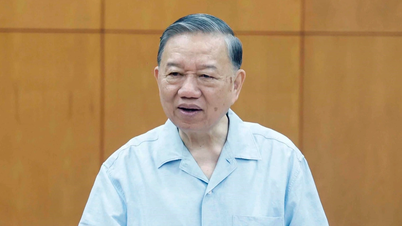
![[Photo] General Secretary and President To Lam presides over a meeting on assessing national development resources.](https://vphoto.vietnam.vn/thumb/1200x675/vietnam/resource/IMAGE/2026/05/20/1779253785852_a1-bnd-2943-8519-jpg.webp)





















































Comment (0)