

Many teachers, through various methods, have helped students break free from stereotypical, "uniform" writing styles from the elementary school level onwards.
We need to believe in the abilities of our students.
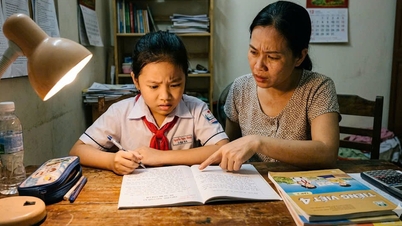
Ms. Nguyen Mong Tuyen, Executive Director of the Academy of Linguistics, stated that the phenomenon of students following pre-prepared outlines for assignments, at the primary, secondary, and high school levels, has existed for a long time. Due to pressure for grades, quality, and time constraints, some teachers resort to immediate solutions such as providing pre-prepared outlines for students to memorize and copy. Gradually, over time, this fosters a habit of dependence and low self-esteem, stifling students' creative thinking and preventing them from expressing their own thoughts.
However, according to Ms. Mong Tuyen, those are just isolated incidents. She still sees many teachers and genuine educators striving every day, wholeheartedly dedicated to developing language skills in young people, in order to teach seriously and effectively.
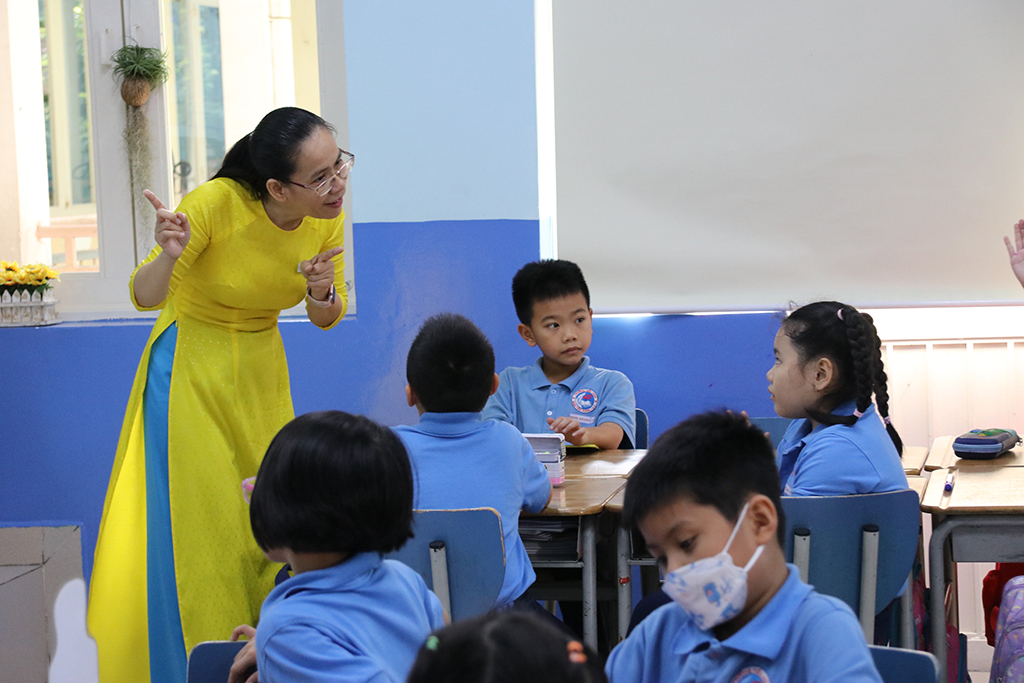
A fun Vietnamese language lesson at a primary school in District 1, Ho Chi Minh City.
Ms. Vu Thi Thanh Tam, manager of the "Book Window" library, believes that the education sector has undergone a transformation since the implementation of the 2018 General Education Program, focusing on developing students' competencies. The Vietnamese language and literature subject is now brought back to its true nature: developing students' reading, writing, speaking, and listening skills. Therefore, theoretically, learning model essays is meaningless. However, the phenomenon of students using model essays and producing formulaic writing still persists.
According to Master Tâm, the aforementioned problem may stem from several reasons, such as teachers lacking confidence in students' abilities, or not believing that teaching according to the curriculum will enable students to write their own essays. Alternatively, teachers may feel pressured to achieve high grades, forcing them to use model essays. Another reason could be parental involvement, where parents place too much importance on their children achieving high scores, thus overlooking this flawed learning method.
Ms. Vu Thi Thanh Tam, M.A., manager of the "Book Window" library.
Ms. Thanh Tam believes that to overcome the problem of students relying on model essays, teachers need to believe in their students' abilities and respect their individual creativity. Further changes to assessment criteria are needed to remove the pressure of high grades on teachers, and communication with parents is also crucial.
"Teachers and parents can start by making small changes, such as creating opportunities for students to express themselves freely, listening to and viewing each student's statement as a small 'spoken essay,' and accepting differing opinions. Next, allow students more freedom to write. It's acceptable for writing to be unrelated to assignments," suggested Master Thanh Tam.
I APPRECIATE HONEST ESSAYS
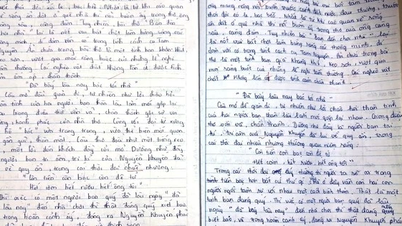
Ms. Pham Hoang Uyen, a teacher at Dinh Tien Hoang Primary School in District 1, Ho Chi Minh City, still vividly remembers an essay by a third-grade student that included the sentence: "My teacher is very kind. Every time I do something wrong, she always says, 'It's okay, I'll let it go. Remember to learn from your mistakes and don't repeat them again.'" For Ms. Uyen, these simple words were touching because the student wrote from real-life experiences, and this little one always remembered the phrase she often said when encountering students who made mistakes.
When teaching her students how to write essays, Ms. Uyen first has them create tree diagrams to visualize the structure of each section. Before writing, students also practice exchanging ideas and discussing in groups. The homeroom teacher of the 3rd grade class always appreciates essays that are honest, with simple language, yet still contain many thoughts and feelings from her students.
Meanwhile, Mr. Hoang Gia Hung, a teacher at Nguyen Thai Son Primary School, District 3, Ho Chi Minh City, said that when students reach grades 4 and 5, the requirements for reading and writing increase. In Mr. Hung's class, during essay writing sessions, students are divided into groups for discussion. The young students learn from their friends about good writing techniques, unique sentence structures, and interesting associations. At the same time, whenever he grades papers and comes across a good essay, Mr. Hung saves it to read aloud to the class later.
Teacher Hung stated that the 2018 general education program for students is based on learning abilities. Students are encouraged to write on specific topics. For example, in the topic of environmental protection, 5th-grade students can choose to write about environmental protection actions such as the community tree planting movement, or they can choose to write about deforestation, fishing using electricity or explosives, which seriously affect the ecosystem. With this competency-based writing approach, the new program encourages creative essays, avoiding mechanical introductions and conclusions. At the same time, teachers must be flexible and creative in grading to foster students' creativity.
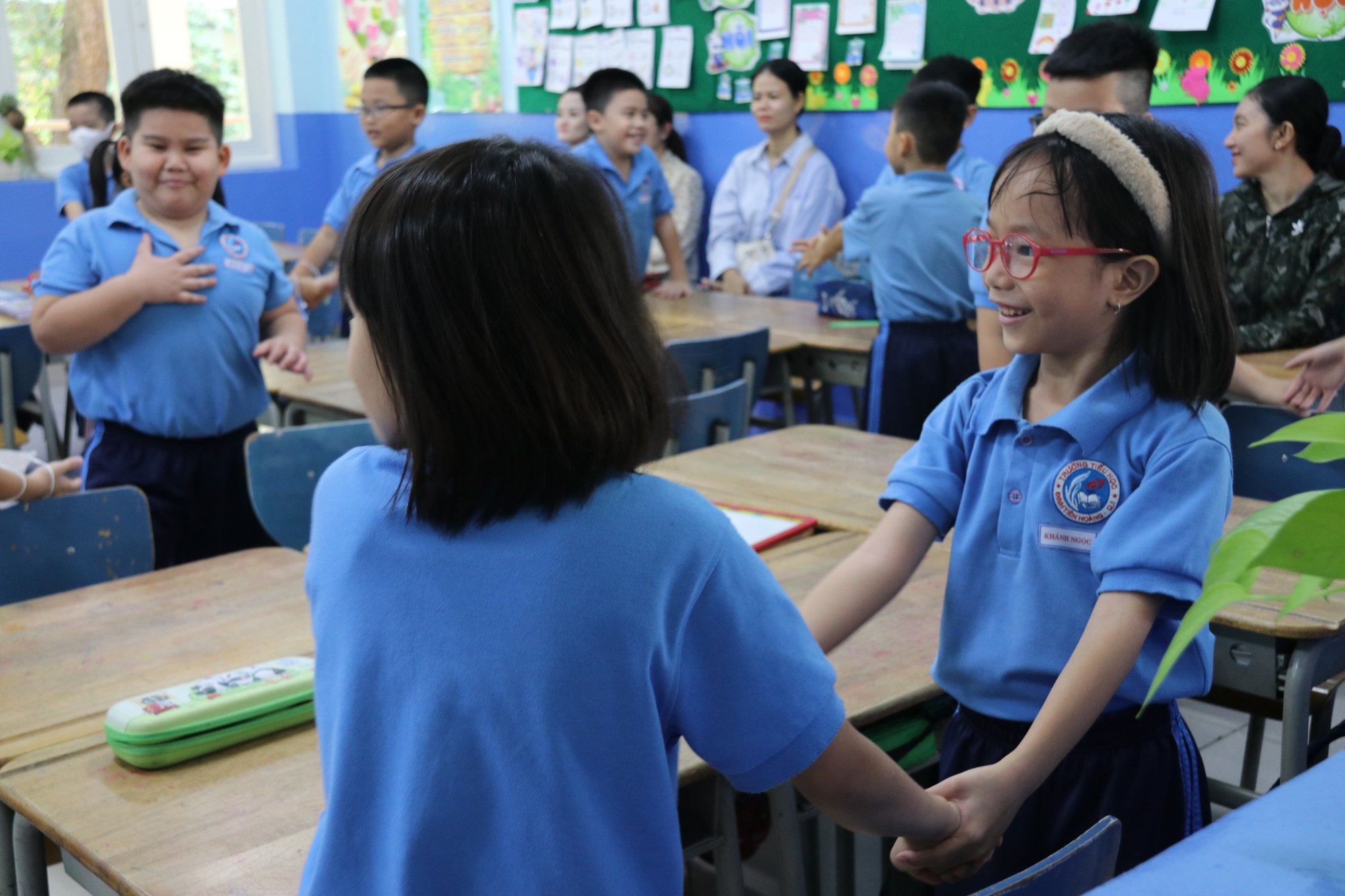
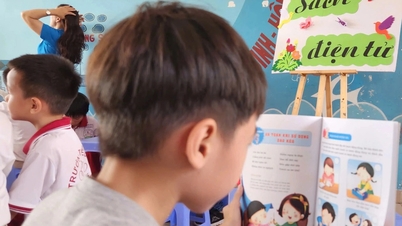
Students are divided into groups, interacting and discussing during Vietnamese class at a primary school in Ho Chi Minh City.
PARENTS SHOULD NOT STAND OUT OF THE MOVEMENT
Teacher Hoang Gia Hung believes that families – parents – should not be left out in the journey of helping students write authentic essays and say no to model essays. For example, good reading skills. From a young age, parents can read books with their children and practice reading skills. Reading extensively enhances students' ability to appreciate literature, expands their vocabulary, and improves their expressive abilities.
Meanwhile, Ms. Mong Tuyen believes that to gradually eliminate formulaic writing styles, adults should focus on activating children's linguistic thinking. Because to write well, students must first want to write. They need topics that stimulate creativity, that make them ponder and think about them. The deeper students think, the more emotions they feel and the desire to express those emotions. At that point, they need a sufficiently rich vocabulary to fully express the ideas in their minds.
"To build a strong vocabulary, children need to read a lot from a young age, and engage in discussions, conversations, debates, and critical thinking. Children as young as 5 or 6 can already do this with the support of their parents," suggested Ms. Mong Tuyen.
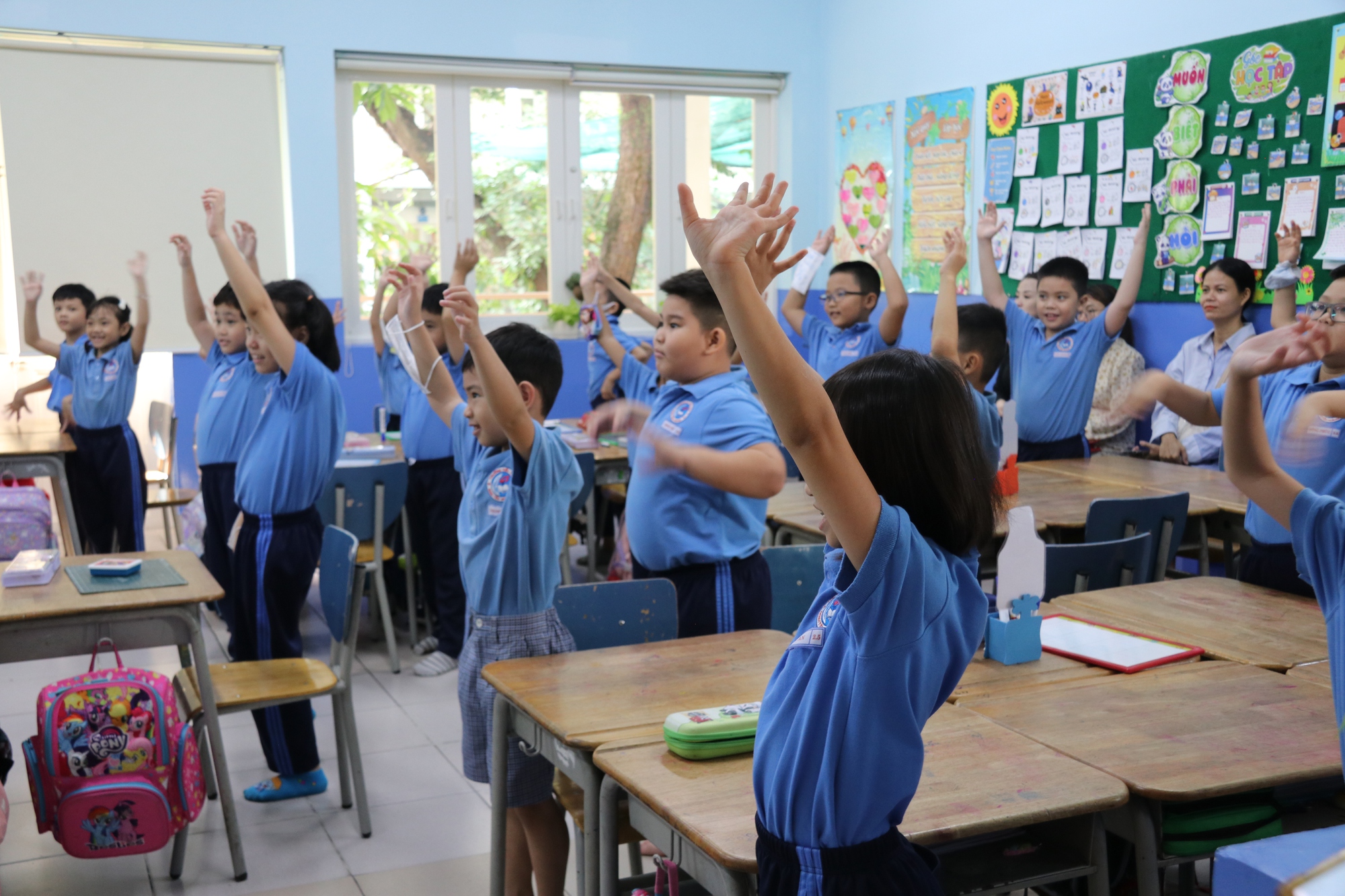
The Vietnamese language and literature subject is now being brought back to its true purpose: to develop students' reading, writing, speaking, and listening skills.
At the same time, according to Ms. Mong Tuyen, students should participate in reading groups, clubs such as public speaking, debate clubs, writing clubs, or participate in various competitions. "They should say no to attending extra classes and memorizing and copying sample essays from teachers. Over time, students should strive to improve their writing skills through their own writing. They should set their own writing topics, write every day, apply interesting vocabulary they've read in books, and find unique ways of expressing themselves that reflect their personal style... From there, each student will become more aware of learning Vietnamese language and literature and develop it daily," Ms. Mong Tuyen shared.
Teachers adapt to students' creativity.
Ms. Phung Le Dieu Hanh, Principal of Hong Duc Primary School, District 8, Ho Chi Minh City, said that with the 2018 General Education Program, students' essay writing assignments are not rigid or formulaic, but allow children to develop their thinking. Essays can be more open-ended and explore various directions, as long as they maintain structure and theme. Teachers adapt their grading to students' needs, encouraging creative essays.
To enhance students' thinking and language skills, the school encourages them to participate in experiential activities so that they can gain a practical perspective on society and life, thereby enriching their writing. At Hong Duc Primary School, children have book reading festivals and storytelling programs every Monday, featuring meaningful stories and heartwarming school stories from various provinces and cities, which also help them develop better writing skills.
Source link
![[Photo] General Secretary and President To Lam receives Amazon's Senior Vice President David Zapolsky](https://vphoto.vietnam.vn/thumb/1200x675/vietnam/resource/IMAGE/2026/05/22/1779466547770_a1-bnd-3513-6601-jpg.webp)

































































Comment (0)