Challenges from the US market
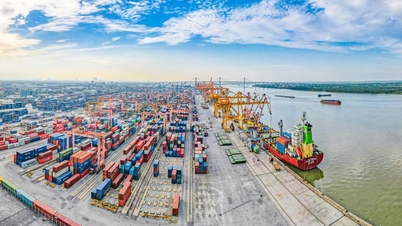
According to the Vietnam Association of Seafood Processing and Export (VASEP), seafood exports in the first five months of 2026 reached US$4.65 billion, an increase of 10.6% compared to the same period last year.
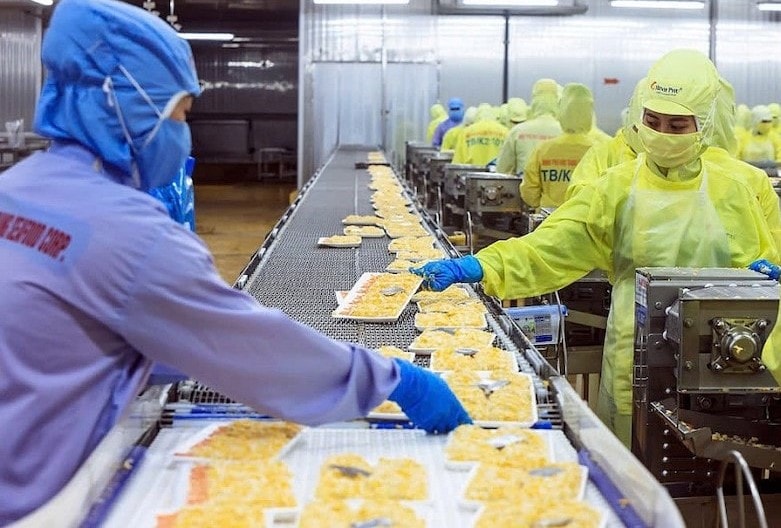
Notably, shrimp continues to be the most challenging product in the US market. Preliminary results from the 20th administrative review, announced by the US Department of Commerce on May 13, 2026, show preliminary anti-dumping duties for the two respondent companies at 10.76% and 6.3%, respectively, while companies eligible for individual duties are subject to a duty rate of 7.56%.
Although not yet the final outcome, this tariff has added pressure to price negotiations and the purchasing sentiment of American importers. This development indicates that market demand has not recovered strongly enough to absorb the cost and price pressures, causing importers to remain cautious about new orders.
For tuna and some other harvested seafood products, the current difficulty lies not in supply and demand but primarily in U.S. regulations. According to the U.S. National Oceanic and Atmospheric Administration (NOAA), every shipment of frozen or processed tuna imported into the U.S. must have Form 370, declaring its "dolphin-safe" status and accompanied by complete supporting documentation.
This regulation is applied within the framework of the Marine Mammal Protection Act (MMPA). Therefore, the ability to maintain orders and market share depends heavily on the company's capacity for record management, traceability, and compliance with technical requirements.
Commenting on the seafood export situation in the first five months of the year, VASEP General Secretary Nguyen Hoai Nam said: While the US and the European Union (EU) are recovering slowly, China is becoming the most important growth driver, contributing more than 70% of the additional growth of Vietnam's entire seafood industry in recent times.
Notably, Vietnam's seafood processing capacity is currently among the world's leading, especially in the area of value-added products. This is a significant competitive advantage compared to major exporting countries such as Ecuador or India.



Removing barriers to achieve the $12 billion export target.
Currently, the fisheries sector faces a growing number of tariff and non-tariff barriers, such as anti-subsidy and anti-dumping investigations, allegations of forced labor, the US MMPA regulations, and the EU's IUU "yellow card" warning. Therefore, achieving the target of $12 billion in seafood export value by 2026 will not be easy.
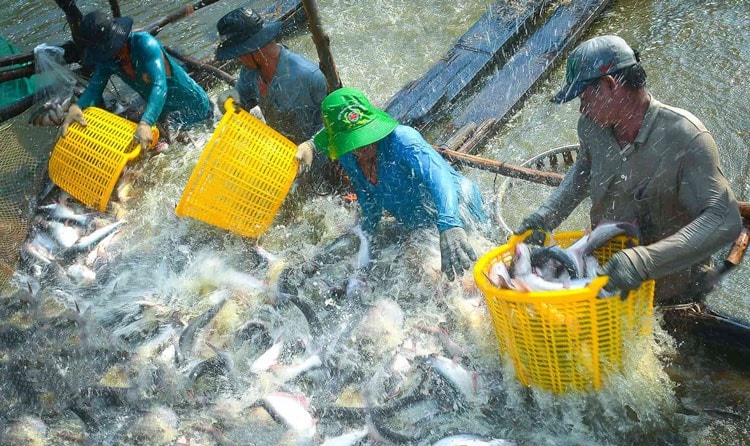
Regarding solutions, Vu Ba Phu, Director of the Trade Promotion Department ( Ministry of Industry and Trade ), advised: Businesses need to focus on improving product quality and animal health certifications; strictly adhere to food safety standards, and build long-term credibility for Vietnamese products. In particular, they need to build brands, participate in international food fairs to increase brand presence; and promote trade, targeting the high-end consumer and culinary segments.
To achieve its export targets, VASEP proposes that the Government reform institutions and the business environment by shifting strongly from pre-inspection to post-inspection, applying risk-based management and considering the compliance history of businesses to reduce the time and cost of administrative procedures.
The Ministry of Agriculture and Environment needs to focus on developing raw materials for export processing by expanding aquaculture areas, investing in infrastructure, improving the quality of breeding stock and feed, and reducing production costs. At the same time, it needs to review marine exploitation planning, invest in more standard fishing ports, and support sustainable exploitation to ensure the supply of raw materials.
According to Mr. Nguyen Hoai Nam, developing science and technology and boosting the production of value-added products is an irreversible trend. The Vietnamese fisheries sector cannot continue to compete solely on volume or low prices; instead, it must increase the value per unit of product through deep processing and adherence to green and sustainable standards.
In particular, VASEP recommends that the Government and relevant ministries and agencies such as the Ministry of Agriculture and Environment, the Ministry of Foreign Affairs, and the Ministry of Industry and Trade continue to strengthen market access and international trade efforts, contributing to the removal of tariff and non-tariff barriers, while protecting the legitimate rights of Vietnamese seafood businesses in the global market.
You may also likeHanoi: Plant rice on all summer rice fields, leaving no land fallow.For the 2026 crop season, Hanoi's agricultural sector plans to plant approximately 67,000 hectares of rice. This is a crucial production season to ensure food supply for over 10 million residents in the capital city.Summer with grandparentsAs the school year draws to a close, many families begin planning their children's summer vacation. Besides extracurricular classes or trips, many parents choose to let their children spend more time with their grandparents. From trips back to their hometowns and days spent with grandparents to simple daily activities, summer is providing many children with memorable experiences and lessons not found in textbooks.Hanoi Cai Luong Theatre begins rehearsals for its new play "The Girl from Hanoi"."The Hanoi Girl" is a meticulously produced work by the Hanoi Cai Luong Theatre, aiming to portray the elegant, resilient, kind, and patriotic beauty of Hanoi women.The seafood business community is committed to continuing technological innovation, improving compliance capabilities, developing value-added products, and diversifying markets, aiming to build a transparent, responsible, and sustainable Vietnamese seafood industry.
General Secretary of the Vietnam Association of Seafood Processing and Export (VASEP) Nguyen Hoai Nam


Source: https://hanoimoi.vn/xuat-khau-thuy-san-doi-mat-nhieu-rao-can-1207912.html
![[Image] Paris's oldest bridge goes viral after transforming into a giant cave.](https://vphoto.vietnam.vn/thumb/1200x675/vietnam/resource/IMAGE/2026/06/24/1782283441197_ndo_br_dsc05314-jpg.webp)
![[Photo] Prime Minister Le Minh Hung presides over the thematic session on promoting science and technology development and innovation.](https://vphoto.vietnam.vn/thumb/1200x675/vietnam/resource/IMAGE/2026/06/23/1782207872934_ndo_br_dsc-1724-jpg.webp)