

Growth drivers
According to the Vietnam Association of Seafood Processing and Export (VASEP), the EU is not only a market with great potential, but also possesses a diverse consumer ecosystem, ranging from mainstream to high-end. European consumers tend to favor seafood, especially shrimp. Among these, convenient, ready-to-eat, and reasonably priced products are increasingly popular.
Statistics for the first quarter of 2025 show that Vietnam's shrimp exports to the EU market reached over $107 million, a 33% increase compared to the same period in 2024.
The average export price of whiteleg shrimp to the EU remained stable at US$7.6/kg, while tiger shrimp recorded a slight increase, reaching US$10.9/kg in March – reflecting improved demand and significant growth potential in the premium segment.
Processed shrimp currently accounts for approximately 42–45% of total exports, while raw shrimp accounts for about 55–58%. This demonstrates a strong shift in consumer trends towards higher value-added products.
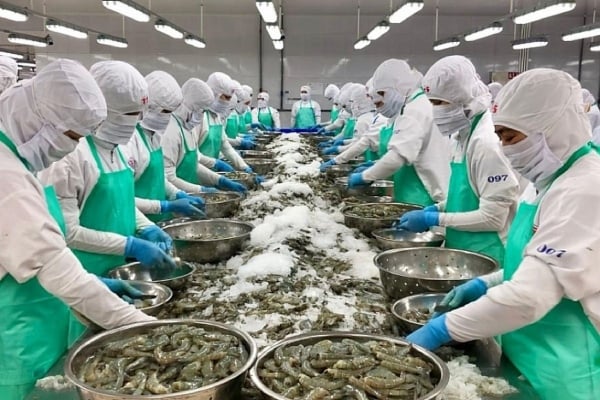
Whiteleg shrimp continued to play a leading role, with export turnover reaching US$87 million, accounting for 81% of the total value, a 31% increase compared to the same period last year. Black tiger shrimp – the second leading product – reached nearly US$10 million, a 14% increase. Notably, Vietnam is currently the second largest exporter of black tiger shrimp to the EU market – a strategic advantage that needs to be fully exploited.
Other shrimp products reached $10 million, a sharp increase of 79%, with breakthrough growth in both processed products (up 77%) and live/fresh frozen products (up 136%). This shows that product diversification is highly valued by the EU market.
Most major markets in the EU recorded positive growth in the first quarter of 2025. Exports to Germany reached $28 million, Belgium $23 million, the Netherlands $21 million, and France $8 million, representing increases of 38%, 59%, 19%, and 39% respectively.
"The growth momentum comes from recovering demand in Europe, the proactive approach of Vietnamese businesses in diversifying products, and effectively utilizing tariff preferences from the EVFTA agreement," VASEP noted.
Growth strategy in the EU
Thus, the first quarter of 2025 witnessed a strong comeback of Vietnamese shrimp in the EU market, along with stable growth in volume, price, and product segments.
VASEP believes that Vietnamese businesses with well-planned strategies can see this as an opportunity to diversify their markets in the face of US tariff policies.
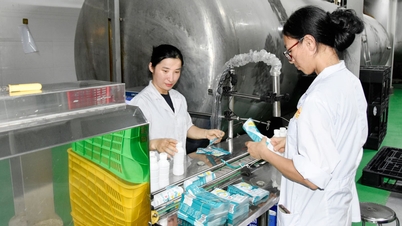
However, to leverage their competitive advantage and expand their market share in the EU, Vietnamese businesses need a strategy to upgrade their production and processing capabilities; invest in modern technology, and increase the proportion of deep processing. They should develop ready-to-eat processed product lines with traditional Vietnamese flavors and expand internationally certified farming areas to increase access to large retail chains.
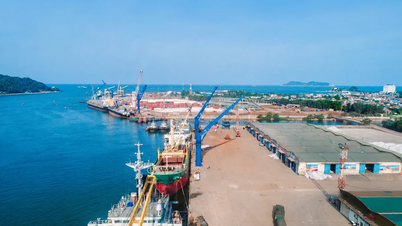
Furthermore, businesses need to establish bonded warehouses in logistics hub countries; connect directly with distributors and supermarkets in the EU to shorten the supply chain. Leveraging online channels such as company websites, digital marketing, and social media to reach new customers is also something businesses should consider.
Source: https://doanhnghiepvn.vn/kinh-te/kinh-doanh/xuat-khau-tom-sang-eu-khoi-sac/20250429041143781


![[Photo] The courage of new recruits of Brigade 144 on the training ground.](https://vphoto.vietnam.vn/thumb/1200x675/vietnam/resource/IMAGE/2026/05/27/1779881651341_anh-man-hinh-2026-05-27-luc-18-32-52.png)


![[Photo] The heat at the fireworks display site on the opening night of the Da Nang International Fireworks Festival 2026](https://vphoto.vietnam.vn/thumb/1200x675/vietnam/resource/IMAGE/2026/05/27/1779889741485_ndo_br_z7872039145157-fecaba5112f39e8352544099d7ef4738-5140-jpg.webp)






















































![[Photo] The courage of new recruits of Brigade 144 on the training ground.](https://vphoto.vietnam.vn/thumb/402x226/vietnam/resource/IMAGE/2026/05/27/1779881651341_anh-man-hinh-2026-05-27-luc-18-32-52.png)

























Comment (0)