

At Lomonosov School, students are encouraged to donate, but with a limit of no more than 30,000 VND. This is a rather subtle and sensitive approach, respecting the circumstances of each student, avoiding pressure, and not discriminating based on economic conditions.
Children who are underprivileged are still shown understanding and encouraged to participate wholeheartedly, not based on specific numbers.
Conversely, at Le Quy Don School, students receive certificates of merit if they contribute 100,000 VND or more, while those who contribute less will only receive a letter of commendation from their homeroom teacher.
This inadvertently creates a disparity in recognition of contributions, easily leading to students from more privileged backgrounds being valued more highly.
It can also lead to feelings of comparison or inadequacy when standards are not met, creating a gap in participation spirit.
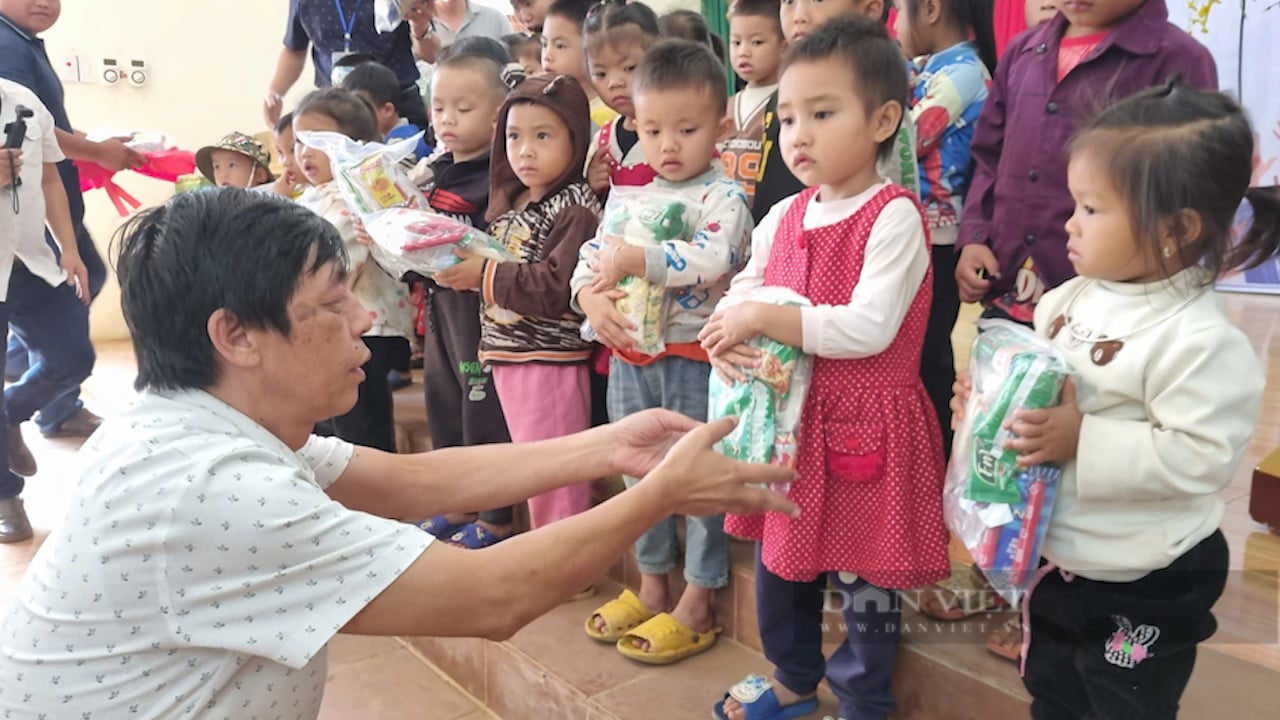
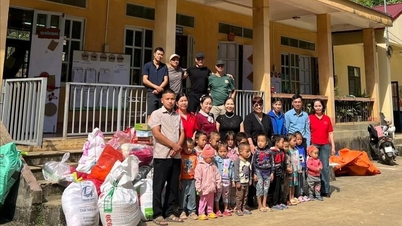
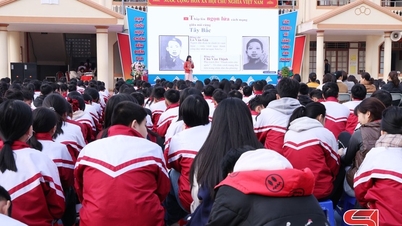
Representatives from Nong Thon Ngay Nay/Dan Viet newspaper present gifts to the students. Photo: Van Ngoc.
The question is: How can we encourage students to do good deeds without pressure or comparison? How can we ensure that every student has the opportunity to contribute without discrimination?
First and foremost, it's important to emphasize that charity isn't a race for numbers. The real value lies in the spirit and compassion. Schools can create an environment where every contribution, however small, is recognized and appreciated.
Instead of simply awarding certificates for large sums of money, encourage children to participate through other actions such as writing motivational letters, drawing pictures, or organizing sharing sessions about the meaning of volunteering. The important thing is to educate them about the spirit of mutual support and emphasize that every contribution, whether emotional, time-consuming, or material, is valuable.
Secondly, the approach needs to be flexible and tailored to each student's circumstances. Instead of imposing a specific contribution amount, the school can encourage students to contribute according to their ability. Students can also participate through small but practical actions such as saving their breakfast money or donating used items to people in flood-affected areas.
Ultimately, recognition shouldn't be based on the amount of donations. A certificate of merit, a word of encouragement, or a ceremony honoring all participating students can be motivating without making them feel compared to others.
The most important thing is to inspire in the children a spirit of volunteerism and empathy, rather than financial competition.

The author of this article is journalist Nguyen Cong Khanh. Photo: DV
References to several countries show that students are often encouraged to participate in volunteer work through a combination of rewards and intrinsic motivation strategies.
For example, some countries like Canada and the United States incorporate volunteering into their school curricula, requiring students to complete a certain number of volunteer hours before graduation. These hours often count toward academic credit or can help improve their college applications.
In many European countries, such as Spain and Germany, volunteering is linked to community engagement programs, where students receive certificates of participation or special recognition that can enhance their resumes.
Schools in these areas also emphasize the intrinsic value of volunteering, fostering a sense of civic responsibility and social contribution from a young age. Furthermore, some schools publicly recognize, award prizes, and grant scholarships to students who consistently participate in charitable activities.
In the Netherlands, students are encouraged through both formal recognition (such as awards or being mentioned in the school newsletter) and informal recognition (such as receiving thank-you letters from local organizations).
This combination of formal and informal recognition helps students feel valued for their contributions while fostering a lasting commitment to community service.
By focusing on both intrinsic and extrinsic rewards, these strategies encourage long-term participation in volunteering rather than viewing it as a one-time activity.
In a country with a tradition of mutual support and solidarity, fostering a spirit of helping those in need among the younger generation is crucial. However, encouragement must be given skillfully, so that children understand that the true meaning of volunteering lies not in the amount of money, but in the heart.
Under the national flag, even the simplest actions can illuminate the future.
Source: https://danviet.vn/30000-dong-100000-dong-va-thong-diep-cua-trai-tim-20240925141608584.htm





































































Comment (0)