


Doctors recommend establishing a "Smoke-Free Day" immediately. (Illustrative image)
Step 1: Identify the core reason. General advice is not enough to help smokers. A strong personal reason is needed as a source of motivation: protecting children from secondhand smoke, fear of lung cancer, a desire to maintain a youthful appearance, or saving money...
Step 2: Choose a “Starting Day” and clean up your living space. Select a day as a “Smoke-Free Day.” Before that time, remove all ashtrays, lighters, and cigarette packs from your home and workplace. Wash your clothes and curtains; prepare a “script” for declining offers and stay away from your usual cigarette stands.
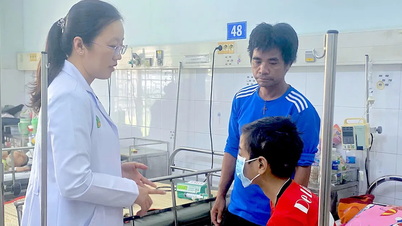
Step 3: Psychological therapy and medical intervention. Approximately 95% of people who attempt to quit smoking on their own fail because their brains have become dependent on nicotine. Therefore, those wanting to quit should inform their family and colleagues; proactively consult a doctor to apply cognitive-behavioral therapy to help control emotions, develop new reflexes, and persevere. If cravings are too strong, medical support is needed to use nicotine replacement therapy to alleviate feelings of restlessness. In cases of severe addiction, prescription nicotine-free medications will be used to reduce depression and concentration problems.
Step 4: Exercise and a healthy diet. When cutting nicotine, the body will react with irritability and restlessness, so soothe yourself by listening to music, practicing yoga, jogging, walking, or gardening. Exercise also prevents weight gain. At the same time, eat plenty of fruits, dark green vegetables, and low-fat dairy. Some foods will make the taste of cigarettes unpleasant, causing the body to instinctively reject smoke. Limit alcohol and coffee as these are stimulants that trigger cravings.
Expert advice: Relapse is common. So if you've made a mistake, establish a new "Smoke-Free Day" immediately. Quitting smoking helps stabilize blood pressure within 20 minutes; blood oxygen levels return to normal after a day; in the long term, it reduces the risk of stroke, heart failure, and lung cancer; and protects the whole family.
THU SUONG
Source: https://baocantho.com.vn/4-buoc-tu-bo-hoan-toan-thuoc-la-a206092.html



![[Photo] General Secretary and President To Lam presides over a meeting on preparations for the review of one year of operation of the three-tiered government system.](https://vphoto.vietnam.vn/thumb/1200x675/vietnam/resource/IMAGE/2026/06/02/1780391821195_a1-bnd-4595-9717-jpg.webp)











































































Comment (0)