

Fundamental challenge
Firstly, the quality of human resources has not kept pace with the development of science and technology . We are lacking a team of lecturers, experts, and high-tech engineers with international qualifications, while the demands of the labor market are increasingly stringent, requiring digital skills, data-driven thinking, and in-depth innovation capabilities.
Secondly, the infrastructure and data for digital transformation and the exploitation and use of artificial intelligence in training and especially in research – particularly in the higher education system – are still very lacking and inconsistent.
Thirdly, disparities among educational institutions are becoming increasingly apparent. Some pioneering schools have boldly implemented digital transformation, curriculum innovation, and governance models; however, many others still struggle with infrastructure, financial capacity, autonomy mechanisms, and human resources. This stratification necessitates the urgent need to improve policies to ensure equal learning opportunities and raise the overall quality standard.
Fourth, the innovation ecosystem in education lacks strong connections between schools, businesses, management agencies, and research organizations. Yet, this is a crucial condition for training to be aligned with practical needs and for science and technology to become a driving force in creating new value in the economy .
"The most important thing right now is that we need a new mindset for educational management, based on data and artificial intelligence, with international standards and national competitiveness. Education must be open, flexible, smart, internationally integrated, encourage creativity, and create conditions for each university to develop its own unique identity while still working together for the common good of the country," Professor Nguyen Dinh Duc stated.
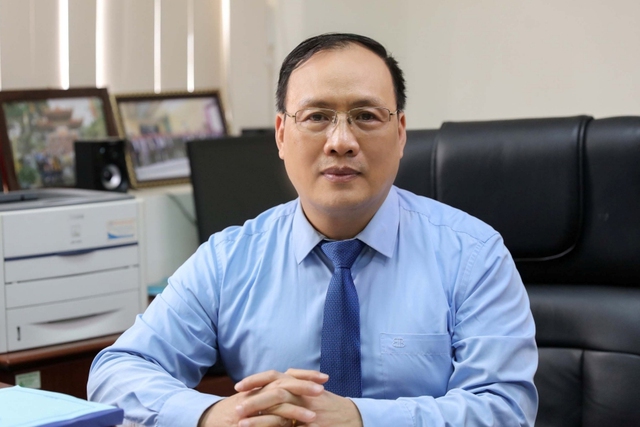
Prof. Dr. Nguyen Dinh Duc
Regarding the role of technology in innovation in teaching and learning, Professor Nguyen Dinh Duc stated that today's technology is not just a supporting tool, but has become a new productive force and a new production method in the digital economy, forming the foundation for creating a new educational model with three key levels. In particular, technology expands the space and methods of learning: Thanks to digital platforms, digital learning materials, virtual laboratories, and simulations, students can learn anytime, anywhere, transcending the limitations of the traditional classroom. This provides unprecedented flexibility and makes the learning process continuous.
Furthermore, technology enhances the quality of teaching, research, and assessment; it helps lecturers optimize lecture design, assessments, and classroom management based on empirical data. Simultaneously, technology fosters creativity and innovation in higher education: Tools such as numerical simulation, augmented reality, automation, big data analytics, and interactive learning platforms enable universities to innovate curricula, open new majors, establish digital laboratories, and forge deeper connections with businesses, preparing high-quality human resources for the digital economy – the knowledge economy. Professor Nguyen Dinh Duc affirmed: "Technology is the engine of innovation, a 'new academic environment, a new method of teaching and learning' that helps Vietnamese education enter a faster, more modern, integrated, and competitive stage of development."
Innovation in thinking - the decisive factor.
Professor Nguyen Dinh Duc affirmed that technology is merely a means, while innovative thinking is the decisive factor in helping education adapt and thrive in the new era. This innovative thinking is reflected in four core points. Firstly, as stated in Resolution 71/NQ-TW, education and training must be recognized not only as a top national priority but also as a decisive factor in the future and destiny of the nation. This understanding is the root and foundation for change.
Secondly, education must be viewed as an open ecosystem, constantly interacting with the labor market, businesses, and national development needs. Knowledge is no longer the central focus; creativity and the ability to adapt and create new values are the core priorities.
Thirdly, we need to shift from "learning to know" to "learning to do - learning to create": Learners must take ownership of the learning process, exploring, questioning, experimenting, and creating new value. This is the most important foundation for training high-quality human resources in today's era of innovation.
Fourth, shift from a management mindset to a service-oriented and constructive mindset: Schools need to manage using data; be flexible, empower faculty and students, and view technology as a tool to enhance the quality of training, research, and management, rather than just a task to implement. "Technology can change infrastructure; but only a change in awareness and a change in thinking can create future changes for Vietnamese education," Professor Nguyen Dinh Duc emphasized.
Furthermore, Professor Nguyen Dinh Duc argues that balancing technology and people is not a choice, but an art of combining the strengths of both to improve the quality of education. Technology opens up new possibilities, but people are the subjects who determine the meaning and value of the learning process. The education sector needs to adhere to core principles to maintain this balance. In particular, technology must serve people, not replace the role of the teacher. AI can support data analysis, individualized learning, and automated assessment; but it is the teacher who inspires, instills aspirations, guides values, builds character, and nurtures the desire for creativity in students. These are precisely the things that technology and artificial intelligence cannot replace.
Simultaneously, maintain a focus on humanistic qualities and competencies: In the age of big data, learners increasingly need critical thinking, creativity, social responsibility, collaboration skills, adaptability, self-improvement, and professional ethics. These are the elements that create depth in education, helping people master technology instead of being controlled by it. Along with this, build an academic environment that harmoniously combines digitalization and direct interaction. This balance is ensured when technology elevates the role of human beings, and people know how to use technology as a tool to develop their intellect, personality, and creative abilities.
According to Professor Nguyen Dinh Duc, the future of education is an ecosystem where technology and artificial intelligence elevate human potential, for the happiness of individuals and the wealth and prosperity of the nation. Vietnamese education will experience remarkable advancements, and some Vietnamese universities will rank among the top 100 in the world. People will use technology and AI to develop their intelligence, enhance creativity, and create new values for the miraculous breakthrough development of a strong and prosperous Vietnam in the new era.
Source: https://phunuvietnam.vn/4-nut-that-can-thao-go-cua-giao-duc-viet-nam-trong-ky-nguyen-so-238251219112217116.htm

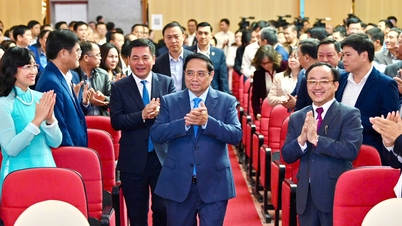
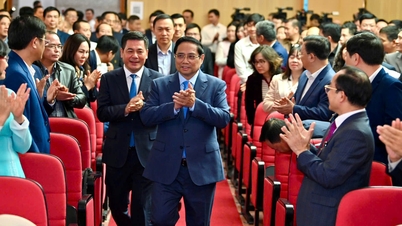
![[Photo] Prime Minister Pham Minh Chinh attends the Conference on the Implementation of Tasks for 2026 of the Industry and Trade Sector](/_next/image?url=https%3A%2F%2Fvphoto.vietnam.vn%2Fthumb%2F1200x675%2Fvietnam%2Fresource%2FIMAGE%2F2025%2F12%2F19%2F1766159500458_ndo_br_shared31-jpg.webp&w=3840&q=75)


















































































Comment (0)