

The lower half of a man's body is not only a vital area for movement but also reflects many potential health issues. Ignoring unusual signs in this area could mean you're unknowingly gambling with your lifespan.
1. Urine has an unusual color.
Normal urine is light yellow, but if your urine is cloudy, foamy, or the volume of urine is less or more than usual, or if it contains blood, or has a foul odor, this could be a warning sign of a serious medical condition. Especially if the change in urine color is unrelated to your diet or dehydration, you should see a doctor immediately.

Normal urine color is pale yellow or clear yellow (Photo: ST)
According to Healthline, abnormal urine may be related to:
- Dark yellow urine: If your urine is simply darker than usual, it could be due to dehydration. When the body doesn't have enough fluids, the compounds in the urine become more concentrated, causing the urine to be darker than normal.
- Pink or red urine: This could be due to red or black foods; side effects of medication or related to kidney disease (stones, inflammation), benign prostatic hyperplasia or cancer; lead or mercury poisoning; or severe muscle injury.
- Orange-colored urine: Orange urine is primarily a side effect of certain medications, such as rifampin, phenazopyridine, laxatives, sulfasalazine, and some chemotherapy drugs. Additionally, orange urine can be a symptom of bile duct or liver disease, especially if accompanied by pale stools.
- Urine that is green or greenish in color: Foods; dyes used in kidney and bladder tests; medications and supplements such as indomethacin, amitriptyline, propofol, and multivitamins. Less commonly, green urine may be caused by a urinary tract infection due to the bacterium Pseudomonas aeruginosa; or benign hypercalcemia.
- Brown urine: Side effects of the medication include: primaquine, chloroquine, nitrofurantoin, metronidazole, methocarbamol, laxatives containing senna or cascara; urinary tract infection; liver disorders; kidney disorders or severe muscle injury.
2. Abnormal bowel movements
The gut is considered the source of all diseases. It controls 70% of the body's immunity, so if the gut is unhealthy, immunity will quickly decline.

One of the first "signals" indicating poor gut health is irregular bowel movements (Photo: ST)
One of the first "signals" indicating poor gut health is abnormal bowel movements, including: blood in the stool, changes in bowel habits, diarrhea, constipation, frequently loose stools, etc. Changes in bowel habits can be a temporary infection, but they can also be more serious, such as cancer, nerve damage from a stroke, or spinal cord injury, all of which can affect a person's ability to control bowel movements.
According to Medical News Today, the color of stool can reflect:
- Bloody stools : This can be acute or chronic. It is associated with hemorrhoids, anal fissures, intestinal polyps, colorectal cancer (dark, tar-like stools), inflammatory bowel disease, stomach ulcers, etc.
- Pale stools (clay-colored, pale yellow stools) : High-fat foods; side effects of medications containing fat. Large amounts of aluminum hydroxide are found in antacids used to treat stomach ailments or in contrast agents used in X-ray examinations. small intestine infection caused by Giardia; Signs of liver damage (fatty liver, liver cancer, liver cysts, Wilson's disease, etc.); gestational cholestasis, gallbladder disease, pancreatic problems such as pancreatic cancer, pancreatitis.
If you experience bloody stools, inability to pass gas, loose stools like diarrhea lasting more than 24 hours, mucus or pus in your stools, or severe abdominal pain, you should seek medical attention as soon as possible.
3. Numbness and tingling in the legs
If men experience numbness or tingling in their legs, it's important to check whether the numbness is symmetrical on both sides or on only one side. If it's symmetrical on both sides, it often suggests diabetic peripheral neuropathy. If it only occurs on one side, intracranial pathology should be considered.
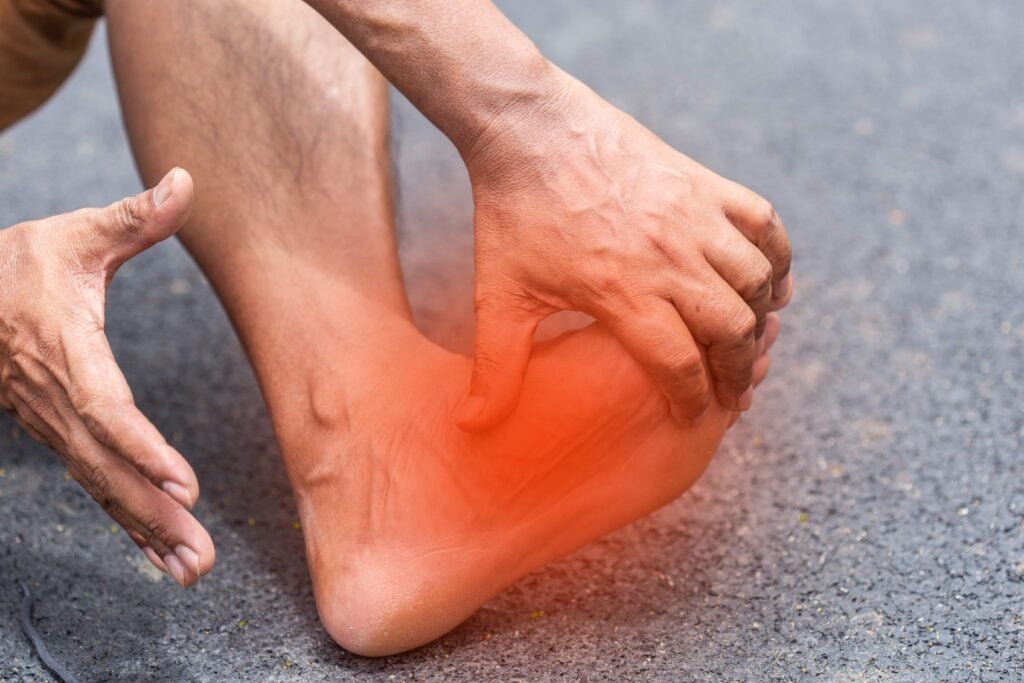
If men experience numbness or tingling in their legs, it's important to check if the numbness is symmetrical on both sides or only on one side. (Image: ST)
Specifically, numbness in the lower extremities can be related to common health conditions such as:
- Incorrect posture: Sitting with legs crossed, kneeling for long periods, or wearing pants/socks/shoes that are too tight can cause the legs to completely lose sensation when changing to a different position.
- Injury: Injuries to the trunk, spine, hips, legs, ankles, and feet can increase pressure on nerves, causing numbness and tingling in the legs to varying degrees, depending on the cause of the injury, such as slipped or herniated discs, hip dislocations, etc.
- Diabetes : Approximately two-thirds of people with diabetes experience nerve damage ranging from mild to severe. In diabetic peripheral neuropathy, the crawling sensation usually develops first in the toes, gradually spreading up both feet and legs, then to the hands and arms.
- Sciatica: The sciatic nerve runs from the lower back down the leg and is the longest nerve in the body. If the sciatic nerve is irritated or compressed, it can lead to numbness or tingling in the leg.
- Tumor: Both cancerous and benign tumors, if they appear in areas such as the brain, spinal cord, or any part of the legs and feet, can restrict blood flow, causing numbness in the legs, which may or may not be accompanied by pain.
- Stroke: Stroke symptoms tend to be similar and include slurred speech, numbness, and weakness or paralysis on one side of the body. These symptoms appear suddenly and are more common in people with high blood pressure, a history of smoking, and diabetes.
- Peripheral artery disease (PAD) : Peripheral artery disease (PAD) occurs when arteries narrow, reducing blood flow to your arms and legs. PAD can make walking painful, and can also cause numbness and tingling in the legs. PAD is often a sign of atherosclerosis, the buildup of fatty deposits in your arteries. Atherosclerosis is a risk factor for heart attack or stroke.
4. Foot edema
Swollen feet Swelling is the accumulation of fluid in the tissues of the legs, causing them to swell, and can be caused by many factors.
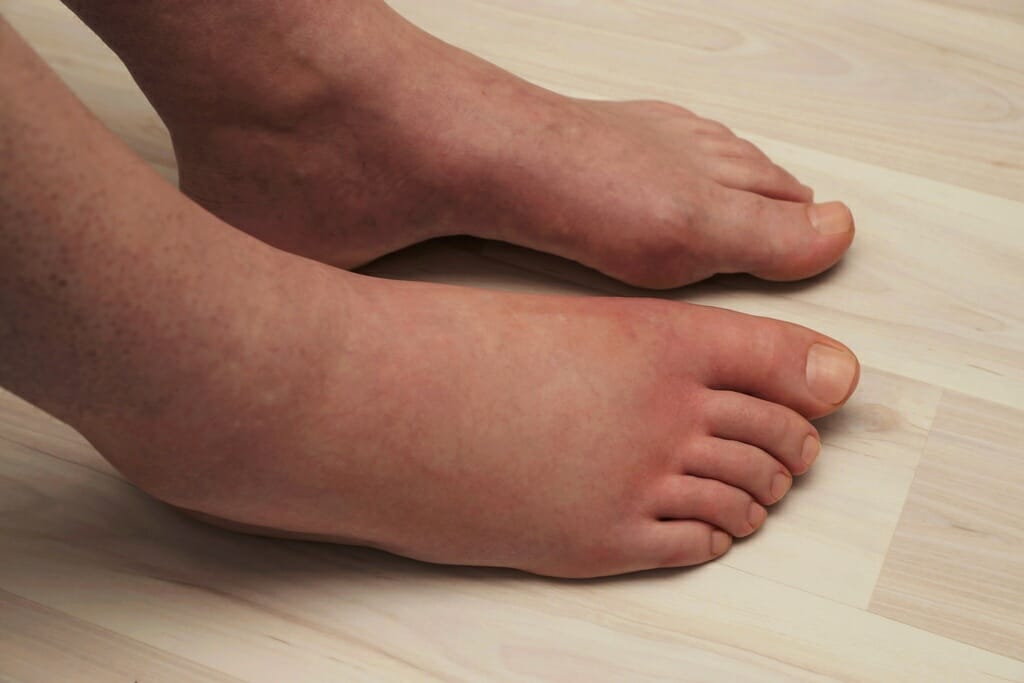
Swollen legs can be caused by many factors (Photo: ST)
Swollen feet can be caused by eczema, foot or ankle injuries such as ankle sprains when ligaments are overstretched, excessive alcohol consumption, foot swelling due to hot weather, or side effects of medications such as estrogen and testosterone hormone medications; calcium channel blockers to control blood pressure; steroids and corticosteroids; antidepressants; nonsteroidal anti-inflammatory drugs; and diabetes medications.
However, leg swelling can be related to more serious medical conditions and requires prompt attention:
- Diabetes: Diabetic foot is a common term referring to foot swelling and reduced sensation associated with diabetes. If blood sugar levels are not well controlled, it can affect blood circulation and the nervous system – both of which can lead to foot edema. Note that people with diabetes are more prone to developing deep vein thrombosis (DVT), which can cause swelling in the feet (usually in one leg). If the clot breaks off and travels to the lungs, it can cause pulmonary embolism, a life-threatening condition.
But Chronic venous insufficiency : Lower extremity venous insufficiency occurs when venous blood has difficulty returning to the heart and pools in the legs, causing hemodynamic changes and deformation of the surrounding tissue. In advanced stages, symptoms of lower extremity venous insufficiency include ankle or foot swelling accompanied by prominent varicose veins on the skin. More seriously, chronic lower extremity venous insufficiency can lead to superficial thrombophlebitis, bleeding from ruptured varicose veins, or infection of ulcers.
- Lower extremity thrombosis: Blood flow back to the heart becomes difficult if blood clots form in the veins of the legs, leading to swelling of the feet and ankles. Deep vein thrombosis (DVT) is a condition where a blood clot forms deep within the leg, blocking major veins and becoming serious if it travels to the heart or lungs. Symptoms of DVT include: swelling in one leg, pain or discomfort in the leg, mild fever, changes in skin color in the leg, etc.
- Heart disease: Swelling in the feet can be a sign of heart disease or heart failure, caused by damage to the heart that prevents it from pumping blood effectively. In particular, right-sided heart failure can cause the body to retain salt and water, leading to foot swelling. Heart failure is a condition that requires immediate medical attention; the sooner it is addressed, the better the prognosis.
5. Erectile dysfunction
Erectile dysfunction is understood as Erectile dysfunction is the inability to achieve or maintain an erection long enough for sexual intercourse. Many factors can cause erectile dysfunction in men, including psychological issues, trauma, unhealthy lifestyle habits such as excessive alcohol and substance abuse, or side effects of certain medications, all of which can make it difficult for men to maintain an erection.
However, in many cases, erectile dysfunction is a symptom of several serious underlying health problems such as heart disease, atherosclerosis, high blood pressure, diabetes, metabolic disorders, Parkinson's disease, and multiple sclerosis.
Early detection of symptoms associated with erectile dysfunction is crucial for prompt intervention and to avoid serious complications.
In general, there are many abnormal changes in the lower half of the male body that require attention, such as urinary and bowel abnormalities, foot/leg/ankle abnormalities, genital abnormalities, etc. Early treatment will lead to a better prognosis, avoiding dangerous complications that affect both health and lifespan, as well as quality of life.
Source: https://phunuvietnam.vn/5-dau-hieu-bao-dong-do-voi-suc-khoe-nam-gioi-2025040912185252.htm



![[Image] Close-up view of the interchange connecting the two expressways and Long Thanh Airport.](https://vphoto.vietnam.vn/thumb/1200x675/vietnam/resource/IMAGE/2026/05/25/1779703378210_ndo_br_z7863716673926-224453a31600126cce10622af6290afd-4549-jpg.webp)

![[Image] Hanoi's urban life under the challenge of a "scorching hot" environment](https://vphoto.vietnam.vn/thumb/1200x675/vietnam/resource/IMAGE/2026/05/25/1779706979265_nang-nong-t5-2026-minh-duy-7-4636-jpg.webp)


































































































Comment (0)