

Many parents believe that children's poor appetite during hot weather is normal. However, if poor appetite is accompanied by lethargy, decreased urination, fever, vomiting, or weight loss, it could be a sign that the child's body is experiencing a problem that needs close monitoring.
- 1. The child urinates infrequently, has dry lips, and cries without tears.
- 2. The child is lethargic, sweating profusely, nauseous, or has a headache.
- 3. Loss of appetite accompanied by fever, cough, sore throat, and mouth ulcers.
- 4. Persistent abdominal pain, vomiting, diarrhea, or constipation.
- 5. Children experiencing weight loss, slow weight gain, and reduced energy levels.
In hot weather, children tend to eat less. The humid air makes them tired, thirstier, preferring cool foods and more likely to refuse hot, greasy, or heavy dishes.
For young children, appetites can also change from day to day. Today they might have a good appetite, but tomorrow they might only want milk, fruit, or a few bites of rice before turning away.
However, not all cases of poor appetite during hot weather are "picky eating." Common picky eating usually occurs while the child is still playing, sleeping, growing relatively well, and showing no obvious signs of illness. Conversely, if a child suddenly stops eating, drinks poorly, is unusually tired, or has other accompanying symptoms, parents should consider health-related causes.
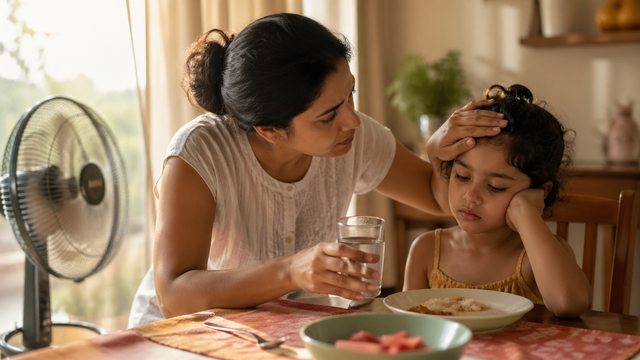
Children eating less on hot days may be a temporary reaction, but parents should monitor for signs of dehydration, fever, and lethargy.
Here are five signs that a child's poor appetite during hot weather may not simply be due to a lack of desire to eat.
1. The child urinates infrequently, has dry lips, and cries without tears.
Dehydration is a common problem during hot weather, especially in young children. Children lose water through sweat, breath, and urine; if they run and play outdoors, have a fever, vomit, or have diarrhea, the amount of water lost increases.
When a child is dehydrated, they often feel tired, thirsty, have a dry mouth, and don't want to eat. Some signs parents should look out for include dry lips, dry tongue, sunken eyes, little or no crying, fewer wet diapers than usual in infants, and in older children, infrequent urination and dark urine.
It's worth noting that many dehydrated children don't complain of thirst explicitly. They may simply be fussy, lie down a lot, be irritable, and refuse to eat. If a child doesn't urinate for hours, is lethargic, drinks very little or nothing at all, parents should take the child to the doctor as soon as possible instead of just trying to force-feed them.
The first thing to do is not to feed the child a lot, but to rehydrate properly. You can give the child small sips of water, oral rehydration solution as directed, breast milk, or formula for breastfeeding infants. Avoid giving the child lots of sugary drinks, carbonated drinks, or very cold beverages to "coax" them to eat, as this can cause bloating and make them even more reluctant to eat.
2. The child is lethargic, sweating profusely, nauseous, or has a headache.
A child who is simply a picky eater will usually still be playful, quick-witted, and alert. But if a child is outdoors in the heat and then becomes lethargic, sweating profusely, with cold, clammy skin, dizziness, nausea, headache, weakness, or unusual irritability, parents should consider the possibility of heat exhaustion.
Hot weather causes the body to sweat more to cool down. When children lose water and salt through sweat but are not adequately replenished, they easily become tired, lose their appetite, and even vomit. Young children are at higher risk than adults because their ability to regulate body temperature is not yet fully developed and they often do not recognize when they need to rest or drink water.
When you see these signs, you should move the child to a cool place, remove some of their clothing, wipe their body with a cool towel, and give them small sips of water or rehydration solution if they are conscious. If, after resting in a cool place, the child does not improve, develops a high fever, becomes confused, breathes rapidly, has seizures, or faints, call emergency services or take the child to a medical facility immediately. This is no longer just a matter of poor appetite.
3. Loss of appetite accompanied by fever, cough, sore throat, and mouth ulcers.
The hot season doesn't mean children are less susceptible to infections. They can still get sore throats, viral colds, hand, foot, and mouth disease, viral fever, or other respiratory and digestive illnesses. When sick, the body prioritizes fighting the infection, causing changes in taste, sore throats, mouth ulcers, or nasal congestion, making children reluctant to eat.
Signs that indicate picky eating is not simply a matter of a child suddenly refusing their usual favorite food, experiencing pain when swallowing, drooling, bad breath, fever, cough, runny nose, rash, or blisters on their hands, feet, or in their mouth. In young children, the symptoms may sometimes be just fussiness during meals, holding food in their mouths for too long, spitting out food, or demanding drinks but refusing or reducing their intake.
During this period, parents should not force children to eat rice or hard, dry foods. Soft, moderately cool, and easy-to-swallow foods such as thin porridge, soup, yogurt, soft fruits, milk, or other foods the child will accept should be prioritized. More importantly, monitor fluid intake, fever, and alertness.
If a child has a persistent high fever, difficulty breathing, refuses to drink, has a severe sore throat, multiple mouth ulcers, an unusual rash, or signs of dehydration, they should be taken to a doctor.
4. Persistent abdominal pain, vomiting, diarrhea, or constipation.
Hot weather makes food spoil more easily if not stored properly. Children also tend to eat more ice cream, ice, snacks, and drink more cold water. These factors can disrupt digestion or increase the risk of intestinal infections.
When experiencing stomach pain, nausea, diarrhea, or bloating, children often fear eating because it makes them feel more uncomfortable. Some children also suffer from constipation due to insufficient water intake, poor vegetable consumption, or excessive sweating. Constipation can also cause bloating, feeling full quickly, and irritability during meals.
Parents should pay attention if their child's poor appetite is accompanied by frequent vomiting, frequent diarrhea, bloody stools, intermittent abdominal pain, bloating, fever, or lethargy. For children with diarrhea, prioritize fluid and electrolyte replacement, continue feeding them small amounts of food, and avoid self-medicating with anti-diarrheal drugs or antibiotics without a prescription.
If a child is constipated, it's necessary to increase fluid intake, provide age-appropriate fruits and vegetables, encourage light exercise, and adjust bowel habits. Prolonged constipation, pain during bowel movements, anal fissures, or weight loss should be evaluated by a doctor.
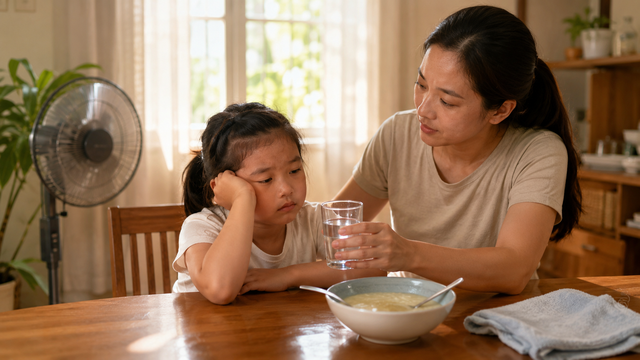
Do not force children to eat when they are tired or nauseous; prioritize hydration, soft, easy-to-swallow foods, and take them to the doctor if there are any warning signs.
5. Children experiencing weight loss, slow weight gain, and reduced energy levels.
Poor appetite due to weather changes is usually temporary. When the weather cools down, children get enough sleep, drink enough water, and their appetite usually improves. The worrying thing is when poor appetite persists for days or weeks, clothes become looser, weight decreases, there is no weight gain for their age, or there is a noticeable decrease in energy intake.
Weight loss, slow weight gain, pale complexion, fatigue, decreased activity, unusually excessive sleep, or persistent irritability are signs that should not be attributed to "picky eating." These could be underlying micronutrient deficiencies, anemia, digestive disorders, chronic infections, dental problems, swallowing disorders, or other causes that require medical attention.
Parents can keep a record for several days: what the child eats, how much they drink, the number of times they urinate, their stool, their sleep patterns, weight, and any accompanying symptoms. This diary helps doctors make a more accurate assessment, rather than relying solely on the feeling that "the child is eating little."
First, reduce the pressure during mealtimes. Forcing children to eat, threatening them, or prolonging meals for too long can make them even more afraid of eating. Instead, divide meals into smaller portions, choose soft, cool, low-fat, and easily digestible foods. Feed children at cooler times of the day, such as early morning or late evening. Mealtimes should be short, enjoyable, and not turn into a "battle" between parents and children.
Secondly, prioritize water. Children need to drink water regularly throughout the day, especially when sweating, exercising, having a fever, vomiting, or diarrhea. For breastfeeding babies, increasing feeding times may be more important than trying to give them more formula or porridge when they are tired.
Third, keep the environment cool and safe. Limit outdoor playtime for children during peak sunlight hours, have them wear hats and breathable clothing, and allow them to rest between exercise sessions. Never leave children in parked cars, even for a short time.
Finally, parents need to remember: children may eat less on hot days, but they shouldn't be lethargic, urinate less, have a high fever, vomit frequently, have severe diarrhea, persistent abdominal pain, or lose weight. When poor appetite is accompanied by these signs, what the child needs is not to be forced to eat a few more spoonfuls of rice, but to have their health assessed promptly.
Source: https://suckhoedoisong.vn/5-dau-hieu-tre-bieng-an-mua-nong-169260506124823363.htm

























































































Comment (0)