

Exercise is an important part of health preservation , helping to regulate blood circulation and balance yin and yang. According to Dr. Nguyen Thanh Hang from the Department of Traditional Medicine, Hanoi Medical University, physical activity not only improves health but also strengthens vital energy.
Regular exercise is not only necessary but also needs to be appropriate for your physical condition, the time of day, and your overall health. Incorrect exercise can not only fail to improve your health but can also lead to fatigue, sleep disturbances, or digestive problems.

Exercising intensely in the evening can make it difficult to fall asleep and lead to fatigue the next day.
Here are 5 common mistakes people make when exercising:
1. High-intensity workout in the evening.
Many people have a habit of exercising intensely in the evening to "relieve stress" after a day's work. However, according to Dr. Nguyen Thanh Hang, from late afternoon onwards, the body enters a state of "rest and recovery" (a phase where the body needs rest to recover). Intense exercise at this time can deplete energy and cause imbalance.
According to modern medicine, when it gets dark, the body increases the secretion of melatonin – a hormone that helps the body fall asleep easily and maintain deep sleep. Meanwhile, high-intensity exercise increases heart rate, body temperature, and stimulating hormones like adrenaline, causing the body to become excited. This conflict makes it difficult for exercisers to fall asleep, resulting in shallow sleep and fatigue the next day.
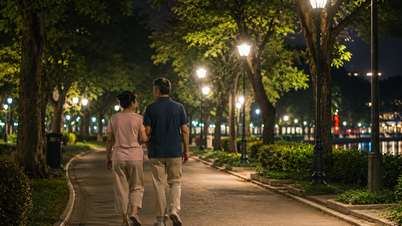
Solution: In the evening, you should only do light exercises such as walking, yoga, or stretching; if you need to exercise vigorously, you should do so at least 2–3 hours before bedtime.

Sweating profusely during exercise but not replenishing fluids adequately is a common mistake many people make.
2. Exercise immediately after eating.
After a meal, blood and energy are concentrated in the digestive system to process food. According to traditional medicine, this is when the spleen and stomach are most active. If you exercise immediately after eating, the digestive process may be affected, causing bloating and indigestion.
Solution: You should rest for at least 30–60 minutes after eating before exercising.
3. Avoid exercising when your body is tired or sleep-deprived.
Some people still believe that the more tired they are, the more they should exercise, thinking "the more you exercise, the healthier you become." However, Dr. Nguyen Thanh Hang argues that when the body is experiencing prolonged fatigue or lack of sleep, vital energy is depleted, and the body needs rest to recover. Trying to exercise in this state can further deplete vital energy and prolong fatigue.
Solution: When feeling unwell, prioritize rest or light exercise such as slow walking and deep breathing.

When your body is tired or you're sleep-deprived, you should only do light exercise such as deep breathing.
4. Excessive sweating without adequate hydration.
In traditional medicine, sweat is considered part of bodily fluids and is related to bodily functions. Excessive sweating without adequate fluid replenishment can lead to depletion of vital energy and reduced vitality. Common symptoms include dry mouth, fatigue, dizziness, decreased endurance, and even low blood pressure during exercise.
Solution: Drink about 200–300ml of water before exercising. Replenish fluids during and after exercise to aid recovery, especially during prolonged workouts.
5. Exercising out of sync with your body's biological rhythm.

The body's activity levels vary throughout the day. Morning and afternoon are generally more suitable times for exercise. Additionally, everyone has different physical conditions: those with weaker constitutions should exercise lightly, gradually increasing intensity; those with better physical conditions can exercise more vigorously. Inappropriate exercise can reduce effectiveness or lead to fatigue.
Solution: Prioritize suitable time slots such as morning (5am–9am) or afternoon (3pm–5pm); choose an intensity level that suits your health.
6. When should I see a doctor?
If exercise causes any unusual symptoms, attention should be paid: persistent fatigue despite regular exercise; muscle or joint pain that does not improve; difficulty sleeping or poor sleep after exercise; rapid heartbeat or palpitations during exercise; dizziness or lightheadedness during exercise... In these cases, you should see a doctor for advice and adjustments to your exercise regimen.
According to Dr. Nguyen Thanh Hang, exercise doesn't need to be too strenuous; what's important is doing it at the right time, suitable for one's physical condition, and maintaining consistency. Listening to your body, adjusting the intensity appropriately, and maintaining a moderate lifestyle will help exercise not only improve physical fitness but also become a sustainable method of maintaining good health.
See more trending articles:
Source: https://suckhoedoisong.vn/5-sai-lam-khi-tap-the-duc-nhieu-nguoi-mac-phai-169260408151640925.htm

![[Image] Hanoi's urban life under the challenge of a "scorching hot" environment](https://vphoto.vietnam.vn/thumb/1200x675/vietnam/resource/IMAGE/2026/05/25/1779706979265_nang-nong-t5-2026-minh-duy-7-4636-jpg.webp)


![[Image] Close-up view of the interchange connecting the two expressways and Long Thanh Airport.](https://vphoto.vietnam.vn/thumb/1200x675/vietnam/resource/IMAGE/2026/05/25/1779703378210_ndo_br_z7863716673926-224453a31600126cce10622af6290afd-4549-jpg.webp)





























































































Comment (0)