

The foundation of inner growth.
First published in 1989, Stephen R. Covey's "The 7 Habits of Highly Effective People" quickly became one of the most influential works on personal and leadership development.
With tens of millions of copies sold worldwide and translated into numerous languages, the book is regarded as a foundational work for principles-based management thinking. Covey's core value is building effectiveness on the basis of character and enduring values.
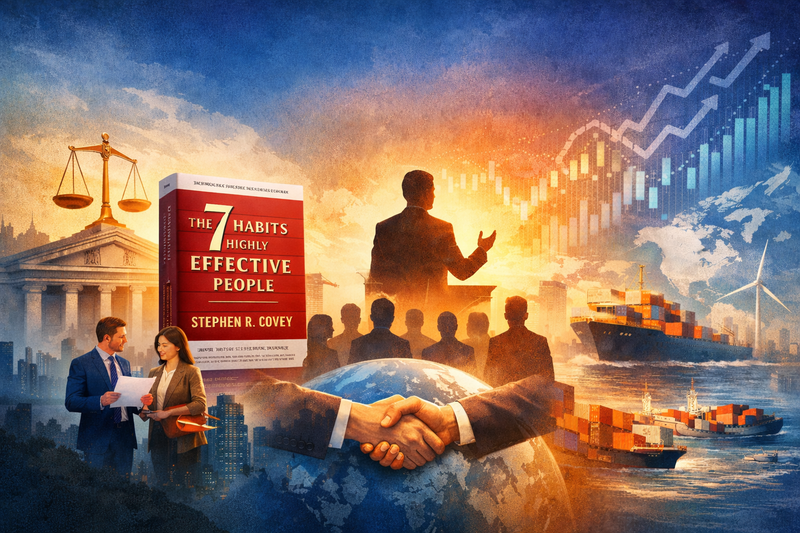
The book on the 7 habits of effective workers contains core insights into teamwork.
The seven habits are arranged in a logical developmental progression. According to author Stephen Covey, the seven effective habits model is divided into three groups, reflecting the journey of growth from personal autonomy to collaboration and sustainable improvement.
The first group, autonomy, comprises three core pillars: The first habit, proactiveness, emphasizes personal responsibility for choices and actions. The second habit, starting with a defined goal, requires establishing a clear vision and direction before undertaking any task. The third habit, prioritizing what matters, stresses focusing time and resources on core values rather than simply addressing pressing issues.
The second group, interdependence, focuses on effectiveness in relationships and collaboration, and includes: Habit four, win-win thinking, seeking solutions that bring harmonious benefits to all parties; Habit five, listening to understand before expecting to be understood, empathetic listening; Habit six, synergy, encouraging the development of collective strength through cooperation and respect for differences.
The final group, continuous improvement, includes: Habit Seven, Sharpen the Saw, which emphasizes the need for constant renewal and holistic development of physical, intellectual, emotional, and spiritual well-being to maintain long-term effectiveness.
Suggestions for building a public service culture.
The world is currently undergoing profound geopolitical and economic changes. Strategic competition between nations is increasing, global supply chains are restructuring, digital technology is developing rapidly, and the demand for sustainable development is becoming increasingly evident. The international environment contains many uncertainties, creating significant pressure on national governance capabilities. In this context, building a culture of public service becomes a strategic requirement.
From the seven habits mentioned, the spirit of "proactiveness" reflects the need to shift from a reactive to a constructive mindset in public administration. When situations change rapidly, the administrative apparatus needs the ability to anticipate, prepare, and adapt promptly, requiring each official and civil servant to enhance their sense of responsibility and proactively propose solutions within their scope of authority and the law. Public service culture is therefore closely linked to a culture of responsibility and a willingness to take accountability.
The principle of starting with the ultimate goal requires establishing a long-term vision for development. In the context of global competition, successful nations often have clear strategies regarding institutions, human resources, and innovation. Public service culture needs to be guided by the goal of serving the people, improving management efficiency, and promoting sustainable development. When strategic goals are thoroughly understood, routine activities will be interconnected and unified.
The habit of prioritizing what is important suggests a rational allocation of public resources. Faced with the pressure of multiple tasks simultaneously, correctly identifying the focus of reform is crucial. Improving the quality of public services, promoting digital transformation, and enhancing transparency are areas that need to be prioritized to create a long-term foundation for development.
In terms of relationships, a "win-win" mindset and the capacity for "understanding" contribute to building social trust. As citizens and businesses increasingly care about transparency and accountability, policy dialogue needs to be based on listening and respect. The spirit of "collaboration" also reflects the need for inter-sectoral coordination in addressing complex issues such as climate change, energy security, and data governance.
Throughout the entire process, the head of the agency or unit plays a guiding and exemplary role. Leaders are responsible for establishing the vision, building behavioral standards, and motivating the team. The working style of the leader directly influences the organizational culture. When leaders demonstrate integrity, a learning spirit, and a service-oriented attitude, these values will spread and shape a professional work environment.
In a rapidly changing world, the 7 Habits system remains a valuable reference point. The principles of personal responsibility, collaboration, and continuous improvement form the basis for a responsive, transparent, and sustainable public service culture.
Source: https://congthuong.vn/7-thoi-quen-va-chuan-muc-van-hoa-cong-vu-444596.html





































































































Comment (0)