

1. Hanging exercise
Hanging from a bar is one of the most effective exercises for increasing height. This exercise helps stretch the spine, reduce pressure on the vertebrae, and correct poor posture caused by prolonged sitting.
Children can hang from both arms for 10-20 seconds and repeat several times. This regular stretching helps lengthen the upper body, strengthen the arms, and improve shoulder alignment. Over time, hanging exercises contribute to better posture, a taller appearance, and stronger back muscles.
2. Swimming helps strengthen bones and increase height in children.
Swimming is one of the best full-body exercises for children because it helps stretch the body naturally while strengthening muscles. The horizontal position in the water reduces pressure on the spine, while the movements of the arms and legs promote flexibility and endurance.
Children who swim regularly will have stronger bones, better posture, and improved lung capacity, all essential for healthy development. Whether freestyle, backstroke, or simply playing in the water, swimming supports height growth while making exercise fun and refreshing.

Regular swimming helps strengthen bones and supports height development in children.
3. Jumping and jump rope
Jumping activities such as jumping rope, bouncing on a trampoline, or jumping in place stimulate the growth plates in a child's legs. These fast, repetitive movements help strengthen bones and improve muscle coordination.
Jumping rope also improves cardiovascular health and helps release growth hormones. Even 10-15 minutes of jumping each day can contribute to improved bone density and posture, supporting overall height growth in the long term.
4. Sprinting in place
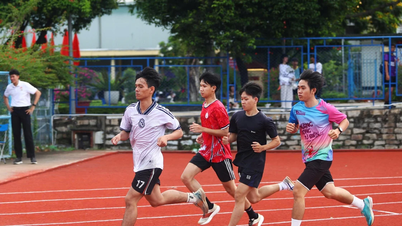
Short bursts of fast running, also known as sprinting in place, help activate growth hormones and strengthen leg muscles. This high-intensity activity helps improve cardiovascular health and bone health.
Children can run in place for 30 seconds, rest briefly, and repeat the cycle several times. Sprinting in place is especially useful when there isn't much space for exercise. This exercise helps increase endurance, promotes muscle development, and supports height growth when performed regularly as part of an active lifestyle.
5. Cobra stretching exercise
The cobra stretch is a gentle yet powerful yoga pose that strengthens the spine and promotes flexibility. When a child lies face down and lifts their chest, this pose stretches the abdominal muscles and lengthens the back.
Practicing this pose regularly helps improve spinal mobility, stimulates growth hormones, promotes a more upright posture, supports lung capacity, and reduces stiffness, making it a well-rounded exercise for developing children. Just a few minutes a day can make a significant difference in flexibility and posture.
How to do it:
- Lie face down with your legs extended straight behind you, the tops of your feet flat on the mat, hip-width apart or closer.
- Place your palms flat on the floor directly under your shoulders, making sure your elbows are close to your chest and not spread apart.
- Press the tops of your feet, thighs, and pubic bone down into the floor to stabilize your lower body.
- Inhale, push your chest forward and upward, lifting your chest off the floor. Use your back muscles more than your arm muscles.
- Keep your shoulders away from your ears and maintain a neutral position for your neck (looking slightly forward or downward) to avoid neck strain.
- Hold for 3-5 slow breaths, then exhale as you slowly lower yourself down.
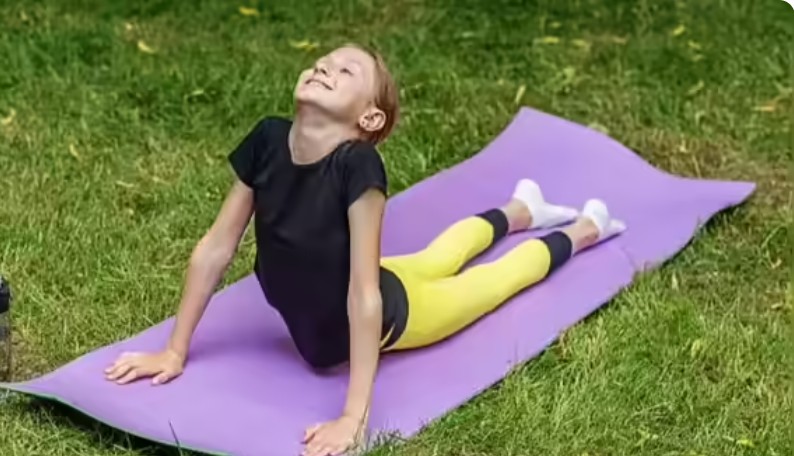
How to perform the cobra pose to help children increase their height.
6. Bend forward (toe-touching motion)
This classic stretching exercise helps lengthen the hamstrings, calves, and spine. As children bend forward to touch their toes, the gentle support stretches the entire back and improves flexibility.
Regularly practicing this stretching exercise helps reduce joint stiffness, correct hunched posture, and improve blood flow to the muscles. Children who perform the toe-touching exercise daily often have better posture and a straighter spine, contributing to a taller appearance. The exercise also helps warm up the body and prepare it for other physical activities.
How to do it:
- Stand upright with feet hip-width apart. Inhale, straighten your body, and as you exhale, slowly bend forward, making sure to keep your spine and back straight as you lower yourself. You can slightly bend your knees to avoid straining your hamstrings.
- Place your hands on the floor beside your feet, behind your ankles, or on supporting blocks depending on your ability, relax your head and neck.
- With each exhale, try to straighten your legs a little more (without locking the joints) and push your thighs back.
- To stand up, place your hands on your hips and inhale while keeping your back straight.
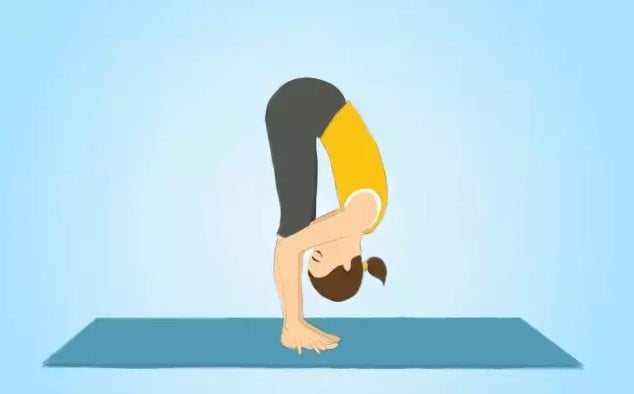
How to perform the forward bend pose.
7. Cat Pose, Cow Pose
This alternating stretching exercise is excellent for strengthening the spine and improving flexibility in the back and neck. The movement between bending and rounding the back enhances spinal mobility and promotes growth.
Practicing cat and cow poses daily helps improve posture, reduce back strain, and enhance overall spinal health. A flexible spine helps maximize height potential during the years of rapid growth.
How to do it:
- Start in a hand-kneeling position, placing your wrists directly under your shoulders and your knees directly under your hips, keeping your spine straight and looking down.
- To perform the Cow Pose: As you inhale, arch your back, bringing your stomach toward the floor, lifting your chest and tailbone toward the ceiling, and looking straight ahead or slightly upwards.
- Cat pose: As you exhale, pull your stomach toward your spine and arch your back toward the ceiling, pointing your tailbone downwards and tucking your chin into the hollow of your neck.
- Continue alternating between the cow pose (inhale) and the cat pose (exhale) to create a rhythmic, fluid movement.

Children who regularly perform the cat pose and cow pose develop flexibility in their bodies.
8. Mountain Pose
The mountain pose is a simple yet highly effective exercise for improving posture. When children stand upright with arms extended above their heads and breathe deeply, the movement lengthens the spine and improves body alignment. This pose strengthens abdominal muscles and encourages proper posture, which is essential for height development.
Practicing this posture regularly helps improve balance, flexibility, and self-confidence. It's an ideal exercise for children, especially those who spend many hours sitting during school hours.
How to do it:
- Stand upright with your big toes touching and your heels slightly apart, or with your feet hip-width apart for better balance.
- Raise and spread your toes, then lower them to form a stable and wide stance, shifting your entire weight onto the four corners of your feet, tightening your quadriceps muscles, and gently lifting your knees.
- Keep your pelvis in a neutral position, slightly pull your tailbone down, and lift your lower abdomen to tighten your abdominal muscles.
- Raise your sternum, broaden your collarbones, and keep your shoulders aligned with your hips; let your arms hang loosely along your sides, palms facing forward or inward, fingers moving; let your shoulders droop, away from your ears, or raise them high, clasping your hands above your head.
- Keep your neck long and straight, chin parallel to the floor, and imagine the crown of your head reaching towards the ceiling, looking straight ahead and holding for 5-10 deep breaths.
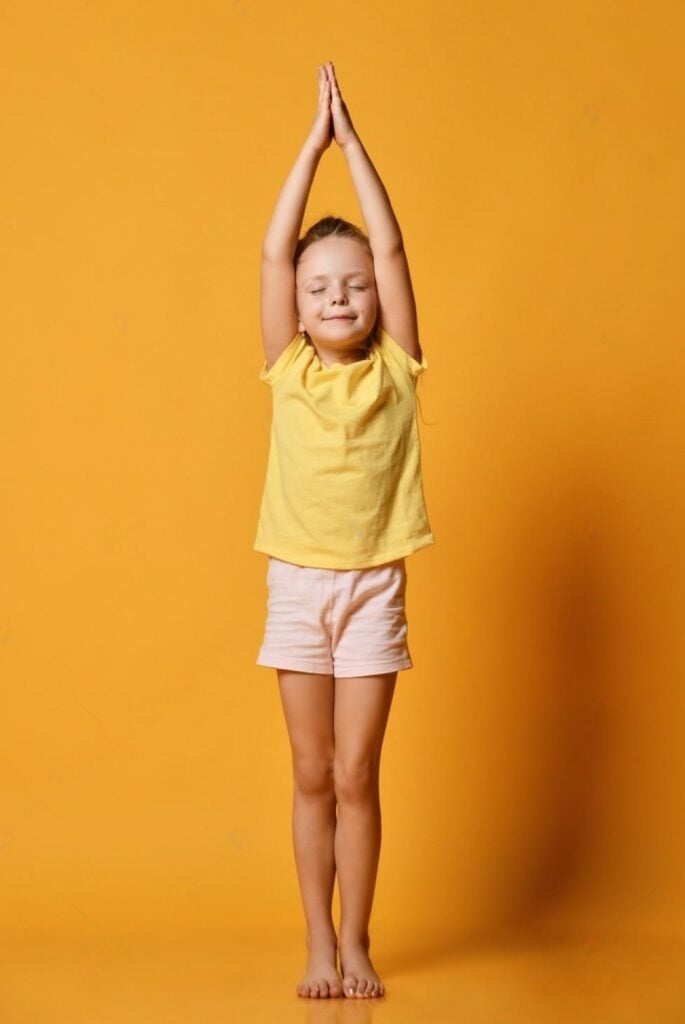
Performing the mountain pose helps stretch the spine and increase height in children.
Source: https://suckhoedoisong.vn/8-bai-tap-tang-chieu-cao-cho-tre-trong-mua-he-169260513152858684.htm
![[Image] Close-up view of the interchange connecting the two expressways and Long Thanh Airport.](https://vphoto.vietnam.vn/thumb/1200x675/vietnam/resource/IMAGE/2026/05/25/1779703378210_ndo_br_z7863716673926-224453a31600126cce10622af6290afd-4549-jpg.webp)
![[Image] Hanoi's urban life under the challenge of a "scorching hot" environment](https://vphoto.vietnam.vn/thumb/1200x675/vietnam/resource/IMAGE/2026/05/25/1779706979265_nang-nong-t5-2026-minh-duy-7-4636-jpg.webp)


















































































Comment (0)