

There are many legends and myths about Cao Son Dai Vuong, the most popular of which is that he was the 17th son of Lac Long Quan and Au Co. He was a general of Son Tinh and made significant contributions to building dikes and mountains to help Son Tinh defeat Thuy Tinh, protecting the people from floods. In the early 16th century, King Le Tuong Duc, in suppressing a rebellion, prayed to Cao Son Dai Vuong for assistance, and subsequently won the battle, restoring the Le dynasty. Therefore, King Le built the Cao Son Temple (later renamed Kim Lien Temple), erected a stele inscribed with a poem praising Cao Son Dai Vuong's merits (this stele was re-carved at the end of the 18th century). He was bestowed the title of High-Ranking Deity and is one of the most widely worshipped deities in Northern Vietnam.
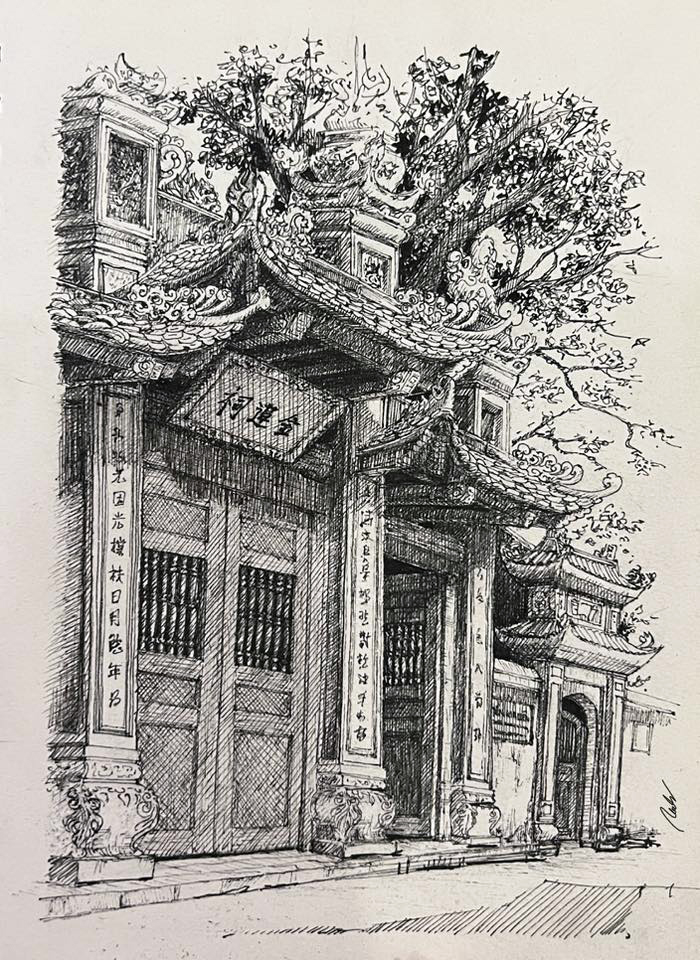
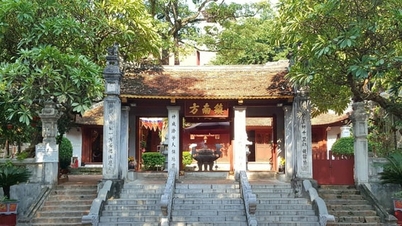
The triple-arched gate at Kim Lien Temple - Sketch by Le To Nhu
The Kim Lien Temple ( Hanoi ), a special national historical site, is the most famous place dedicated to Cao Son Dai Vuong. The ancient capital of Thang Long had four sacred temples guarding the four directions, ensuring the city's stability and protection from natural disasters and enemy attacks: Kim Lien Temple guarding the south, Bach Ma Temple the east, Voi Phuc Temple the west, and Quan Thanh Temple the north.
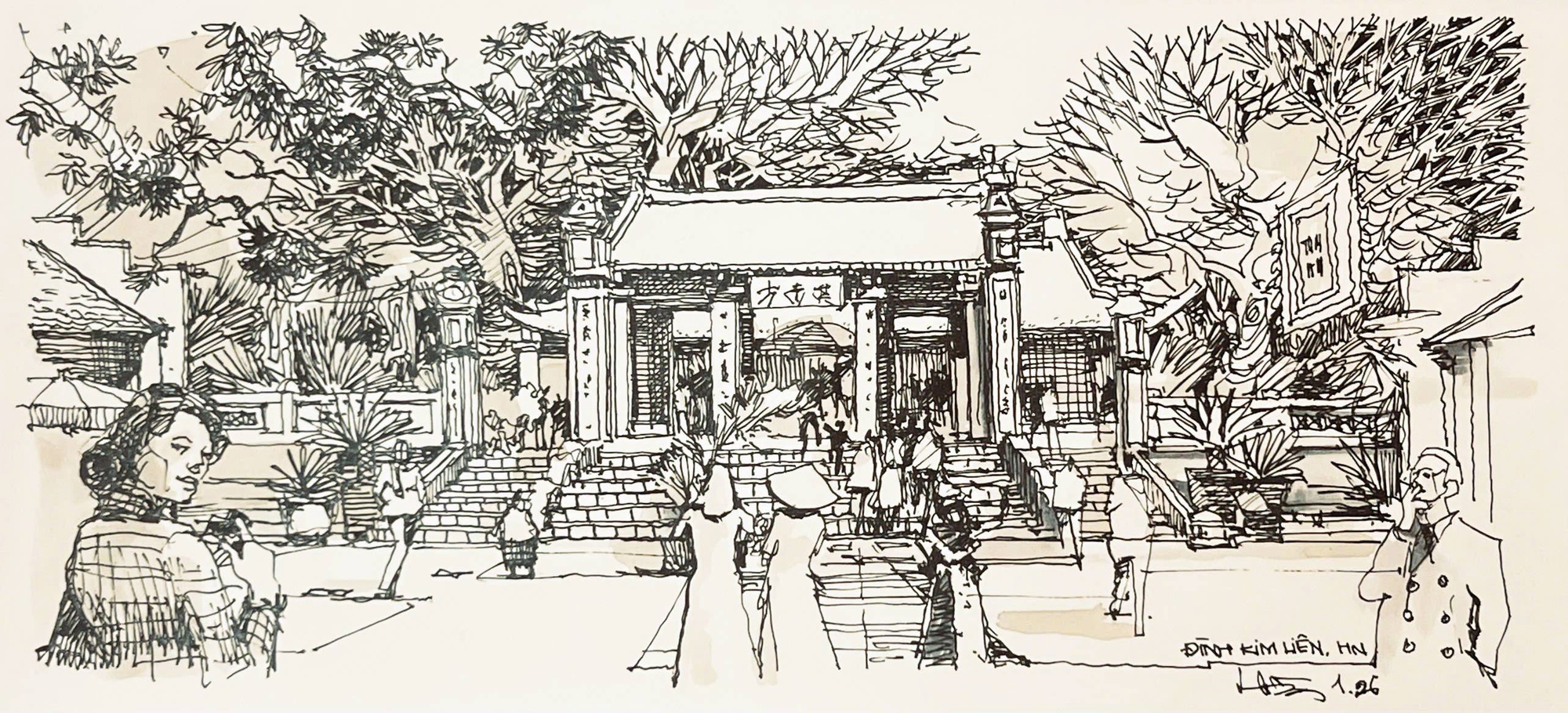
Kim Lien Temple was classified as a special national historical site in 2022 - Sketch by architect Tran Xuan Hong
Through several renovations, the main axis of Kim Lien Temple currently includes the main gate (3 bays), the main hall (5 bays, recently renovated around 2000), and the rear hall (3 bays, the last bay dedicated to Cao Son Dai Vuong, with a tiled roof and exposed brick construction). Inside the temple, there is still an ancient stone stele (2.5 x 1.6 m) embraced by an old banyan tree as a symbol of protection for the deity.
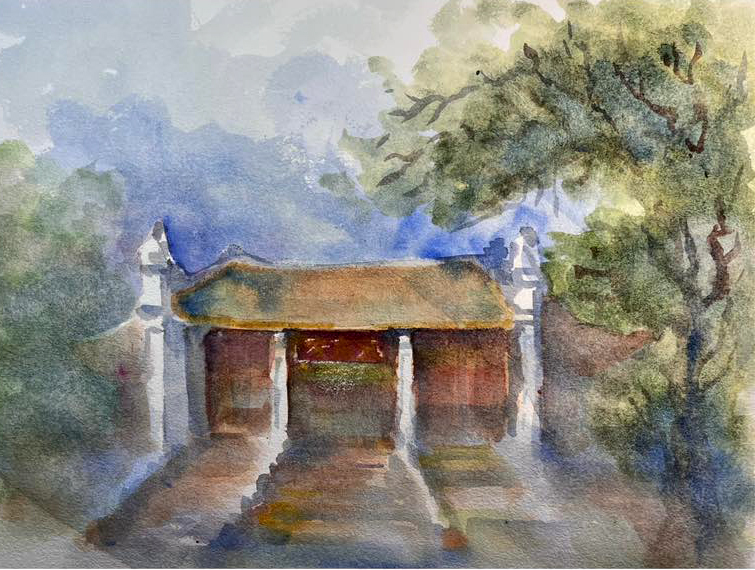
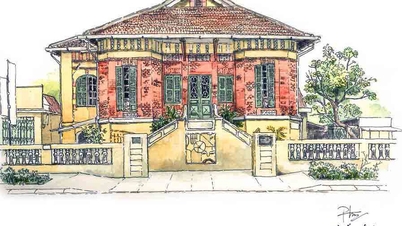
The three-bay ceremonial gate with gable walls (built to enclose both ends) at Kim Lien Temple - a sketch by architect Tran Thai Nguyen.
In addition, the temple also houses 39 royal decrees (documents from the king bestowing titles and recognizing deities), the earliest dating back to the early 17th century; and two stone crocodiles from the Le Dynasty... In the past, the temple was also a gathering place for villagers to discuss communal matters, so it was considered a communal hall. It is traditionally believed to be very sacred, and people in the past often came here to pray for assistance in farming and to mitigate natural disasters.

Tiger face emblem at the gate of Kim Lien Temple - sketch by artist Tran Binh Minh
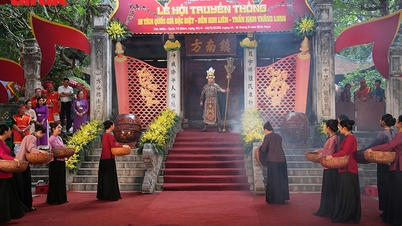
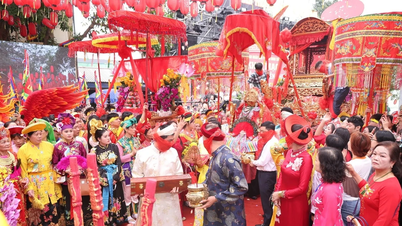
Today, every year on the 16th day of the 3rd lunar month (traditionally believed to be the birthday of Cao Son Dai Vuong), Kim Lien Temple holds a festival to commemorate him, attracting a large number of participants.
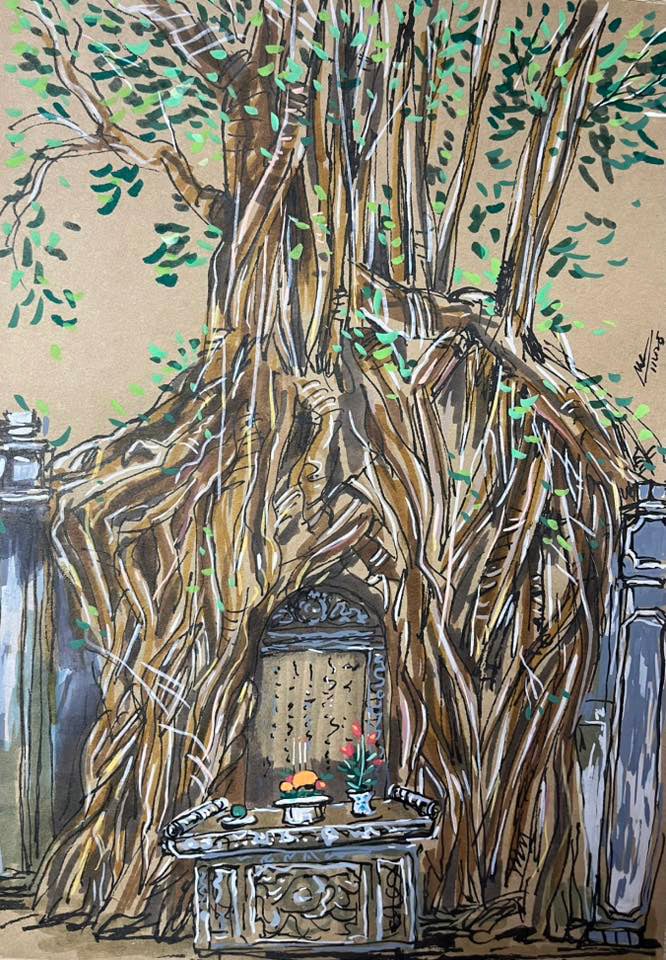
Ancient trees grow around the old stone stele dating back to the early 16th century - a sketch by artist Tran Binh Minh.
Source: https://thanhnien.vn/ai-giup-son-tinh-danh-bai-thuy-tinh-185260131205848056.htm




![[Image] Close-up view of the interchange connecting the two expressways and Long Thanh Airport.](https://vphoto.vietnam.vn/thumb/1200x675/vietnam/resource/IMAGE/2026/05/25/1779703378210_ndo_br_z7863716673926-224453a31600126cce10622af6290afd-4549-jpg.webp)
![[Image] Hanoi's urban life under the challenge of a "scorching hot" environment](https://vphoto.vietnam.vn/thumb/1200x675/vietnam/resource/IMAGE/2026/05/25/1779706979265_nang-nong-t5-2026-minh-duy-7-4636-jpg.webp)










































































Comment (0)