

What is the G7 Summit?
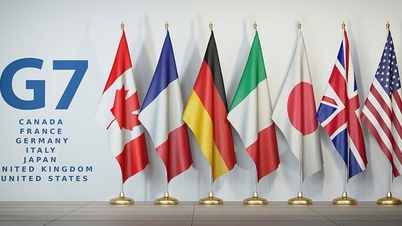
The G7 is an informal group of leading industrial nations, comprising Canada, France, Germany, Italy, Japan, the United Kingdom, and the United States. The leaders are scheduled to discuss a range of issues, including economic policy, security, climate change, energy, and technology.
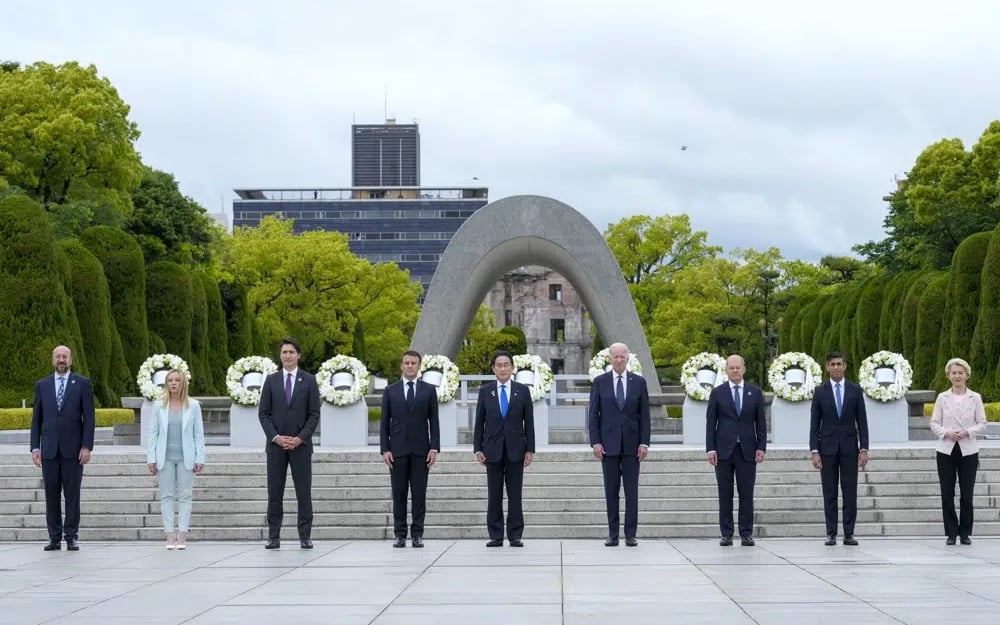
G7 leaders pose for a group photo during a visit to the Hiroshima Peace Memorial Park on May 19, 2023. Photo: AP
This year, Japan is hosting and holding the rotating presidency. Following the tradition of recent years, leaders from several non-G7 countries and international organizations will also participate in some sessions of this conference.
The first summit took place in 1975, when France hosted the then-G6 meeting to discuss addressing the economic downturn following the Saudi oil embargo. Canada became the seventh member a year later. Russia joined to form the G8 in 1998 but was excluded after the annexation of Crimea in 2014.
Who will participate?
This year, leaders from Australia, Brazil, Comoros, the Cook Islands, India, Indonesia, South Korea, and Vietnam were invited to attend. The invitation to leaders outside the G7 aims to expand cooperation to more countries.
The G7 countries' share of global economic activity has fallen to around 30%, compared to approximately 50% four decades ago. Developing economies such as China, India, and Brazil have achieved tremendous success, raising questions about the relevance of the G7 and its role in leading a world economy that is increasingly dependent on these emerging economies.
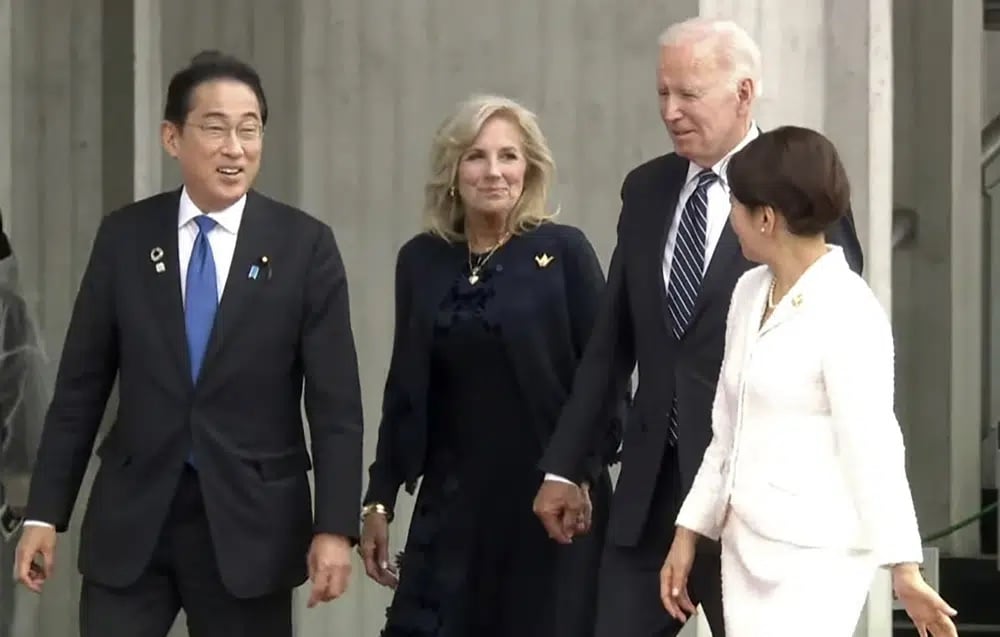
Japanese Prime Minister Fumio Kishida and U.S. President Joe Biden and their wives stroll through the Hiroshima Peace Memorial Museum on May 19, 2023. Photo: AP
Leaders from the United Nations, the International Energy Agency, the International Monetary Fund, the Organization for Economic Cooperation and Development, the World Bank, the World Health Organization, and the World Trade Organization were also invited to attend this conference.
Why Hiroshima, and what was the top priority?
Hiroshima is the hometown of Japanese Prime Minister Fumio Kishida. His choice of location underscores the commitment to placing nuclear disarmament and non-proliferation at the top of the conference agenda.
The path to nuclear disarmament appears more difficult with the threat of weapons, despite this danger being present in relation to the war in Ukraine and tensions on the Korean Peninsula.
Prime Minister Kishida is trying to forge a path between the harsh realities of the present and the ideal of a world without nuclear weapons.
Today, he will welcome leaders to visit several significant sites in Hiroshima, such as Hiroshima Peace Park and the Atomic Bomb Museum, and may also hold a meeting with survivors of Hiroshima's atomic bombing during World War II.
“I believe that the first step toward any nuclear disarmament effort is to provide firsthand experience of the consequences of an atomic bombing and communicate that in a practical way,” Kishida said last Saturday while visiting Hiroshima to observe preparations for the conference.
G7 leaders are expected to discuss the Russia-Ukraine conflict. Ukrainian President Volodymyr Zelenskyy will participate in the meeting online. In addition, regional tensions will also be discussed, alongside global security, economic, and climate issues.
Huy Hoang (according to AP, Reuters, Kyodo)
Source


















![[Image] Hanoi's urban life under the challenge of a "scorching hot" environment](https://vphoto.vietnam.vn/thumb/1200x675/vietnam/resource/IMAGE/2026/05/25/1779706979265_nang-nong-t5-2026-minh-duy-7-4636-jpg.webp)















































Comment (0)