

If there is a city woven from golden sunshine, from white lime walls stained with the passage of time, and the salty taste of the sea, it must surely be Algiers.
After years of quietly remaining hidden on the international tourism map, Algeria's capital is now opening its doors, ready to tell the world a new symphony – where the romantic French colonial past, the solemn Ottoman imprint, and the gentle breath of contemporary North Africa blend together.
Before setting foot in this beautiful capital city, take a moment to realize you're standing on the largest landmass in Africa, covering nearly 2.4 million square kilometers.
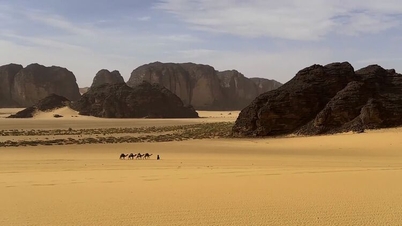
Strategically located in North Africa, Algeria's northern border is adjacent to the Mediterranean Sea with a coastline stretching over 1,200 km, while much of its southern territory is covered by the legendary Sahara Desert. The country is a blend of geographical extremes: from verdant coastal plains and the majestic Atlas Mountains to endless rolling golden sand dunes.
It is this vastness and diversity that makes Algeria a captivating enigma, especially for those eager to explore and escape the beaten path of mainstream tourism .
If the entire country of Algeria were a novel, then the capital city of Algiers would be the magnificent opening chapter.
Our flight landed at Houari Boumediene International Airport at 9 a.m. Stepping out of the cabin, I was bracing myself for the stifling heat typical of North Africa, but Algiers generously greeted us with a cool Mediterranean breeze and a clear, sunny sky.
Standing out against that sky are the pristine white buildings in the distinctive French colonial architectural style lining the avenues, creating a stunning contrast with the deep blue of the harbor.
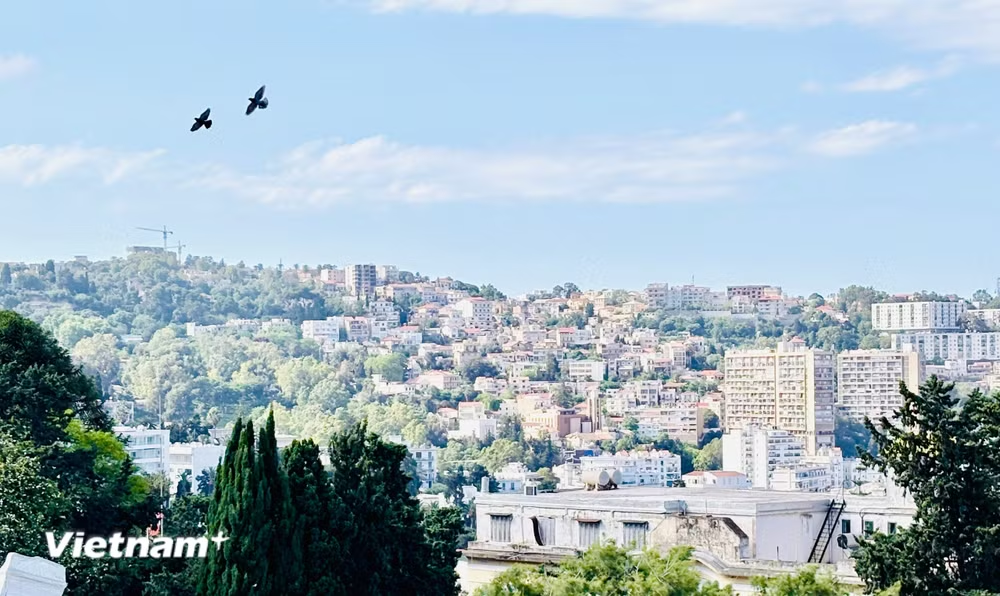
From the window of the car speeding towards the city center, Algiers appeared brimming with vibrant energy. Below, the streets bustled with traffic; above, flocks of seagulls soared freely through the air. The entire city seemed bathed in a golden, shimmering sunlight. Following the winding slopes along the coast, Algiers resembled a harmonious architectural masterpiece, blending the romantic charm of Europe with the mystique of the Arab world.
However, strangely, Algiers doesn't give off the suffocating or chaotic feeling of a city with over 3 million inhabitants. On the contrary, it still exudes a unique sense of peace and tranquility, preserving its historical layers and serving as the political and economic center of the nation.
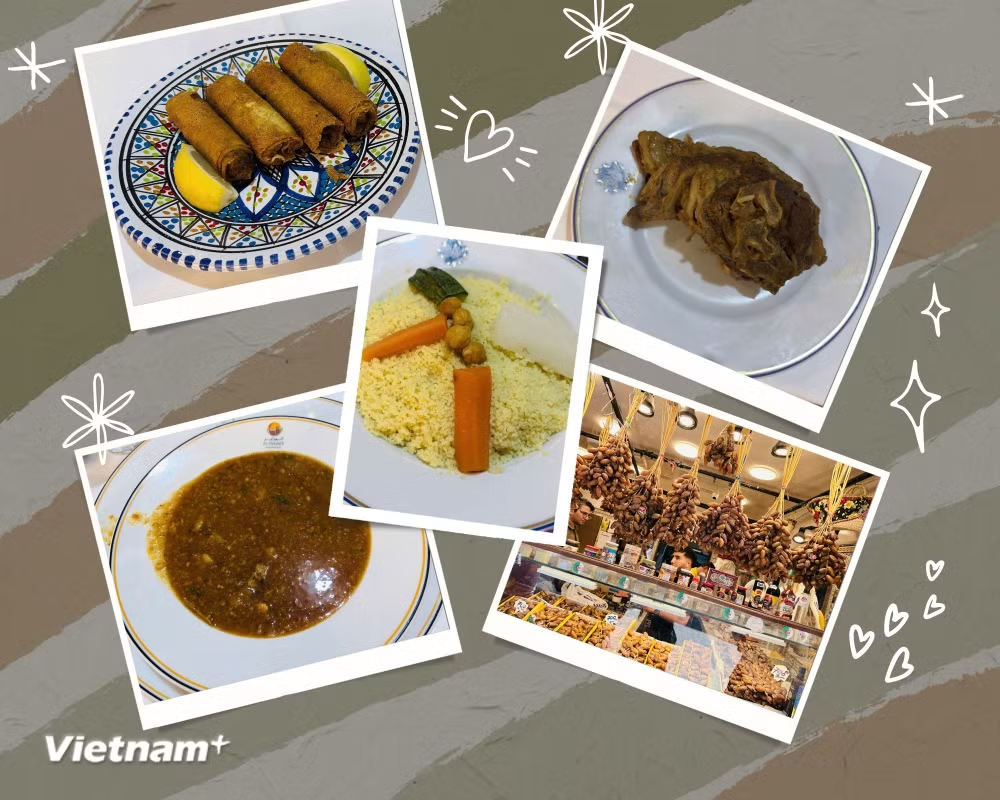
We arrived here during the SITEV 2026 International Tourism Fair, a time when the entire city seemed to be brimming with a desire for transformation, ready to open its hearts to explorers from all over the world.
Casbah - a historical labyrinth in the heart of the capital.
Algiers' proudest highlight is the Casbah – the old town, recognized by UNESCO since 1992.
From a distance, the Casbah resembles a cascading waterfall of tiered whitewashed houses perched on a hillside overlooking the Mediterranean Sea. The deeper you venture into this labyrinth, the narrower the ancient city becomes, condensing into surprisingly small alleyways. Some passages are so narrow that you can easily touch the cool limestone walls on either side with just outstretched arms.
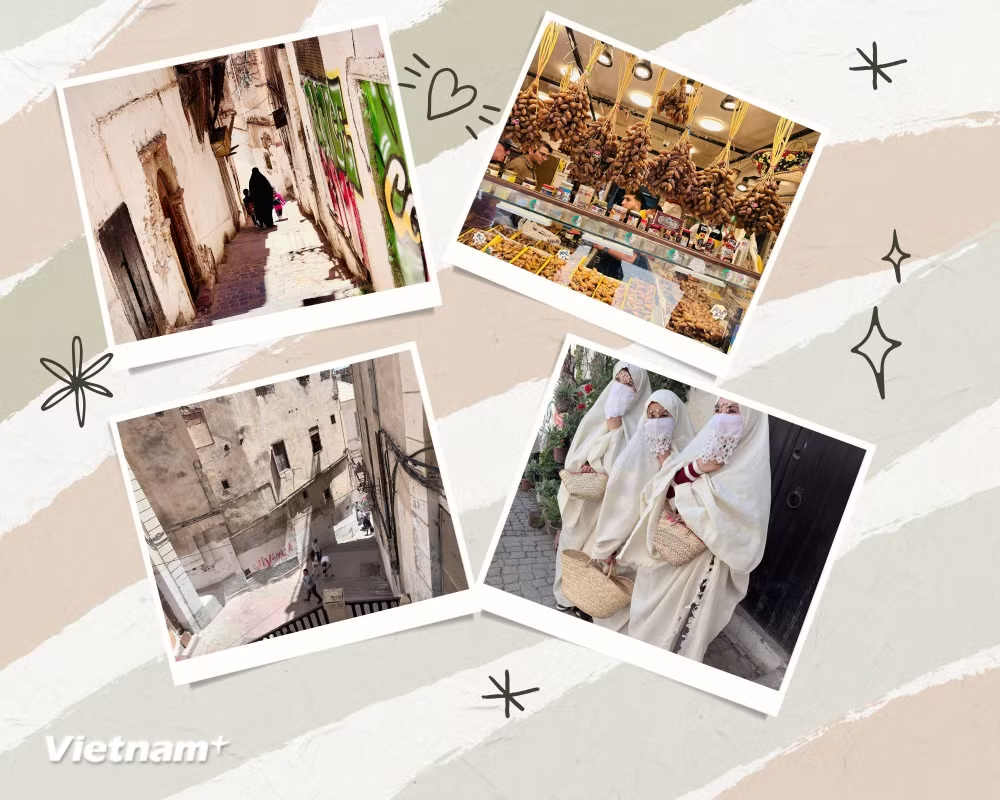
However, hidden behind that cramped, time-worn space, you will immediately be captivated by a remarkably vibrant reality: against a centuries-old white backdrop, modern painted walls and brightly colored doors, skillfully adorned by locals, breathe a fascinating contemporary life into the heritage site.
Tracing back in time, the Casbah was once a center of Ottoman power, then became a symbol of unwavering resistance during Algeria's struggle for independence. Today, its ancient mosques and small squares quietly preserve the traces of countless ups and downs. Walking through it is like stepping into an old film of the Mediterranean, where each stone step holds the memory of centuries past.
It is this nostalgic atmosphere that has prompted many travelers to exclaim in admiration upon arriving here. "Oh, it's amazing! Walking through the Casbah, I felt like I was lost in a fairytale movie!" shared Yuichi Iwasaki, a Japanese tourist, when asked about his feelings.
Indeed, wandering through these cobblestone alleyways is an experience that awakens all the senses. The paths wind through Ottoman-style iron balconies and weathered walls, where sunlight filters through the gaps in the roof, dancing on the worn stone pavement.
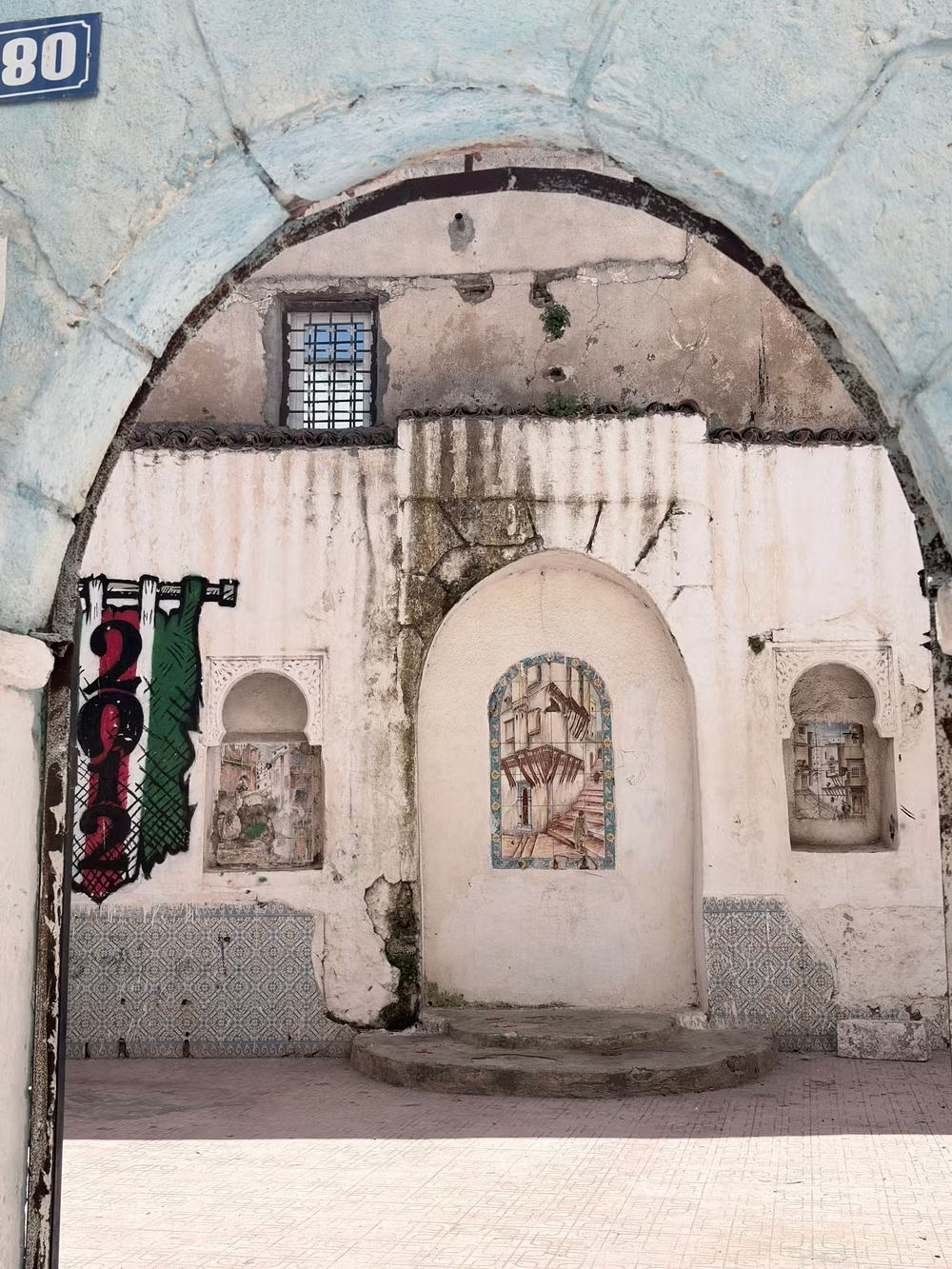
In the heart of this heritage site, life flows peacefully: the sound of children playing, the aroma of freshly baked bread, and the fragrant scent of mint tea wafting from tiny windows create a tranquil oasis, isolated from the bustling capital outside.
Notre-Dame d'Afrique - the spiritual beacon of the city
Leaving the tranquil corners of the Casbah, we ascended the slope to Notre-Dame d'Afrique Cathedral, the city's spiritual beacon.
Built in the 19th century during the French colonial period, the church stands proudly on a hilltop overlooking the vast bay. The structure is striking for its unique Byzantine architecture blended with the Moorish style of North Africa.
From the spacious courtyard in front of the church, one can gaze out over the entire white city stretching softly along the azure Mediterranean Sea, feeling a sacred sense of protection that has existed for two centuries.
One thing about Algiers that always easily captivates the heart of any traveler is the charming intertwining of two worlds within everyday life.
Strolling along the wide, palm-lined avenues, admiring the sidewalk cafes nestled beneath cream-colored buildings with their delicately wrought-iron balconies, I felt as if I had wandered into some peaceful little street in Southern France. However, a simple turn into a small alley leading to the local market immediately brought back a rich, authentic Arab atmosphere that awakened all my senses. There were lively conversations, the pungent aromas of cumin and cinnamon mingled with the smoke from the street-side barbecue stalls, and the gentle smiles of elderly people in traditional robes chatting over warm mint tea.
Djamaa El-Djazaïr - a greeting towards the future
To fully experience the pulse of an Algeria confidently reaching out to the world, our final stop on our journey was the Djamaa El-Djazaïr Grand Mosque.
Standing majestically on the coastline with the world's tallest minaret soaring into the blue sky, this magnificent structure has become a new and proud symbol of Algiers in the 21st century. In contrast to the intricate, time-worn carvings of the Casbah old town, Djamaa El-Djazaïr boasts a minimalist yet incredibly imposing and grandiose architecture.
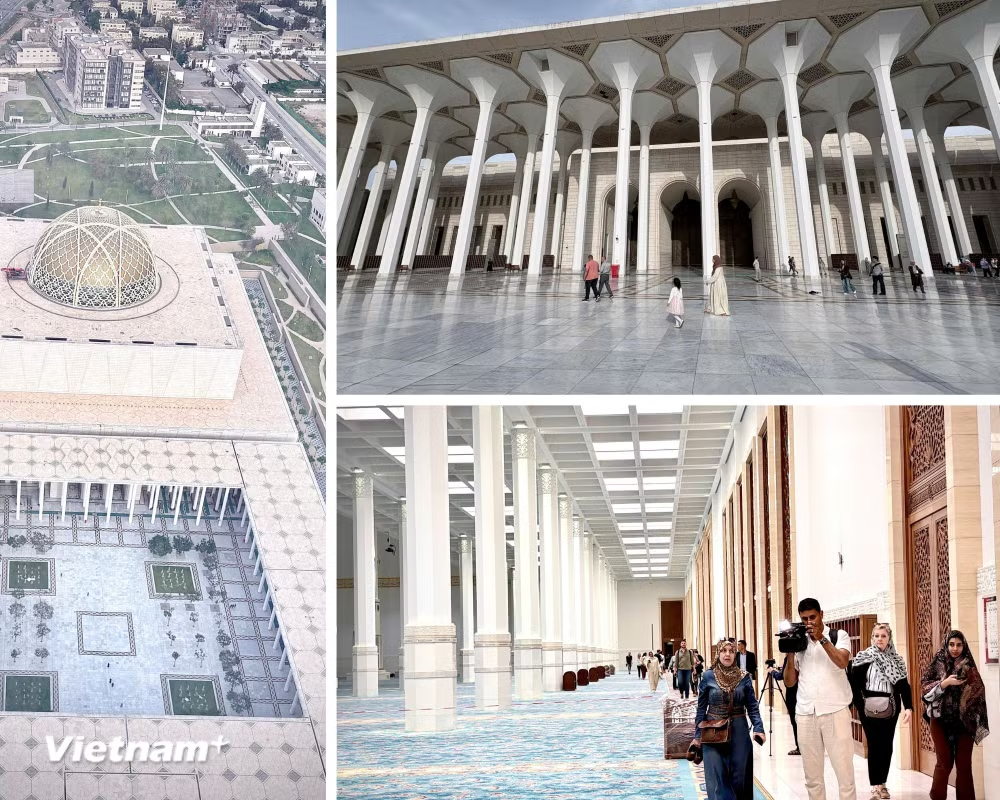
Standing on the 40th floor of the tower as the sun sets, one can take in the entire shimmering cityscape. Before this vast and magnificent space, I could clearly feel the heartbeat of a North African nation moving towards a new era – an era of expansive development and a yearning for global connectivity.
Algiers is not a glamorous, industrial entertainment destination. Its appeal comes from its authentic authenticity: from the proud, weathered walls of the Casbah, from the deep blue of the Mediterranean Sea, and from the genuine hospitality of its people.
If you're looking for an unspoiled destination, a place where history still breathes with the waves, book your trip to Algiers. Here, the Mediterranean meets the Arab world, and it's this peaceful, tranquil pace of life that will touch the deepest parts of every traveler's soul.
Source: https://www.vietnamplus.vn/algiers-vien-ngoc-tho-lang-man-ben-bo-dia-trung-hai-post1112252.vnp

![[Image] Close-up view of the interchange connecting the two expressways and Long Thanh Airport.](https://vphoto.vietnam.vn/thumb/1200x675/vietnam/resource/IMAGE/2026/05/25/1779703378210_ndo_br_z7863716673926-224453a31600126cce10622af6290afd-4549-jpg.webp)

![[Image] Hanoi's urban life under the challenge of a "scorching hot" environment](https://vphoto.vietnam.vn/thumb/1200x675/vietnam/resource/IMAGE/2026/05/25/1779706979265_nang-nong-t5-2026-minh-duy-7-4636-jpg.webp)















































































Comment (0)