

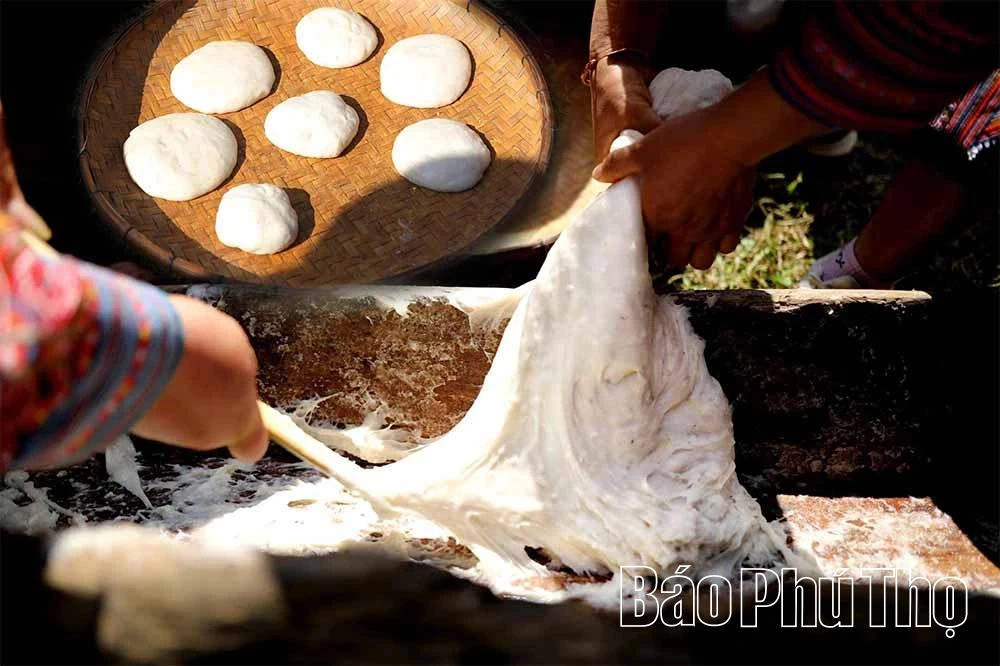
The rice is pounded while it's still hot. Once the mixture is smooth and pliable, it's divided into small, round portions.
Sticky rice cakes are an indispensable part of the traditional Tet (Lunar New Year) celebration of the Hmong people. But what impresses many first-time visitors most is the moment they hold in their hands a cake that seems as hard as stone. In the cold of the highlands, freshly pounded sticky rice cakes left outdoors quickly harden, but simply placing them on glowing charcoal or frying them in a hot pan makes them soft, chewy, and fragrant. This simple transformation surprises and delights many tourists, as if they have just witnessed a "miracle" of mountain cuisine .
I've had many opportunities to watch the Hmong people make sticky rice cakes during Tet (Vietnamese New Year) and I clearly feel that behind this simple dish lies a whole cultural space of the community. Sticky rice cakes are not just for eating, but also for bonding.
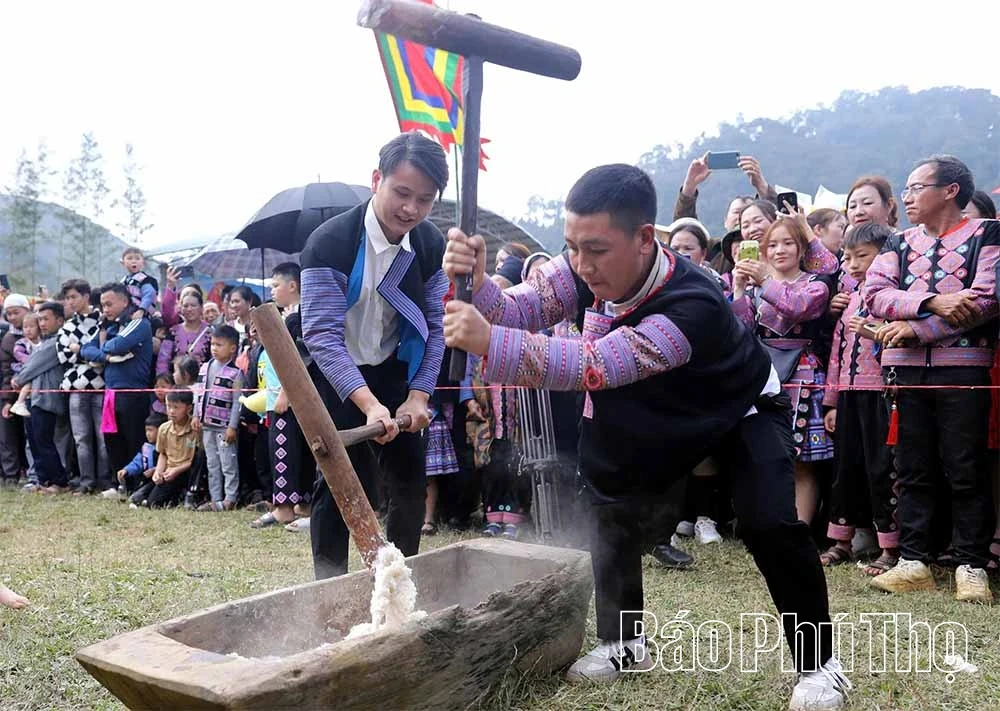
The strong men usually take on the task of pounding the rice for the cakes.
The main ingredient for making sticky rice cakes is fragrant, sticky glutinous rice grown by the Hmong people on the best fields. From the afternoon of the 30th of Tet (the last day of the 11th lunar month), almost every household steams large batches of sticky rice to prepare for making the cakes. Many cakes are made to offer as sacrifices and to last throughout the Tet holiday – the most important time of the year, when children and grandchildren gather, and when all the old things are set aside to welcome new and auspicious beginnings.
Pounding rice for making bánh giầy (a type of Vietnamese rice cake) is a physically demanding task requiring strong physique and coordinated effort. Strong, muscular men take on this arduous work. They gather in groups of about a dozen, taking turns pounding. After finishing at one house, they move on to another, creating a lively Tet atmosphere throughout the village. The rhythmic sound of pestles pounding echoes through the mountains and forests, blending with the sounds of laughter and conversation, like a unique rhythm of spring in the highlands.
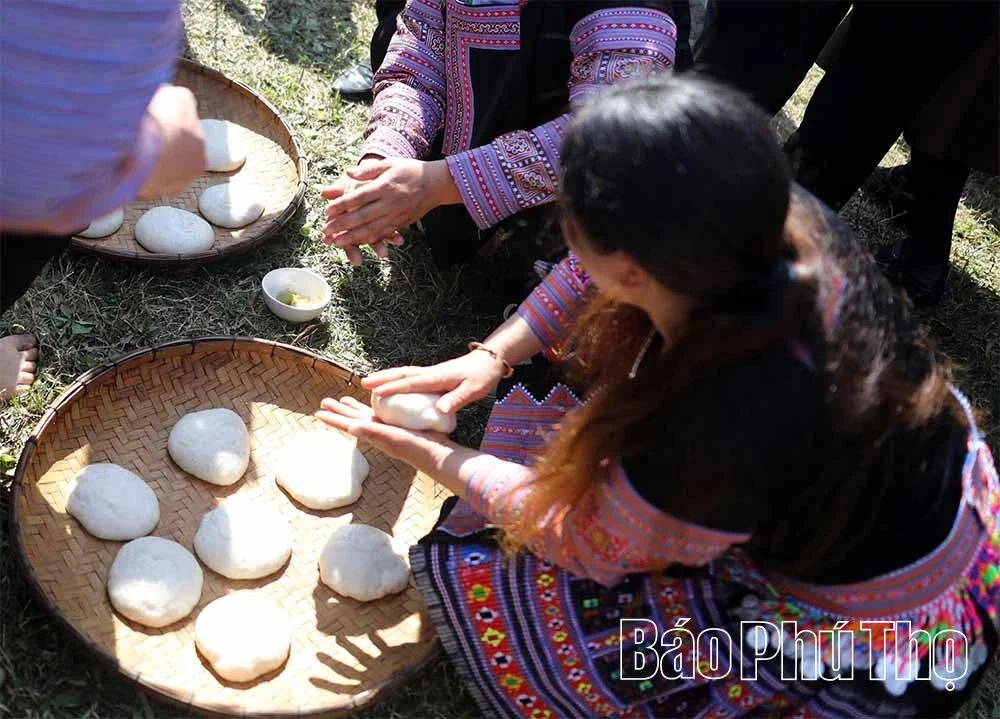
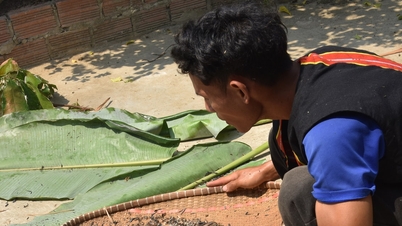
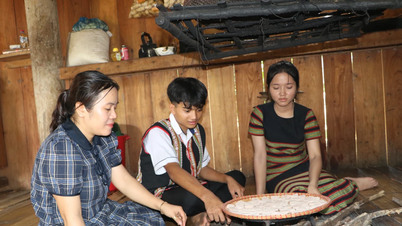
The Hmong woman skillfully molds the cakes.
Hmong women also participate in pounding the rice, mainly for fun, because the rice must be pounded while it's still hot, just taken off the stove, and continuously. If left to cool, the rice will become dry and hard, making it difficult to achieve a smooth, pliable texture. The person pounding must exert force to make the pestle penetrate the rice's elasticity, hitting the bottom of the wooden mortar, creating a solid "clop, clop" sound - a sign of a successful batch of rice.
Once the dough is soft and pliable, the shaping process begins. The dough is divided into small, round portions and wrapped in banana leaves. The person shaping the cakes usually applies finely mashed egg yolk to their hands to prevent the cakes from sticking, to the leaves, and to give them a beautiful shine. These seemingly simple steps demonstrate the finesse and experience accumulated over generations of the Hmong people.
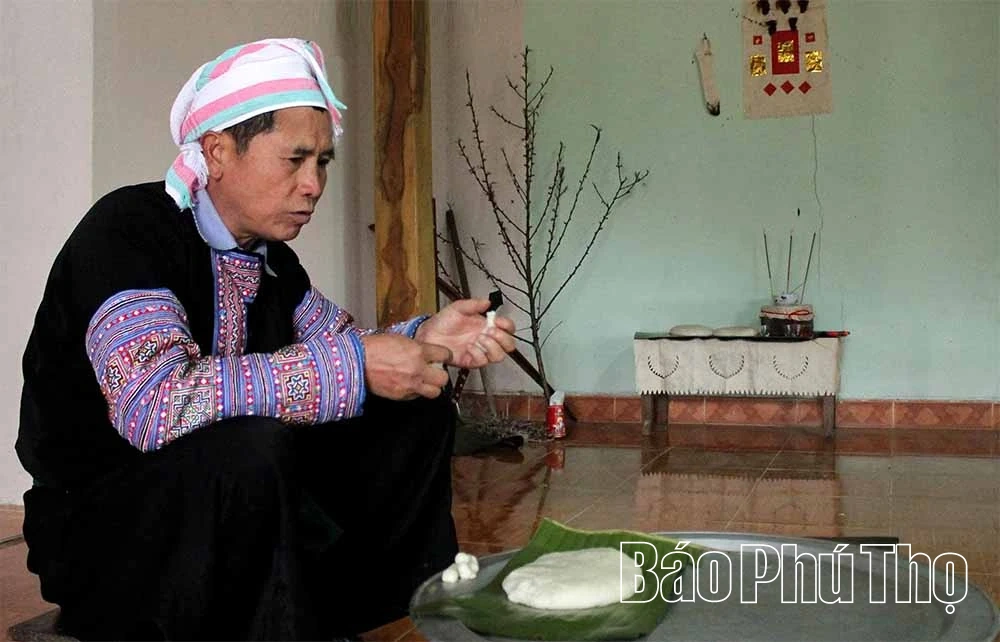
Sticky rice cakes are an indispensable part of the Hmong people's New Year's rituals.
Today, sticky rice cakes are not only present in kitchens during Tet (Lunar New Year) but have also become part of community tourism experiences. At some tourist destinations in the Hmong villages, visitors can directly participate in pounding and shaping the rice cakes and enjoy hot sticky rice cakes right by the fire. A prime example is at Giang A La's homestay, where the traditional custom of pounding sticky rice cakes is preserved almost intact.
Sharing his thoughts on this, Giàng A La said that for the Hmong people, sticky rice cakes are a symbol of abundance, good fortune, and unity. “I want tourists to come here not only to eat the cakes but also to understand why the Hmong consider pounding the rice as a community activity. When pounding the rice together, sitting by the fire, even strangers become friends,” A La said. According to him, introducing the custom of making sticky rice cakes to tourists is also a way for the Hmong New Year culture to spread naturally, authentically, and without ostentation.
That authenticity moved many tourists. Celebrating Tet (Vietnamese New Year) in a Hmong village for the first time, Ms. Tran Thi Anh, a tourist from Hanoi, shared: “I’ve eaten sticky rice cakes in many places, but this is the first time I’ve held a pestle to pound them myself, heard the sound of the pestle echoing through the mountains, and eaten hot cakes right by the fire. Tet here isn’t noisy, but it’s very warm and memorable.” For her, the experience wasn’t simply tourism, but an opportunity to truly connect with the cultural life of the Hmong people.

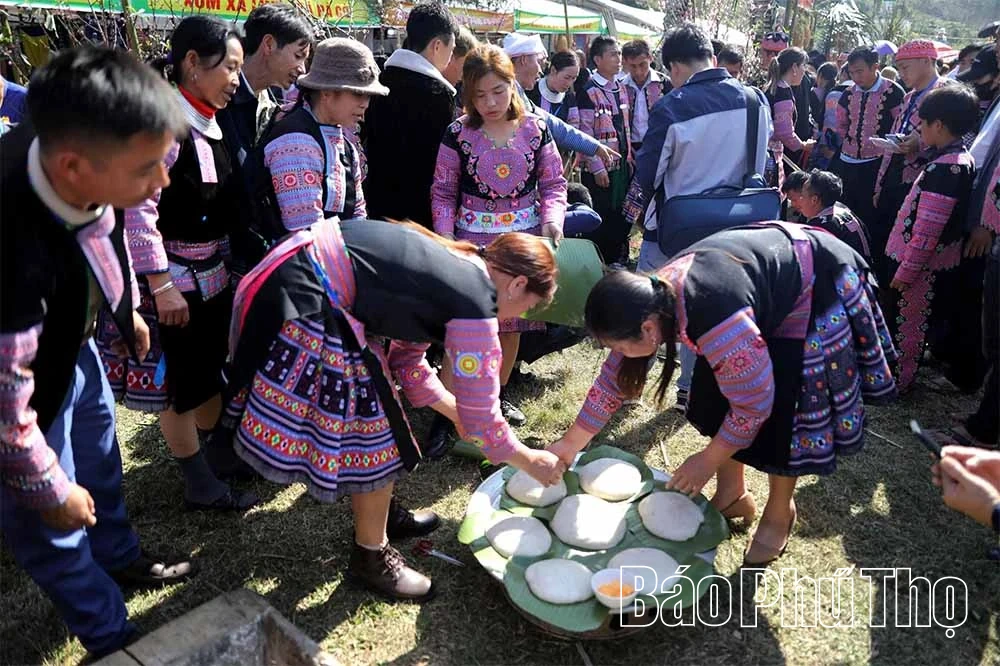
The traditional rice cake pounding competition takes place during the Gầu Tào festival of the Hmong Pà Cò people.
Particularly during the Gầu Tào festival – an important traditional festival of the Hmong people – a rice cake pounding competition is held annually between villages. The sound of pestles pounding rice cakes resonates joyfully, attracting a large number of locals and tourists. The competition not only creates a cheerful spring atmosphere but also contributes to preserving and spreading beautiful customs deeply ingrained in community life.

The Gầu Tào Festival in 2026 will be held over two days, January 30-31.
Amidst the hustle and bustle of modern life, the traditional Mong New Year rice cake retains its rustic and enduring flavor, just like the people of the highlands. In the chill of spring in the mountains, the fragrant, chewy rice cake not only warms the hearts of those who enjoy it but also leaves a deep impression of a rich and distinctive culture – where each pounding sound of the pestle is a heartbeat of spring, of togetherness, and of faith in good things to come.
Hong Duyen
Source: https://baophutho.vn/an-tuong-banh-giay-tet-mong-246512.htm

![[Image] Hanoi Police officially crowned champions of V-League 2025/2026](https://vphoto.vietnam.vn/thumb/1200x675/vietnam/resource/IMAGE/2026/05/31/1780244769054_ndo_br_039d561b692be875b13a-jpg.webp)












![[Photo] The General Secretary, President and his wife begin their state visit to the Philippines.](https://vphoto.vietnam.vn/thumb/1200x675/vietnam/resource/IMAGE/2026/05/31/1780230559452_anh-man-hinh-2026-05-31-luc-19-28-11.png)












































Comment (0)