

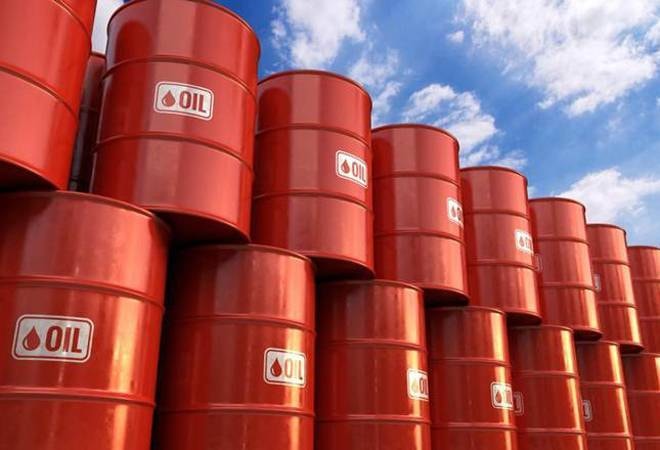
According to the Vietnam Commodity Exchange (MXV), this is a period when the market is strongly influenced by investor sentiment, macroeconomic information, and geopolitical signals.
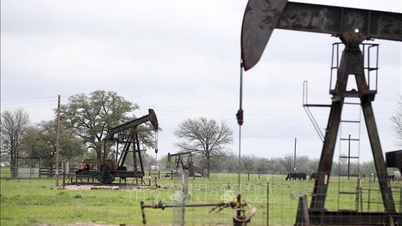
Following a series of sharp declines earlier in the week, energy markets rebounded across the board. Brent crude rose 0.94% to $63.32 per barrel, while WTI crude increased 1% to $59.49 per barrel, escaping its lowest point in five months.
According to MXV, the main driving force comes from positive sentiment after US Treasury Secretary Scott Bessent confirmed that the meeting between President Donald Trump and Chinese President Xi Jinping will still take place on the sidelines of the APEC Summit. The continued dialogue between the two sides reduces trade risks and encourages capital flows back to the energy sector.
Furthermore, in its October report, OPEC maintained its forecast for global oil demand growth at 1.4 million barrels per day and warned of potential supply shortages, in contrast to the more cautious forecast from the International Energy Agency (IEA).
In addition, according to China's General Administration of Customs, China's oil imports in September increased by 3.9% year-on-year, reflecting a recovery in consumption. These factors helped oil prices regain upward momentum after a period of sharp correction, although the increase remained modest due to market caution amid uncertainties in the Middle East.
After a brief recovery the previous day, world oil prices weakened again on October 14th. Brent crude fell 1.47% to $62.39 per barrel, while WTI dropped 1.33% to $58.7 per barrel – its lowest level since early May.
The decline continued into the October 15th session, with Brent crude losing another 0.77% to $61.91 per barrel, and WTI falling 0.73% to $58.27 per barrel.
The primary reason remains concerns about global oversupply, as the IEA reports that global supply could increase by 3 million barrels per day in 2025, reaching 106.1 million barrels per day, and further increase by 2.4 million barrels per day in 2026. Meanwhile, demand growth is expected to remain at 700,000 barrels per day, widening the supply-demand gap.
In addition, the fact that refineries are entering their scheduled maintenance season has reduced total input to 81.6 million barrels per day.
Meanwhile, US-China trade tensions escalated as Beijing tightened restrictions on rare earth exports, while Washington threatened to impose additional tariffs of 100%. Pessimism prevailed, causing capital to flow out of the energy sector, driving oil prices down sharply. Since October 10th, WTI oil prices have repeatedly fallen below $60 per barrel.
At the same time, Bank of America warned that if trade tensions do not ease soon, Brent crude oil prices could fall sharply below $50 per barrel.
However, MXV believes there are still short-term supporting factors as investors expect the US Federal Reserve (FED) to soon lower interest rates to stimulate growth. The probability of the FED cutting interest rates as early as October has increased to 98%, helping the energy market avoid a sharper decline.
As of this morning, October 18th, gasoline and oil prices have increased slightly. Brent crude rose by $0.23 to $61.29 per barrel; WTI crude also edged up by only $0.08, or 0.14%, to $57.54 per barrel.
However, world oil prices recorded a nearly 3% weekly decline and are currently at their lowest level in about 5.5 months.
According to experts, in the short term, oil prices are likely to fluctuate within a narrow range around $60 per barrel due to the intertwined effects of macroeconomic , geopolitical, and monetary policy factors.
Source: https://hanoimoi.vn/ap-luc-tam-ly-chi-phoi-thi-truong-dau-tuan-qua-720119.html




![[Photo] First session of the 14th Congress of the Vietnam Trade Union](https://vphoto.vietnam.vn/thumb/1200x675/vietnam/resource/IMAGE/2026/06/03/1780465947883_ndo_br_img-3852-jpg.webp)






















































![[Video] Sunset at Lap An Lagoon – Where the sun sets over the fishing nets](https://vphoto.vietnam.vn/thumb/1200x675/vietnam/resource/IMAGE/2026/05/31/1780192137701_beach-landscape-sea-water-nature-grass-745871-pxhere-com.jpeg)







































Comment (0)