

Telegram and Signal – two other foreign messaging apps – were also removed from the store on Friday, according to app tracking companies Qimai and AppMagic.
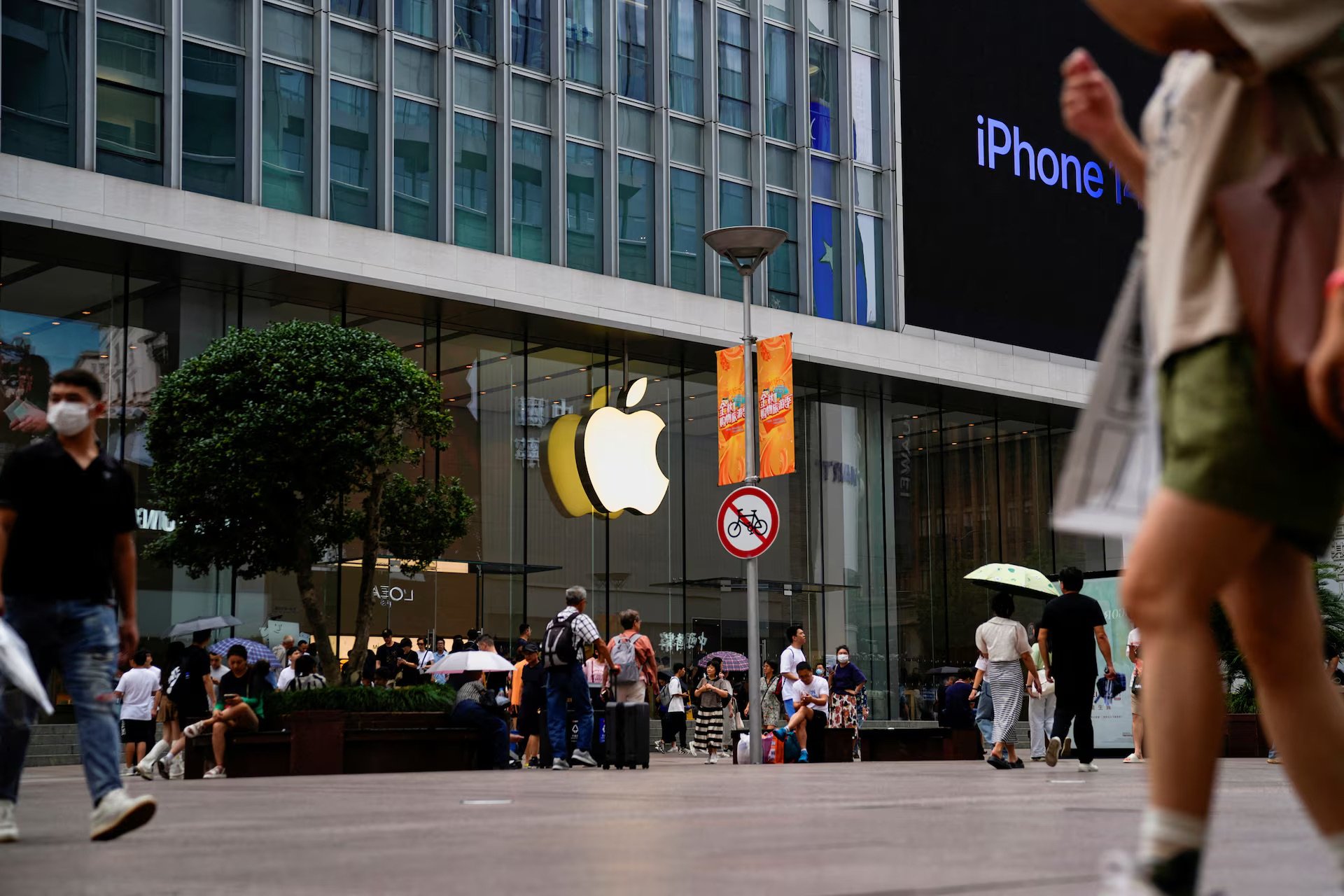
People walk past an Apple store in Shanghai, China, on September 13, 2023. Photo: REUTERS
The removal of these four apps demonstrates the Chinese government's increasingly aggressive stance in controlling services and information circulating in social media.
Other Meta apps, including Facebook, Instagram, and Messenger, are still available on the App Store in China. Many other popular apps developed by Western companies, including YouTube and X, are also available.
Apple said in a statement: “China’s Cyberspace Administration ordered the removal of these apps from its Chinese app store based on national security concerns.”
The statement said: “We have an obligation to comply with the laws of the countries where we operate, even if we disagree.”
None of these four apps are widely used in China – where Tencent's WeChat remains the dominant service to date.
These apps, and many other foreign apps, are often blocked on Chinese networks by the "Great Wall"—the country's extensive internet censorship system—and are only accessible through a virtual private network (VPN).
These four apps are still available in Hong Kong and Macau, two special administrative regions of China.
Some experts in the Chinese tech industry say the government's order on WhatsApp and Threads may be related to a new regulation last August requiring all apps available in China to register with the authorities or risk being removed.
The deadline for companies to complete registration is the end of March, and the regulations will take effect on April 1st.
Apple has previously removed other apps from its app store in China. In 2017, Apple removed the news app The New York Times for allegedly violating local regulations. The app remains unavailable on the Chinese App Store.
Last year, Apple also removed several apps similar to ChatGPT as Beijing was developing local regulations on artificial intelligence (AI) services.
Mai Anh (according to Reuters)
Source
![[Photo] Prime Minister Pham Minh Chinh presides over a meeting on private sector economic development.](/_next/image?url=https%3A%2F%2Fvphoto.vietnam.vn%2Fthumb%2F1200x675%2Fvietnam%2Fresource%2FIMAGE%2F2025%2F12%2F20%2F1766237501876_thiet-ke-chua-co-ten-40-png.webp&w=3840&q=75)





































































Comment (0)