

After the merger, Da Nang city has an area of over 11,859 km2 and a population of over 3 million people, making it the largest centrally-governed city in terms of area, with ample room for development.
However, many mountainous areas and western communes of the city still face difficulties and have underdeveloped economies . In the coming term, Da Nang aims to gradually develop its infrastructure and socio-economic aspects in a comprehensive manner to reduce the gap between the lowland and mountainous regions.
Unleashing the potential of mountainous regions.
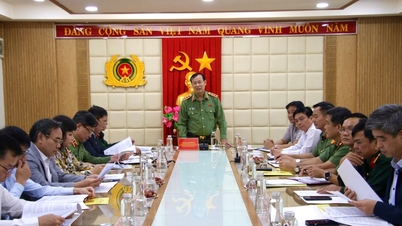
The Resolution of the First Congress of the Da Nang City Party Committee outlined the task of leveraging potential and advantages and increasing investment in resources to develop the socio-economic conditions of the mountainous region, narrowing the gap with the lowland region.
Tra Linh commune is a mountainous commune in Da Nang city, located approximately 210km from the city's administrative center, with a total natural area of 158.19km2. The commune currently comprises 7 villages and 32 residential areas with a population of approximately 6,792 people.
The population, primarily consisting of the Xơ Đăng and Ca Dong ethnic groups, are always conscious of protecting natural resources and deeply rooted in their ethnic cultural identity.
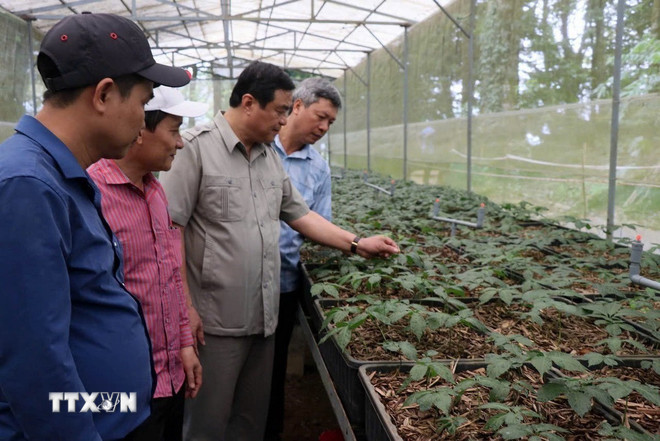
Ms. Ho Thi Minh Thuan, Secretary of the Party Committee and Chairwoman of the People's Council of Tra Linh commune, said that the locality is aiming to become a leading center for the production, processing, research, and conservation of medicinal herbs in the Central and Central Highlands regions.
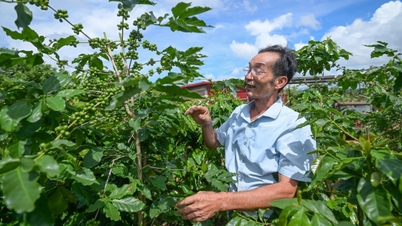
The entire commune has 671.86 hectares of forest under development as a source of Ngoc Linh ginseng; of which, more than 300 households and 14 businesses participate in ginseng cultivation. The annual production of Ngoc Linh ginseng reaches approximately 100 tons, and in the context of increasing domestic and international market demand, this opens up the potential for sustainable economic development for Tra Linh commune in the future.
To develop Tra Linh commune into a center for the medicinal herb industry, primarily focusing on Ngoc Linh ginseng, Ms. Ho Thi Minh Thuan suggested that Da Nang city issue specific policies and mechanisms for the locality. Specifically, the city should increase investment in developing infrastructure such as transportation, irrigation, electricity, and telecommunications, as well as research, preservation, and processing facilities for medicinal herbs, especially Ngoc Linh ginseng.
The city has established and developed the West Da Nang Bio-Pharmaceutical Industrial Zone, becoming a center for processing, researching, and preserving the genes of Ngoc Linh ginseng and other valuable medicinal plants, with a modern infrastructure and advanced technology.
Da Nang continues to create favorable conditions to attract investment in the fields of cultivation, processing, research, and conservation of valuable medicinal plant genetic resources.
Tay Giang commune is located more than 120km west of Da Nang city center, with a natural area of over 400km2; over 9,063 inhabitants, with more than 90% being Co Tu ethnic people. The commune has more than 20km of land border with neighboring Laos.
To develop the local economy, Bhling Mia, Secretary of the Party Committee and Chairman of the People's Council of Tay Giang commune, proposed that the city continue to promote and support investment in completing the infrastructure of the Aró Industrial Cluster in Tay Giang commune to exploit and process timber, cultivate forest products and medicinal plants.
The city facilitates local participation in the carbon credit market, contributing to environmental protection while opening up avenues for green and sustainable economic development in the mountainous border region.
Reducing the gap between mountainous and lowland areas.
According to Bhling Mia, Secretary of the Party Committee and Chairman of the People's Council of Tay Giang commune, the locality still faces many difficulties regarding infrastructure, the lack of sustainable infrastructure, and frequent natural disasters such as storms and floods.
In the area, 2 out of 23 villages lack mobile phone coverage, and 8 out of 23 villages lack fixed-line internet infrastructure, causing difficulties in leadership, management, communication, application of information technology, and digital transformation within the community.
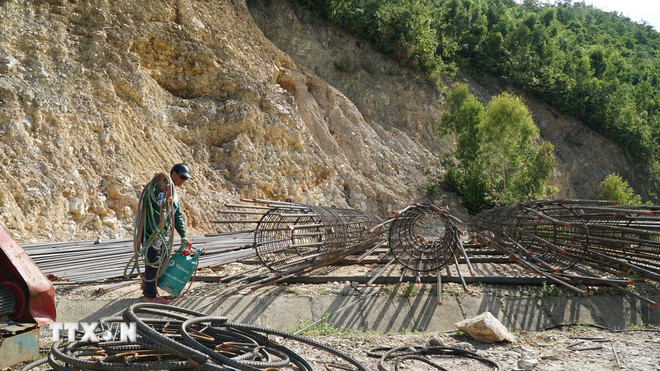
Based on the above situation, the locality recommends that the city continue to invest in telecommunications and transportation infrastructure. Priority should be given to upgrading Road 14G from Tuy Loan to Prao town and Provincial Road 606 from the center of Avuong commune to the Tay Giang-Ka Lum sub-border gate in Hung Son commune, in order to shorten distances and facilitate the trade of goods between the western region and the city center.
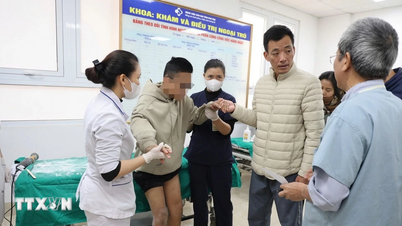
Da Nang is stepping up investment in infrastructure to meet the needs of people in mountainous areas, especially in healthcare, education , and communication.
According to Nguyen Ha Nam, Director of the Da Nang City Department of Construction, the fundamental weakness in connecting infrastructure in the western mountainous communes of the city is the difficulty in doing so, which leads to many other problems.
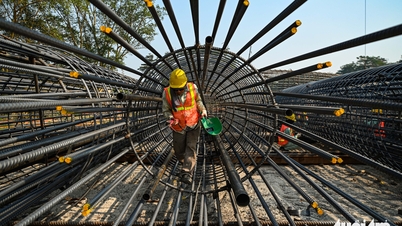
Therefore, the city has identified the need to focus investment on developing a complete, synchronized, and seamless transportation infrastructure to address the challenge of economic development in the mountainous region.
Specifically, from now until 2030, Da Nang will focus on investing in and upgrading the complete and seamless connection routes between the East and West regions. The city will form development corridors and urbanization corridors, including three main axes: Axis 1 (Road 40B and Provincial Road DT617 connecting the southern communes and wards to the Central Highlands); Axis 2 (National Highway 14E and National Highway 14H connecting coastal communes and wards with the western region); and Axis 3 (National Highway 14G, National Highway 14B, and National Highway 14D connecting the Da Nang city administrative center with the western region) to exploit two international gateways (Nam Giang Border Gate and Tay Giang Sub-border Gate).
Besides strengthening infrastructure connectivity, the Da Nang City Party Committee has recently implemented an innovative solution: establishing sister-ward relationships between communes and wards in the area to support each other's comprehensive development and improve the quality of life for the people.
Each commune or ward in the plains region will establish a sister-commune relationship with a commune in the mountainous, remote, border, or island areas; supporting economic development while maximizing the potential, advantages, and unique characteristics of each locality; and rotating the deployment of qualified officials and employees to provide support and professional guidance to communes in mountainous, remote, and isolated areas.
According to Nguyen Thi Thu Lan, Secretary of the Party Committee of Tam Ky Ward, the ward has established a sister-ward relationship with Tra Tap mountainous commune; and is focusing on exchanging, supporting, and transferring experience and expertise in Party building and state management.
Among these, the focus is on the ward's strengths such as digital transformation, information technology, and the activities of the Public Administrative Service Center.
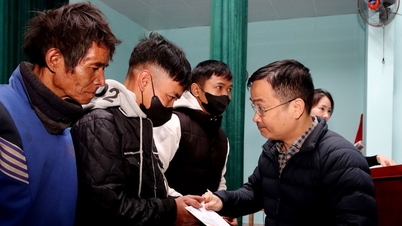
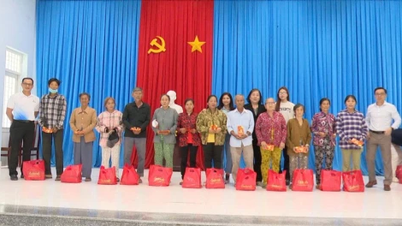
Right during the ceremony marking the establishment of a fraternal relationship, Tam Ky ward called on philanthropists in the area to donate and contribute 150 million VND to support the overcoming of difficulties faced by people, poor households, and families entitled to preferential policies in Tra Tap commune.
In the long term, the ward will continue to call upon and encourage businesses and investors to show interest in and invest in the economic development of Tra Tap commune in the coming time.
Lesson 1: Building a strong government apparatus as a foundation
Lesson 2: Economic Development in Adaptation to the New Situation
Lesson 4: Improving the quality of life for the people
Source: https://www.vietnamplus.vn/bai-3-phat-trien-dong-bo-ket-noi-ha-tang-post1069619.vnp






































































Comment (0)