

In 1947, in his immortal work "Revising Working Methods," President Ho Chi Minh cautioned: "Without control over power, abuse of power will arise." More than 75 years later, this admonition remains a guiding principle for all reforms. Especially at the present time, when the entire country is undergoing a profound restructuring of the administrative apparatus, granting more power to local governments in personnel management and reorganization is a logical step to promote proactive action. Along with this, increased supervision, transparency, and accountability are necessary to ensure that this power is exercised effectively.
During the five-year transitional period following the merger, while the number of temporary staff remains unchanged for reorganization, each personnel decision will shape the system for many years to come. The new system needs to be run by competent, courageous, and responsible individuals to better meet the demands of being closer to the people, serving them better, and helping the country confidently enter an era of national progress. And this can only be effectively achieved when empowerment is coupled with oversight and control of power.
The monitoring mechanism needs to be designed in a hierarchical manner – at the right level.
In the current period of strong administrative restructuring, along with increased decentralization and delegation of power to enhance the initiative and responsibility of local governments, the mechanism for monitoring power needs to be designed in a hierarchical manner – at the appropriate levels.
A "flexible three-tiered control system" can be implemented according to the hierarchical structure of personnel: Tier 1 - Organizational bodies: reviewing dossiers, scrutinizing processes, and ensuring compliance with legal regulations; Tier 2 - Independent evaluation council: comprising the Fatherland Front , inspectors, reform experts, social organizations, etc., to reassess based on practical capabilities and social credibility; Tier 3 - Social feedback: through the press, surveys, voter conferences, etc., allowing citizens to directly provide feedback on each personnel plan. These three tiers need to operate with clearly defined powers, avoiding overlap but providing sufficient checks and balances to strengthen the control of power.
Around the world , many countries have institutionalized personnel oversight mechanisms as an essential part of administrative reform. For example, in Canada, every appointment of a senior civil servant is accompanied by an independent evaluation process, involving civil society organizations, expert panels, and public review from Parliament, helping the system select the right people to do the job.
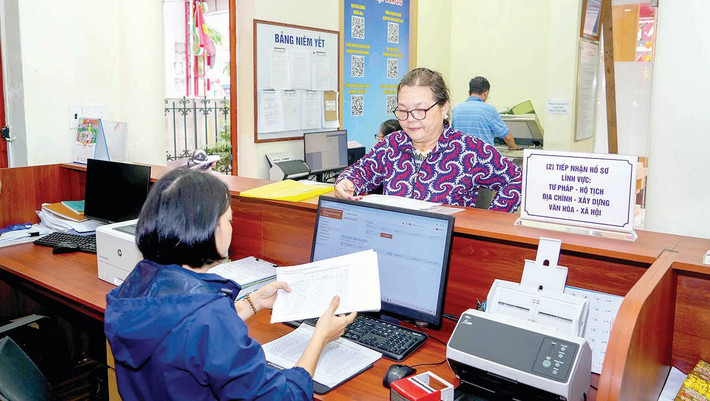
Government Resolution 74/NQ-CP dated April 7, 2025, clearly stipulates that the Ministry of Interior is the focal agency responsible for inspecting the organizational structure and personnel placement of officials and civil servants in localities, as well as receiving and handling feedback, difficulties, and obstacles during implementation. This is an important legal basis for establishing a "soft" but politically impactful inspection system – not only top-down supervision, but also creating a bottom-up feedback channel from citizens, voters, and social organizations, helping to facilitate transparency and accountability.
However, oversight only carries weight when accompanied by transparency and accountability. A standardized post-merger personnel report is needed – not a single submission, but a public commitment including: a list of proposed retainers; work performance over the past three years; feedback from citizens and organizations; and reasons for not selecting candidates with equivalent capabilities. This report should be made public at provincial-level personnel review meetings. More importantly: if the wrong person is appointed or a deserving candidate is overlooked – who will be held accountable? The mechanism for handling violations, biased evaluations, or delays needs to be sufficiently clear – to ensure the commitment is legally binding.
The five-year period following the merger is a crucial time to re-select the right people and rebuild the foundation for the new system. Without a proper oversight mechanism from the outset, flawed decisions can significantly impact the entire reform process. A "soft" oversight mechanism – if designed correctly – can prevent closed-door arrangements, retain innovative individuals, and strengthen confidence in a system that selects competent, innovative, and proactive people.
The plan for implementing the project on reorganizing administrative units and local governments at two levels also clearly requires that the Ministry of Interior and local governments standardize the process of monitoring the organizational structure, including: checking, providing feedback, and comprehensively reviewing personnel plans after mergers. This is a key legal foundation for implementing a unified "three-tiered monitoring" mechanism nationwide. Personnel monitoring – therefore – must become a fixed institution in all personnel decisions after the reform.
Meeting the requirements of being closer to the people and serving the people better and better.
Personnel selection must be based on practical results, not just administrative records. The first five years after the merger are a golden opportunity to review the entire workforce, select the most deserving individuals, and meet the requirements of being close to the people and serving them even better.
Based on this reality, it is necessary to establish a "reform safety zone" – where officials with clear achievements but lacking seniority, not yet included in the planning... still have the opportunity to be flexibly tested, as stipulated in Decree 179. This is not a special exemption – but a verifiable reform mechanism: based on concrete results and social feedback, over a real period of time. At the same time, an independent evaluation council and a feedback channel from the public are needed to objectively assess the capabilities of officials.
A practical proposal is to implement a Personal Reform Profile – not as a mere record of achievements, but as a living document of practical capabilities. Each profile should clearly reflect: specific results achieved in the last three years, initiatives implemented, feedback from citizens and social organizations, and commitments to future development. For this profile to be valuable, it cannot rely solely on self-declarations or unit reports. An independent verification mechanism is needed – cross-checking between data, actual feedback, and assessments from a professional council. Commitments are only valid when accompanied by verification. And this reform data – should be updated periodically as an integral part of the personnel placement and development process.
Along with strengthening oversight and control of power, a public service ecosystem is needed – not only to retain talented people, but also to enable them to continue creating value, spreading confidence, and truly shining, contributing enthusiastically to the nation's era of progress.
Source: https://daibieunhandan.vn/bai-4-trao-quyen-gan-voi-kiem-soat-quyen-luc-post411232.html


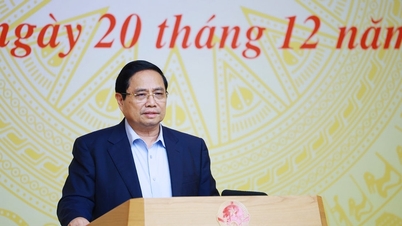
![[Photo] Prime Minister Pham Minh Chinh presides over a meeting on private sector economic development.](/_next/image?url=https%3A%2F%2Fvphoto.vietnam.vn%2Fthumb%2F1200x675%2Fvietnam%2Fresource%2FIMAGE%2F2025%2F12%2F20%2F1766237501876_thiet-ke-chua-co-ten-40-png.webp&w=3840&q=75)





































































Comment (0)