

Lesson 1: When the fields are unprofitable
Lesson 2: New thinking on old land
The government is providing hands-on guidance.
The restructuring of crop and livestock production is actually not a new story in Tuyen Quang. In the period from 2021 to 2025 alone, the province converted over 3,800 hectares of land and implemented improvements to unproductive orchards, developed household garden economies , created livelihoods for people, and achieved sustainable poverty reduction, with over 646 hectares of land undergoing improvement. Of this, nearly 2,700 hectares of rice-growing land were converted to other crops and livestock. Over 1,100 hectares of low-yield corn-growing land were converted to high-value crops and livestock. The economic value from this crop and livestock restructuring has increased income by 1.5 to 3 times compared to traditional crops.
However, deciding what crops to plant, what livestock to raise, and how to implement the transformation requires the involvement of many stakeholders. In this process, the role of the State and local authorities is considered crucial, ensuring both sustainable linkages and adherence to local planning.
 |
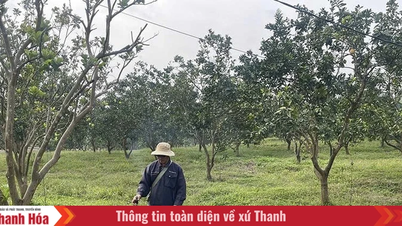
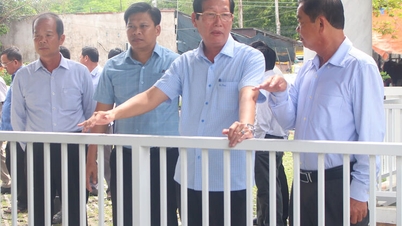
| Leaders of Son Duong commune inspect a lemon cultivation model in the area. |
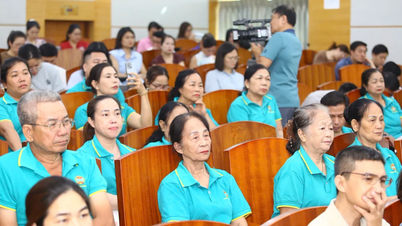
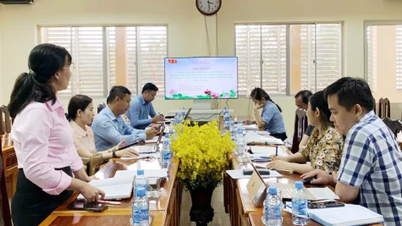
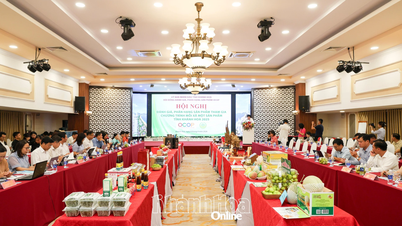
In response to the urgent need to restructure crop and livestock production and increase farmers' income, in early 2026, the People's Committee of Tuyen Quang province organized a conference to disseminate knowledge and models on the conversion of high-yield, high-economic-value crop and livestock varieties to the people, co-chaired by the Chairman of the Provincial People's Committee and Professor Nguyen Lan Hung. This move is seen as a demonstration of the government's determination to direct and require localities to decisively transform crop and livestock structures to be more suitable and effective.
The government leader's view is that the transformation of crop and livestock varieties must be based on the ecological advantages of each region and sub-region; be consistent with land use planning and plans; be closely linked to market demand and product consumption contracts; and absolutely not be implemented spontaneously or as a fad.
Agricultural development should be oriented towards: Modern - Green - Digitalized - Disease-Free - Chain Linkage - High Value; strongly applying science and technology, digital transformation, and reducing emissions in production to improve productivity, quality, and added value. Production should be organized into closed value chains; enterprises and cooperatives should play a central role in linking these sectors; and concentrated raw material areas of sufficient scale should be established to serve deep processing and stable consumption.
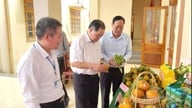
Effectiveness and breakthroughs in the restructuring of crop and livestock production have been identified by the province as one of the four tasks for evaluating the performance of commune and ward leaders. This demonstrates the urgency and the need for rapid innovation, introducing high-economic-value crops and livestock to increase productivity, output, and most importantly, income for farmers.
During a working session with the authorities of 19 communes in the northern part of the province in early April 2026, the Chairman of the Provincial People's Committee also pointed out that delays in crop conversion in any given season will directly harm the people in that season. Therefore, each commune needs to develop at least 3 effective crop models and 3 effective livestock models for replication.
Connecting multiple households, leading production.
The conversion of crop and livestock varieties has not only created jobs and increased income for people per unit area, but also reduced the abandonment of agricultural land due to prolonged crop failures. Through the restructuring of crop patterns, it has also helped create an abundant supply of agricultural products for the market; households have responded positively to this conversion, contributing to the diversification of agricultural products. This has stimulated the participation and growth of many agricultural and forestry cooperatives in the area, forming a stable and sustainable production chain.
 |
| Model of collaborative strawberry farming in Yen Nguyen commune. |
According to a report by the Department of Agriculture and Environment, the province currently has 936 agricultural and forestry cooperatives with nearly 12,000 members. On average, each commune or ward has 7.5 cooperatives – a fairly comprehensive and inclusive figure, given that agriculture and forestry remain strengths in many localities. However, without regulation and guidance, this could easily lead to problems like mismanagement of planning or the trap of selling substandard seeds, as has happened in many localities years ago.
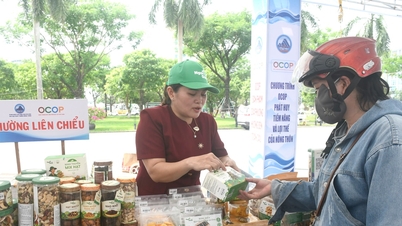
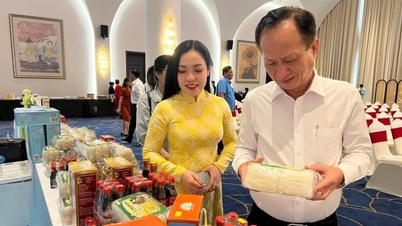
The province currently has over 100 agricultural production linkage chains involving cooperatives. However, this number is still quite modest when considering the total number of cooperatives in the province. According to the Department of Agriculture and Environment, one of the key solutions set forth by the sector to promote the transformation of crop and livestock structures is to promote the implementation of the One Commune One Product (OCOP) program, develop community tourism and agricultural tourism associated with building new rural areas; and attract large enterprises to invest in deep processing and production along the supply chain.
At the same time, strongly innovate forms of production organization, link production and product consumption; develop production according to planning orientation and consumer market; encourage enterprises, organizations, cooperatives, and individuals with capital and technical resources to consolidate land for agricultural, forestry, and livestock production.
During this phase, the sector will shift from subsidized production support to loan-based support to enhance accountability in the use of state-supported resources. It will effectively implement policies to encourage investment in agricultural and rural development, attract large-scale enterprises to invest in agriculture and forestry, and improve the quality of agricultural service systems.

At this time, branches and transaction offices of the Agricultural and Rural Development Bank are also participating in local linkage conferences with communes and wards, committing to providing credit capital to both cooperatives and farmers during the transformation process. Land consolidation, mechanization of production, bringing cooperatives into the chain, and applying digital technology in all stages of agricultural production are being focused on by localities, both increasing production value and reducing pressure on agricultural labor.
The challenge facing agriculture today is no longer "whether or not to have land," but "what to do with the land." When farmers no longer rely solely on labor for profit, and when production is linked to the market and technology, every inch of land will truly become invaluable. Ultimately, this journey is not just about crops and livestock, but about a shift in mindset to create a modern, sustainable agricultural economy.
Text and photos: Nguyen Dat, Doan Thu, Duy Tuan
Source: https://baotuyenquang.com.vn/kinh-te/202604/bai-cuoi-de-tac-dat-la-tac-vang-28604ec/








































![[Video] Sunset at Lap An Lagoon – Where the sun sets over the fishing nets](https://vphoto.vietnam.vn/thumb/1200x675/vietnam/resource/IMAGE/2026/05/31/1780192137701_beach-landscape-sea-water-nature-grass-745871-pxhere-com.jpeg)


















Comment (0)