

Lifelong learning empowers us to think boldly, speak confidently, act decisively, take responsibility, and make sacrifices for the common good, ultimately becoming useful members of society.
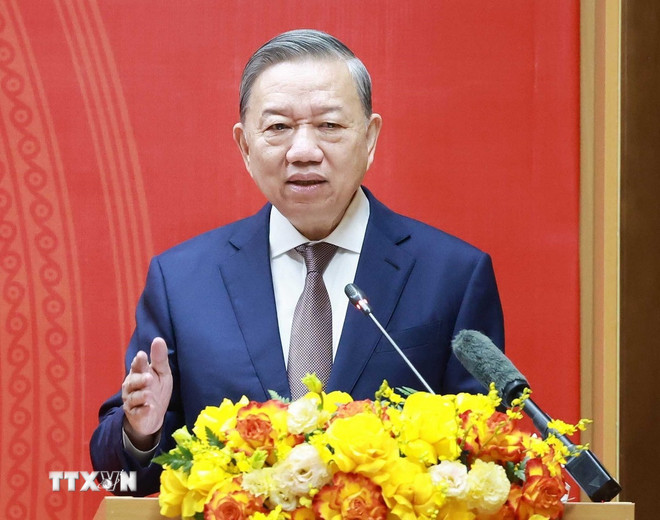
The scientific and technological revolution has been and continues to unfold powerfully on a global scale, creating tremendous transformations in social life, posing new demands, needs, tasks, ways of thinking, and actions for every Vietnamese citizen, especially for cadres and Party members in the political system on the path of building and defending the socialist Fatherland. This includes maximizing opportunities, leapfrogging ahead, and leading the country into an era of development, prosperity, and standing shoulder-to-shoulder with the world's leading nations. To successfully fulfill the requirements, tasks, and responsibilities of this new era, lifelong learning—daring to think, daring to speak, daring to act, daring to take responsibility, and daring to sacrifice for the common good—is an urgent requirement for each individual, each citizen, especially cadres and employees in the political system.
Lifelong learning is not a new issue. Right after the successful August Revolution, President Ho Chi Minh launched a nationwide movement to eradicate illiteracy. He instructed: “…To know, one must compete in learning. Learning never ends. Learn constantly to progress constantly. The more progress one makes, the more one realizes one must learn more”[1]; “The more society progresses, the more work there is, the more sophisticated the machinery becomes. If we don't learn, we will be backward, and backwardness means being eliminated, eliminating ourselves”[2]. In the revolutionary stages, especially in the years of reform, our Party has always paid attention to and encouraged lifelong learning and building the whole country into a learning society. The policy of lifelong learning is mentioned in many Resolutions, Directives, and Conclusions of the Party, such as Resolution No. 4 of the 7th Central Committee on continuing to reform the education and training system, Resolution No. 2 of the 8th Central Committee on strategic orientation for the development of education and training in the period of industrialization and modernization and tasks until 2000, Conclusion No. 14-KL/TW, dated July 26, 2002, the 6th Central Committee Conference of the 9th term on continuing to implement Resolution No. 2 of the 8th Central Committee, Resolutions of the 10th and 11th Party Congresses, Resolution No. 29-NQ/TW, dated November 4, 2013, of the 11th Central Committee on "Fundamental and comprehensive reform of education and training to meet the requirements of industrialization and modernization in the context of a socialist-oriented market economy and international integration", and Resolution of the 13th Party Congress affirming "Promoting the building of a learning society and lifelong learning". "life"[3] because "Revolutionary people must learn all their lives, learn from books, learn from each other and learn from the people; the 'sea of learning' is vast and never runs dry.
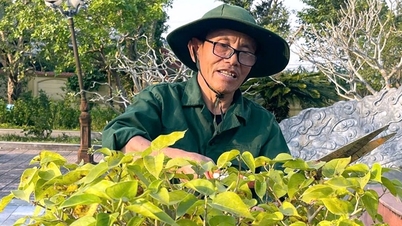
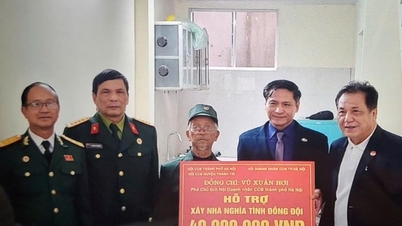
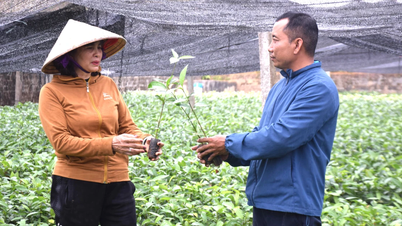
Implementing the Party's viewpoints and policies, the building of a learning society and lifelong learning has become a movement, a necessity, a cultural norm, and has achieved many important results. Accordingly, a unified national education system has been formed, from preschool to postgraduate training; types of schools, classes, and training programs have been diversified, providing learning opportunities for people of all ages. The methods of providing and connecting different levels of training have improved; the network and scale of education have expanded throughout the country; emulation movements to promote learning and talent have become more in-depth and substantive in almost all localities; a healthy educational environment has been created, where learning goes hand in hand with practice, linked to the campaign to eradicate hunger and poverty, and to building a cultured life and cultured families. In many clans, villages, communes, and hamlets, the emulation movement for learning has developed strongly. The awareness of lifelong learning has permeated every family, every residential area, every training institution, every region... There are many exemplary individuals, including farmers, laborers, officials, and teachers, who actively engage in self-study and creativity in their work, making significant contributions to the community; many exemplary individuals who apply scientific and technological advancements, conducting research and developing effective solutions with high practical application in production and daily life; and many elderly people who, through self-study and research, apply their knowledge and experience to production, helping their families escape poverty, build a new cultural life, and contribute to the socio-economic development of their localities. These new models and shining examples demonstrate that learning is never too late. Many people, even in their seventies, still pursue postgraduate studies and doctoral dissertations with the sole purpose of setting an example for their children and grandchildren to follow, encouraging them to "learn, learn more, and keep learning." “Learn to work, to be a good person, to be a good cadre. Learn to serve the organization, to serve the class and the people, to serve the Fatherland and humanity”[4], contributing to our country achieving great achievements after nearly 40 years of reform.
Despite the achievements, the implementation of the lifelong learning policy still faces some shortcomings and limitations. Training and professional development still prioritize quantity over quality; self-study, practical learning, and lifelong learning among cadres and Party members have not yielded the desired results; there is still a tendency to learn based on trends and a craze for degrees rather than on practical demands; a reluctance to face difficulties and hardships in learning; and a lack of in-depth thinking to strive for the highest achievements in science. Limitations in professional expertise, individualism, and the tendency to rely on experience among a segment of cadres and Party members affect the quality of public service and the quality of service to the people; they impact the spirit of daring to think, speak, act, and take responsibility; they stifle the motivation for innovation and creativity; and they lack the necessary knowledge and confidence to propose and implement groundbreaking initiatives and solutions. A segment of officials, civil servants, and employees are satisfied with the knowledge they have acquired in schools and training institutions, or they pursue further education to obtain qualifications for promotion, neglecting to regularly research and learn to improve their professional skills, management capabilities, knowledge, integration skills, and adaptability. Another segment shows a reluctance to learn, lacking the concept of continuous, lifelong learning, thus becoming outdated, conservative, and unable to adapt and keep pace with the rapid pace of life in the era of science and technology 4.0 and X.0.
The country is facing new opportunities and prospects to rise up and "stand shoulder to shoulder" with the world, as envisioned by President Ho Chi Minh and aspired to by the entire nation. Our Party has no other interest than leading the country and the nation into a prosperous and strong society, where the people are well-fed, free, happy, and developed. More than ever, we need cadres with innovative thinking, vision, and actions; those who dare to think, speak, act, take responsibility, and make sacrifices, especially in implementing revolutions in streamlining and reorganizing the apparatus to be more efficient, effective, and efficient; and in implementing Resolution No. 57-NQ/TW, dated December 22, 2024, of the Politburo on breakthroughs in science and technology development, innovation, and national digital transformation. The Fourth Industrial Revolution is unfolding on an unprecedented scale and pace. The rapid development of the knowledge economy, digital transformation, the digital economy, and the digital society means that some of the content taught in schools today may become outdated and obsolete within a few years. Furthermore, things that are common today did not exist 10 years ago, and 65% of current jobs will be replaced by technology in the coming years. In a complex, unstable, and unpredictable world, knowledge must be constantly updated. With longer life expectancy and extended retirement periods, older people are compelled to learn and stay active to avoid falling behind in modern society.
In this context, lifelong learning becomes a way of life; it not only helps individuals recognize, adapt, and avoid falling behind in the ever-changing world, enriching their intellect, perfecting their character, overcoming difficulties and challenges to progress and position themselves in modern society; more importantly, it is a crucial key to raising the intellectual level of the population and training human resources, promoting socio-economic development, and is the only path, the inevitable direction for all nations to ensure prosperous and sustainable development. Lifelong learning helps each member of society have the conditions and opportunities to improve themselves, enhance the quality of life for themselves, their families, clans, villages, wards, communes, and the entire country under the leadership of the Party on the path to becoming a wealthy, strong, democratic, just, civilized, and socialist nation.
Only by genuinely promoting lifelong learning can we enrich ourselves with ideas, solutions, and initiatives to address the urgent demands of practice, new and unprecedented problems; thoroughly overcome "bottlenecks" in mechanisms and policies, and formalistic manifestations in self-criticism and criticism; eliminate stagnation and confusion in handling work at localities, agencies, and units; create a team of courageous cadres who correctly understand objective laws, proactively think and master their thoughts, dare to speak out on issues arising from practice, from vibrant life, from the demands of reform and the legitimate requests and aspirations of the people; have determination, dare to take responsibility for the results of their work, the field and sector they are in charge of, dare to admit mistakes, correct errors, be accountable to the people and the Party, and know how to master themselves and their work. They must dare to resist unjust enrichment and, if necessary, dare to sacrifice personal interests for the Party, the Fatherland, and the people. Only then will we successfully build a team of cadres with high qualifications, capabilities, and good moral character, who aspire to excel and develop, who dare to think, dare to act, and dare to take responsibility for their decisions to realize revolutionary tasks, create breakthroughs for the benefit of the people, and contribute to the development of the country.
Building a learning society and promoting lifelong learning will only succeed when every citizen is aware of their responsibility for lifelong self-learning; and when every cadre and Party member is clearly aware that lifelong learning is a revolutionary task, approached with seriousness and high self-awareness. Through lifelong learning, individuals will understand their responsibility to building and protecting the Fatherland in each specific stage and time; develop the capacity to master and organize their lives; continuously progress, improve their health and quality of life; understand, preserve, and contribute to building the national cultural traditions; have faith in the future of the country, in the correct policies and leadership of the Party, and aspire to a prosperous and happy nation. Every citizen needs to continuously learn about political theory, professional skills, methods, work experience, and the ability to coordinate within a group to enhance organizational discipline, labor productivity, and the overall strength of the nation. Every cadre and Party member needs to learn about the character of a revolutionary cadre, learn from books, learn from each other, and learn from the people; constantly self-study, update new knowledge, actively participate in the "digital learning" movement, popularize and improve scientific and technological knowledge, and digital knowledge; actively propagate and encourage relatives, family, and clans to engage in lifelong learning. Through lifelong learning, they can fulfill all the tasks entrusted by the Party, the revolution, and the people.
Each Party committee, socio-political organization, and professional association needs to clearly understand that the main goal of lifelong learning is the development of socialist human beings. From this understanding, they should identify lifelong learning content for cadres, Party members, and their associates, linking it with emulation campaigns, evaluation, commendation, and rewards. The Party and State will soon summarize, evaluate, and research the issuance of regulations and procedures, and innovate the perspective on evaluating, screening, and planning the cadre workforce, aiming to build a complete, clean, and strong public administration system that wholeheartedly serves the people; protecting cadres who are ready to take the lead and make breakthroughs for the common good. The education system will continue to be improved in an open, flexible, and interconnected manner, creating opportunities for lifelong learning for all citizens and implementing training according to the needs of the labor market. There are specific solutions to raise public awareness of the role and significance of lifelong learning and its contribution to improving the quality and competitiveness of the national workforce. Monitoring, inspecting, and supervising the pilot implementation of innovative proposals; proactively identifying emerging issues, providing timely encouragement and support, resolving difficulties and obstacles, or reviewing and adjusting decisions to suit the actual situation; and implementing a policy of exemption from liability for officials involved in the pilot program whose results are unsatisfactory or only partially achieve the set goals, or who experience risks or losses due to objective reasons.
We are living in an era where knowledge and understanding will help people maximize their potential to seize opportunities, effectively respond to challenges, and achieve sustainable development; it is also an era where the volume of human knowledge is increasing exponentially every day. Only when the entire Party, the entire people, the entire army, every household, and every individual effectively implements lifelong learning, and builds a team of cadres who dare to act, dare to speak, dare to take responsibility, and dare to sacrifice, can we firmly advance into a new era, an era of development and prosperity under the leadership of the Party.
[1] Ho Chi Minh: Complete Works, National Political Publishing House, Hanoi, 2011, vol. 6, p. 61
[2] Ho Chi Minh: Complete Works, op. cit., vol. 12, p. 333
[3] Documents of the 13th National Congress of Delegates, National Political Publishing House, Hanoi, 2021, vol. 1, p. 137
[4] Ho Chi Minh: Complete Works, op. cit., vol. 6, p. 208
Source: https://daidoanket.vn/bai-viet-ve-hoc-tap-suot-doi-cua-tong-bi-thu-to-lam-10300797.html


![[Photo] Prime Minister Pham Minh Chinh presides over a meeting on private sector economic development.](/_next/image?url=https%3A%2F%2Fvphoto.vietnam.vn%2Fthumb%2F1200x675%2Fvietnam%2Fresource%2FIMAGE%2F2025%2F12%2F20%2F1766237501876_thiet-ke-chua-co-ten-40-png.webp&w=3840&q=75)

































































Comment (0)