



This requires a radical change in how the private sector is treated: firmly protecting property rights and freedom of business; removing barriers related to land, credit, markets, and technology; creating a healthy competitive environment; developing an innovative startup ecosystem; and fostering a team of modern entrepreneurs with integrity, intelligence, and professional ethics.
Resolution 68 laid the foundation for the formation of strong private corporations capable of participating in global value chains.


 Resolution 57 establishes science , technology, innovation, and digital transformation as the foundation and main driving force of the new growth model.
This represents a shift from "applying technology" to "mastering technology," from viewing science as a supporting field to considering it the main axis of development. The resolution calls for eliminating outdated thinking, encouraging a spirit of daring to think, daring to act, and daring to innovate; perfecting institutions towards openness and creation; building a national innovation ecosystem; promoting R&D in businesses; and developing data infrastructure and digital platforms.
Without this pillar, Vietnam will find it difficult to generate endogenous productivity to compete in the digital economy and Industry 4.0 era.

Resolution 66 targets the institutional foundation: comprehensively reforming the work of lawmaking and enforcement. The resolution shifts the mindset from "management" to "service," from passively regulating laws to laws that lead and guide development.
This means the legal system must be synchronized, transparent, highly predictable, and stable; lawmaking processes must be proactive, scientific, and aligned with the requirements of rapid and sustainable development; law enforcement must be strict and accountable; and decentralization and delegation of power must go hand in hand with the elimination of the "request-and-grant" mechanism.
A modern legal system is the "operating system" of the entire economy: Without strong reforms, all efforts to develop the private sector or innovate will be hampered.


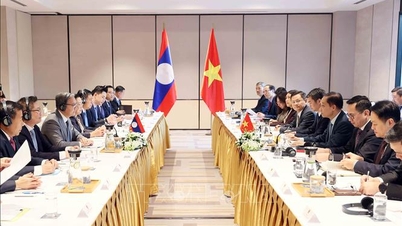
Resolution 59 places international integration in the position of a strategic driving force, defining integration as a national undertaking, with the people and businesses at its center.
The resolution emphasizes that internal strength determines the success of integration, while external forces only supplement it; it requires integration to be proactive, flexible, and closely linked to the goal of building an independent and self-reliant economy.
Major orientations include: leveraging opportunities from new-generation FTAs; deeply participating in the digital economy, green economy, and circular economy; expanding strategic partnerships; improving the quality of human resources; and developing a team of integration officials with the courage and capacity to handle global issues. Effective integration will expand markets and bring technology, capital, and knowledge into the domestic economy.
The four resolutions complement each other: without transparent laws, the private sector struggles to thrive; without a strong private sector, innovation struggles to spread; without innovation, integration struggles to create added value; and without proactive integration, the impetus for domestic reform weakens.
The four resolutions – if implemented synchronously, decisively, and effectively – can be seen as a version of the Doi Moi (Renovation) movement, helping Vietnam overcome the limitations of the old growth model, escape the middle-income trap, and enter a new era of development, with the goal of becoming a developed, high-income country by 2045.
Vietnamnet.vn
Source: https://vietnamnet.vn/bo-tu-nghi-quyet-dong-luc-cat-canh-cua-viet-nam-2471813.html
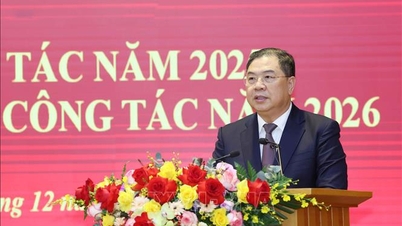
![[Image] Central Party Office summarizes work in 2025](/_next/image?url=https%3A%2F%2Fvphoto.vietnam.vn%2Fthumb%2F1200x675%2Fvietnam%2Fresource%2FIMAGE%2F2025%2F12%2F18%2F1766065572073_vptw-hoi-nghi-tong-ket-89-1204-jpg.webp&w=3840&q=75)
















































































Comment (0)