2,000-year-old stone map reveals lost civilization?
A new discovery in Mexico has stunned archaeologists: a stone map documenting a network of ancient settlements could change our understanding of the region's history.
Báo Khoa học và Đời sống•24/06/2025
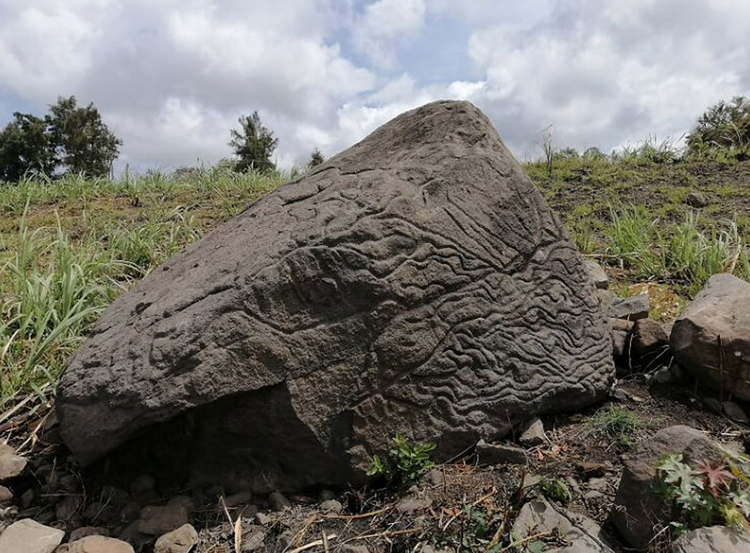
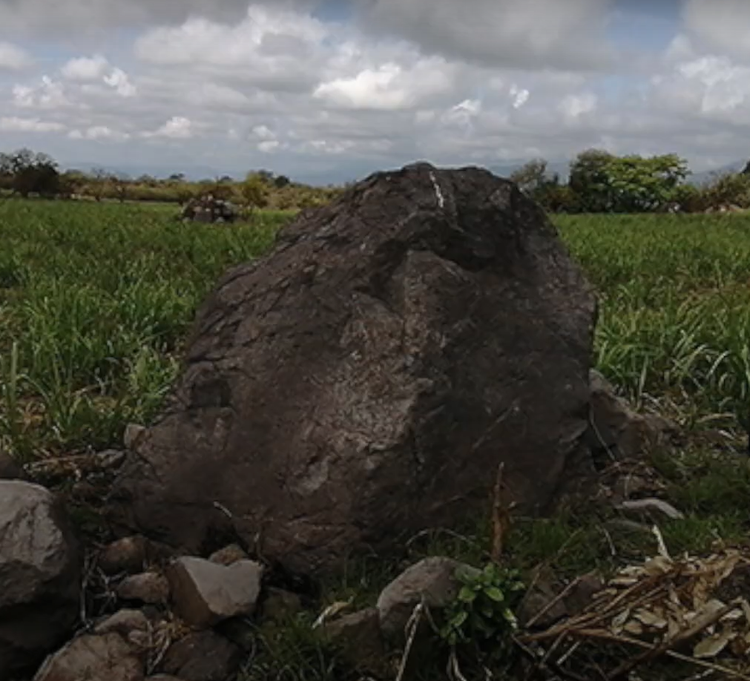
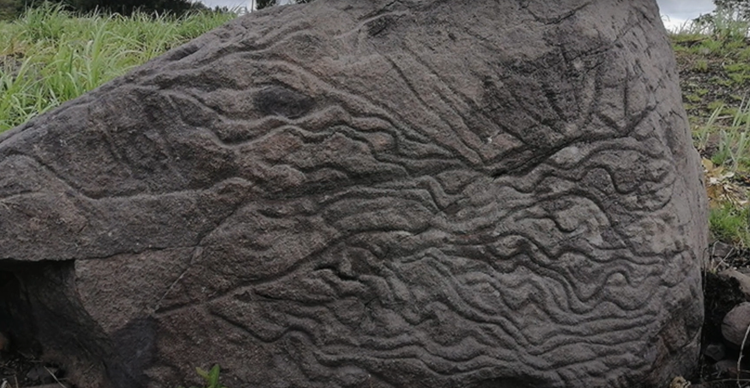
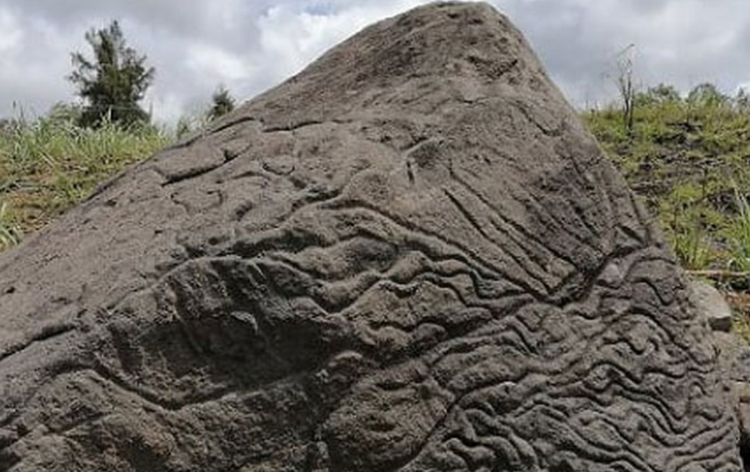
During excavations in Colima, Mexico, archaeologists from the National Institute of Anthropology and History of Mexico (INAH) discovered a strangely shaped, mysterious stone structure. Photo: @INAH. This stone structure is actually a basalt volcanic rock map dating from approximately 200 BC to 200 AD. Photo: @INAH.
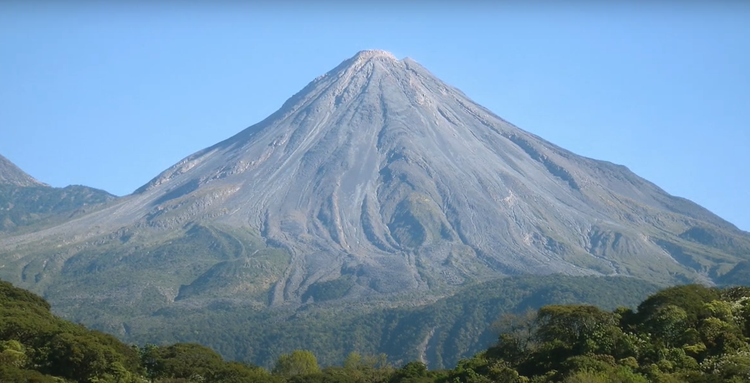
This map-like rock is 1.7 meters high, situated on an axis angled approximately 20 degrees to the northeast and pointing toward the Colima volcano, about 14 km away. Photo: @INAH.
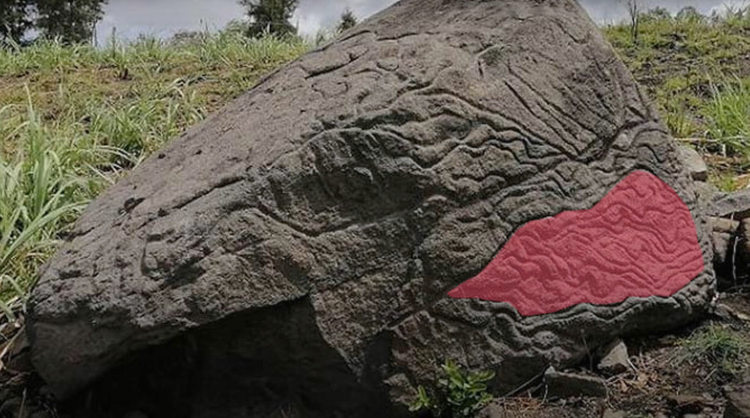
In-depth archaeological surveys and studies reveal that this map stone depicts the territory of pre-Columbian indigenous peoples living around Colima, represented by small circular features carved directly into the stone, indicating the locations of ancient settlements. Photo: @INAH.
The rock also features hollowed-out sections carved to represent villages, as well as lines that may relate to topographical features and natural hydrological systems. Photo: @INAH. Archaeologist Julio Ignacio Martínez de la Rosa reports that some features depicted on this map correspond to the actual geographical landscape of the southern slopes of the Colima volcano, with gorges and rivers clearly visible. Photo: @INAH.
Julio Ignacio Martínez de la Rosa added: “There is no doubt that this rock map has helped us better understand how the pre-Columbian indigenous peoples around Colima managed their land. Furthermore, this map is also a way to preserve knowledge from generation to generation, at a time when writing did not yet exist in the ancient territory of Colima.” Photo: @INAH. We invite our readers to watch the video : “Opening” the 3,000-year-old mummy of an Egyptian Pharaoh: Shocking true appearance and earth-shattering secrets. Video source: @VGT TV - Life.

 Báo Khoa học và Đời sống•24/06/2025
![[Image] Close-up view of the interchange connecting the two expressways and Long Thanh Airport.](https://vphoto.vietnam.vn/thumb/1200x675/vietnam/resource/IMAGE/2026/05/25/1779703378210_ndo_br_z7863716673926-224453a31600126cce10622af6290afd-4549-jpg.webp)


![[Image] Hanoi's urban life under the challenge of a "scorching hot" environment](https://vphoto.vietnam.vn/thumb/1200x675/vietnam/resource/IMAGE/2026/05/25/1779706979265_nang-nong-t5-2026-minh-duy-7-4636-jpg.webp)

















![[GALLERY] The super-cheap Claude AI API turns out to be selling user data.](https://vphoto.vietnam.vn/thumb/402x226/vietnam/resource/IMAGE/2026/05/25/1779691077049_cl-6-png.webp)










































































Comment (0)