


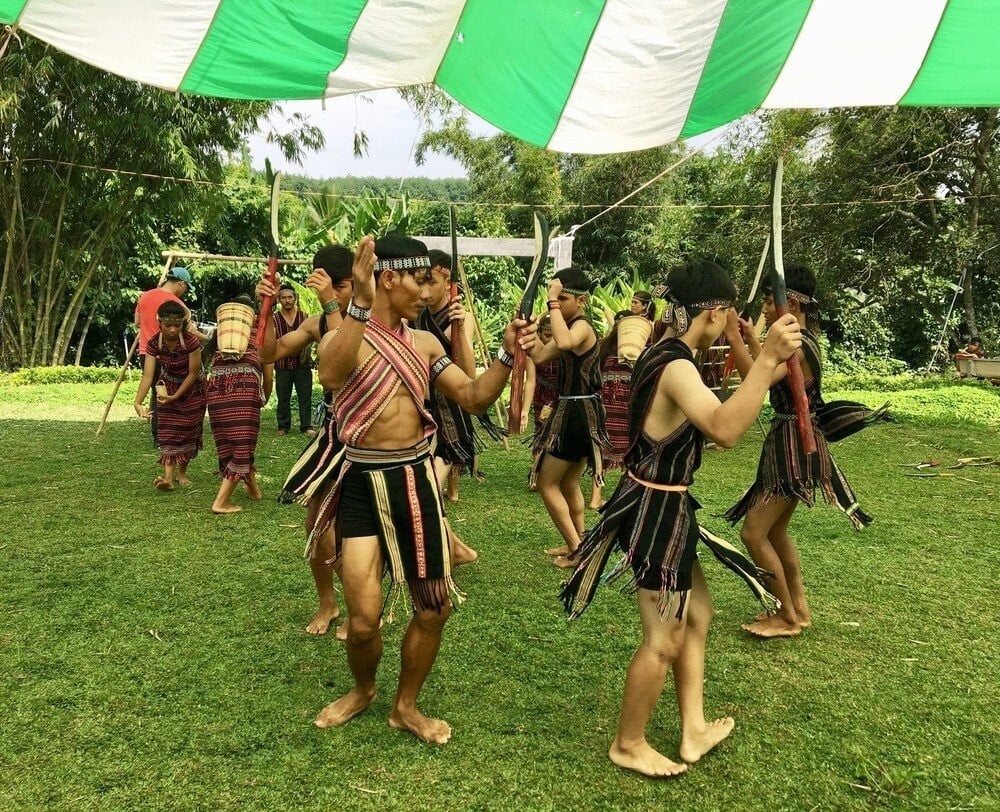
The Chơ Ro ethnic group has long resided in the low mountainous regions of Đồng Nai and Bà Rịa - Vũng Tàu provinces. Due to living close to or intermingling with other ethnic groups, many aspects of the Chơ Ro people's traditional culture have faded away. However, currently, some intangible cultural heritage, customs, practices, and traditional festivals have been restored and promoted in the cultural and spiritual life of the people by the Department of Culture, local authorities, and the people themselves.
National heritage
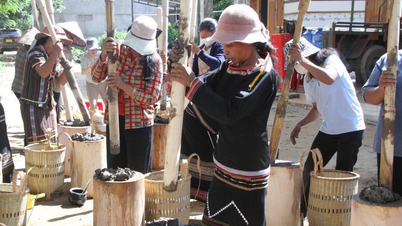
According to Mr. Pham Diem, former Director of the Culture and Arts Center of Ba Ria - Vung Tau province and Head of the project "Research, restoration and development of Cho Ro folk performing arts," Cho Ro folk performing arts play a very important role in rituals, festivals, spiritual beliefs, weddings, funerals, and folk performances of the Cho Ro family, clan, and community; especially in community life. Cho Ro folk performing arts first include folk singing, encompassing: Folk lyrical performances: various genres of folk songs, chants, love songs, and romantic songs (e.g., "Inviting to drink wine," "Praying for rain," "Going to the forest," "Going to plant rice together," "Going to cultivate," etc.); comprehensive folk performances such as: the Op Yang Va Festival (worshiping the rice god) and the Op Yang Vri Festival (worshiping the forest god); and various forms of dance: Religious dances: the shaman dance, the dance following the shaman into trance; Labor dances: Rice planting dance, rice sifting dance, rice pounding dance, gong-beating dance, moonlit dance; daily life dances...
Unlike the folk songs of the Ma ethnic group, which are often cheerful and optimistic, the folk songs of the Cho Ro people are narrative in nature, similar to traditional Vietnamese music . Lullabies always contain teachings for children about living optimistically, virtuously, and being connected to nature, mountains, and forests... Meanwhile, songs about daily life and work are messages, advice, news, stories, and expressions of care, concern, and love among family members.
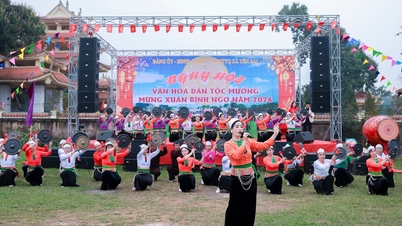
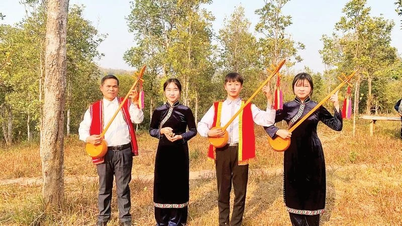
Besides folk singing and dancing, the Chơ Ro people have seven types of musical instruments that are being preserved, maintained, and used in community activities: goong (gong), chinh (cymbals), goong cla (bamboo gong), cầm vuột (gourd horn), goong choloq, senh, tuyn (flute), and toon (mouth horn). Among them, the gong is considered the soul of the Chơ Ro people. They believe gongs and cymbals are sacred because they are indispensable in ceremonies honoring the Rice God and the Forest God. Before playing the gong, they must ask permission from their ancestors. The gongs and cymbals of the Chơ Ro people are respectfully hung on frames.
To preserve the folk culture of the Chơ Ro ethnic group, in 2023, the Department of Science and Technology and the Center for Culture and Arts of Bà Rịa - Vũng Tàu province developed a scientific project entitled "Research, restoration and development of Chơ Ro folk performing arts in Bà Rịa - Vũng Tàu province". Through this, they conducted surveys, collected and supplemented documentation on folk dances, songs and rituals to restore and preserve the original performing arts of the Sayangva Festival - Celebrating the New Rice Harvest, one of the largest festivals of the Chơ Ro people.
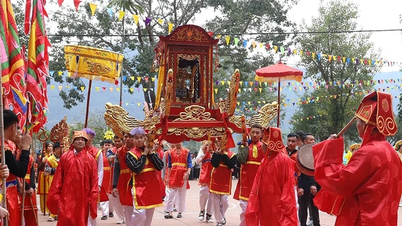
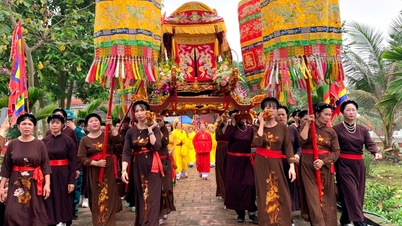
In addition, localities with large Chơ Ro ethnic minority populations often organize annual traditional festivals at community cultural centers, such as in Châu Đức district or in Bàu Lâm and Tân Lâm communes in Xuyên Mộc district; and Long Tân commune in Đất Đỏ district...
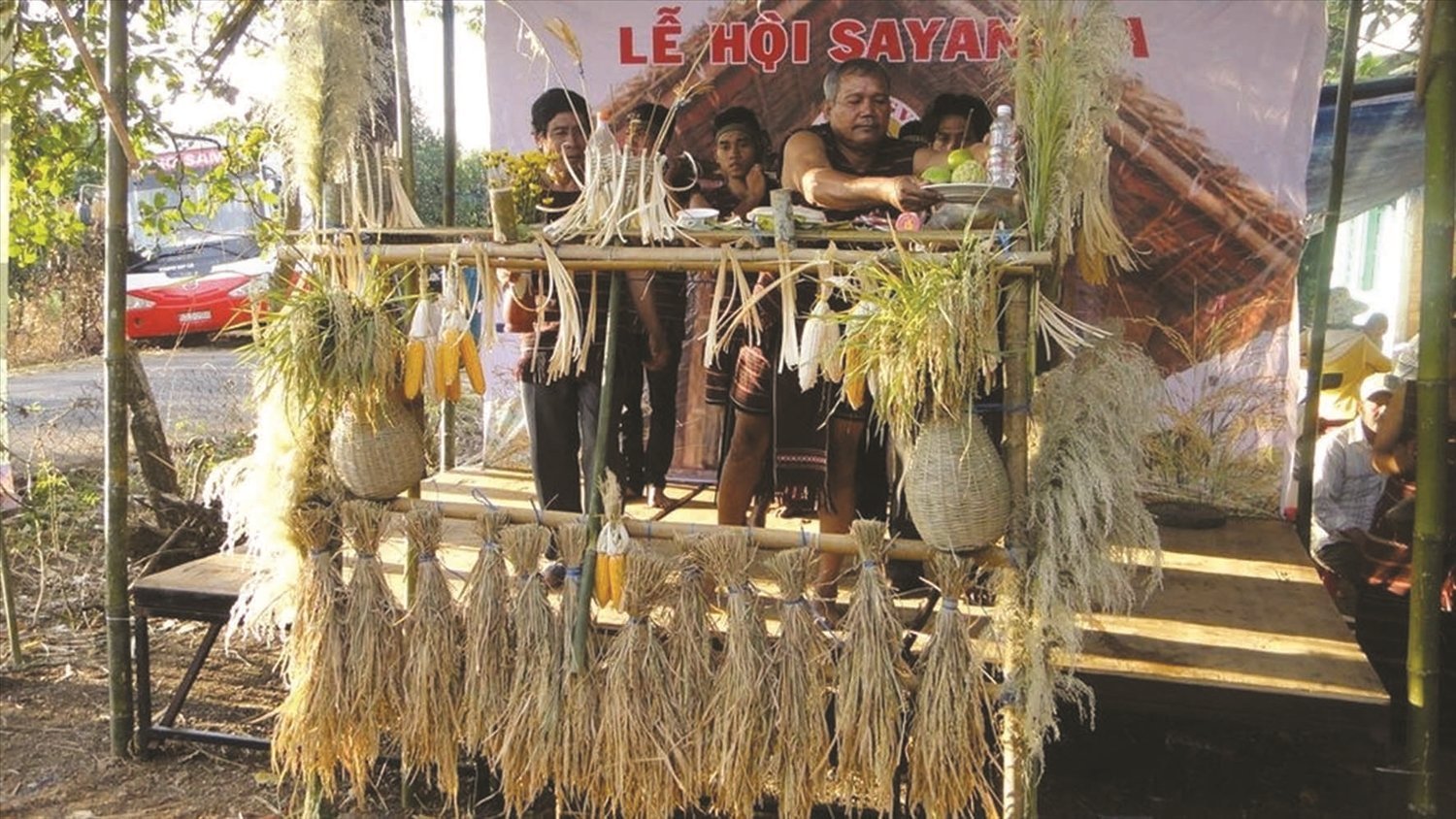
In Dong Nai province, the Cho Ro people regularly hold two of the most important festivals of the year: the Rice God Worship Ceremony (Op YanYang in Cho Ro language) and the Forest God Worship Ceremony (Op Yang Vri). In addition, they also hold rain-praying ceremonies, erect ceremonial poles, and perform other rituals related to their life cycle.
In 2022, the Dong Nai Provincial Cultural and Film Center organized gong and drum rehearsals, recreating traditional rituals from the Sayangva Festival (New Rice Festival) of the Cho Ro people in Tuc Trung commune, Dinh Quan district, to participate in the 3rd Folk Performance Festival of Ethnic Groups in the Truong Son - Tay Nguyen region in 2022 in Kon Tum.
In 2024, Dong Nai province prepared a dossier to propose the inclusion of the Sayangva Festival (worshiping the Rice God) of the Cho Ro people in the list of National Intangible Cultural Heritage.
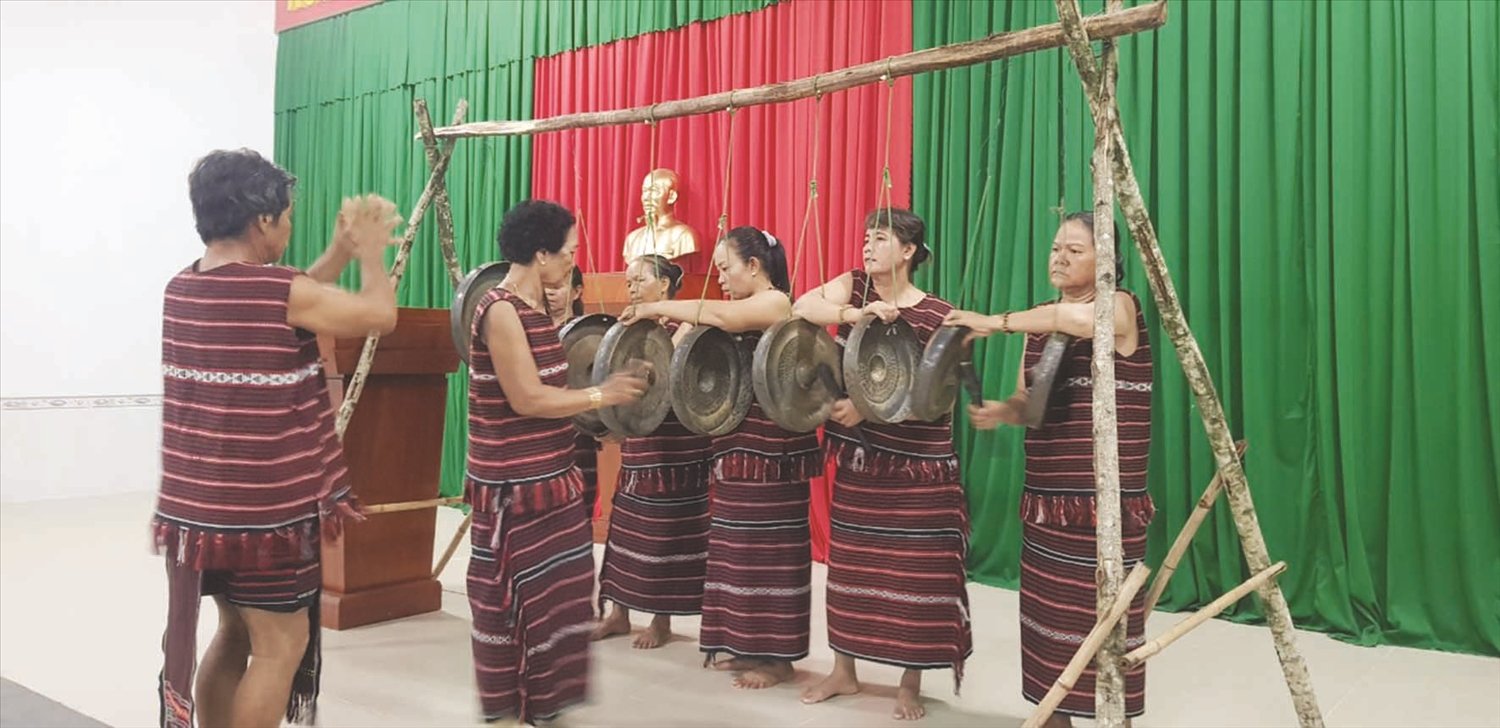
Mr. Dang Thanh Hieu, Head of the Ethnic Affairs Department of Long Khanh City, said: Implementing Project 6 "Preserving and promoting the fine traditional cultural values of ethnic minorities associated with tourism development" under the National Target Program 1719, from the beginning of 2024 to the present, Long Khanh City, Dong Nai province has opened 4 gong-playing classes for the Cho Ro ethnic people in Bao Quang, Hang Gon, Bau Tram communes and Bao Vinh ward, with a total of 80 students participating in the classes.
The city has provided financial support to instructors and students, and purchased costumes, totaling nearly 300 million VND. The aim is to help the people maintain and preserve the cultural values of their ethnic group's gong music and to teach young people about their ethnic culture.
According to the Ethnic and Development Newspaper
Source: https://baophutho.vn/bao-ton-lan-toa-van-hoa-cho-ro-220974.htm



















































Comment (0)