

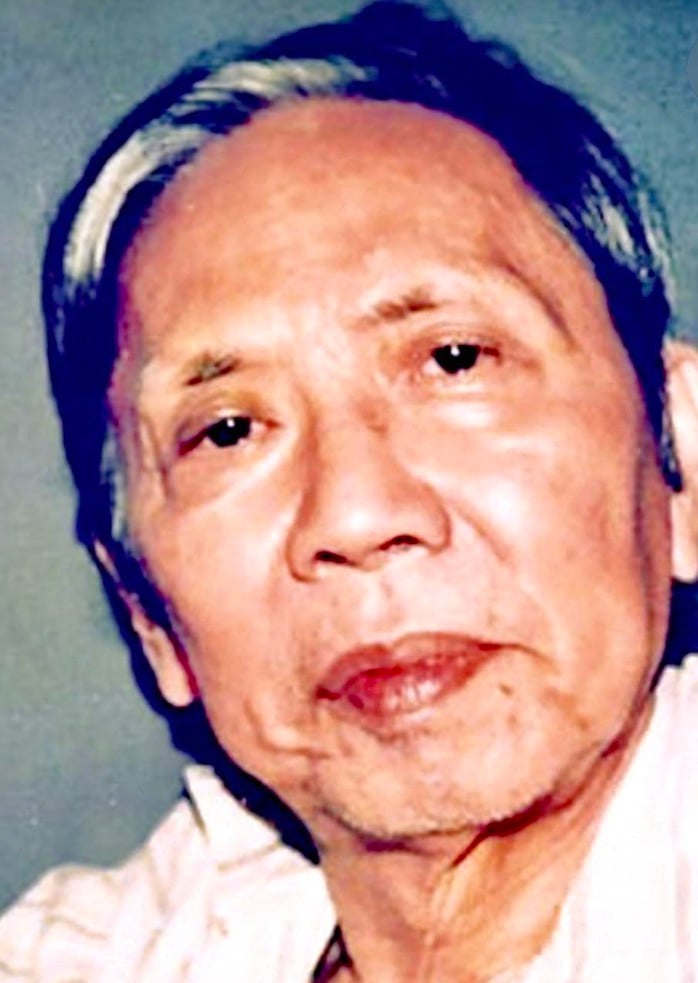
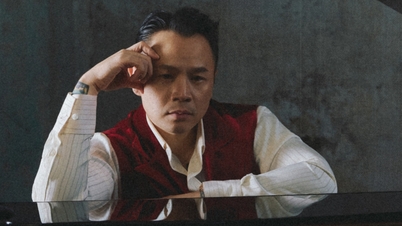
Composer Tran Kiet Tuong
For her, composer Tran Kiet Tuong was someone who poured the essence of Southern Vietnam into every melody, ensuring that memories of his homeland always remained present in the hearts of listeners.
The musical storyteller of the South
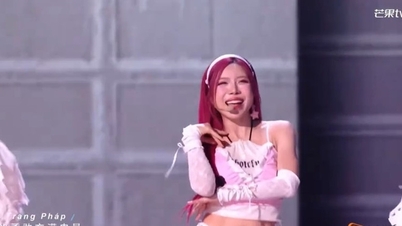
Singer Bich Phuong said: "Some musicians are remembered for their songwriting technique, others for the quantity of their works. But with musician Tran Kiet Tuong, what remains after a century since his birth is a very special feeling: he is remembered as a storyteller through music – telling about the South with sincerity, telling about the country with faith."
Speaking of him, singer Bich Phuong said she was always touched by the unique emotions in the music of this composer from the Mekong Delta – simple yet profound, heartfelt yet not melancholic. "What's special about Tran Kiet Tuong's songs is that even when written during wartime, far from home, or during separation, his music still retains a light of optimism. Listening to his music doesn't evoke a sense of despair. Each melody always contains faith, the breath of his homeland, like the slow but deep flow of the Mekong River," the singer shared.
Write with genuine emotion to connect with generations.
Looking back at the musical journey of composer Tran Kiet Tuong, it's clear that almost all of his compositions stemmed from real experiences and genuine emotions.
From his debut song "Joyful Meeting" to works that have become ingrained in the memories of many generations such as "The Unknown Soldier," "Brother Ba Hung," "Traditional Vietnamese Dress," or " Ho Chi Minh , the Most Beautiful Name," all share a common source: love for the homeland and faith in humanity.
Singer Bich Phuong believes that this is what gives Tran Kiet Tuong's music its enduring vitality.

Singer Bich Phuong
Bringing the spirit of Southern Vietnam to the North.
The female singer particularly remembers the son of the late musician Tran Kiet Tuong, Thanh Binh, an editor working at Vietnam Radio. Every time she is invited to perform or record, she hears him recount the period when musician Tran Kiet Tuong relocated to the North after 1954 – a story his father told him during his lifetime.
Far from home but not far from his roots, the musician brought the folk songs and melodies of Southern Vietnam into his new life in the North. From his longing for home, he wrote songs that were like a dialogue with his beloved South.
Images of the traditional Vietnamese blouse, the flowing water, and folk songs are incorporated into the songs not as personal memories but as shared memories across generations.
That is what makes his musical legacy so unique and irreplaceable: deeply rooted in national identity yet still close to everyday life.
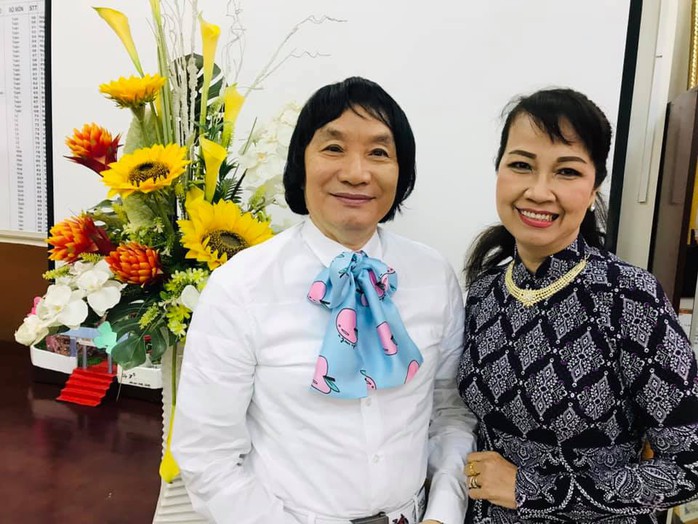
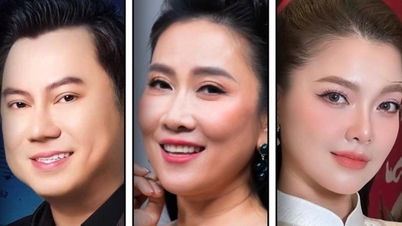
People's Artist Minh Vương and singer Bích Phượng
The legacy still resonates in life today.
For singer Bich Phuong, the greatest value that Tran Kiet Tuong left behind lies not only in the quantity of his works, but also in the way he preserved the national spirit in music.
"He showed that modern music doesn't necessarily have to abandon folk music. On the contrary, it is the traditional heritage that helps the works live longer. Young people today can still feel the distinctly Vietnamese beauty in every lyric when they listen again."
Besides compositions dedicated to his homeland, musician Tran Kiet Tuong also wrote many songs reflecting the working life in the North, such as "My Herd of Cattle," "The Southern Arm on Northern Soil," and "The Wheelchair"...
Many construction sites, farms, and projects in the North at that time bore the imprint of the sweat and hard work of sons and daughters from the South, such as the Bac Hung Hai large-scale irrigation project, the Lam Son farm, and the Ham Rong Bridge repair project…
Source: https://nld.com.vn/bich-phuong-nho-nhac-si-tran-kiet-tuong-196260525122207133.htm

![[Image] Hanoi's urban life under the challenge of a "scorching hot" environment](https://vphoto.vietnam.vn/thumb/1200x675/vietnam/resource/IMAGE/2026/05/25/1779706979265_nang-nong-t5-2026-minh-duy-7-4636-jpg.webp)


![[Image] Close-up view of the interchange connecting the two expressways and Long Thanh Airport.](https://vphoto.vietnam.vn/thumb/1200x675/vietnam/resource/IMAGE/2026/05/25/1779703378210_ndo_br_z7863716673926-224453a31600126cce10622af6290afd-4549-jpg.webp)







































































Comment (0)