

Why does the body lack iron?
Normally, in healthy individuals, there is always a balance between supply and consumption. This balance can be disrupted for various reasons: either due to insufficient supply, decreased absorption, increased consumption, or increased demand (growth, pregnancy).
Iron loss can be caused by:
- Why does the body lack iron?
- Who needs iron supplementation?
- Should you take iron supplements daily?
– Physiological blood loss: loss through stool, cell shedding, menstruation in women.
– Related or unrelated to blood loss due to pathological conditions: gastrointestinal bleeding, gynecological bleeding.
Anemia manifests in various ways, including fatigue, shortness of breath, paleness, dizziness, palpitations, and hair loss. The only way to diagnose anemia is through a blood test to check hemoglobin levels. Treatment for mild iron-deficiency anemia involves prescribing oral iron supplements for 3-6 months, along with addressing the underlying cause of the anemia.
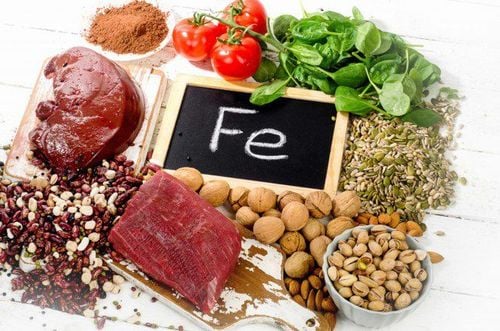
Getting iron through food is the safest way to supplement iron for both children and adults.
Who needs iron supplementation?
Symptoms of iron deficiency vary from person to person. Age, gender, general health, constitution, medical history, and the severity of iron deficiency will all result in different symptoms.
Mild to moderate iron deficiency is often difficult to recognize because there are no symptoms easily observable with the naked eye at this stage. If iron deficiency continues for an extended period, it will lead to iron-deficiency anemia. At this point, the symptoms begin to become severe.
Patients with iron-deficiency anemia often experience symptoms such as rapid heartbeat, tinnitus, dizziness, headaches, cold hands and feet, shortness of breath, lethargy, fatigue, difficulty concentrating, and memory loss. In addition, the most easily recognizable signs of iron-deficiency anemia include brittle nails, hair loss, cracked corners of the mouth, tongue inflammation, and pale skin on the hands, feet, and corners of the eyes, lacking the healthy pinkish hue of healthy skin.
There are many different causes of iron-deficiency anemia. These include:
- Congenital iron deficiency can occur during pregnancy (iron deficiency in the mother leads to iron deficiency in the child) or in premature infants.
- Iron deficiency in the daily diet.
- Iron deficiency can result from blood loss during menstruation, childbirth accidents, or injuries.
- Iron deficiency can result from increased iron requirements, such as during puberty, pregnancy, breastfeeding, or due to medical conditions like swelling, inflammation, infection, and cancer.
Therefore, iron supplementation is extremely important for adults because:
People with anemia.
Pregnant women.
Women who are breastfeeding.
Women have prolonged menstrual periods.
People who are undergoing medical treatment.
Should you take iron supplements daily?
In healthy adults, daily iron supplementation is not harmful if the daily dose is less than 17 mg. However, iron supplementation through medication and supplements is usually only used for a limited period of time.
You don't need to take iron supplements daily, year after year without end. Generally, the amount of iron needed varies depending on age, gender, and the body's developmental needs at each stage. Therefore, you should absolutely not take iron supplements without a diagnosis or prescription from a doctor.
Effective sources of iron
There are two effective sources of iron supplementation: the first is from natural foods, and the second is from the use of medications and dietary supplements.
- Getting iron through food is the safest way for both children and adults, and is often recommended by doctors. Some iron-rich foods include:
Types of meat: Pork, beef, chicken, poultry, and other red meats.
Seafood: Shrimp, crab, squid, fish, lobster, etc.
Legumes: Peas, red beans, soybeans…
Green leafy vegetables: The darker the green color of the vegetable, the richer it is in iron, such as spinach, kale, broccoli, and bok choy.
Grains: Such as sesame seeds, cashews, oats, pumpkin seeds, quinoa, etc.
In most cases, consuming iron-rich foods can meet the body's needs. When supplementing iron through food, it's best to eat it along with foods rich in vitamin C.
It has been found that vitamin C can increase the body's ability to absorb iron from plant-based iron sources (non-heme iron ions). Vitamin C is found in foods such as citrus fruits, tomatoes, potatoes, strawberries, green and red bell peppers, broccoli, and kiwi.
- Taking iron supplements in pill form is generally less recommended because overdosing can lead to iron toxicity. However, in the following cases, iron supplements should be taken as prescribed by a doctor:
Pregnant and breastfeeding women need oral iron supplements because their needs are significantly increased and may not be met through diet alone.
Vegetarians cannot eat red meat, while their iron intake from plant sources is quite low.
People with metabolic disorders have a lower ability to absorb iron than the average person.
Source: https://suckhoedoisong.vn/bo-sung-sat-dung-cach-cho-co-the-169251231134232197.htm

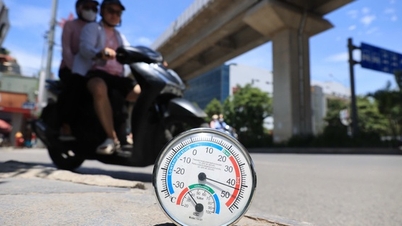
![[Image] Hanoi's urban life under the challenge of a "scorching hot" environment](https://vphoto.vietnam.vn/thumb/1200x675/vietnam/resource/IMAGE/2026/05/25/1779706979265_nang-nong-t5-2026-minh-duy-7-4636-jpg.webp)
![[Image] Close-up view of the interchange connecting the two expressways and Long Thanh Airport.](https://vphoto.vietnam.vn/thumb/1200x675/vietnam/resource/IMAGE/2026/05/25/1779703378210_ndo_br_z7863716673926-224453a31600126cce10622af6290afd-4549-jpg.webp)























































































Comment (0)