

The increasing number of foreign players is bringing a new look to Vietnamese basketball. They not only participate on the court but also bring with them modern skills, physical abilities, strategic thinking, and unique stories of integration. As a result, the orange ball is gradually becoming a bridge connecting people and cultures, opening up more opportunities for the development of Vietnamese basketball.
Journey to Vietnam
On the basketball court, language is sometimes no longer the biggest barrier. Just a glance, a pass, or a high-five after a score is enough for people from different countries to find common ground. For foreign players in Vietnam, basketball is not just a sport they pursue, but also a bridge that helps them get closer to a new country, a new culture, and a new life.
In recent years, Vietnamese basketball has witnessed many positive developments. Besides professional leagues, the semi-professional system, grassroots movements, clubs, and basketball academies are also increasingly developing. On the courts of Hanoi , Ho Chi Minh City, and many other localities, the sight of foreign players participating in the team lineup has gradually become familiar.
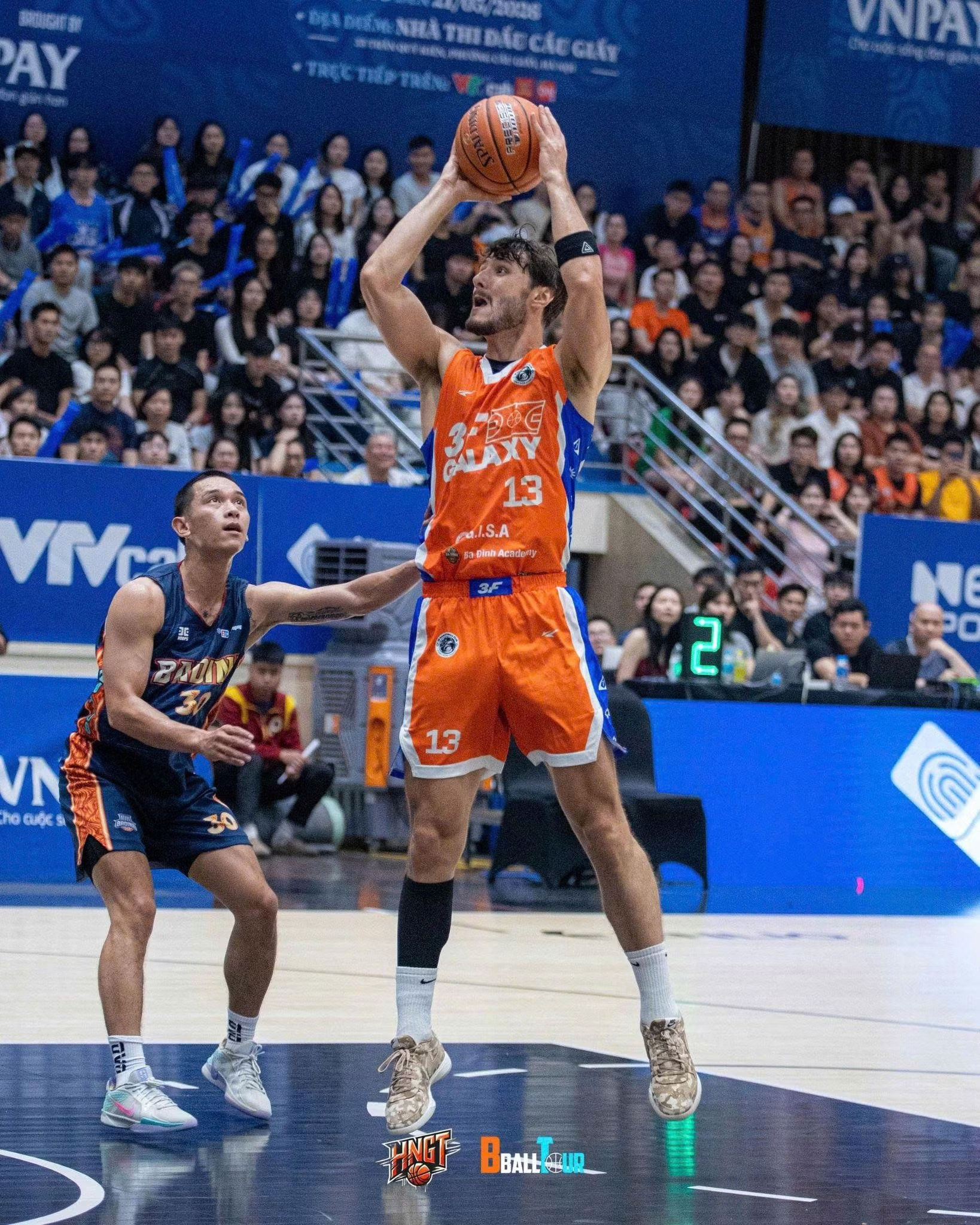
Mykhailo (born in 2002, from Ukraine) is one of the foreign basketball players currently competing in Vietnam. Playing as a forward or center, he has been involved with basketball since he was 13 years old. Mykhailo didn't come to Vietnam through a playing contract; his family moved here after hearing many good things about the country. From a completely unfamiliar place, Vietnam gradually became an environment that helped him see more opportunities for development in basketball.
Before coming to Vietnam, Mykhailo was already familiar with several leagues such as the VBA, SA League, HBC, VBC, and SBC. What caught his attention was that many of the Vietnamese leagues took place after the European season had ended. This opened up the possibility for a player who had finished playing in Europe to continue playing in Vietnam, seeking more opportunities to gain experience.
For Mykhailo, Vietnam is a suitable environment for young players to begin their journey in Asia. He believes that local players are quite open in their communication, and the coaching staff is always proactive in supporting foreign players to familiarize themselves with tactics, playing style, and roles within the team. He also believes that playing in Vietnam gives young players more opportunities to gain attention, thereby expanding their development possibilities and opening new doors in the regional basketball market.
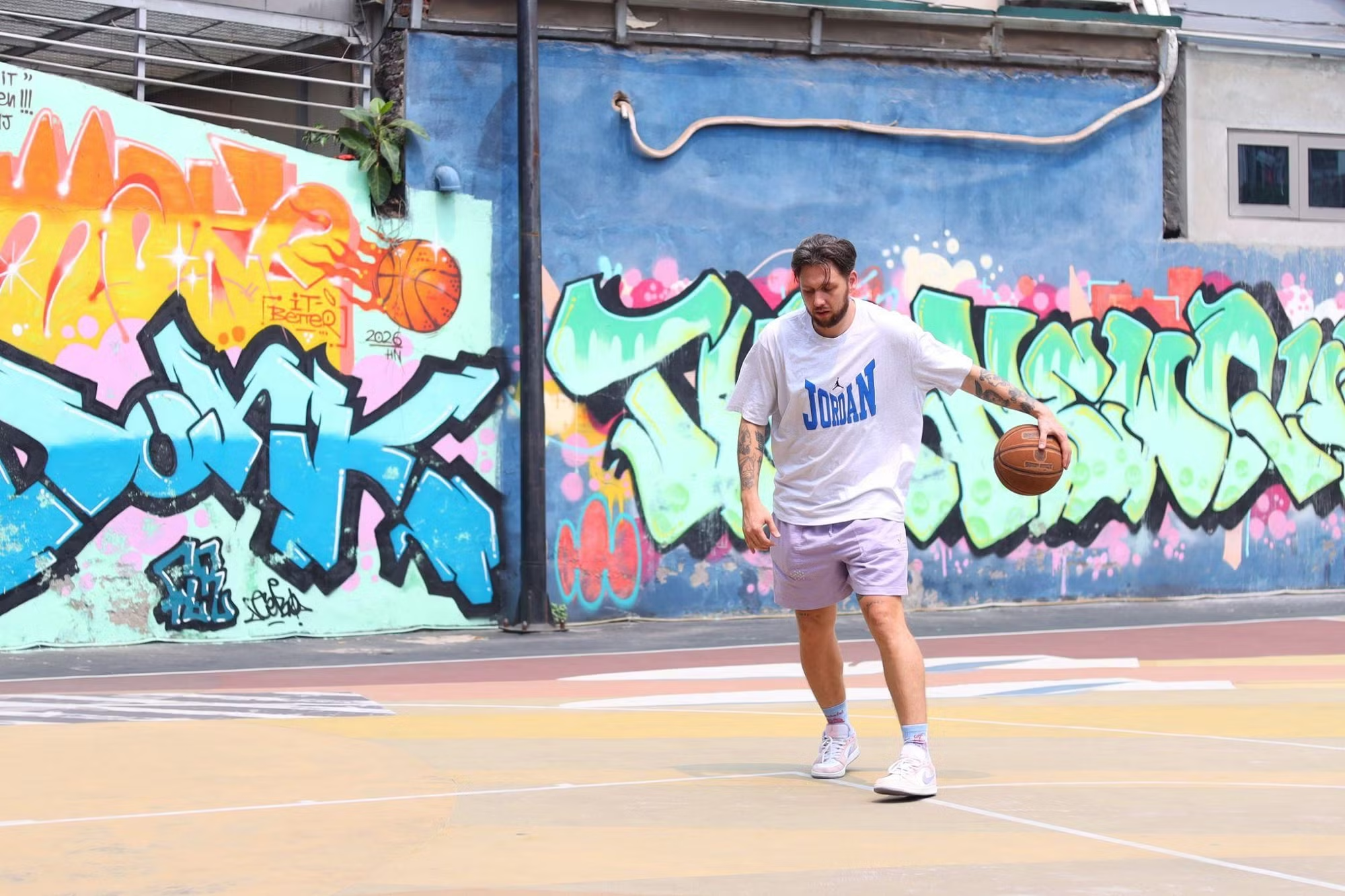
While Mykhailo came to Vietnam with his family and found his opportunity to play basketball there, Kurkin Egor (born in 1995, Russian) had a different journey. Usually playing forward, Egor lived in Vietnam for nearly two years working in marketing, but it was basketball that helped him connect more deeply with the community. Egor previously played for the Hidden Dragons. When asked what Vietnam means to him now – a stopover or an opportunity – he simply replied: “Home.” For Egor, Vietnam is not just a place to live or play basketball, but has become an integral part of his daily life.
Another story is that of Mathis Caudyser, a player from France who plays at position 3 or 4. He came to Vietnam through a school exchange program, and then stayed on to intern and work. Before arriving here, Mathis had played basketball in France for about seven years. Initially, Vietnam was a new destination for him to explore , but after a period of studying, working, and playing basketball, it gradually became his "second home."
From a different perspective, Huy Hoang, vice-captain of the Yen Hoa basketball team, who once trained with foreign players, believes that facing opponents with superior physical attributes forces Vietnamese players to play smarter, faster, and more flexibly in every situation. Not only do these foreign players create a difference in physical strength, but they also bring a more modern basketball mindset, thereby contributing to the future development of Vietnamese basketball.
From a coaching perspective, coach Nguyen Xuan Loc, currently working at the Hanoi Eagle Basketball Academy, with 15 years of experience and having coached the youth teams of Hanoi Buffaloes and Thang Long Warriors, believes that foreign players bring new talent and diversity of expertise to Vietnamese basketball. More importantly, Vietnamese players can learn from them the professional spirit, training experience, and approach to basketball formed in different environments.
Differences and the journey of adaptation
Opportunities exist, but the journey of foreign players in Vietnam is not always easy, as they must adapt to everything from the pace of competition, physical demands, and playing style on the field to differences in language, lifestyle, and daily life in a completely new environment.
For Mykhailo, what caught his attention most while playing basketball in Vietnam was the pace. Compared to where he played in Ukraine and Europe, basketball in Vietnam has a faster tempo. Players run a lot, shoot well, and force big man players like him to move constantly to contest rebounds, support defense, and keep up with the game.
However, Mykhailo also noticed the difference in physique. In Europe, players are generally larger, so collisions and challenges are somewhat more intense. In Vietnam, physical strength may not be the biggest advantage, but speed and intensity of movement are things foreign players must quickly adapt to. For him, to play well here, you can't stand still waiting for the ball; you have to run a lot.
For Mathis, the biggest difference when playing basketball in Vietnam comes from the weather and the intensity of the physical contact. He believes the hot weather makes training sessions more strenuous compared to playing in France. However, Mathis doesn't see this as a major obstacle. For him, "basketball is still basketball," and these differences only make the experience of playing basketball in Vietnam more novel.
Unlike the two players mentioned above, Kurkin Egor sees the main difference as stemming from the fighting spirit, believing that Vietnamese people are very friendly and kind. However, this very gentleness sometimes prevents some young players from being truly aggressive on the field. In contrast, the competitive environment in European countries is much more intense, so Egor believes that if young players want to develop further, they need to dare to step out of their comfort zone and play with a stronger, more proactive spirit.
Those observations resonate with Huy Hoang's feelings. When training with players who are physically superior, Vietnamese players cannot simply play according to their old habits. They must handle the ball faster, choose better positions, and find ways to overcome opponents using strategic thinking instead of relying solely on brute force. It is these kinds of encounters that create the necessary environment for domestic players to improve.
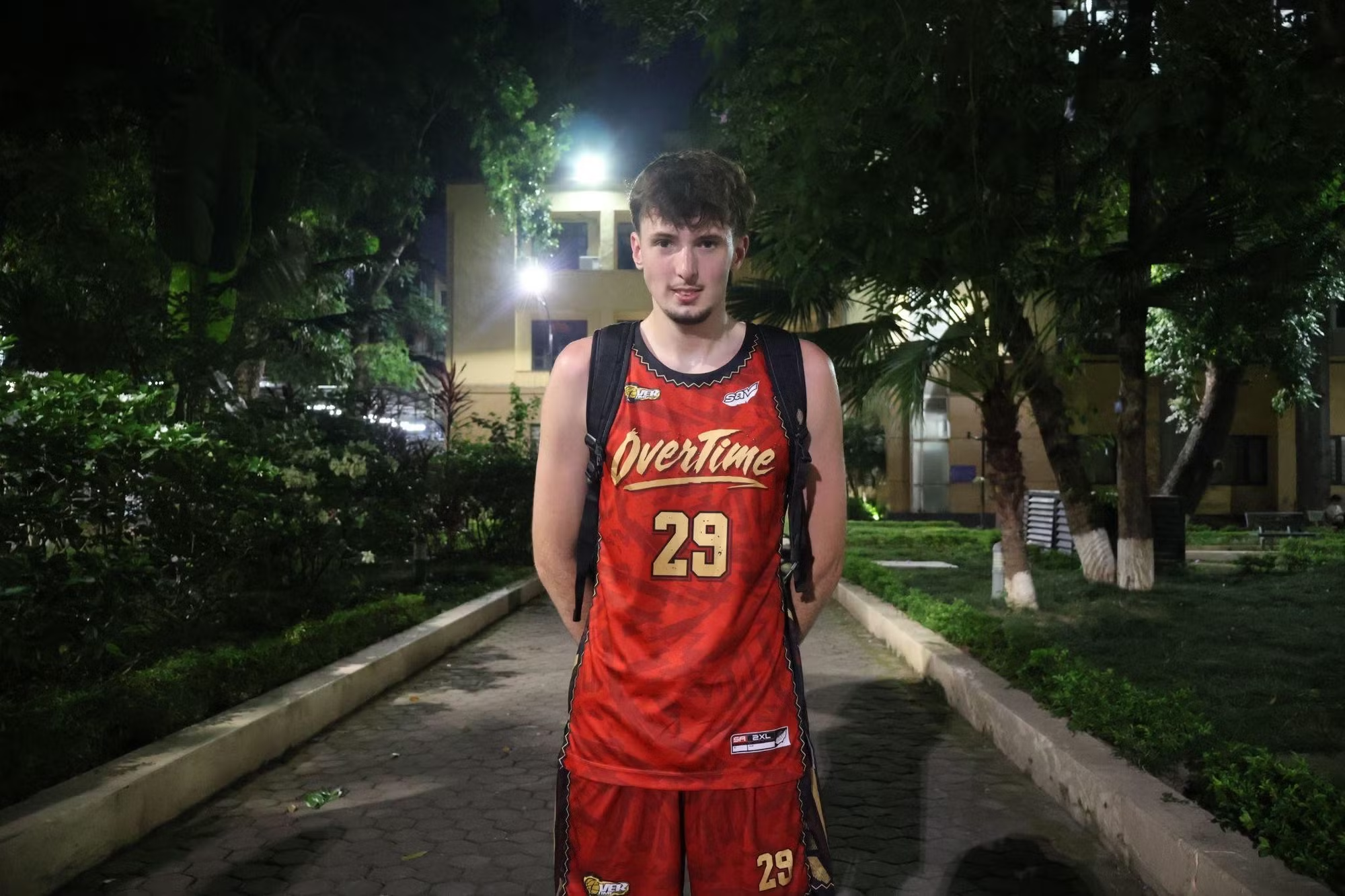
Besides professional differences, Mykhailo said that the fact that some teammates don't speak English well sometimes makes communication complicated, forcing him to ask a third party for assistance when discussing tactics or training. In daily life, he also has to adapt by using translation apps, gestures, or facial expressions to communicate, but Mykhailo doesn't see this as a major obstacle, but rather as a natural part of living in a new country.
Similar to Mykhailo, Kurkin Egor has integrated quite naturally into Vietnam. When asked what the biggest challenge of living here is, he answered succinctly: “Nothing. I love Vietnam.” For him, language is not a major barrier either. Egor's alternating use of English and Vietnamese in communication shows his comfortable adaptation to the new environment. He has friends, a job, basketball, and close relationships, enough to feel that Vietnam has become a familiar part of his life.
In the process of adapting, people are the most important factor. For Mykhailo, his teammates at 3F Galaxy helped him quickly integrate into life in Hanoi, from training and eating to introducing him to the local culture, making him feel that the team is not just a place to play but also a home. For Kurkin Egor, Hidden Dragons holds a similar meaning, as he calls it his "second family," showing that basketball not only helps him bond with his teammates but also gives him a sense of belonging in a foreign country.
According to coach Nguyen Xuan Loc, the coaching staff acts as a bridge, helping foreign players quickly integrate from the very beginning. This support goes beyond simply guiding them through exercises or tactics; it also involves connecting them with local athletes both on and off the court. He believes that in basketball, off-court bonding is just as important as on-court training sessions.
When the orange ball erases the gaps
After living, training, and competing in Vietnam for a period of time, what changes in foreign players is not only their ability to adapt to the new environment, but also their perception of the country and its people.
For Mykhailo and Mathis, Vietnam is a place where they can continue playing football, seek opportunities, and will certainly return to the pitch if circumstances allow. Meanwhile, in Kurkin Egor's eyes, Vietnam has even surpassed the meaning of a destination. When asked if another foreign player would hesitate to come to Vietnam, he answered very briefly in Vietnamese: "Absolutely! Come here!"
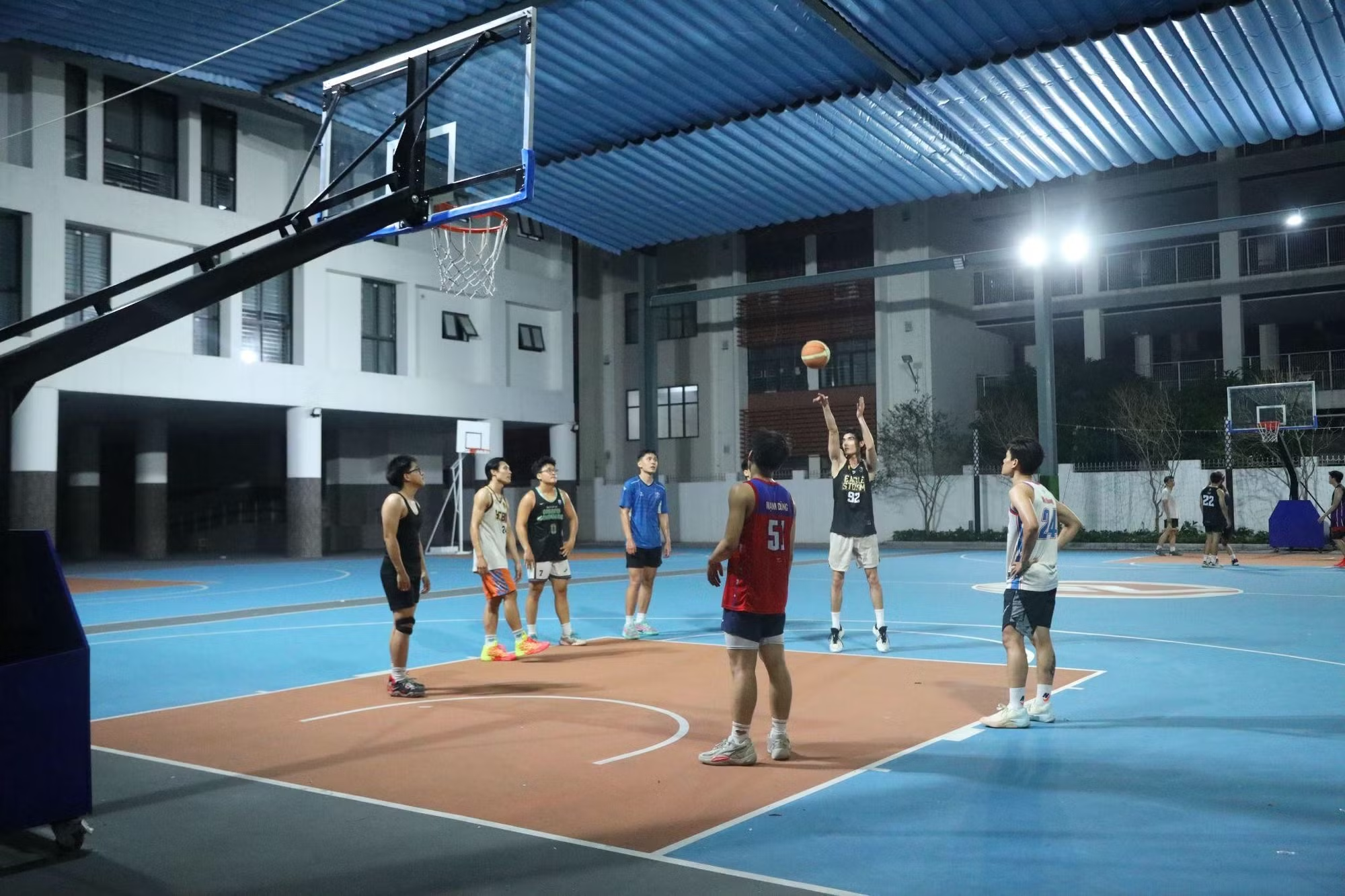
Those answers show that basketball is not just about creating opportunities for competition. It also helps people connect with each other. On the court, foreign and Vietnamese players may differ in language, culture, physical abilities, or competitive mindset, but they share a common goal: to train better, play better, and develop better together as a team.
The arrival of foreign players also brings many benefits to Vietnamese basketball. First, they contribute to improving the professional quality. When Vietnamese players train and compete with players who have different physical, technical, or tactical backgrounds, they have more opportunities to gain experience and learn. These experiences help domestic players better understand their strengths and weaknesses, thereby proactively improving their playing style.
Furthermore, foreign players bring diversity to the Vietnamese basketball scene. They not only appear in major leagues but also participate in semi-professional teams, amateur leagues, academies, and local communities. This makes the domestic basketball scene more vibrant and opens up more opportunities for interaction between Vietnamese players and their international counterparts.
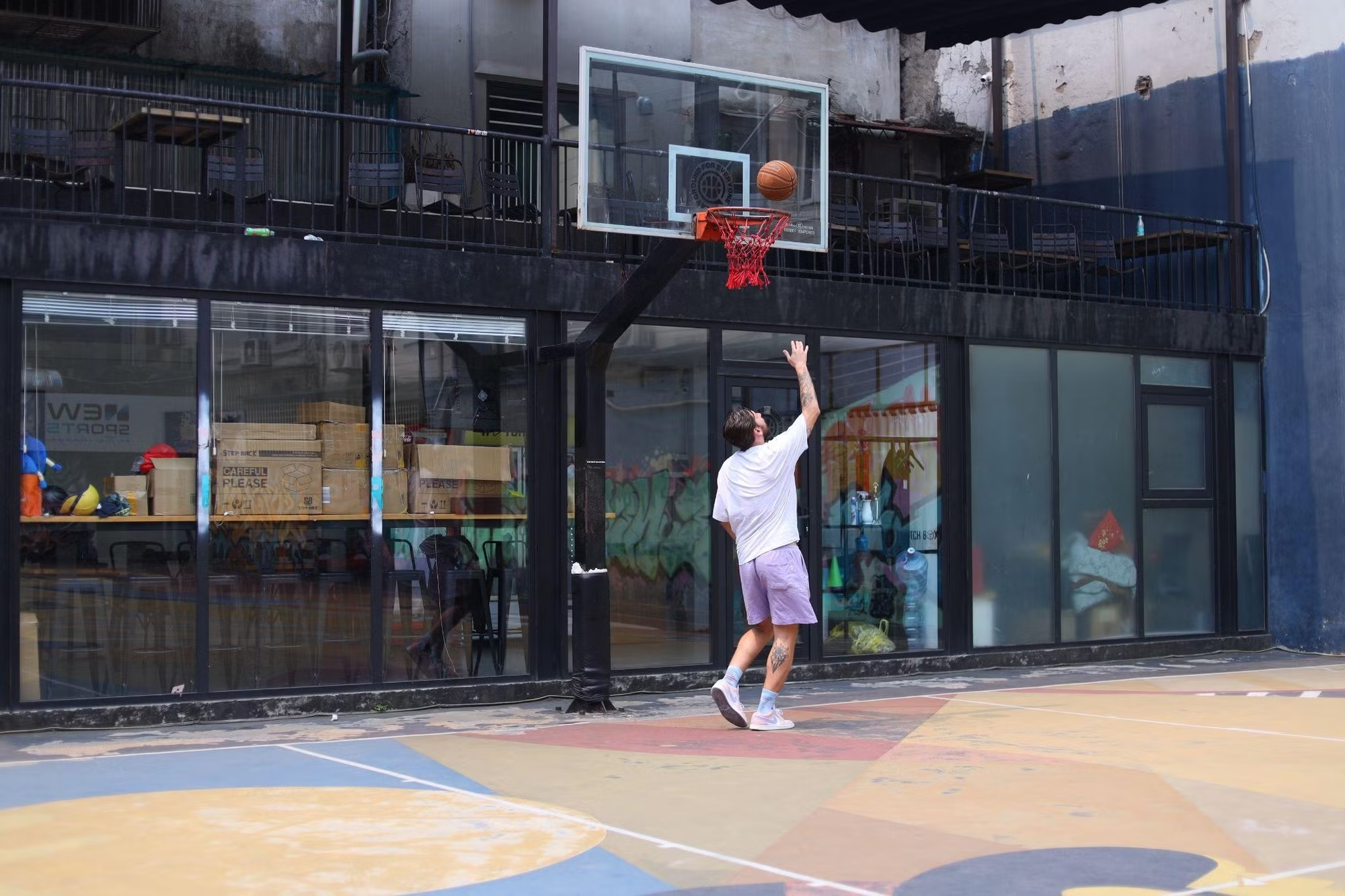
Could Vietnam become a long-term destination for foreign basketball players?
However, for Vietnam to truly become a long-term destination for foreign players, the domestic basketball environment still needs further improvement. From coach Xuan Loc's professional perspective, teams need to focus more on supporting new players with language skills, daily life, cultural communication, and professional development. The coaching staff also needs to continue acting as a bridge, not only helping foreign players understand tactics but also making them feel welcome within the team and integrating into a new country.
For Vietnamese players, the arrival of foreign players is an opportunity to step out of their comfort zone. It's a chance to learn different playing styles, improve their physical fitness, mindset, and gameplay by being exposed to a more international basketball environment.
Vietnam may not yet be the largest basketball center in Asia. However, from well-invested training facilities; major tournaments such as the National Basketball Championship, the Hanoi Amateur Basketball League (HBL), the National University Basketball League (NUC),...; grassroots basketball leagues; professional clubs like Thang Long Warriors, Hanoi Buffaloes,... or academies like Hanoi Eagle Basketball Academy, American Edu-Sports Academy,... it is clear that Vietnamese basketball is growing stronger and stronger.
And in that journey, the orange ball doesn't just roll on the playing field. It's quietly connecting people from many countries and cultures, so that on the same field, differences are no longer a barrier, but become a driving force to move forward together.
Source: https://cand.vn/bong-ro-viet-nam-mien-dat-moi-hap-dan-cac-cau-thu-ngoai-post812152.html

![[Photo] The heat at the fireworks display site on the opening night of the Da Nang International Fireworks Festival 2026](https://vphoto.vietnam.vn/thumb/1200x675/vietnam/resource/IMAGE/2026/05/27/1779889741485_ndo_br_z7872039145157-fecaba5112f39e8352544099d7ef4738-5140-jpg.webp)
![[Photo] The courage of new recruits of Brigade 144 on the training ground.](https://vphoto.vietnam.vn/thumb/1200x675/vietnam/resource/IMAGE/2026/05/27/1779881651341_anh-man-hinh-2026-05-27-luc-18-32-52.png)































![[Photo] The courage of new recruits of Brigade 144 on the training ground.](https://vphoto.vietnam.vn/thumb/402x226/vietnam/resource/IMAGE/2026/05/27/1779881651341_anh-man-hinh-2026-05-27-luc-18-32-52.png)



















Comment (0)