

 |
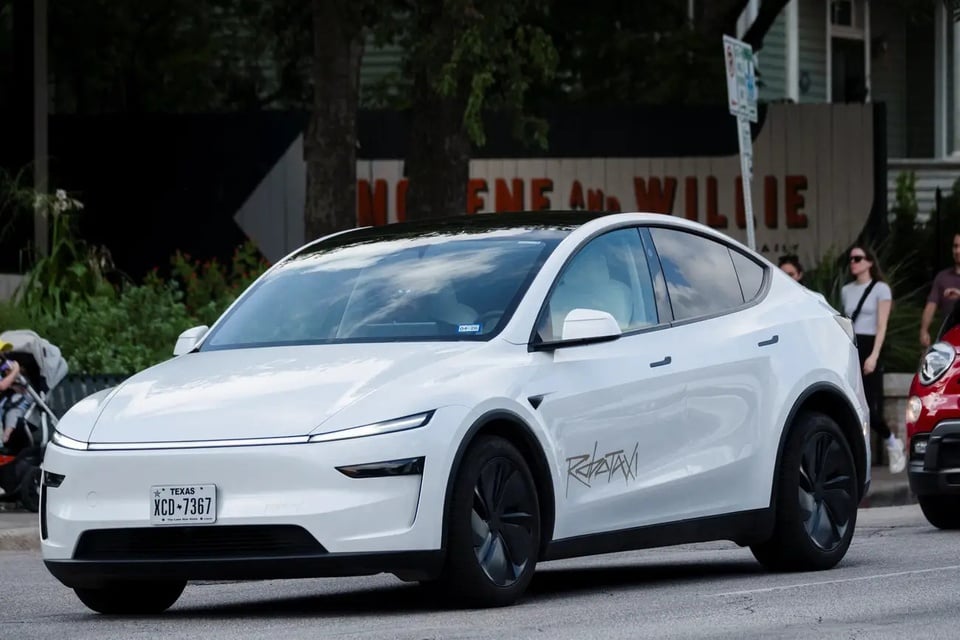
Tesla's supervised robot taxi service. Photo: Reuters . |
Last week, Tesla launched its ride-hailing service in the San Francisco Bay Area. Elon Musk confirmed that users in San Francisco and Austin can now book Tesla vehicles through the app. The service area includes the Bay Area, Fremont, and downtown San Jose.
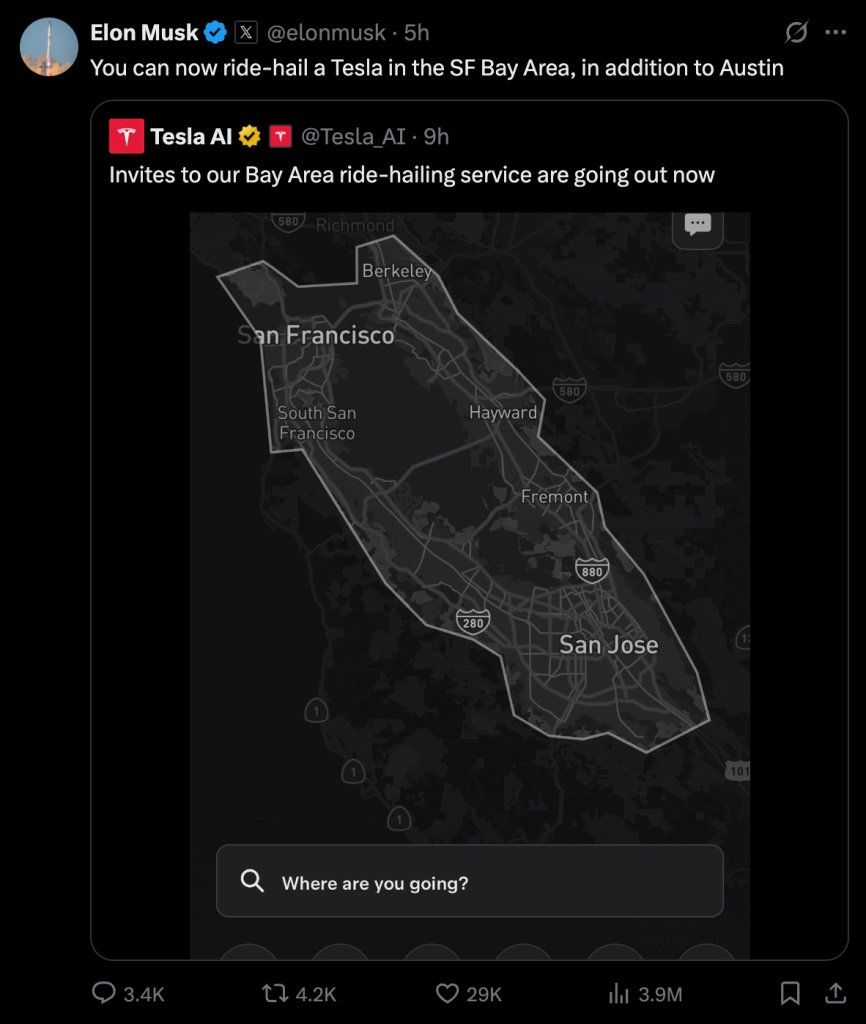 |
The extent of Tesla's service rollout in California. Photo: X/Elon Musk. |
Musk and Tesla aren't calling the new service a robotaxi. According to Business Insider , Tesla had previously announced internally that it would launch a robotaxi service, but in reality, a driver would still be needed to supervise the journey.
Other news outlets like Politico and Reuters also don't call this a robotaxi. Meanwhile, a video shared by the account X Teslaconomics clearly shows a driver behind the wheel and Tesla charging for the ride.
While Texas, where Tesla has been deploying its robot taxis since June, has more flexible regulations, California is quite strict regarding self-driving taxi services. Tesla has not yet applied for permission to test or operate fully driverless taxis in the state.
According to Politico, Tesla scheduled two meetings with the California Department of Motor Vehicles (DMV) in July. While media outlets were reporting on the planned deployment of robotaxis there, the DMV and another regulatory agency publicly warned the company about the unauthorized deployment of robotaxis in the San Francisco Bay Area.
In both meetings, Musk habitually canceled the launch date target right before the calls. Two days before the first meeting, he posted on X that he was waiting for California regulators, even though he hadn't filed any applications recently.
He also promised a timeframe of “one or two months” to bring robotaxi to the San Francisco area. Then, a day before the second meeting, Musk announced that the company had received permits for autonomous vehicles in some areas by the end of 2025, but provided no details about the approvals it had received.
The company currently holds a special transport permit on public roads. Tesla can utilize its Fully Autonomous (Supervised) feature, performing many driving tasks, but this requires the driver to remain focused and ready to take over at all times.
Tesla's move was somewhat slow, but it complies with the law and ensures passenger safety. Marie Missy Cummings, a researcher on autonomous vehicles at George Mason University, argues that the presence of a human driver will make Tesla's service much safer.
In fact, allowing complete human supervision is what competitors Waymo and Zoox also did in the early stages of testing. She believes the company's actions are commendable.
However, for Cummings, this choice could be evidence that Tesla is falling behind its competitors. “If deploying self-driving systems is a learning process from kindergarten to 12th grade, then Tesla is only in first grade,” she said. Everything the company has shown users in Texas previously, or California now, demonstrates its immaturity in autonomous driving.
On the other hand, according to Electrek technology reporter Fred Lambert, Tesla's actions are creating the illusion that it is the leader in the field of autonomous vehicles by deploying a robotaxi service with human assistance. He argues that by not applying for a permit, the company may be avoiding exposing potentially harmful data to the state.
Part of the reason lies in the rapid development of its competitors. Waymo has officially launched commercial self-driving cars in five cities and plans to expand to international markets (Tokyo). Amazon's Zoox is only in the early stages of testing, but has a budget advantage and is expected to officially launch later this year.
Previously, Musk had set ambitious goals for Tesla's robot taxi service. In late July, he shared his expectation with investors that about half of the US population would have access to his robot taxi service by the end of this year.
Source: https://znews.vn/buoc-lui-cua-tesla-post1573722.html































































Comment (0)