

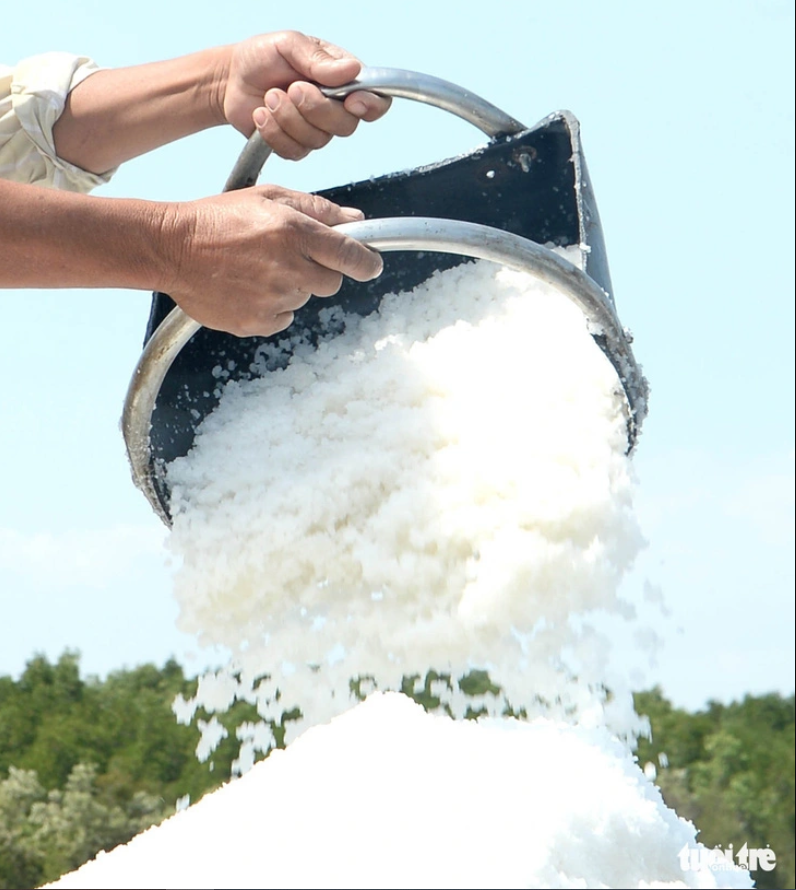
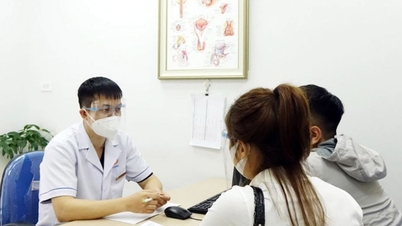
Table salt has many medicinal uses - Illustration
Salt is essential for life, but it needs to be used correctly.
Dr. Hoang Khanh Toan, former head of the Traditional Medicine Department at Military Central Hospital 108, said that table salt (NaCl) is formed by the evaporation of seawater and mainly contains sodium chloride and some substances such as potassium chloride, magnesium chloride, calcium salts, magnesium, iron, etc.
According to modern medicine, table salt plays a crucial role in kidney function: urine production depends on the presence of a normal amount of NaCl in the blood. When salt levels drop due to persistent vomiting (pregnancy, poisoning) or significant dehydration (burns, diarrhea), urine excretion slows down.
Salt is essential for the human body, with a daily salt requirement ranging from 5-10g. Modern medicine often uses salt in its pure form to prepare isotonic or hypertonic solutions for injection, intravenous infusion, or wound irrigation.
According to Dr. Nguyen Tien Dung from the Stroke Center at Bach Mai Hospital, salt - sodium - is an essential mineral for life. It is regulated by the kidneys, helping to control fluid balance in the body.
It also helps transmit nerve impulses and affects muscle function. A prolonged lack of salt can have various consequences and can even be life-threatening.
However, excess sodium can also be harmful to health because it can raise blood pressure, leading to heart problems and strokes. Therefore, it is crucial to know which foods are high in salt so that you can consume them in appropriate amounts.
According to WHO recommendations, healthy adults should consume less than 5g of salt per day. For infants under 1 year old, the recommended intake is less than 1g of salt per day; children aged 1-3 years should consume 3g per day; and children over 7 years old should consume the same amount of salt as adults.
For individuals with underlying medical conditions, the amount of salt consumed should be as prescribed by their doctor.
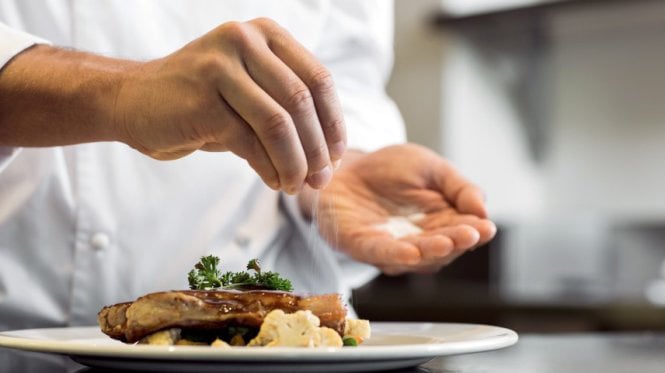
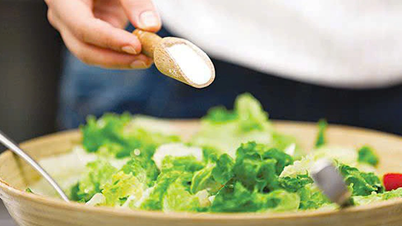
Salt is good for your health, but you should only consume it in moderation - Illustration.
20 prescriptions using salt to treat illnesses
According to traditional medicine, Dr. Hoang Khanh Toan explained that table salt has a salty taste, a cold nature, is non-toxic, and acts on the kidney, heart, and stomach meridians. Its functions include clearing heat, calming the heart, cooling the blood, detoxifying, moisturizing dryness, and guiding other medicines into the meridians. It is commonly used to treat cases of heat accumulation in the stomach and intestines, phlegm buildup in the chest, constipation, sore throat, toothache, bleeding gums, conjunctivitis, vomiting, genital ulcers, and insect bites.
There are many prescriptions that use table salt to treat illnesses, such as:
- Sore throat: For a sore throat, gargle with whole grains of salt, one after another, or gargle with crushed garlic mixed with salt water.
- Toothache: For swollen and painful gums and loose teeth, rinse your mouth with a mixture of salt and boiled water several times a day.
- Abdominal pain: For abdominal pain caused by cold, heat salt in a pan, wrap it in cloth, and apply it to the navel and the painful area.
- Cough: For coughs caused by colds, put salt in a lemon wedge and suck on it until it dissolves.
- Tearing: For excessive tearing, use a diluted saline solution made from salt and boiled water to rinse the eyes.
- Hematoma: For bruises and hematomas, mix table salt with a little eucalyptus oil and apply to the affected area twice a day.
- Sore throat: For a sore throat, mix table salt with boiled water, let it cool to a warm temperature, and gargle 5-7 times a day.
- Burns: For thermal burns, mix a small amount of fine salt with sesame oil and apply it to the burn to create a cooling sensation, reduce pain and swelling, and promote faster healing. Apply 2-3 times a day.
- Headache: For headaches caused by heatstroke, mix a small amount of salt with water to make a weak salt solution, similar to broth, and drink a few sips gradually until the headache subsides.
- Nosebleed: For nosebleeds, insert a cotton ball soaked in saline solution into the nostril, then drink a glass of diluted salt water.
- Hair loss: For hair loss caused by fungal infections of the hair and scalp, wash your hair with salt water, rinse with clean water, and the condition will improve after a while.
- Constipation : Drink a glass of warm, diluted salt water early in the morning on an empty stomach. Regular use is very good for the intestines and chronic constipation.
- Tinnitus: For tinnitus, heat salt in a cloth bag and apply it to the inner ear area for 10 minutes, twice a day.
- Underarm odor: For underarm odor, use hot roasted salt, put it in a cloth bag, and rub it on the armpits until it cools down, twice a day.
- Aches and pains in the limbs: For aches and pains in the limbs due to rheumatism, rub table salt on the affected area to warm it up, doing this before going to bed for 5-10 days.
- Itchy skin: For itchy skin in the elderly, use table salt with a high salt content, crushed into a fine powder, and rub it on the affected area once a day before going to bed.
- Poisoning: For food poisoning, dissolve 1 tablespoon of salt in 100ml of water and give the patient to drink 1-2 times. Then, induce vomiting to expel any remaining food from the stomach. Depending on the severity and type of poisoning, immediately take the patient to the nearest medical facility for further treatment.
- Joint pain: For neck pain, shoulder pain, back pain, sciatica, etc., apply a hot compress of salt mixed with mugwort to the affected area 1-2 times a day.
- Insomnia: Soak your feet in hot salt water for 15-20 minutes before going to bed.
- Back pain : Wash mugwort leaves thoroughly, mix them with coarse salt, then roast or toast them until hot. Wrap the mixture in a thin cloth and apply it to the painful area several times in the evening before going to bed.
Eating too much salt is harmful:
- Increased calcium excretion through urine, increasing the risk of osteoporosis and kidney stones;
- Increased risk of peptic ulcers and stomach cancer due to destruction of the protective lining of the stomach and increased growth of Helicobacter Pylori bacteria;
- Increased risk of kidney failure due to increased protein in the urine and increased burden on the kidneys;
- Increased risk of obesity due to increased thirst and increased consumption of beverages, especially sugary drinks;
- It increases fluid retention and edema, especially in patients with cirrhosis and heart failure.
Therefore, experts recommend developing a low-salt diet as early as possible.
Ways to reduce salt intake:
Reducing salt intake in your daily diet is a simple yet highly effective way to mitigate the health risks associated with a high-salt diet.
- Add less salt to your food.
- Apply a light touch or no touch at all.
- Reduce your intake of salty dishes such as stews, stir-fries, and pickled foods.
- Drink plenty of water every day.
Source

![[Photo] Admire the coral "masterpiece" amidst the million-year-old heritage of Dak Lak province.](https://vphoto.vietnam.vn/thumb/1200x675/vietnam/resource/IMAGE/2026/05/31/1780221235105_anh-man-hinh-2026-05-31-luc-16-53-27.png)
![[Photo] The General Secretary, President and his wife begin their state visit to the Philippines.](https://vphoto.vietnam.vn/thumb/1200x675/vietnam/resource/IMAGE/2026/05/31/1780230559452_anh-man-hinh-2026-05-31-luc-19-28-11.png)
![[Image] Hanoi Police officially crowned champions of V-League 2025/2026](https://vphoto.vietnam.vn/thumb/1200x675/vietnam/resource/IMAGE/2026/05/31/1780244769054_ndo_br_039d561b692be875b13a-jpg.webp)

![[Photo] Solemn bathing ceremony and Buddha procession in Hue](https://vphoto.vietnam.vn/thumb/1200x675/vietnam/resource/IMAGE/2026/05/31/1780228263543_1-jpg.webp)
















![[Video] Sunset at Lap An Lagoon – Where the sun sets over the fishing nets](https://vphoto.vietnam.vn/thumb/340x192/vietnam/resource/IMAGE/2026/05/31/1780192137701_beach-landscape-sea-water-nature-grass-745871-pxhere-com.jpeg)









































































Comment (0)