

Mars is the destination in the search for life.
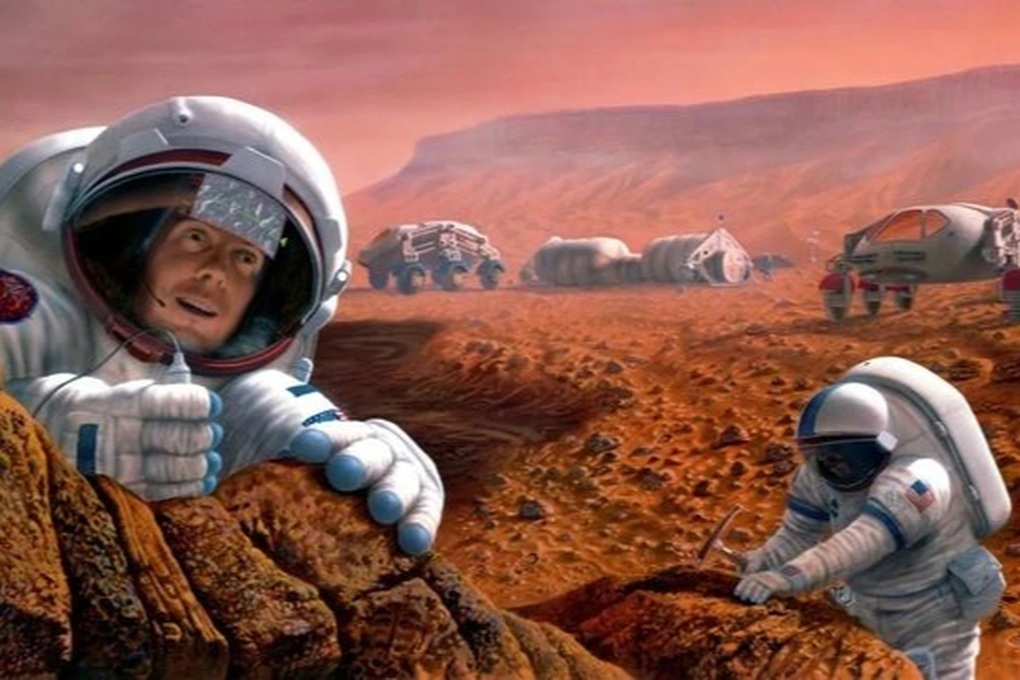
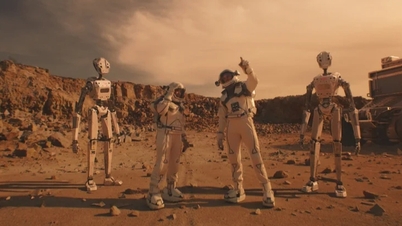
Illustration of astronauts exploring Mars (Photo: NASA).
On December 9th, Space magazine cited a scientific report recently published by the National Academy of Sciences, Engineering, and Medicine of the United States, indicating that the top priority of a mission to Mars is to search for signs of life, whether in the past or present.
This is considered a key objective in NASA's Red Planet exploration strategy, which it aims to implement by the mid-2030s.
Specifically, according to the 240-page report titled "Scientific Strategy for Human Exploration of Mars," the discovery of life on Mars has always been a major question attracting the attention of the scientific community.
The first astronauts to set foot on the planet will be tasked with assessing potential environments that once harbored life, particularly areas with water ice, ice sheets or other “temporarily habitable” conditions in recent geological history.
11 key scientific goals
The search for biological traces is ranked first on the list of 11 scientific priorities that manned missions should aim for. In addition, the expert group proposed 10 other goals, including:
- Research on water and CO₂ cycles on Mars;
- Detailed geological mapping;
- Assessment of environmental impacts on astronaut health;
- Research on dust storm mechanism;
- Survey the possibility of exploiting local resources;
- Assessing environmental impacts on DNA and fertility;
- Learn about the risks of bacteria;
- Analyze the impact of dust on equipment;
- Research on the adaptability of artificial ecosystems;
- Assess the radiation level on the planet's surface.
4 proposed missions
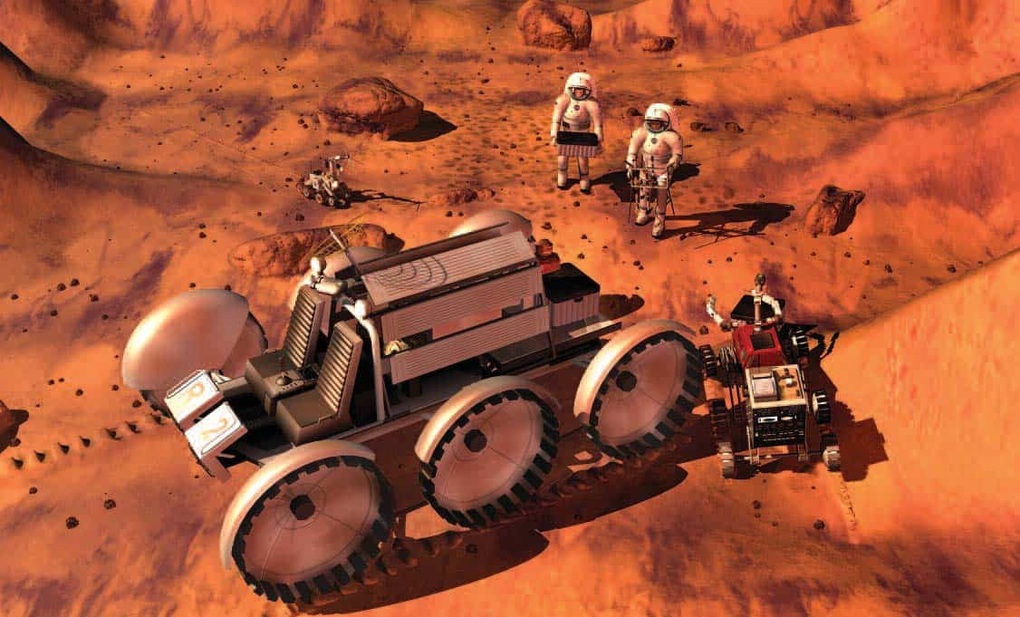
NASA will launch four crewed Mars exploration missions (Illustrative image: Getty).
The report outlines four manned expedition campaigns, each comprising three missions. The highest-priority scenario is considered capable of meeting all 11 scientific objectives. Each planned campaign includes:
- A manned mission lasts 30 sols (1 sol equals 24 hours 40 minutes).
- An unmanned cargo delivery mission.
- A long-term manned mission lasting up to 300 hours.
The proposed sites are mostly in low- to mid-latitudes, where there is underground ice and diverse geology. Another scenario focuses on drilling 2–5 km deep to reach pockets of liquid water beneath red soil, which is also considered the most favorable environment for sustaining life.
The report also recommends that NASA build a science laboratory on the surface of Mars to collect samples after each mission. This should be combined with a three-pronged approach—humans, robots, and artificial intelligence—to increase the effectiveness of collaborative research.
Risk of bacterial infection to the Red Planet?
Despite high hopes, the search for life on Mars remains limited by planetary protection regulations, aimed at preventing the risk of bringing Earth bacteria to other worlds or introducing extraterrestrial life to Earth.
Experts say NASA needs to continue to coordinate internationally to adjust these rules, ensuring both safety and not hindering research in areas with high biological potential.
The report concludes that a human mission to Mars will usher in a new chapter in planetary science. And if there is any place in the Solar System that can help us find the answer to the question, "Are we alone?", Mars is the strongest candidate.
Source: https://dantri.com.vn/khoa-hoc/nasa-dang-chuan-bi-cho-cac-su-menh-toi-sao-hoa-de-san-tim-su-song-20251210050800011.htm

































![[Video] The craft of making Dong Ho folk paintings has been inscribed by UNESCO on the List of Crafts in Need of Urgent Safeguarding.](https://vphoto.vietnam.vn/thumb/402x226/vietnam/resource/IMAGE/2025/12/10/1765350246533_tranh-dong-ho-734-jpg.webp)





























































Comment (0)