

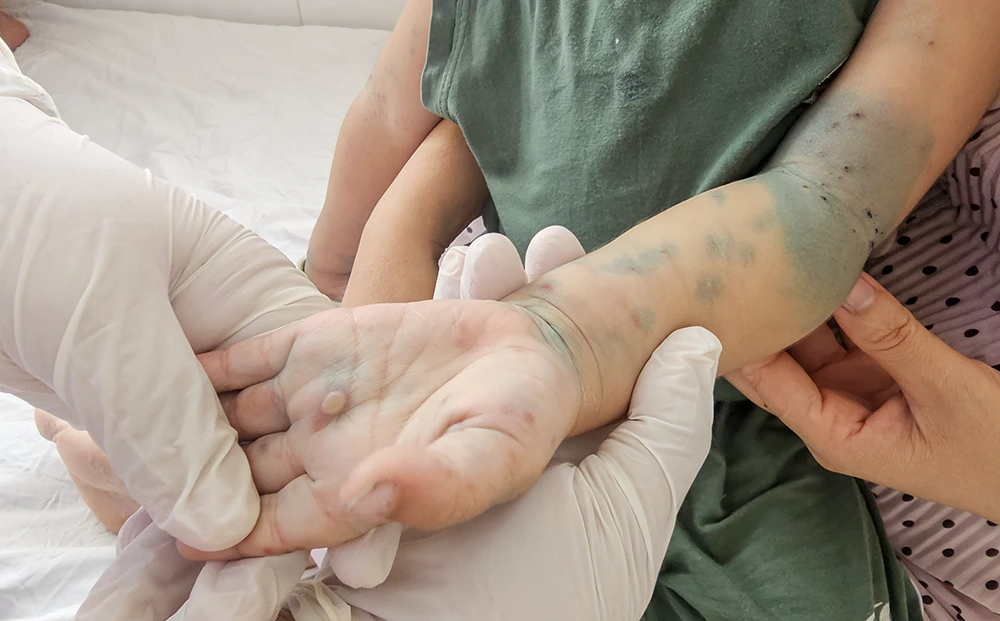
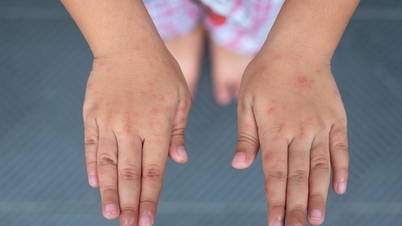
Typical symptoms of hand, foot, and mouth disease.
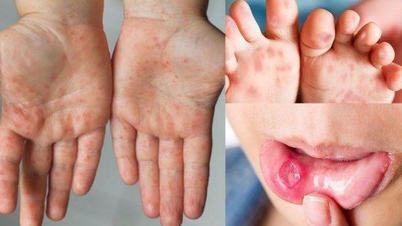
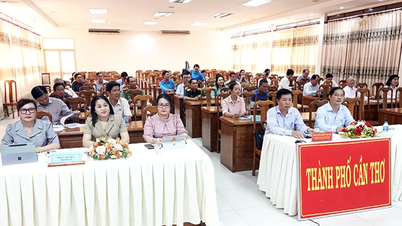
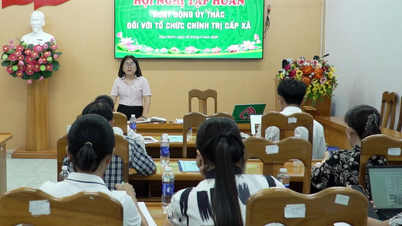
In response to this situation, the Can Tho City Department of Health organized training for medical staff on the diagnosis and treatment of Hand, Foot, and Mouth Disease (HFMD). At the training session, Dr. Nguyen Trong Nghia, Deputy Head of the Emergency Department at Can Tho City Children's Hospital, stated: "HFMD is an infectious disease caused by enteroviruses. The most common causative agents are Coxsackie A16 and Enterovirus 71. The main symptoms are skin and mucous membrane lesions in the form of blisters in specific locations, such as the oral mucosa, palms, soles, buttocks, and knees. The disease can cause many dangerous complications, such as encephalitis, meningitis, acute myocarditis, and acute pulmonary edema, leading to death."
Hand, foot, and mouth disease (HFMD) has four grades. Grade 1 patients experience mouth ulcers and/or skin lesions. Grade 2 has different levels. Grade 2a includes a history of startling (less than 2 times/30 minutes, not recorded during examination); fever lasting more than 2 days, or fever >39 ° C; vomiting; lethargy; difficulty sleeping; and unexplained crying. Grade 2b is divided into two groups. Group 1 symptoms include: startling, drowsiness, and a rapid pulse >130 beats/minute (when the child is lying still and not feverish). Group 2 symptoms include: high fever ≥39 ° C unresponsive to antipyretics; rapid pulse >150 beats/minute; tremors in the limbs and body, inability to sit steadily, unsteady gait; nystagmus (involuntary eye movements), strabismus; limb weakness or paralysis; cranial nerve palsy (choking while swallowing), changes in voice, etc.
Stage 3 symptoms include: rapid pulse >170 beats/minute (when the child is lying still and not feverish); in some cases, the pulse may be slow; increased blood pressure; rapid breathing, difficulty breathing, wheezing, or SpO2 <94%; mottled skin, profuse sweating, cold extremities. At stage 4, the patient is in shock; acute pulmonary edema; cyanosis, SpO2 <92%; respiratory arrest, gasping for breath.
According to the treatment referral system, commune health stations and private clinics provide outpatient examination and treatment for grade 1 TCM (Traditional Chinese Medicine) and refer patients for grade 2a and above. Regional health centers and private hospitals provide examination and treatment for grade 1 and 2a TCM; referral is provided for grade 2b and above TCM, or grade 2a with co-morbidities.
Dr. Nguyen Trong Nghia, a specialist in pediatrics, advises that the following points should be considered when transferring patients: Prepare and stabilize the child before transfer, assess factors that could lead to adverse outcomes during the transfer, and conduct a consultation before the transfer. If any deterioration occurs during the transfer, a follow-up consultation with the next-level hospital should be conducted. The safe transfer time for children with hand, foot, and mouth disease (HFMD) is under 2 hours. When transferring children over long distances, have intermediate hospitals in place in case of worsening conditions.
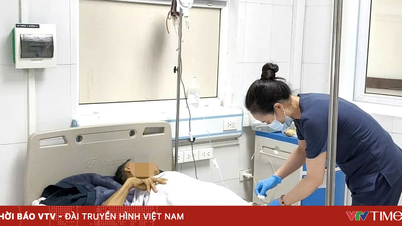
For mild cases of Hand, Foot, and Mouth Disease (HFMD), outpatient treatment is possible. Families should help reduce fever, ensure rest, avoid stimulation, increase nutrition, divide meals into smaller portions, maintain oral hygiene, care for skin lesions, and schedule follow-up appointments every 1-2 days for the first 8-10 days. Preventing spread by keeping the child home from school for 7-10 days is also crucial. For HFMD at higher levels, hospitalization is required.
According to doctors, due to the diverse complications, Hand, Foot, and Mouth Disease (HFMD) can be mistaken for pneumonia, bronchial asthma, acute laryngitis; sepsis, septic shock; bacterial meningitis - encephalitis; rabies (due to panic, screaming, etc.), so people should not be complacent. Dr. Tran Minh Thanh, Deputy Head of the Infectious Diseases Department, Can Tho Children's Hospital, said that signs of severe HFMD in children with potential complications that require immediate hospitalization include: high fever that is difficult to bring down, fever >39 ° C, fever lasting 2 days or more, frequent vomiting (nausea, vomiting without diarrhea, vomiting not after coughing...), lethargy or irritability, not breastfeeding or eating/breastfeeding too little, startling, fussiness, rapid breathing, difficulty breathing, mottled skin, coma, seizures...
Dr. Nguyen Ngoc Viet Nga, Deputy Director of the Can Tho City Department of Health, requested that medical facilities arrange on-call duty and ensure sufficient personnel during the April 30th and May 1st holidays. She urged medical staff and the public to be vigilant, detect hand, foot, and mouth disease (HFMD) cases early, treat according to protocols, strengthen consultations, ensure safe transfers to hospitals, reduce the rate of severe cases, and make maximum efforts to prevent fatalities.
Text and photos: H.HOA
Source: https://baocantho.com.vn/can-canh-giac-cao-do-voi-benh-tay-chan-mieng-a203154.html
![[Image] Close-up view of the interchange connecting the two expressways and Long Thanh Airport.](https://vphoto.vietnam.vn/thumb/1200x675/vietnam/resource/IMAGE/2026/05/25/1779703378210_ndo_br_z7863716673926-224453a31600126cce10622af6290afd-4549-jpg.webp)
![[Image] Hanoi's urban life under the challenge of a "scorching hot" environment](https://vphoto.vietnam.vn/thumb/1200x675/vietnam/resource/IMAGE/2026/05/25/1779706979265_nang-nong-t5-2026-minh-duy-7-4636-jpg.webp)



























































































Comment (0)