

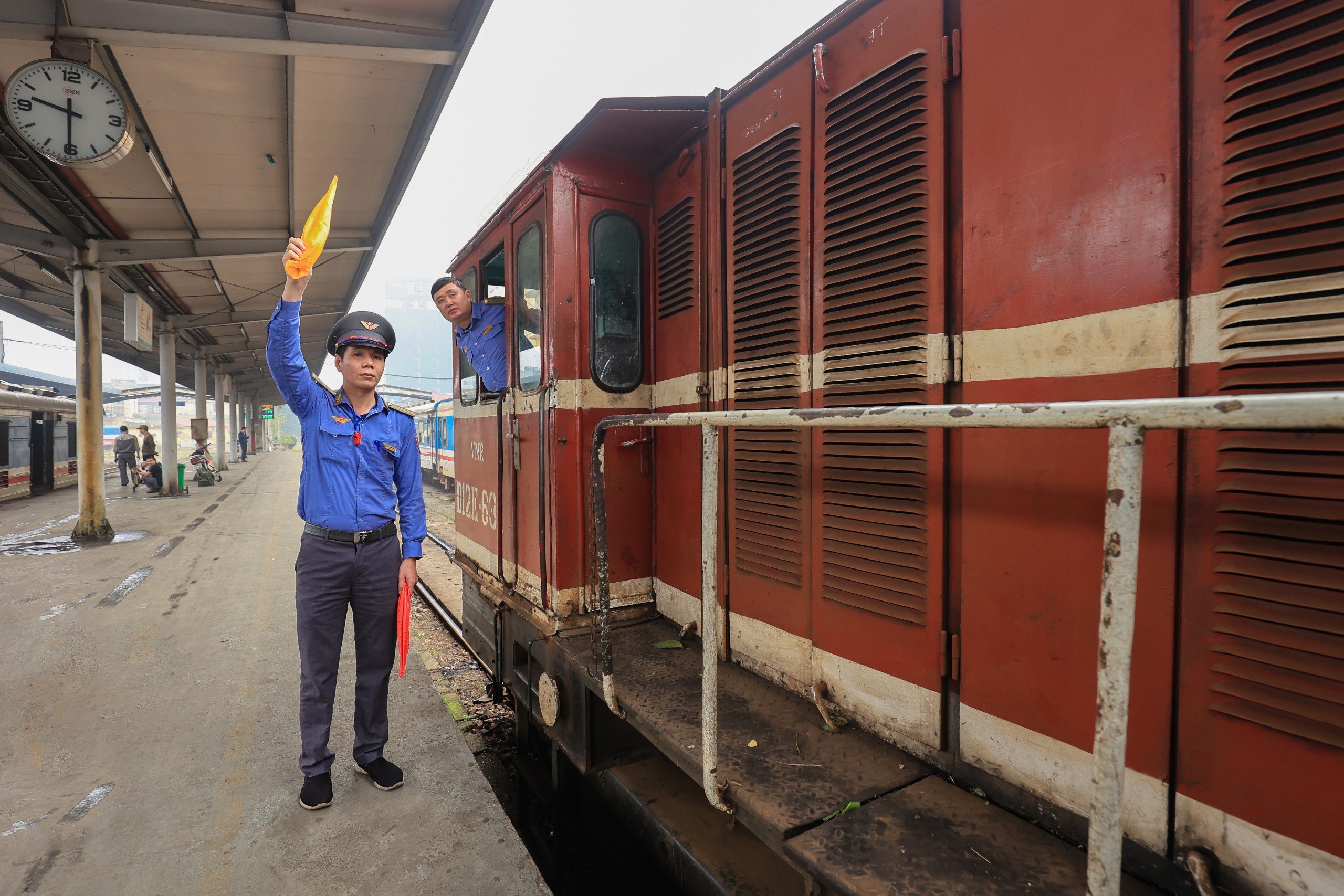
To schedule and operate trains, railway stations must have railway personnel directly involved in train operations, including: station dispatchers; train dispatchers; shunting supervisors; signalmen; and locomotive and carriage coupling personnel. By law, these personnel must possess appropriate professional qualifications and certificates for their positions. When performing their duties, they must strictly adhere to the procedures and regulations for each position, as well as the technical procedures and rules of each station (Photo: Hanoi station dispatcher giving signals to welcome a passenger train into the station).
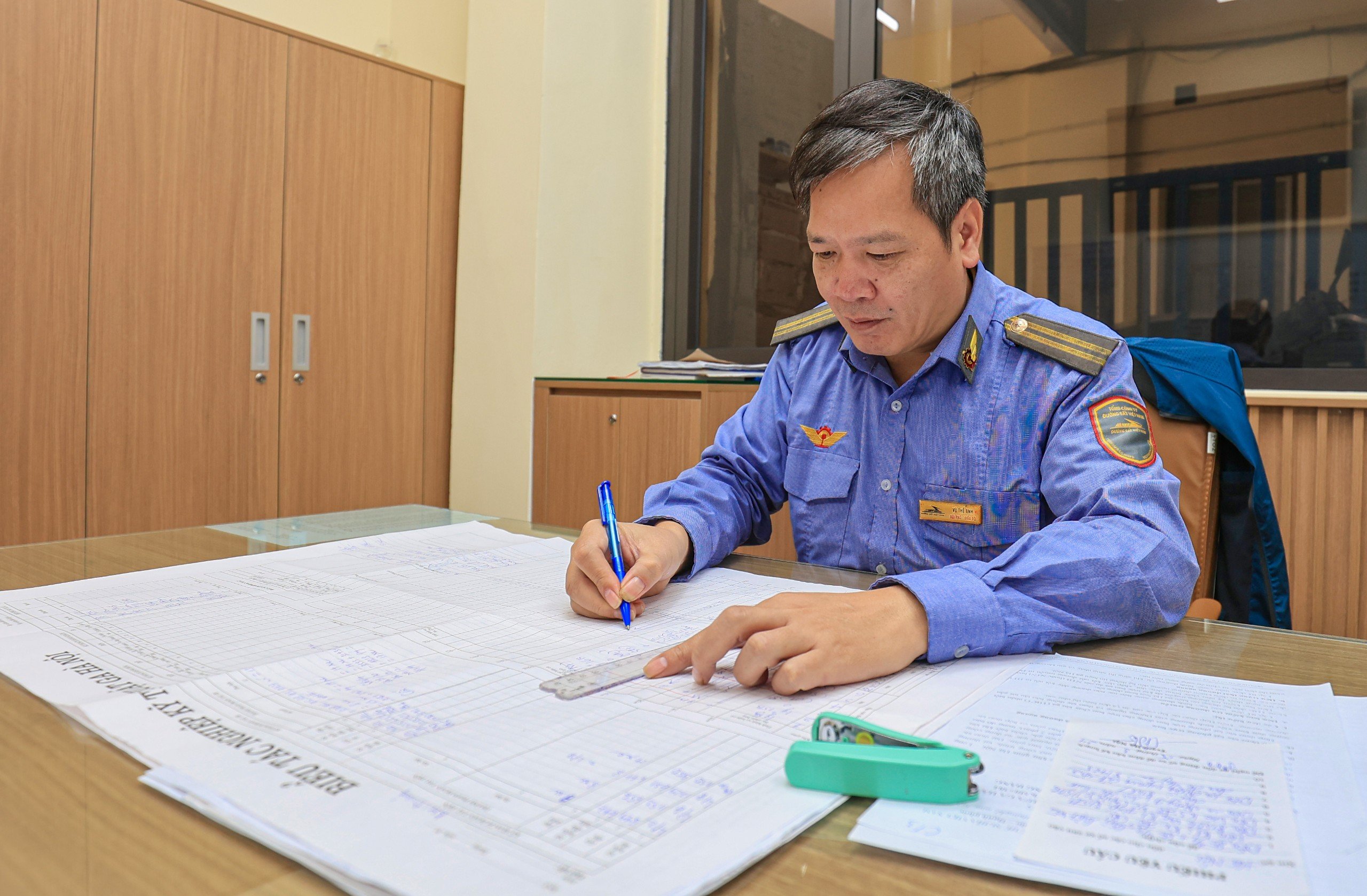
According to Mr. Vu The Anh, Team Leader of the Hanoi Station Train Operations Team, the train operation team varies depending on the station. For Hanoi Station, a Class I station, the on-duty team consists of approximately 14 people, with the team leader also acting as the dispatcher, overseeing the overall planning, dismantling, receiving, and dispatching of trains, and the movement of carriages. There are three train operation duty officers: the planning officer, the field officer, and the track officer, with the rest being coupling staff and signalmen. "To organize train operations and ensure safety, a unified chain of command is needed. Each position has its own responsibilities and pressures. If someone on the ground makes a mistake or operates incorrectly, the locomotive or carriages could derail, directly threatening train safety. In the train operation control room, if the planning officer makes a mistake operating the control panel (pressing the automatic signal control button), there is a risk of two trains colliding, with extremely serious consequences. Therefore, the staff must conscientiously adhere to the operating procedures, uphold a high sense of responsibility, and self-check and supervise each other to enhance safety," Mr. The Anh said.
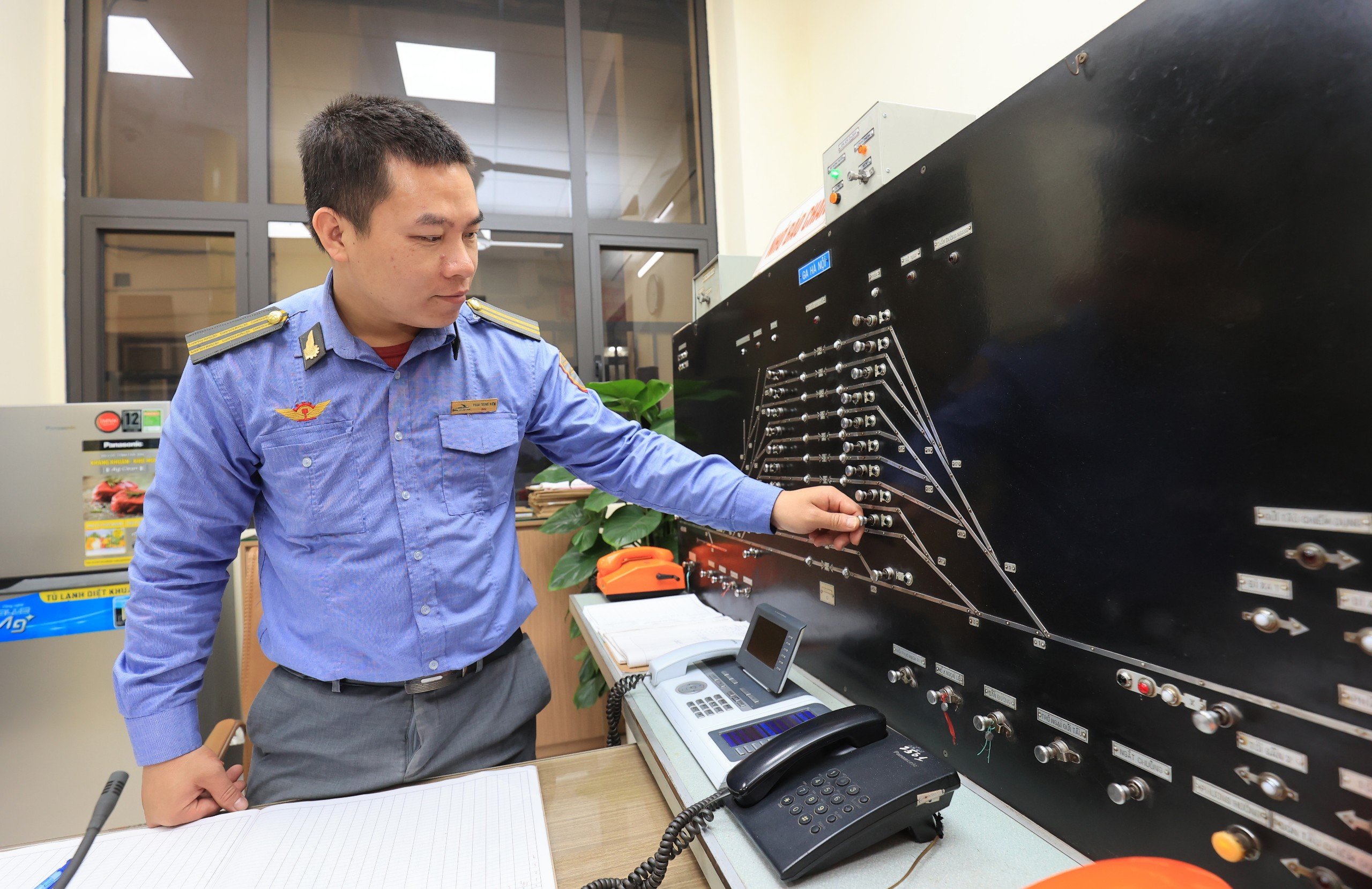
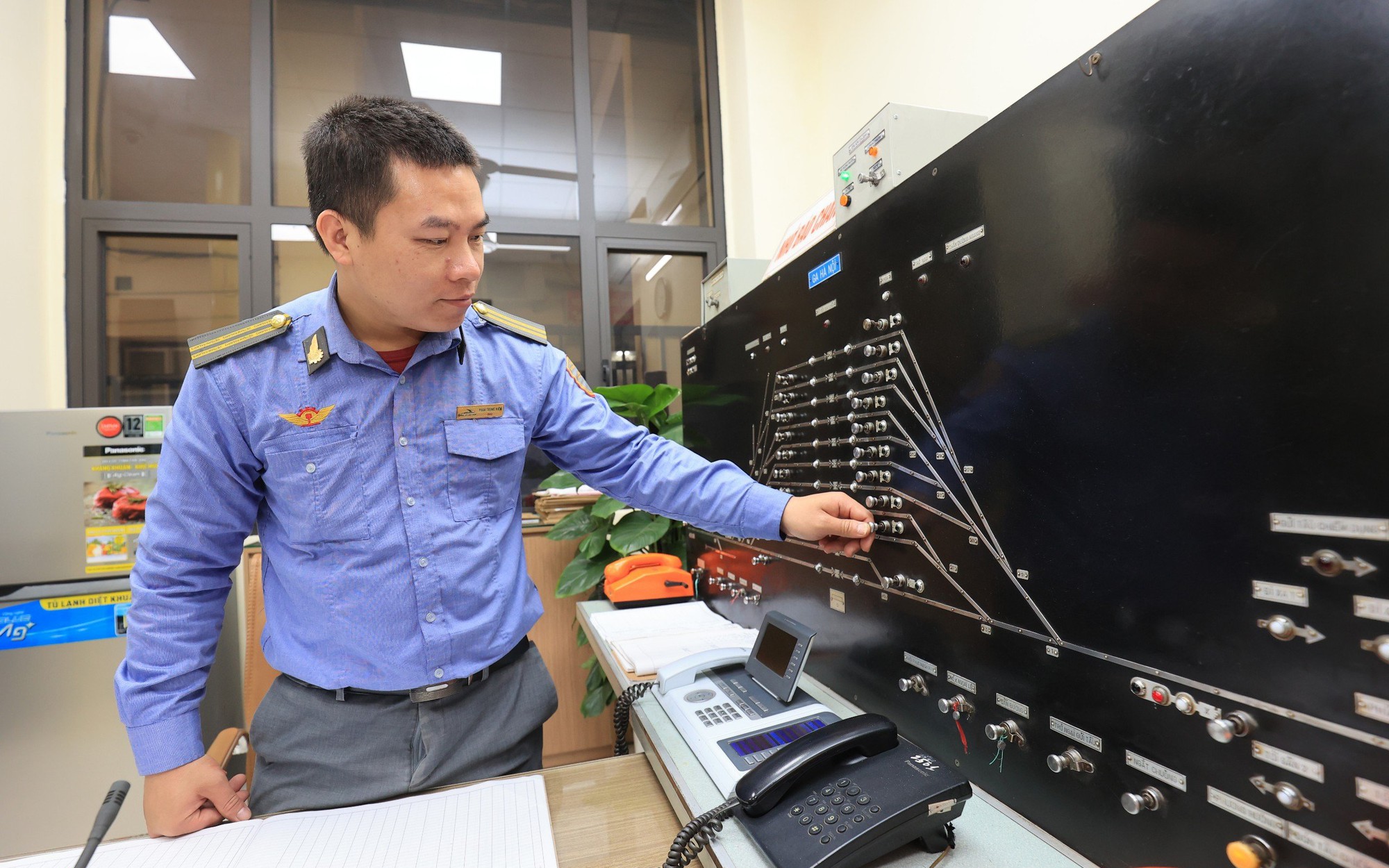
According to Mr. Phan Trung Kien, the train dispatcher at Hanoi Station, each shift works 12 hours, starting at 6:00 AM in the morning and 6:00 PM at night. However, the team must be present half an hour beforehand for the shift change, where the team leader briefs on the situation and assigns tasks. There are no breaks during those 12 hours, except for meal times. Furthermore, due to the specific nature of Hanoi Station, each shift handles over 100 shunting operations, primarily at night with more than 30 trains, leaving no time for extended rest periods. (Photo: Dispatcher Phan Trung Kien pressing buttons on the control panel).
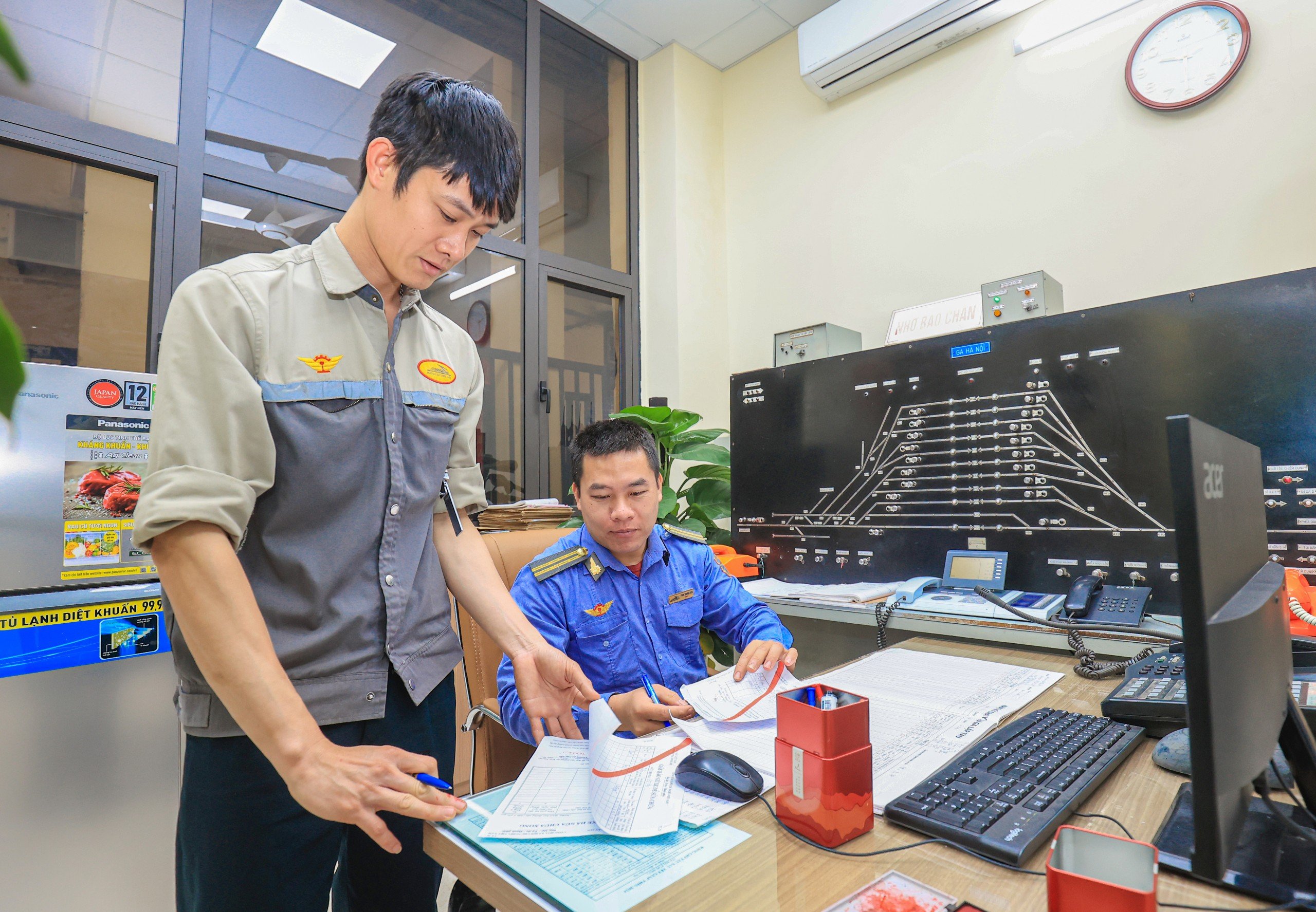
The planning duty officer sometimes receives phone calls reporting train schedules, sometimes notifies the level crossing guard about an approaching train, then informs the signalman to operate the switchboard, receives and dispatches trains, and also confirms and verifies information with related departments in the station area, such as inspecting and repairing rolling stock according to regulations.
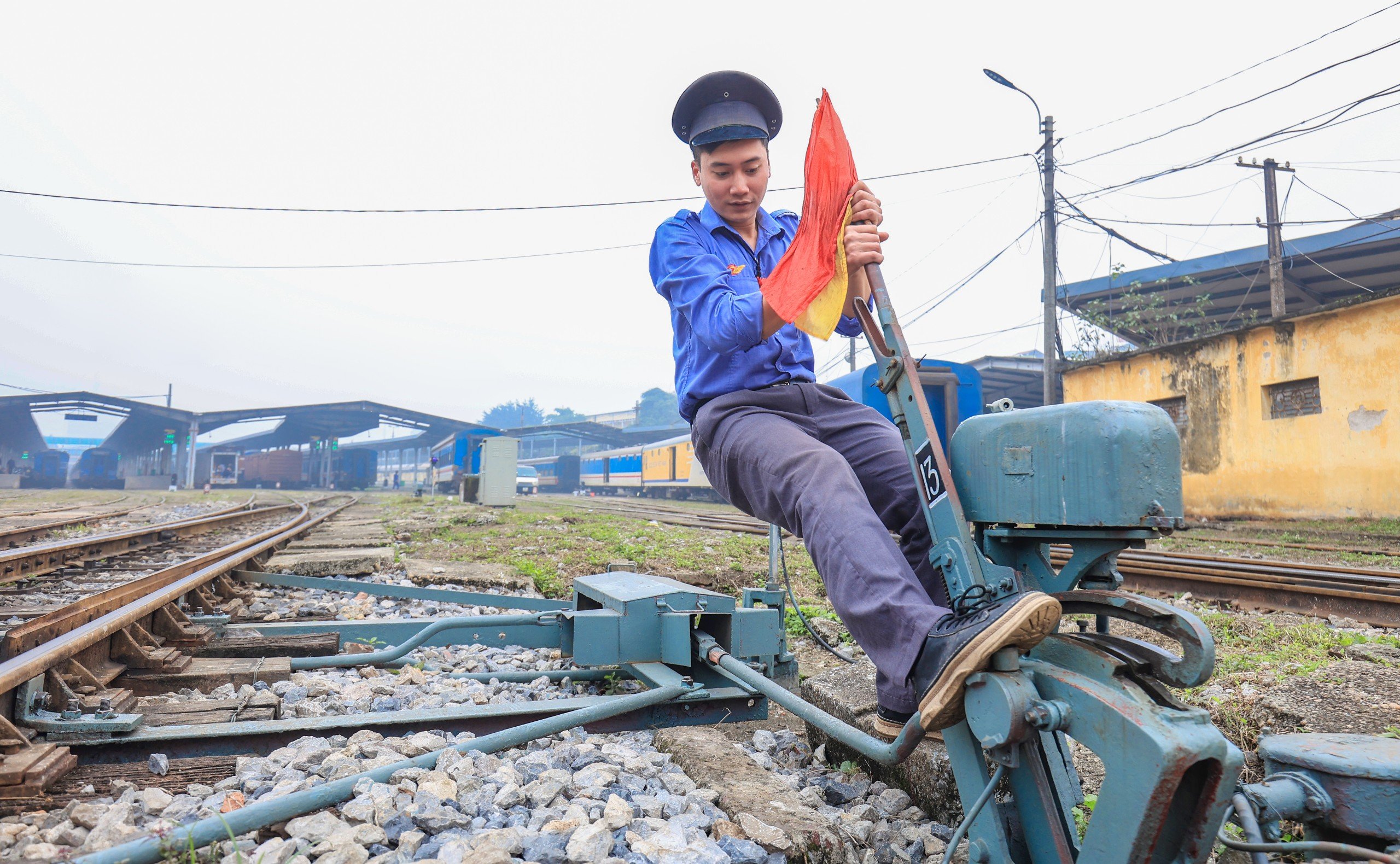
The signalman operates the switchgear, opening and closing the switches for trains, directing them to the correct track number as requested by the station duty officer, while also observing and ensuring safe passage through the switches. Dang Van Tien (from Thai Binh province), who has been working as a signalman and liaison at Hanoi station for just over a year, shared that he had done many jobs before deciding to become a railway employee. While the job is stable, the salary is still low compared to the workload and the cost of living in the capital. For someone like him, earning around 6.7-6.8 million VND per month, renting a house would be very difficult if the company didn't provide accommodation.
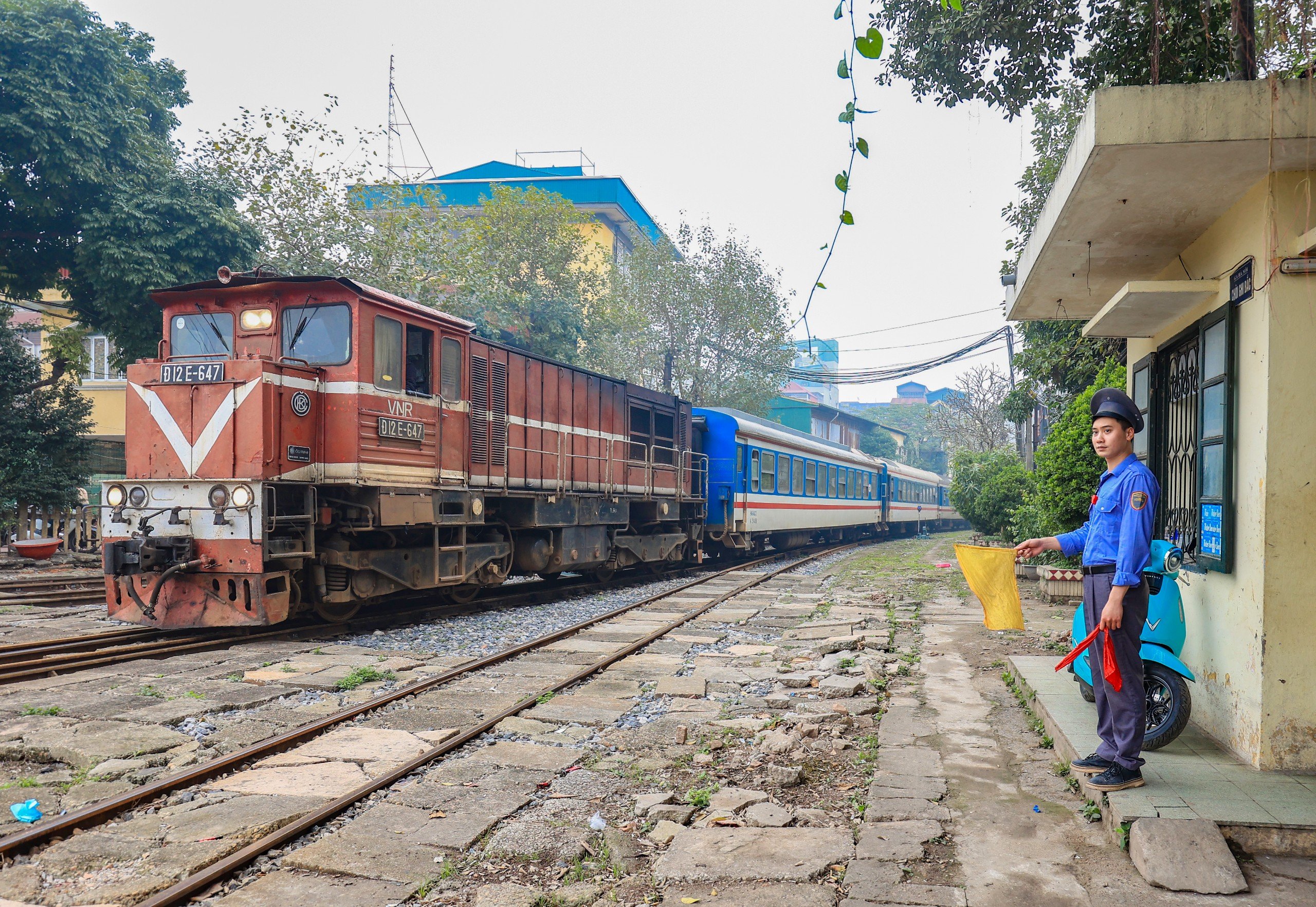
The duties of a signalman are not only to turn the switches and open the tracks, but also to observe the track to ensure it is clear and free of obstacles before trains arrive. Once the train has passed, they must continue to observe for any issues that threaten the safety of train operation, so that they can promptly inform the train driver or conductor to stop the train in time.
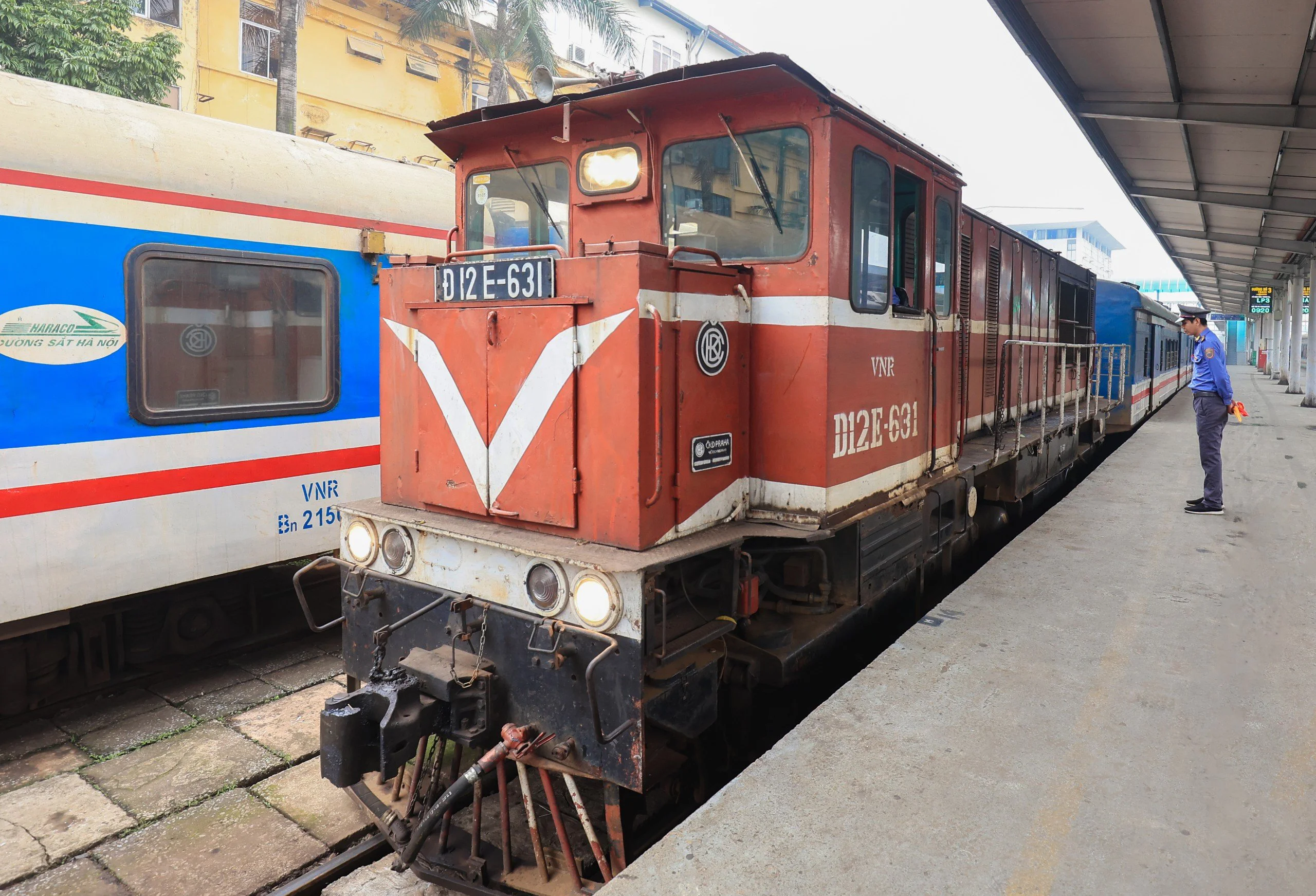
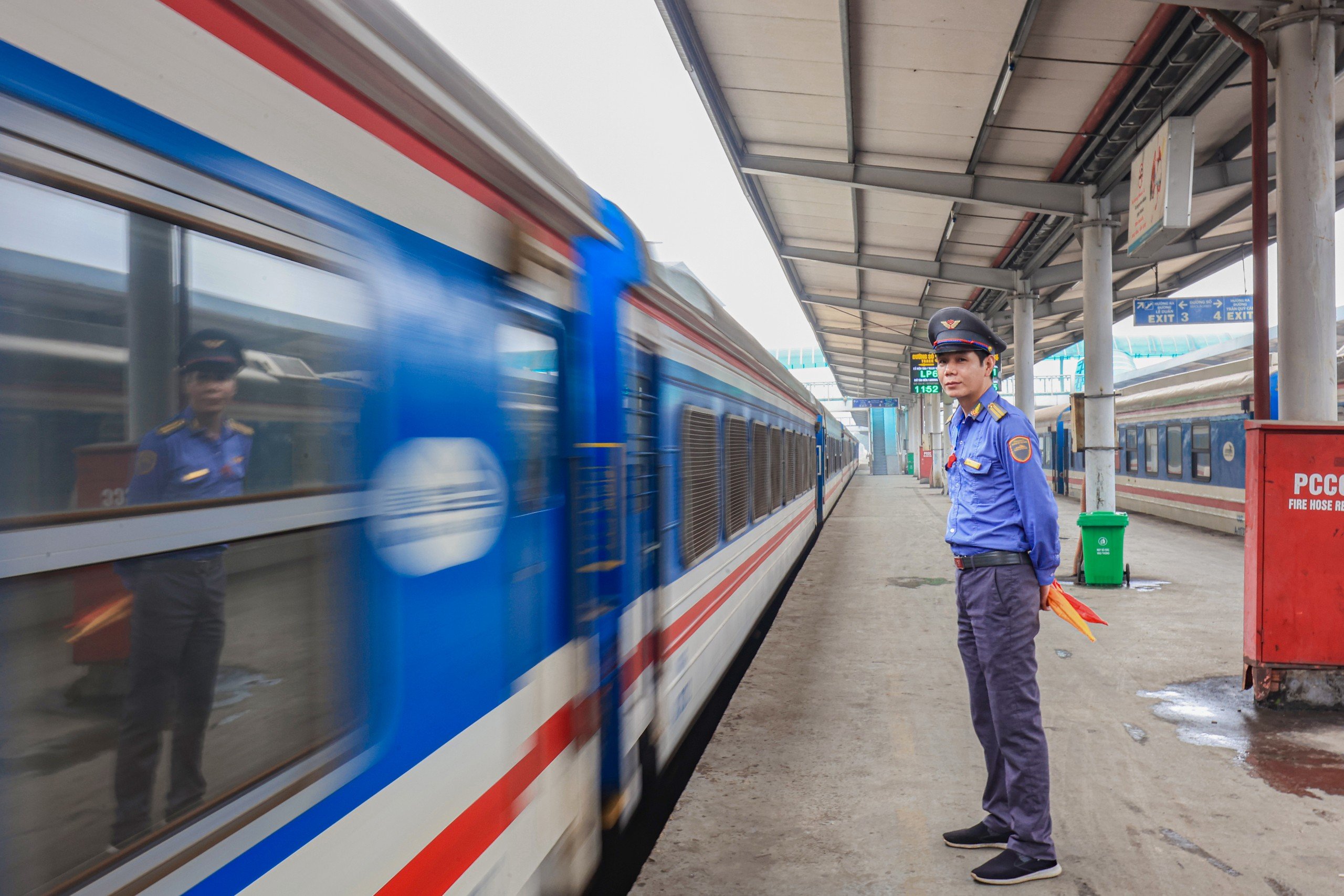
The on-duty officer outside the station is responsible for working with the train conductor and handling procedures for train operation, inspecting tracks, receiving and dispatching trains; and inspecting and supervising signalmen. The track duty officer, on the other hand, must count the carriages in the station, then, based on the train schedule, prepare shunting slips for the shunting team to carry out, specifically regarding which carriages to detach or attach to which train, on which track, and in what order... They also supervise and expedite shunting work at the site, ensuring that the work is carried out according to operational procedures and safely, while immediately addressing any necessary adjustments to ensure smooth operation (Photo: On-duty officer after receiving a train must observe the train's entry into the station to ensure safety).
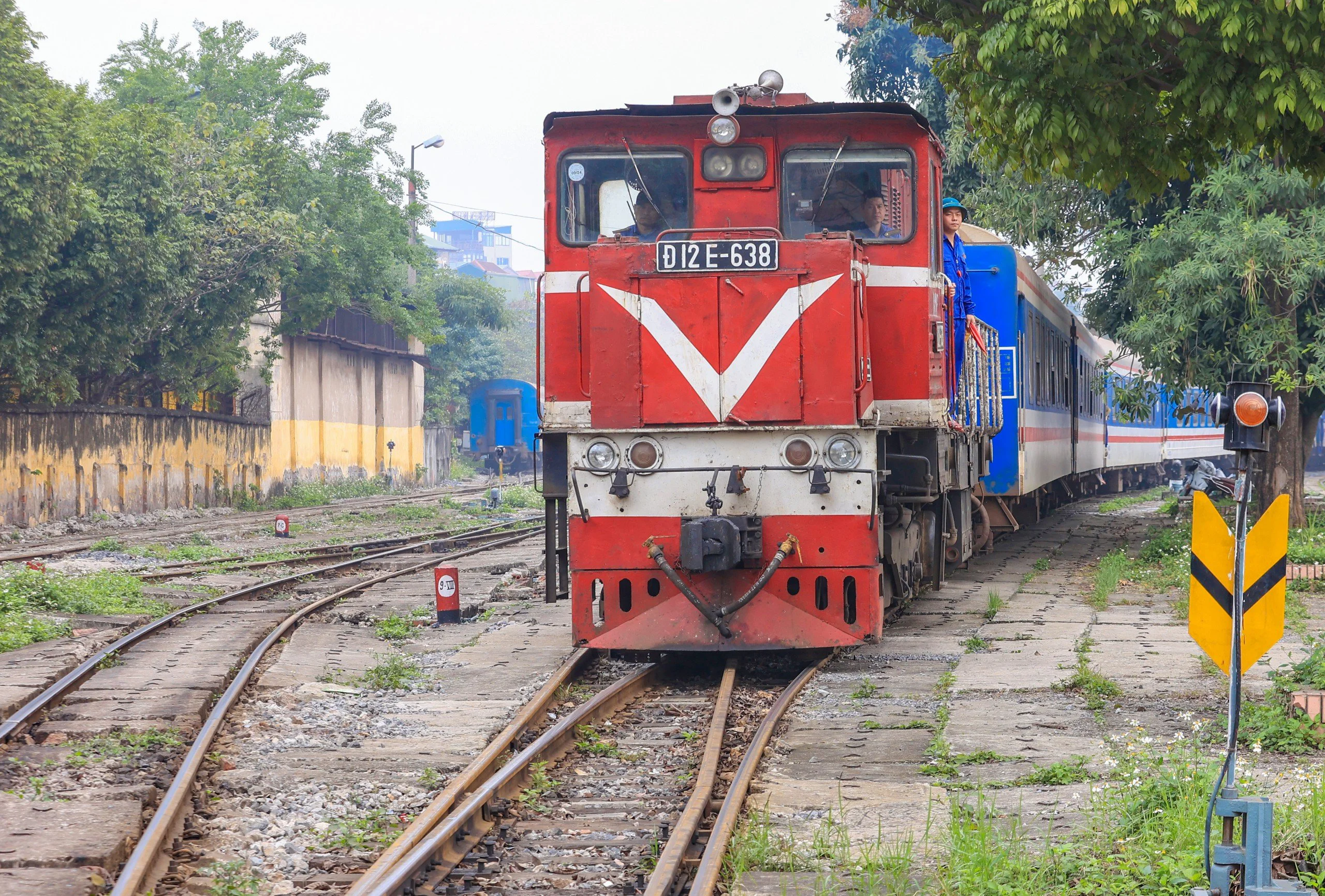
According to Mr. Phan Trung Kien, who has worked as a train operator for over 10 years and held various positions, shunting and coupling staff play a crucial role in implementing shunting plans. This work is arduous because it requires constantly climbing up and down, and clinging to train cars. Not to mention, with passenger cars, they also have to perform additional tasks such as removing electrical couplings and securing them in a fixed position to prevent them from falling when the cars move, thus ensuring safety. During holidays and Tet (Lunar New Year), when trains are busy and many trains need to be shunted and assembled, the workload and pressure increase even more. (Photo: Shutting and coupling staff clinging to locomotives and carriages to observe and give signals).
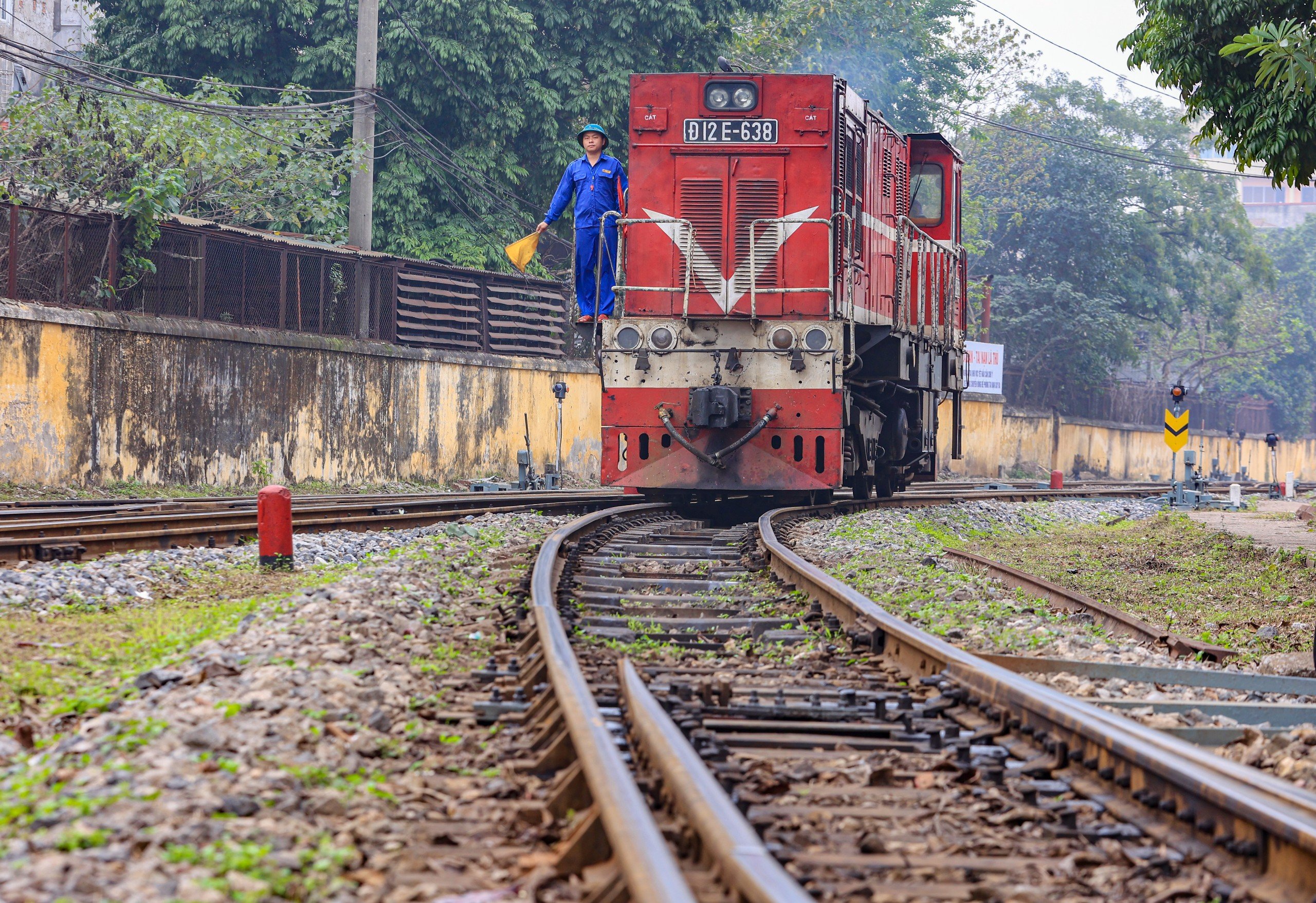
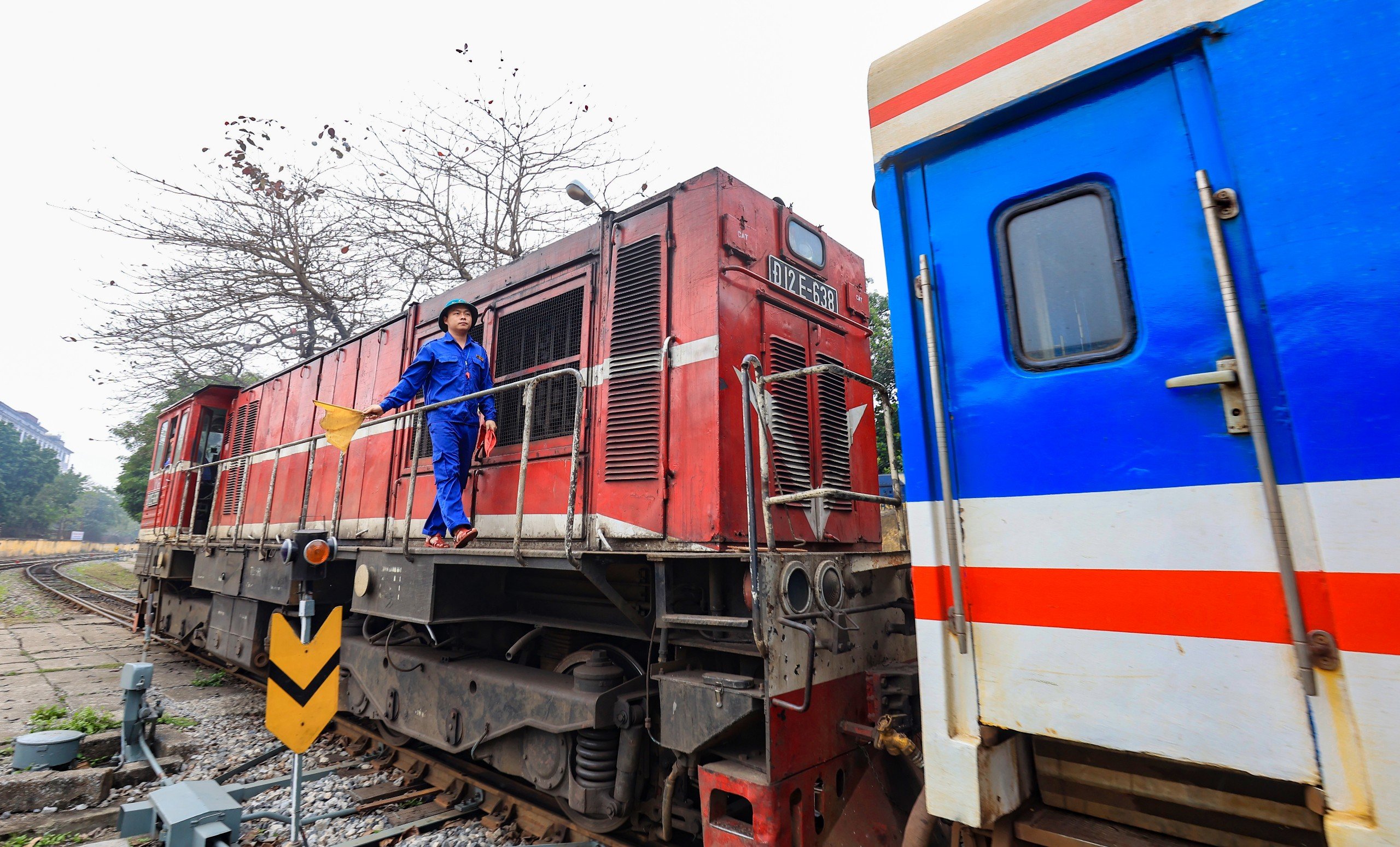
The shunting supervisor is usually positioned at the locomotive's head, observing the front and rear, receiving signals from the coupling staff to relay to the train driver for operational tasks.
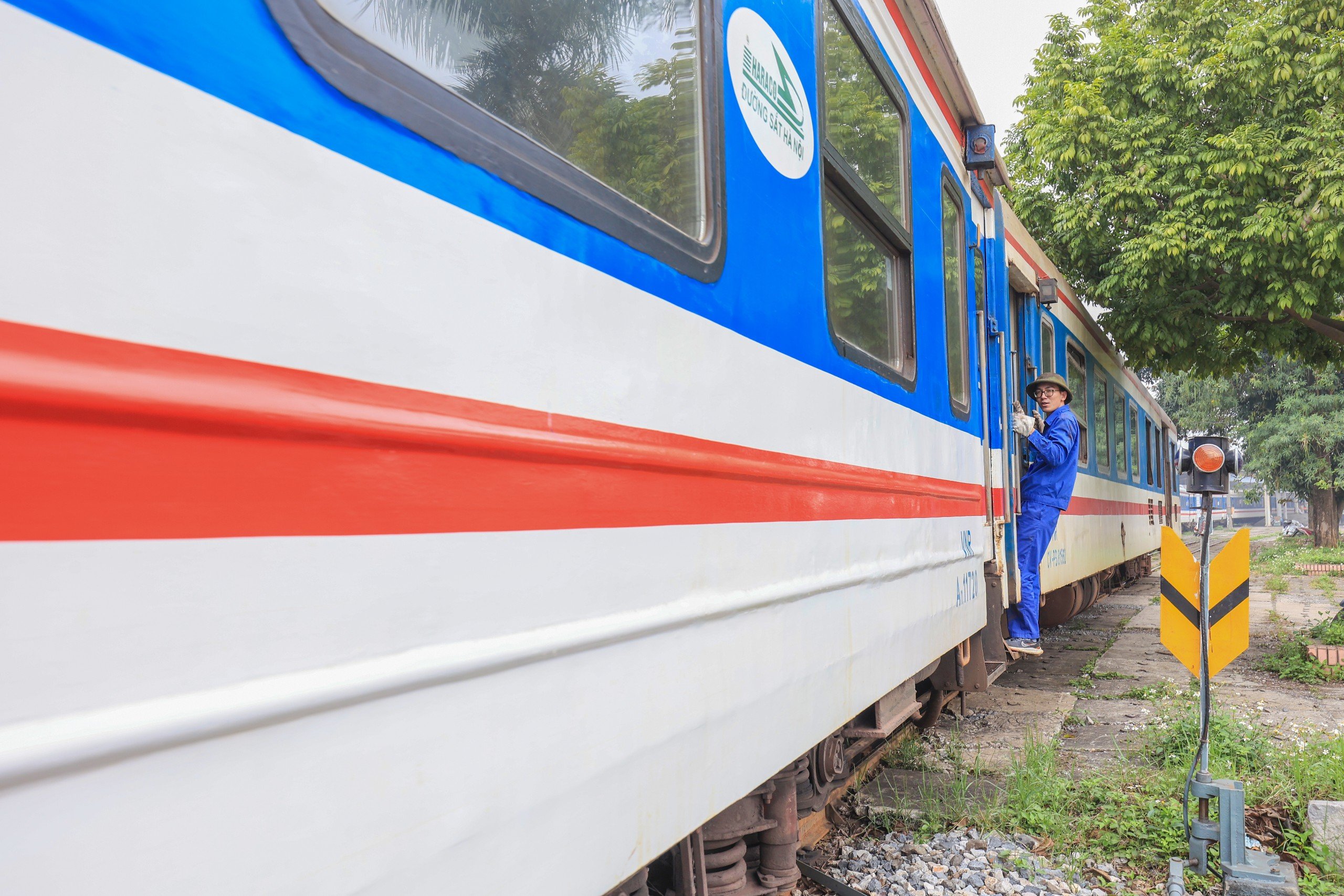
The coupling operator must cling to the train car, observe the surroundings, and give safety signals to the shunting supervisor.
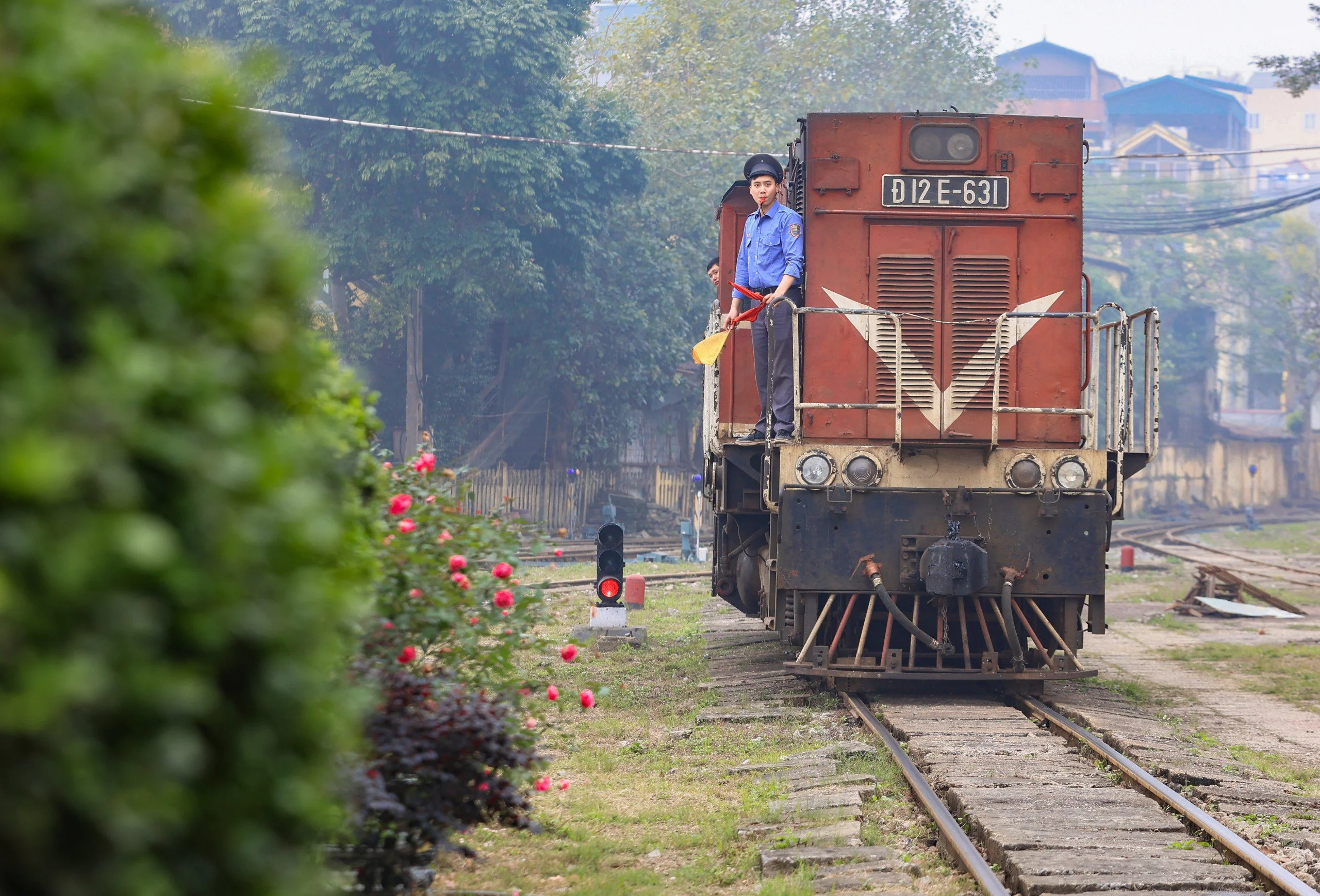
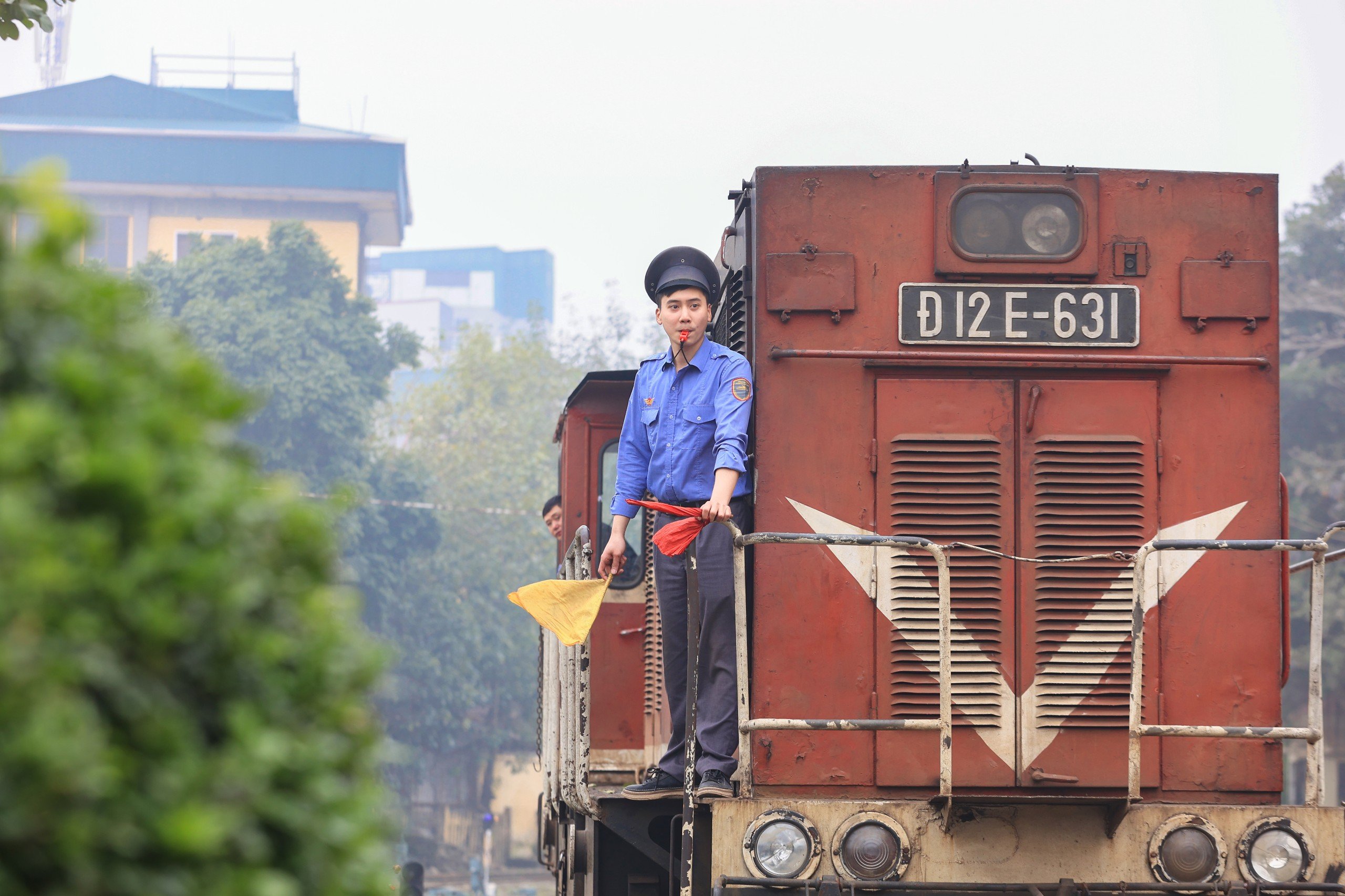
Even after the locomotive, carriages, and train have passed the signal, the signalman must continue to observe, ensuring safety and adhering to the train schedule and shunting plan.
 The arduous job of a train station security guard.
Source


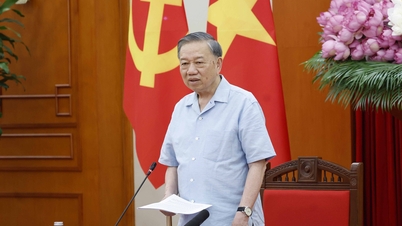
![[Photo] General Secretary and President To Lam presides over a meeting on preparations for the review of one year of operation of the three-tiered government system.](https://vphoto.vietnam.vn/thumb/1200x675/vietnam/resource/IMAGE/2026/06/02/1780391821195_a1-bnd-4595-9717-jpg.webp)















































































Comment (0)