

According to researcher and translator Nguyen Quoc Vuong, young people should focus on genuine learning, studying practical content that suits their abilities and the needs of society, rather than worrying about what kind of university degree they get, whether it's a large or small university...
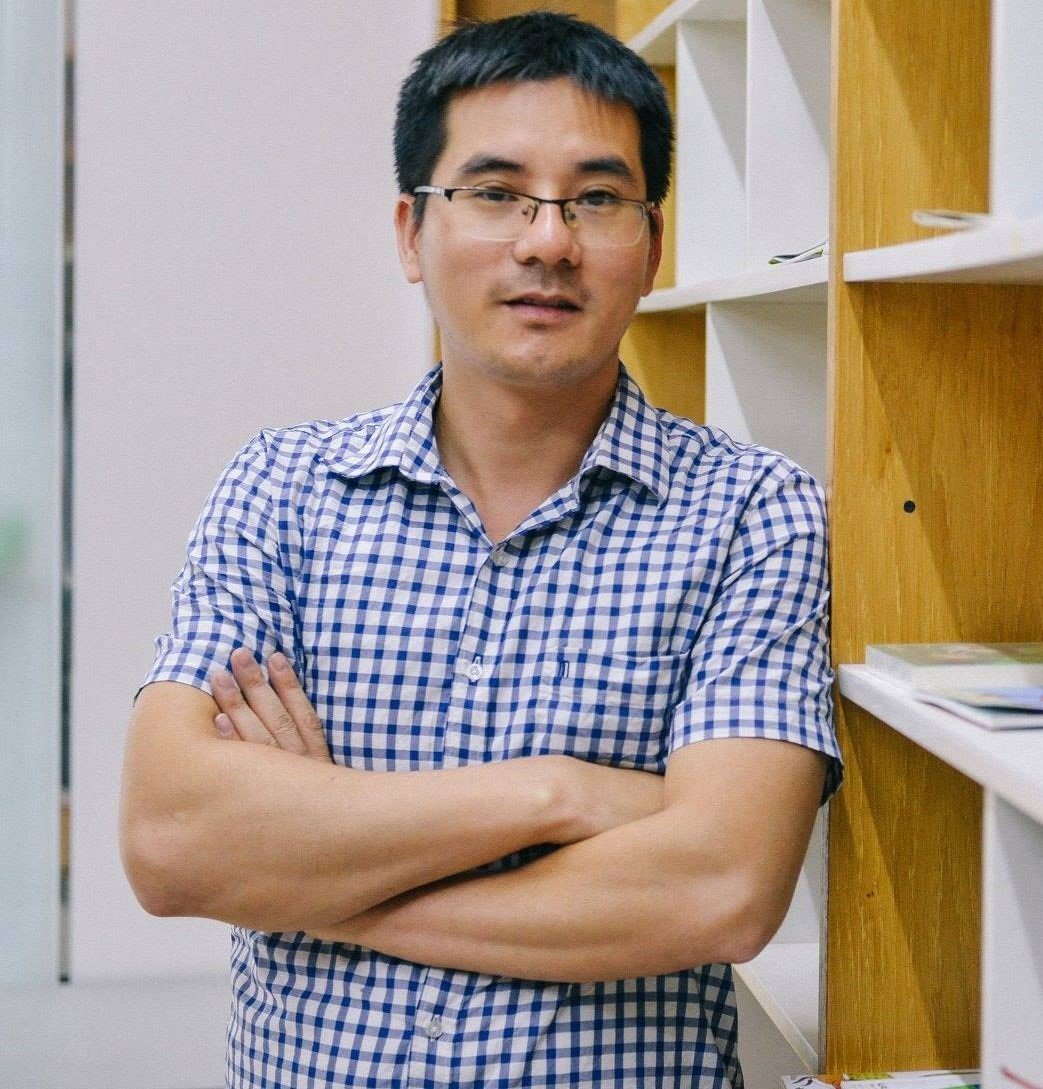 |
| According to researcher and translator Nguyen Quoc Vuong, young people shouldn't focus on what kind of university degree they have, whether they attend university or college, but rather on learning practical knowledge that is relevant to the needs of society. |
Qualifications are not the deciding factor.
Choosing between university or vocational training, or entering the labor market immediately without prior training… these are different paths faced by each student after graduating from high school. What are your views on the career choices of young people today?
I believe that university is not the only path to success in career and life. Life is very diverse, and the needs, abilities, and tendencies of students and young people are very diverse.
Opportunities for a career, leading to independence and happiness, come from many different fields and environments. Students and young people can seize these opportunities in various ways. They can find them through vocational training, university education, or by combining study and work, entering the workforce and production immediately after graduating from high school.
Previously, Vietnam's economy was primarily state-owned and based on small-scale farming. The situation is different now. While Vietnam's economy may not yet be comparable to many countries in the region and the world, it is much more diverse and open than it was 20-25 years ago. As a result, opportunities for young people are more numerous, diverse, and abundant. They also have more opportunities to study outside of school or to work while studying.
The reality is that employers no longer place as much importance on university degrees, so how do you think we need to change our mindset regarding university education versus vocational training?
For certain professions, a university degree is a minimum requirement for employment due to mandatory legal or industry regulations. However, in many professions, a degree is not a requirement.
For professions that require a degree as a standard, it's merely a "ticket" to entry. Everything must be demonstrated in actual work, that is, the real capabilities of the person being hired.
Therefore, young people, families, and schools need to focus on genuine learning. Students should learn practical content that suits their abilities and the needs of society, rather than worrying about the type of degree, whether it's a university or college degree, a large or small school, etc. The private sector is currently very dynamic with a large number of small and medium-sized companies. This is fertile ground for young people to test their true abilities.
In this context, qualifications are not the deciding factor. If you're not pursuing an academic career to become a university lecturer, senior expert, scholar, etc., then you shouldn't place too much emphasis on degrees. Young people can work and study simultaneously, earning degrees after gaining experience in their field. That is, they can return to university to study the profession they are currently working in and receive a degree. This is perfectly normal in a learning society.
Don't choose an easy job.
Many young people lack clear direction; after graduating with a university degree, they are uncertain about their future. Is the fault with this system, or is it due to inadequate career guidance and streaming?
In my opinion, there are many reasons, including significant socio-psychological and social context factors. The tradition of academic achievement, media information, and the values of the community and family all influence young people's choices. It's not just about students choosing universities, faculties, and majors haphazardly to simply get a degree; even vocational training is often chosen superficially and carelessly by many students.
In other words, without proper education in thinking and willpower, as well as a healthy value system regarding learning and work, young people, whether they graduate from high school and go to work, vocational school, or college/university, will approach things with a superficial attitude. They are indifferent, languishing, waiting for time to pass, and expecting that "having a degree will solve everything." Therefore, the issue here is bigger than vocational training or college/university education. It's about value education, about educational philosophy…
In the current context of integration, is collaboration between schools and foreign businesses (with relevant industries) a feasible option for conducting training programs?
That's what needs to be done. Once companies become the employers, schools need to know what those companies expect from their employees. Linking with companies will help schools provide more practical training and give students a better understanding of their future careers.
Highly talented students may even find jobs and earn money from businesses while still studying. In return, businesses can recruit and retain good students and suitable trainees. Both sides benefit from this approach.
Let your child take responsibility for their own life.
Students and parents need to understand how to choose schools and careers during the university and college admissions season. How should the mindset regarding academic qualifications be changed?
It is necessary to innovate and promote vocational education in high schools with appropriate content and methods, both in the regular curriculum and extracurricular activities. In addition, families need to have more channels to help their children, such as reading books, researching online, and receiving information from businesses and schools.
Parents cannot make decisions for their children because children are responsible for their own lives. Therefore, what parents should do is provide their children with diverse experiences, encourage them to read, and access information from various sources to gain a deeper understanding of society. From there, they can make informed choices about schools, professions, and career paths after graduating from high school. Parents should focus on the true value of education and hard work rather than the prestige of diplomas or illusory titles.
During each admissions season, experts always emphasize to candidates the importance of career orientation, clearly defining their personal development path, and avoiding chasing after "hot" professions. In your opinion, what is the solution to the current problem of unemployed graduates?
I believe there are two possible reasons for graduate unemployment. Firstly, the economy is not strong enough to create enough jobs for graduates. Secondly, there are many jobs, but graduates do not meet the requirements.
In fact, I've noticed that businesses and organizations often complain about not being able to recruit suitable personnel because candidates lack the necessary skills. When university graduates have neither a general cultural background nor specific professional skills that are any better than those without a university degree, they will inevitably face unemployment.
This reality makes it obvious that students must focus on their studies, making the most of every learning opportunity both inside and outside of school to acquire the best professional skills and be capable of working professionally. The fact that certain professions become "hot" at a certain time doesn't mean they will continue to be "hot," and even if they are, whether a student's abilities are suitable for them is another matter.
When it comes to studying and pursuing a career, one should choose a profession they are best at, most passionate about, most professional in, and most competitive, rather than one that is currently very popular. When something is popular, it means there is a lot of competition.
If you don't have an advantage in that competition, you will fail. It's better to choose a profession where you have strengths and expertise. For graduates who are unemployed, there are still many opportunities. If you realize what you've learned isn't useful, be brave enough to abandon it and learn a different profession.
In today's society, learning opportunities are abundant with books, libraries, the internet, and more. What's important is focus, the right learning philosophy, and persistent diligence. If these elements are present, then graduates will never be unemployed.
Thank you, sir!
Educational researcher and translator Nguyen Quoc Vuong has translated and written approximately 90 books on education, history, and culture. Some of his notable works include: - Translated books: Vietnamese Education Reform, National Dignity, Happiness with Everyday Life... - Books written: Reading books and the arduous journey of a thousand miles, What can Vietnamese education learn from Japan, History is not as boring as you think, Reflecting on Vietnamese education from afar, Searching for the philosophy of Vietnamese education… Award: Best Book Award 2020 for the book "What Vietnam Can Learn from Japan in Education". |
Source


![[Photo] Prime Minister Pham Minh Chinh presides over the conference announcing the establishment of the International Finance Centre in Vietnam.](/_next/image?url=https%3A%2F%2Fvphoto.vietnam.vn%2Fthumb%2F1200x675%2Fvietnam%2Fresource%2FIMAGE%2F2025%2F12%2F21%2F1766309817714_ndo_br_dsc-3400-jpg.webp&w=3840&q=75)


![[Photo] Prime Minister Pham Minh Chinh presides over a meeting on private sector economic development.](/_next/image?url=https%3A%2F%2Fvphoto.vietnam.vn%2Fthumb%2F1200x675%2Fvietnam%2Fresource%2FIMAGE%2F2025%2F12%2F20%2F1766237501876_thiet-ke-chua-co-ten-40-png.webp&w=3840&q=75)

































































Comment (0)