

Ho Chi Minh City – The Can Gio coastal tourism urban area, covering 2,870 hectares with 5 sub-areas, has an estimated total investment of over 76,000 billion VND for infrastructure development and construction.
The information is contained in the revised summary report on the local adjustment of the 1/5000 scale zoning plan for the Can Gio coastal tourism urban area , which has just been completed by the local authorities for appraisal.
The urban area to be developed in Long Hoa commune and Can Thanh town had its 1/5000 scale zoning plan approved five years ago. Due to numerous changes from the original plan, the project is being reviewed and adjusted to suit the current reality, in parallel with the ongoing revision of the city's master plan . The localized adjustments to the Can Gio Urban Area project, once approved, will serve as the basis for detailed planning and preparation for investment and construction.
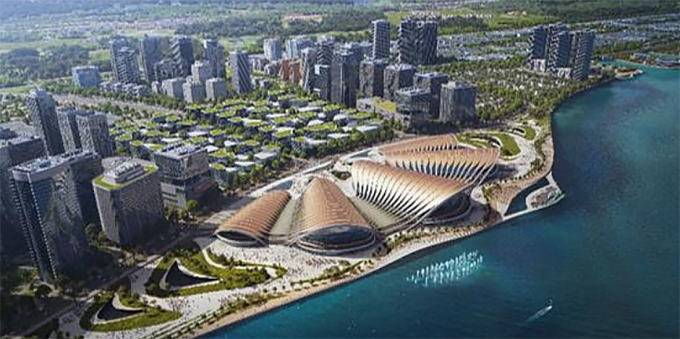
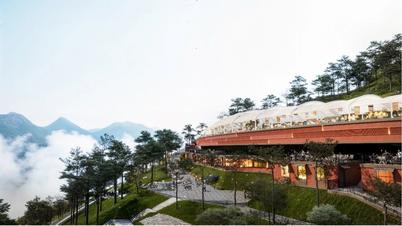
Perspective view of the main waterfront landscape axis in the central urban area. Photo: Can Gio District People's Committee .
Accordingly, the plan retains the five functional zones A, B, C, D, and E, with a population of over 228,000 people as before, but adjusts some aspects related to water bodies, sandy beaches, and public swimming areas. The land allocated for tourism and resorts in zones A, B, C, and D will also be reduced to better suit tourism needs and increase public amenities. The golf course in zone A will increase in area from approximately 146 hectares to 155 hectares to provide more land for accompanying facilities.
Regarding transportation and related infrastructure, the plan adjusts the parking system, concentrating it in the gateway area and utilizing modern technology. Some road sections are straightened to facilitate connections between areas. The internal transportation network within the urban area is also redesigned to create a new spatial and landscape design. Furthermore, the plan considers converting some land use functions to protect and enhance their value. This aims to align with the local reality, development needs, and new development directions.
In the total investment, the project estimates the cost of constructing technical infrastructure at over 32,500 billion VND and approximately 43,700 billion VND for architectural construction within the urban area. Phase one involves land leveling and completion of technical infrastructure according to the main transportation frameworks; green spaces, water features, a golf course, services, and residential areas at gateway locations. Phase two will continue to complete the infrastructure connecting the entire area, including commercial centers, hotels, and convention centers. The social infrastructure system, residential areas, and tourism and service projects will also be completed and put into operation during this phase.
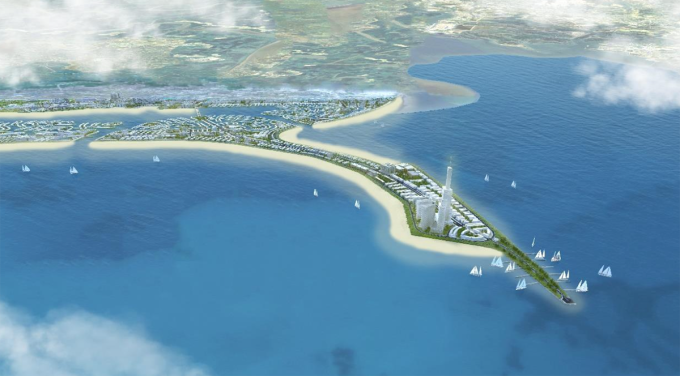
A perspective view of the Lighthouse Cape area with the iconic 108-story tower in subdivision C. Photo: Can Gio District People's Committee.
According to the revised plan, Zone A will increase in area from approximately 771 hectares to nearly 954 hectares, with the main functions being entertainment and recreation (themed parks, golf courses, etc.); high-end resort tourism; commerce and services, etc. Zone B, covering approximately 659 hectares, is planned with a central focus on a complex of cultural and sports facilities, including stadiums at major intersections. The gateway area to the urban area will house public facilities such as parking lots, hospitals, schools, as well as offices, shopping centers, and hotels.
Areas C and D, totaling over 798 hectares, will feature sports fields combined with landscaping, plazas, mixed-use buildings, shopping centers, schools, etc. Low-rise housing in this area will be divided into islands and peninsulas, integrated with a system of waterways winding around them. Area E, approximately 457 hectares in size, will primarily function as an open space, artificial beach, and canal. This area will create a large waterfront space along with the construction of parks and beaches.
Previously, in June 2020, the Government decided to approve the adjustment of the investment policy for the expansion of the Can Gio coastal urban area project, covering a total area of nearly 3,000 hectares with a total investment of 217,000 billion VND. The project is invested by Can Gio Tourism Urban Joint Stock Company, with equity capital of over 32,500 billion VND and the remainder being commercial loans. The project implementation period is 50 years (until 2070 for the expanded area; and until 2057 for the 600 hectares of reclaimed land already allocated to the investor since 2007).
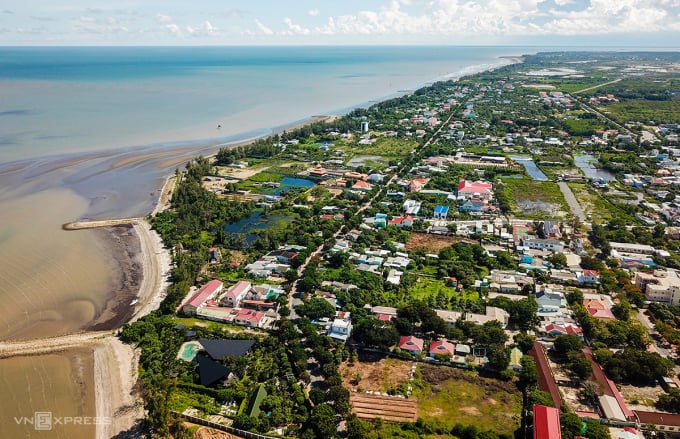
The area around Can Thanh town, Can Gio district, and the surrounding sea in July 2020. Photo: Quynh Tran
The government requires that during the project implementation process, the investor must fully comply with the contents of the environmental impact assessment report; strictly adhere to the legal framework of the United Nations Educational, Scientific and Cultural Organization (UNESCO) on the Can Gio mangrove biosphere reserve; and not negatively impact the ecosystem or narrow the seawater supply to the mangrove forest...
Located approximately 50 km from the center of Ho Chi Minh City, Can Gio is the city's only district bordering the sea, boasting 23 km of coastline. The district covers a total area of over 71,300 hectares, with more than 70% being mangrove forests and waterways. It is home to many traditional craft villages and unique cultural festivals, making it ideal for developing eco-tourism, agricultural tourism, and cultural-religious tourism.
Ho Chi Minh City's orientation is to promote the exploitation of Can Gio's tourism strengths, building and developing a regional and international-class tourism urban area there. The city hopes that Can Gio can contribute to economic growth while preserving its natural and cultural advantages.
Gia Minh
Source link


![[Photo] General Secretary and President To Lam and the President of the Philippines hold talks.](https://vphoto.vietnam.vn/thumb/1200x675/vietnam/resource/IMAGE/2026/06/01/1780286997787_anh-man-hinh-2026-06-01-luc-11-09-43.png)






























































Comment (0)