

Gaps in the urban housing development structure
The development of the real estate market in recent years has contributed significantly to the economy and urban expansion. However, the reality shows that while Vietnam has strongly developed various types of housing for sale, it has almost failed to establish a professional, long-term rental housing system with systematic guidance from the State. The current rental market is largely spontaneous, fragmented, lacks comprehensive planning, and does not guarantee a stable quality of life for residents. This is also an issue emphasized by General Secretary and President To Lam in the new housing policy orientation.

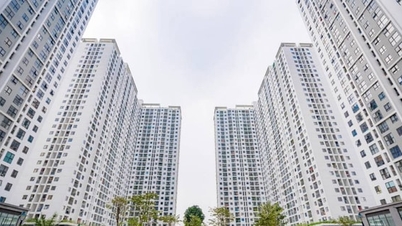
In Hanoi and Ho Chi Minh City, the demand for rental housing is increasing, but the supply of quality housing is insufficient. According to the Vietnam General Confederation of Labor, there are currently about 5 million workers employed in industrial zones nationwide, most of whom rent accommodation in limited conditions. The majority of these workers live in informal, privately-built rental housing areas with high population density. These areas often lack living space, have dilapidated infrastructure, and pose significant fire safety risks. Following several serious rental housing fires in Hanoi and Ho Chi Minh City recently, the issue of rental housing quality has become even more alarming.
Furthermore, owning a home in major cities is becoming a difficult financial challenge. With a standard apartment costing around 7 billion VND, even high-income earners need a very long time to save up.
The Vietnam Institute for Real Estate Market Research and Evaluation (VARS IRE) observes that the market is trending towards affordable properties in suburban areas with transparent legal frameworks. However, to address the root of the problem, people need access to quality housing at reasonable costs. The rental housing model is seen as a solution to this issue.

Shaping the institutional framework for the development of a sustainable rental market.

Looking at the world, many developed countries have chosen rental housing as a crucial pillar of their social security system and urban stability. In Germany, the home ownership rate is only about 46%. The legal system there provides strong protection for tenants, giving people peace of mind considering rental housing as a long-term residence. The government applies a reference rental price list to control price increases and prevent landlords from unilaterally terminating contracts.
Meanwhile, Singapore and South Korea are promoting models through the state, directly investing in or acquiring apartments for long-term rental to students and low-income earners. Preferential funding from national funds helps these projects maintain affordable prices, enabling people to settle down.
International experience shows that the role of the State is a decisive factor in developing sustainable rental housing. Unlike the model of housing for sale, which can recover capital quickly, rental housing requires a very long payback period, often lasting from 15-25 years, while profit margins are not high. If relying solely on conventional market mechanisms, the private sector will find it very difficult to incentivize participation.


Alongside promoting the implementation of the National Rental Housing Fund, Vietnam needs to change its mindset regarding housing development, viewing rental housing as an essential social infrastructure similar to education, healthcare, or public transportation.
Another crucial task is to establish a separate legal framework to protect the legitimate rights of tenants. Vietnam needs to promptly research and enact specific regulations on contracts, price increase margins, and quality standards for rental properties. With a clear Law on Rental Housing, people will be freed from the disadvantage of price fluctuations or unexpected demands from landlords. Businesses employing a large workforce also need financial support to build housing, helping workers feel secure in their jobs and remain committed to long-term employment.
Source: https://baotintuc.vn/xa-hoi/can-khung-phap-ly-thong-nhat-cho-mo-hinh-nha-o-cho-thue-20260604140155587.htm
























































![[Video] Sunset at Lap An Lagoon – Where the sun sets over the fishing nets](https://vphoto.vietnam.vn/thumb/1200x675/vietnam/resource/IMAGE/2026/05/31/1780192137701_beach-landscape-sea-water-nature-grass-745871-pxhere-com.jpeg)








































Comment (0)