

The preservation, conservation, and promotion of cultural heritage in Vietnam are facing many challenges, and sometimes the handling of heritage-related issues is more one-sided than a multi-faceted dialogue.
 |
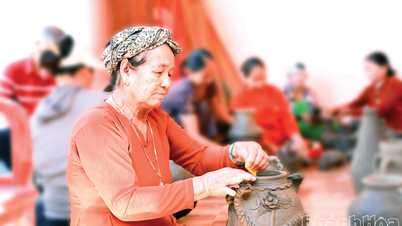
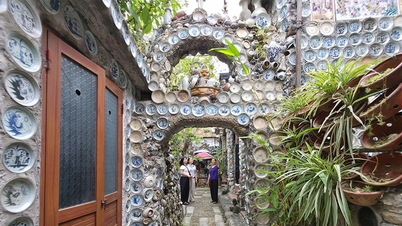
| Cham pottery art has been added to the List of Intangible Cultural Heritage in Need of Urgent Safeguarding. (Source: VNA) |
Vietnam possesses a treasure trove of diverse and distinctive cultural heritage, not only bearing the indelible mark of history but also containing incredibly rich spiritual values.
Over the years, the Vietnamese Government has enacted numerous policies, laws, and regulations related to the preservation of cultural heritage, such as the 2001 Law on Cultural Heritage, the 2019 amended Law on Cultural Heritage, along with decrees and circulars guiding their implementation. A system of museums, research centers, and heritage management agencies has been established and is operating to carry out the tasks of preserving and promoting cultural heritage.
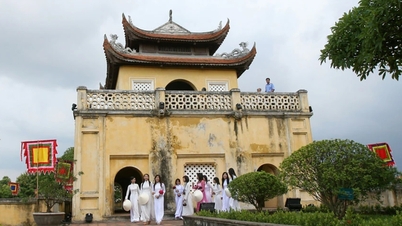
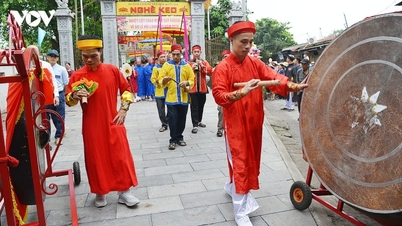
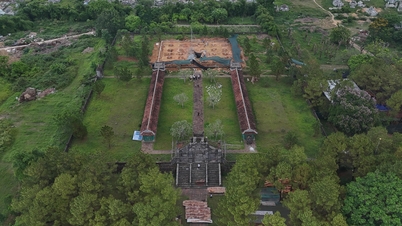
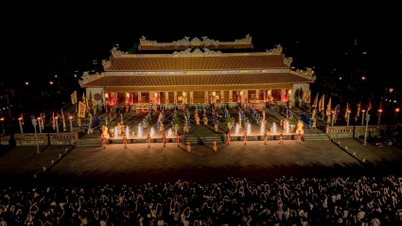
The government and cultural organizations have implemented numerous projects to preserve, restore, renovate, and enhance historical sites, and organized activities to raise public awareness of heritage values. Many cultural heritage sites have been recognized and included in UNESCO's list of World Cultural Heritage sites. Traditional festivals are frequently reenacted, bringing unique cultural value.
However, despite commendable efforts, the preservation and promotion of cultural heritage in Vietnam still face many challenges. Many historical sites are deteriorating and being damaged due to a lack of funding for regular restoration and maintenance. Some sites are being encroached upon and illegally constructed. The management, protection, and promotion of heritage values still encounter many inadequacies and overlapping jurisdictions among relevant agencies.
The legal system in Vietnam is rich and diverse, but this also leads to overlaps, conflicts, and difficulties in implementation, especially in the cultural sector. In reality, many levels of government are involved in conservation efforts, but there is a lack of uniformity in policy implementation. This results in a passive and indecisive approach to heritage management. For example, some historical sites are handled inconsistently, leading to omissions or failure to fully utilize their value.
Some experts argue that promoting cultural heritage requires a multi-faceted dialogue to ensure that conservation policies and projects are not only based on decisions by management agencies but also reflect the opinions and needs of local communities, balancing the requirements of preservation and conservation with the needs of socio -economic development. Besides strictly protecting heritage sites, flexible policies and solutions are needed to facilitate the development of economic and cultural activities based on heritage.
However, some argue that the promotion of cultural heritage in Vietnam is proceeding in a "one-way street," focusing on exploitation and profiting from heritage without truly prioritizing preservation and conservation. Many historical sites and scenic spots are being overused and exploited excessively for tourism purposes, without comprehensive solutions for long-term preservation.
In this context, finding comprehensive solutions that balance conservation and development, state management and community participation, is one of the major challenges facing the preservation, conservation, and promotion of cultural heritage in Vietnam today.
The exploitation and promotion of cultural heritage must be carried out in a focused and sustainable manner, avoiding abuse and overexploitation for short-term gain. Only then will Vietnamese cultural heritage be truly preserved, protected, and promoted comprehensively, for the sustainable development of the country.
Source: https://baoquocte.vn/phat-huy-di-san-van-hoa-viet-nam-can-mot-doi-thoai-da-chieu-294687.html



![[Image] Nearly 125,000 Hanoi students completed the Literature exam for the 10th grade entrance exam.](https://vphoto.vietnam.vn/thumb/1200x675/vietnam/resource/IMAGE/2026/05/30/1780117233041_ndo_br_thiet-ke-chua-co-ten-2-png.webp)






















































































Comment (0)